Opinion
Why India’s bid for COP 33 is particularly poignant for the Global South
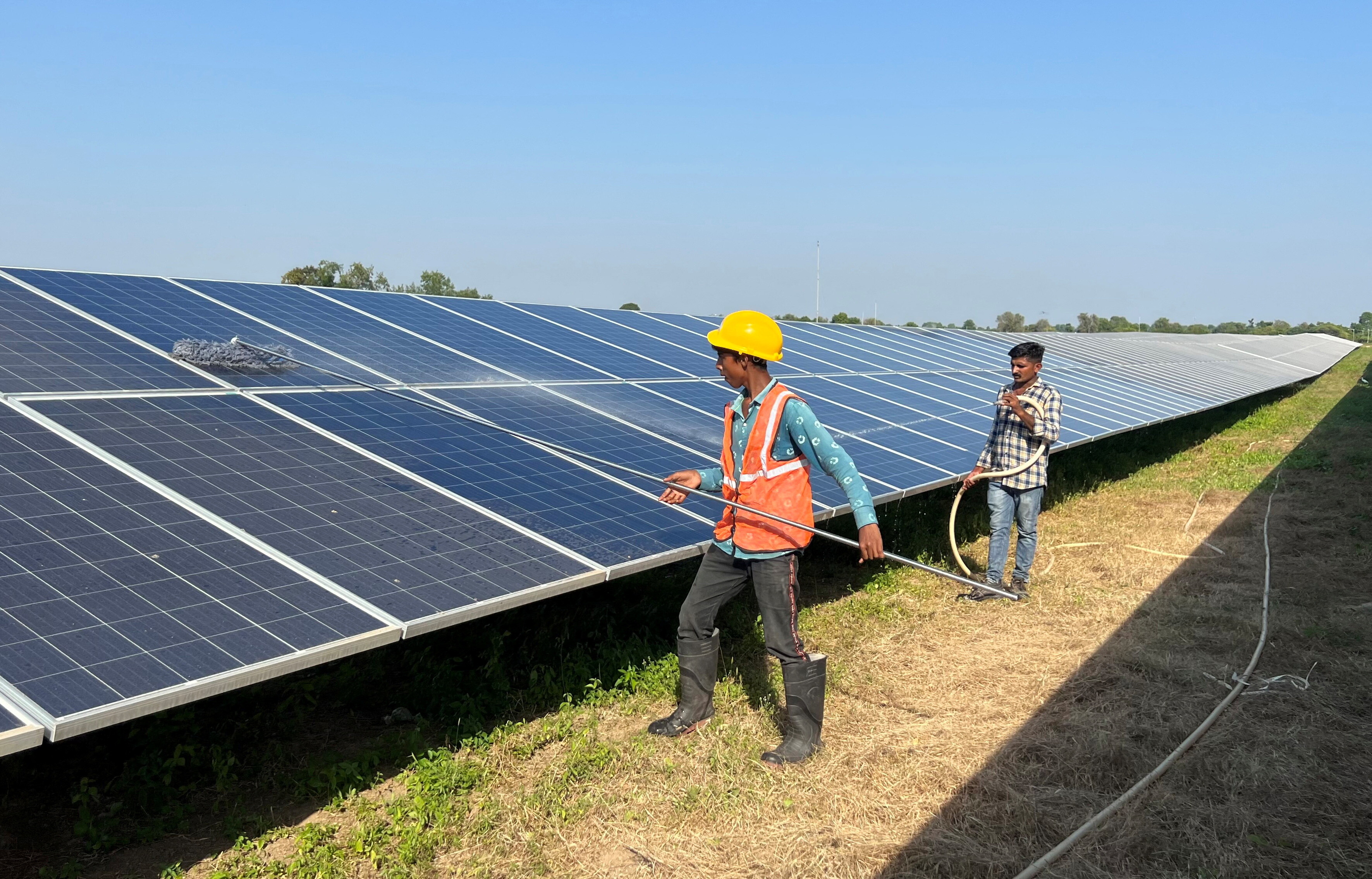
India’s bid for COP 33 embodies the Global South’s determination to shape its climate destiny. Image: REUTERS/Sunil Kataria
- India has formally expressed its intention to host COP 33 in 2028.
- COP 33 in India would highlight how development and decarbonization can advance together, rather than in conflict.
- India’s bid for COP 33 embodies the Global South’s determination to shape its climate destiny.
In a world where climate extremes have become the new normal, every UN Climate Conference of the Parties (COP) carries higher stakes than the last. Paris delivered the historic Paris Agreement, Glasgow cemented net-zero pledges and Dubai launched the Loss and Damage Fund. Brazil’s COP 30 in 2025 will host the first follow-up to the Global Stocktake, where it will also highlight the ethical dimension. The Global Ethical Stocktake Circle, spearheaded by President Lula and UN Secretary-General António Guterres, will be a central feature of the summit.
Now, another signal is emerging: India has formally expressed its intention to host COP 33 in 2028 — a bid that received full support from BRICS member countries at their 17th Summit in July. While still awaiting confirmation from the UN Framework Convention on Climate Change (UNFCCC), this candidacy is less about venue and more about India’s assertion of global climate leadership.
India’s bid to host COP 33 is a clear signal of geopolitical intent. It positions the world’s largest democracy, the most populous nation and the fourth-largest economy as a bridge between developed and developing worlds. For billions across the Global South, the question is no longer whether climate action will come, but whether it will come on fair and equitable terms. India’s candidacy signals that the Global South is participating in climate diplomacy and increasingly shaping its direction.
A moral and strategic case for leadership
India has long championed the principle of climate justice, rooted in 'common but differentiated responsibilities.' This principle, that while all must act, not all bear equal historical responsibility or have the same capacity, remains the cornerstone of Global South perspectives.
Crucially, India brings lived experience to this argument. Home to 17% of the world’s population, it accounts for only around 4% of historic emissions. Yet, it faces mounting risks from deadly heatwaves, devastating floods and declining agricultural productivity. At the same time, it has balanced rapid economic growth with a massive expansion of clean energy.
Few countries embody so starkly the dual reality of broadening energy access while managing decarbonization. Hosting COP 33 would allow India to bring this unique perspective, one that resonates deeply across Africa, Asia, and Latin America, to the centre of global climate negotiations.
A proven track record as convener
India’s recent diplomatic leadership underscores why COP 33 in India would matter. Its G20 presidency in 2023 was widely hailed as a success; delivering consensus despite geopolitical divisions and elevating Global South priorities, such as reforming multilateral development banks and scaling sustainable finance. Under India’s leadership, the African Union gained permanent membership to the G20 — an unprecedented expansion of global governance. Next year, India will host BRICS, once again tasked with bridging diverse and often competing voices.
Beyond these milestones, India has anchored durable global platforms, such as the UN-backed Coalition for Disaster Resilient Infrastructure (CDRI) and the International Solar Alliance (ISA). These initiatives demonstrate India's ability to navigate polarization, forge coalitions and infuse the ethos of Vasudhaiva Kutumbakam, 'the world is one family,' into global diplomacy. COP 33 would extend this convening power into climate governance at a moment when trust between North and South is deeply strained.
A model of scaled, equitable transitions
India’s clean energy transformation strengthens its credibility as a potential COP 33 host. With over 220 GW of renewable capacity already installed, India is the world’s fourth-largest clean energy market and is on track for its ambitious target of 500 GW of non-fossil capacity by 2030. Solar tariffs have fallen to among the lowest globally, driving rapid expansion.
At the same time, India has lifted hundreds of millions out of energy poverty, achieving near-universal electricity access within a decade through programmes like Saubhagya. More recently, launched to provide rooftop solar for 10 million households by March 2027, the PM Surya Ghar Muft Bijli Yojana has reached over one million installations as of March 2025, offering up to 300 free units of electricity per month. By the time India would be preparing to host COP 33, this initiative could stand as a global case study in large-scale, people-centric renewable deployment.
These achievements make India a relatable model for the Global South: a country of vast population and resource constraints proving that green growth is possible. Its international initiative, including the Global Biofuel Alliance and the vision of One Sun, One World, One Grid, demonstrate that India is transitioning at home and building cooperative frameworks abroad. COP 33 in India would highlight how development and decarbonization can advance together, rather than in conflict.
A platform for Global South leadership
Ultimately, COP 33 is about who gets to shape the climate agenda. For the last decade, the Global South has had a voice, but rarely power, in climate diplomacy. India’s bid signals a shift. By hosting COP 33, India could institutionalize a stronger Global South presence, whether through collective negotiating platforms, new frameworks for equitable finance or stronger adaptation commitments.
This would not be about India alone. It would mark a turning point where emerging economies stopped being primarily recipients of climate frameworks and became co-architects of solutions. With India as host, COP 33 could be remembered as the summit where fairness, equity and innovation were finally embedded into the heart of the global climate regime. India’s distinctive strengths — from combining scientific expertise with frugal innovation to harnessing digital public infrastructure and emerging technologies like AI — could bring fresh tools into climate negotiations. At the same time, India can advocate for procedural reforms that make climate negotiations more balanced, with the Global South helping to frame priorities on finance, technology and resilience.
India’s bid for COP 33 is a signal of confidence and intent from a nation that has proven it can convene, deliver and inspire. More importantly, it embodies the Global South’s determination to shape its climate destiny. If realized, COP 33 in India would not simply be another chapter in negotiations. It would be remembered as the turning point when the climate regime became truly multipolar, inclusive, innovative and ambitious enough to meet the scale of the crisis.
Don't miss any update on this topic
Create a free account and access your personalized content collection with our latest publications and analyses.
License and Republishing
World Economic Forum articles may be republished in accordance with the Creative Commons Attribution-NonCommercial-NoDerivatives 4.0 International Public License, and in accordance with our Terms of Use.
The views expressed in this article are those of the author alone and not the World Economic Forum.
Stay up to date:
Climate Crisis


Forum Stories newsletter
Bringing you weekly curated insights and analysis on the global issues that matter.
More on Climate Action and Waste Reduction See all

Sadaf Hosseini
February 12, 2026


