Opinion
Why we must rethink conflict prevention and peacebuilding in a fractured world
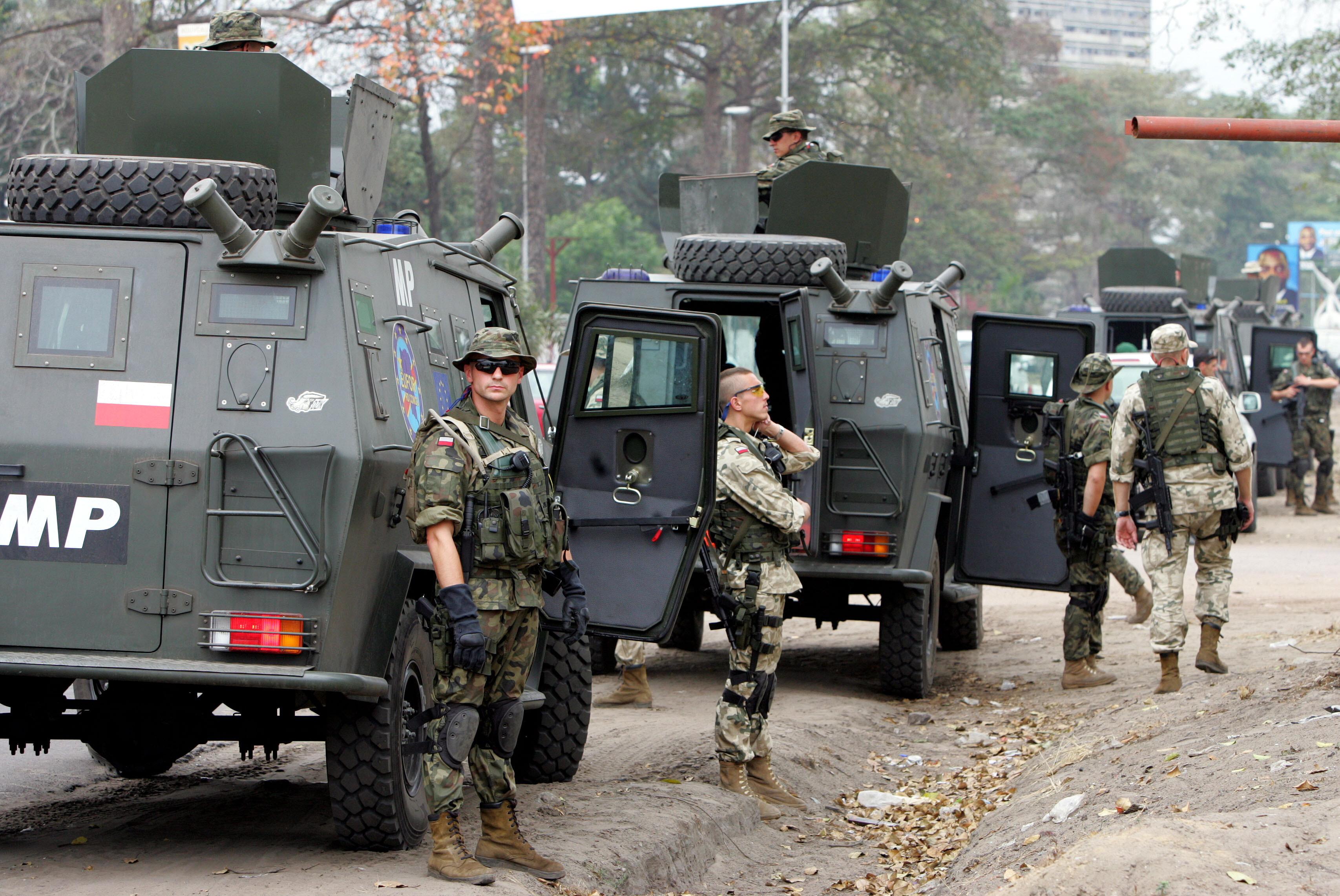
Peacebuilding operations are contracting while conflicts are on the rise. Image: REUTERS/Antony Njuguna
- Wars and global defence spending are increasing, all while aid budgets, humanitarian finance and peace operations are shrinking.
- Political shifts, budget pressures and governance challenges in traditional donors have made aid flows more uncertain and response slower, exacerbating the gap between early warning and action.
- With old models in retreat, renewal and resilience depend on empowering local actors, embracing tactical risk-taking, leveraging technology and reframing peace as a global public good.
Global conflict is surging just as the architecture designed to prevent and resolve it falters. Research institutes recorded 61 wars in 2024, the highest since 1946. At the same time, global defence spending jumped nearly 10% to $2.7 trillion, even as aid budgets shrank.
Data from the Organization for Economic Co-operation and Development (OECD) shows official development assistance also fell by over 7% in real terms last year and humanitarian financing experienced a “seismic contraction” of almost 10% over the same period. The paradox is stark: as conflict and fragility rise, the systems meant to respond are eroding.
Drivers of disorder
The drivers of global disorder are familiar. Military spending has surged, conflicts are proliferating and guardrails such as arms-control treaties are crumbling. From Ukraine to the Red Sea to Taiwan, confrontation is intensifying. There is a growing sense in the West that the rules-based order is unravelling.
The race for artificial intelligence (AI) dominance and sharpening economic competition add instability, while climate threats and democratic backsliding amplify the turmoil. Global temperatures reached record highs in 2024 and democratic freedoms have declined for the 19th consecutive year. The result is more crises and fewer avenues for collective response.
Perceptions of global disruption differ by region. For many, the world feels less stable, less predictable and far more dangerous than at any point in recent memory.
In much of Asia, the mood is more calculated, sometimes optimistic. Multipolarity offers agency to Beijing, Delhi, Jakarta and Riyadh. Across the Global South, many governments are hedging, taking US security where it suits, Chinese markets where they pay and regional clubs for insurance.
Some view the current global shifts as deeply threatening, while others see them as rare openings. Crucially, more and more voices from the Global South are calling for aid and development to be reshaped from the bottom up, insisting that Southern actors themselves should play a central role in setting priorities, designing interventions, and determining how resources are allocated.
The retreat of multilateralism
The space for multilateral action is shrinking just as the UN marks its 80th anniversary with proposed reforms. Yet, momentum for more global cooperation is weak. Humanitarian appeals are perennially unmet, with less than 17% of the required $45.5 billion provided for 2025. Meanwhile, peace operations in the Democratic Republic of Congo, Mali and elsewhere are closing, and the Security Council is paralyzed by vetoes.
International non-governmental organizations (NGOs) such as International Rescue Committee, Norwegian Refugee Council, Save the Children are retrenching, squeezed by donor fatigue and compliance costs. Although the Council of Foundations found that many philanthropic groups are ramping up grant-making to meet shortfalls, others have grown more risk-averse owing to increased political attacks and compliance risks. Some boards now prefer safe projects over politically sensitive prevention or rights-based work.
A key reason is the growing unpredictability of traditional aid anchors, creating uncertainty for partners to plan long-term, leaving budgets facing competing demands and humanitarian financing often falls short. These dynamics make forward-looking investments harder to sustain, widening the gap between early warning and timely response.
We are in a period of extreme volatility. Whether it hardens into permanent disorder will depend on whether practitioners, donors and thinkers reinvent peacebuilding for this harsher age.
”Recent crises – whether in Haiti, Myanmar or Sudan – illustrate the challenge. Warnings were available but action was delayed until emergencies escalated. Structural weaknesses are even more acute in today’s unsettled environment.
The heyday of multidimensional UN peacekeeping is also over. Missions are smaller, ad hoc and often under-resourced. Peacebuilding has lost traction, too, tarnished by failures in Afghanistan and South Sudan.
Sensitivities over sovereignty, shrinking civic space and declining aid flows make ambitious international interventions unlikely. Even the language has shifted, with “peacebuilding” increasingly replaced by “stabilization” and “resilience.” Yet, the underlying challenge – helping societies escape cycles of violence – remains unchanged.
Renewal strategies in a fragmented system
Adapting to this new disorder requires realism. The old models, anchored in US leadership, reliable OECD donors and robust UN missions, are unlikely to return.
There are at least five overlapping futures: disintegration and drift; pragmatic localization; Western retrenchment; an expanded Chinese footprint; and competitive multipolar aid dynamics.
Navigating this complex, uncertain landscape will require agility and unconventional partnerships. So what are some lessons moving forward?
- Embrace tactical risk-taking: Conflict prevention and peacebuilding require experimentation. UN agencies, NGOs and donors should underwrite “safe-to-fail” pilots, community mediation platforms, digital monitoring systems and hybrid finance tools. Some will fail; others may scale. Excessive caution is itself a strategic error.
- Advance radical localization: Resources and decision-making need to shift decisively to local actors who often enjoy greater legitimacy and nimbleness. Governments and philanthropies can accelerate this process by supporting southern research networks, diaspora-led initiatives and community NGOs directly, without heavy northern overheads.
- Confront opposition head-on: Aid actors are not just neglected but often targeted. Authoritarian regimes routinely delegitimize NGOs as foreign agents. Retreat only emboldens them. Think tanks and foundations should invest in stronger communications, expose disinformation and build solidarity networks for activists under attack.
- Leverage technology: Digital tools can entrench repression but also empower prevention and peace-making efforts. AI platforms can model overlapping risks, satellites can document abuses in real time and secure platforms can connect fragmented civic groups. Philanthropies should invest in these tools while pushing for guardrails.
- Reframe peace and security as public goods: Prevention must be recast as integral to addressing global challenges, including climate change, migration and digital governance. It also has co-benefits. Conflict-sensitive climate finance can cut emissions and fragility alike. Digital resilience protects democracy and can preserve stability. Linking peace to urgent priorities gives it a new constituency.
A fragile opportunity in a volatile era
Global power centres are reading today’s turbulence in very different ways. In Washington and Brussels, the mood is defensive; in Asia, it is more strategic; and across much of the Global South, it is opportunistic.
States big and small are repositioning, while many in the Global South (including the BRICS) are seeking to redefine aid and development. Looming over this are existential risks: escalating conflict among nuclear powers, unregulated AI and climate shocks.
Civil societies and philanthropies cannot rebuild the post-Cold War order on their own but they can adapt. They can take risks where governments cannot, convene dialogue where politics stalls and invest in technologies and local actors who will shape the future.
They can defend civic space, expose repression and frame peace and security not as charity but as a necessity for resilience. We are in a period of extreme volatility. Whether it hardens into permanent disorder will depend on whether practitioners, donors and thinkers reinvent peacebuilding for this harsher age.
Don't miss any update on this topic
Create a free account and access your personalized content collection with our latest publications and analyses.
License and Republishing
World Economic Forum articles may be republished in accordance with the Creative Commons Attribution-NonCommercial-NoDerivatives 4.0 International Public License, and in accordance with our Terms of Use.
The views expressed in this article are those of the author alone and not the World Economic Forum.
Stay up to date:
Drivers of War
Related topics:


Forum Stories newsletter
Bringing you weekly curated insights and analysis on the global issues that matter.
More on Resilience, Peace and SecuritySee all

Ali Mammadov and Kanan Mammadov
February 6, 2026


