Why workforce health should be at the core of every business strategy

Climate-driven and workforce health risks could cost the global economy $1.5 trillion in lost productivity by 2050. Image: REUTERS/Phil McCarten
Elia Tziambazis
Managing Director & Partner, Global Lead for ESG in Healthcare, Boston Consulting Group (BCG)- Climate-driven health risks could cost the global economy at least $1.5 trillion in worker availability losses between now and 2050, affecting food and agriculture, the built environment, and health and healthcare.
- Businesses that invest in health-resilience measures, such as employee health coverage, will be better able to protect their workforce and operations.
- Scaling climate-health solutions, such as heat-stable medicines or innovative insurance models, can help meet growing market demands and unlock new growth.
Extreme heat now disrupts the work lives of 70% of the global workforce, contributing annually to nearly 19,000 deaths and 23 million workplace injuries.
As global temperatures rise, climate-driven health risks, such as heat stress and respiratory illnesses, are becoming critical threats to human health and economies. Communities lacking strong infrastructure and access to healthcare are being left most vulnerable.
A new report from the World Economic Forum, developed in collaboration with Boston Consulting Group (BCG), outlines why protecting the workforce and communities against climate-health risks is a business imperative.
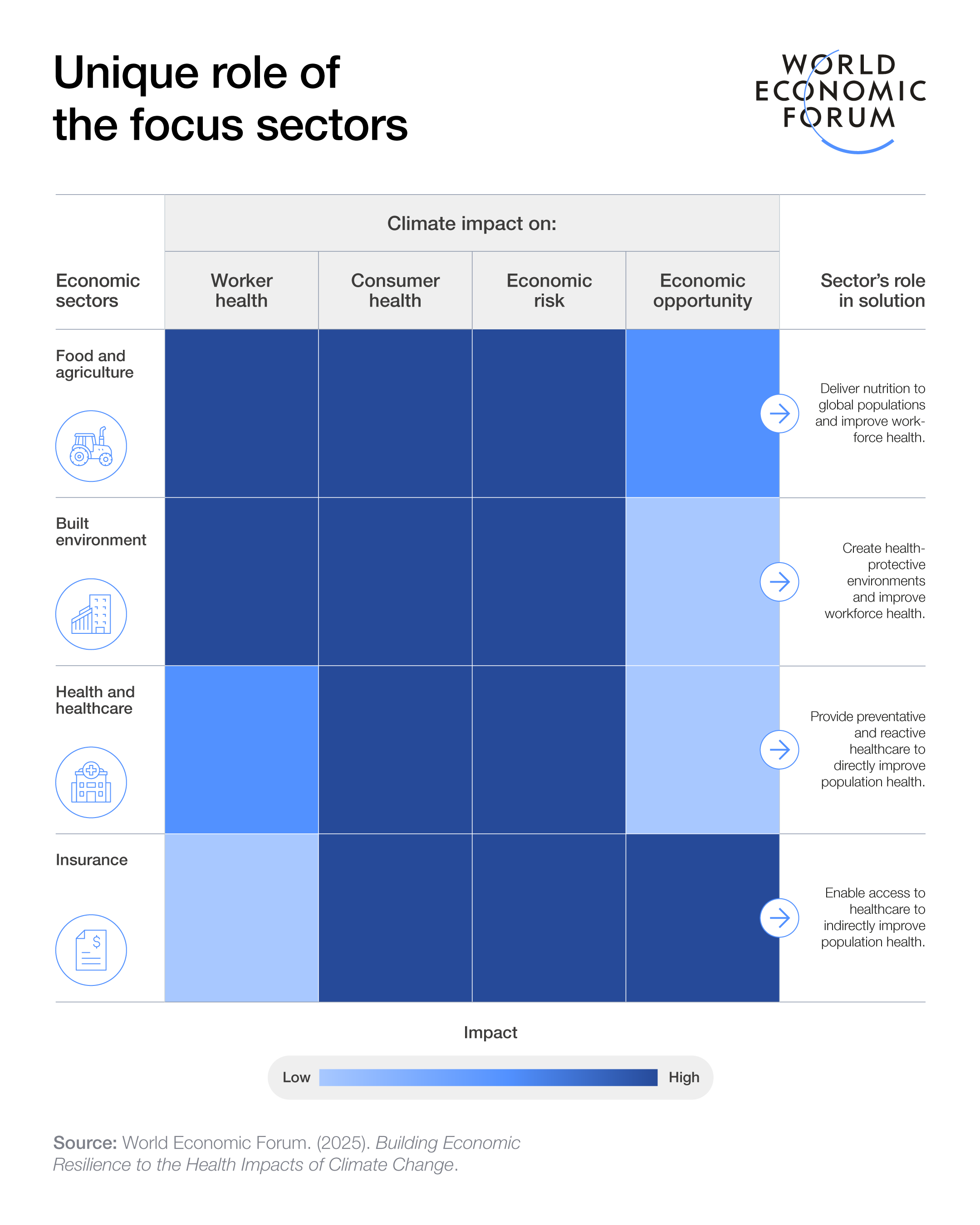
It assesses climate-driven health impacts across four sectors: food and agriculture, the built environment, health and healthcare, and insurance.
Critical economic sectors among the hardest hit
Frontline, labour-intensive sectors such as agriculture, the built environment and healthcare face the greatest risks from climate-related health impacts, with cascading consequences for food security, health systems and economic stability.
In food and agriculture, climate-health impacts could result in $740 billion in lost output and over 600,000 deaths by 2050, placing the sector under strain and jeopardizing global food supply chains.
Regions like sub-Saharan Africa and Asia, where smallholders manage 80% of farmland, are particularly vulnerable to these stressors during harvesting times. Malaria-infected farmers in Nigeria, for example, are unable to harvest 60% of their crops, reducing yield and threatening regional food security.
In the built environment, climate-health impacts are projected to result in productivity losses of $570 billion by 2050 and up to 120,000 worker deaths. The sector is projected to be among the hardest hit by extreme heat, accounting for 19% of global working hours lost to heat stress by 2030. Urban heat islands and inadequate infrastructure are likely to compound these challenges across the industry.
Meanwhile, the healthcare sector faces escalating burdens from climate-driven illnesses, with impacts on its workforce projected to lead to $200 billion in productivity losses by 2050.
Rising patient demand, contributing to an anticipated $1.1 trillion in additional treatment costs by mid-century, together with workforce strain risk overwhelming care delivery, especially in regions with existing health resource gaps.
Climate-health risks are also expected to affect the insurance sector, driving a surge in medical, life and casualty claims that could strain capital, push premiums higher and exacerbate existing coverage gaps.
While the scale of these risks is considerable, businesses that act now can build health resilience at a fraction of the cost incurred by delayed response, safeguarding human health and long-term stability.
Driving health resilience can unlock significant growth
Addressing the health impacts of climate change demands bold and targeted action across key sectors but the benefits of adaptation extend far beyond mitigating losses. Companies driving innovative climate-health solutions can unlock growth while meeting emerging market needs.
Investing in climate-smart crops, embracing regenerative and precision agriculture practices and protecting vulnerable workers can increase yields and revenues while safeguarding global food supply chains.
In the built environment, adopting heat-protective equipment and modified working schedules can safeguard workforce health and productivity. Meanwhile, investing in climate-resilient urban design and green infrastructure solutions can increase property climate-readiness, tapping into a burgeoning market.
For the health and healthcare sector, developing climate-smart medicines, expanding preventive care and retrofitting facilities can strengthen health systems and reduce disease burden under climate stress.
Tailored insurance products, advanced risk modelling and incentivizing preventive behaviours could help fill existing coverage gaps, protect vulnerable communities and unlock growth for insurers.
Cost-effective interventions across all economic sectors
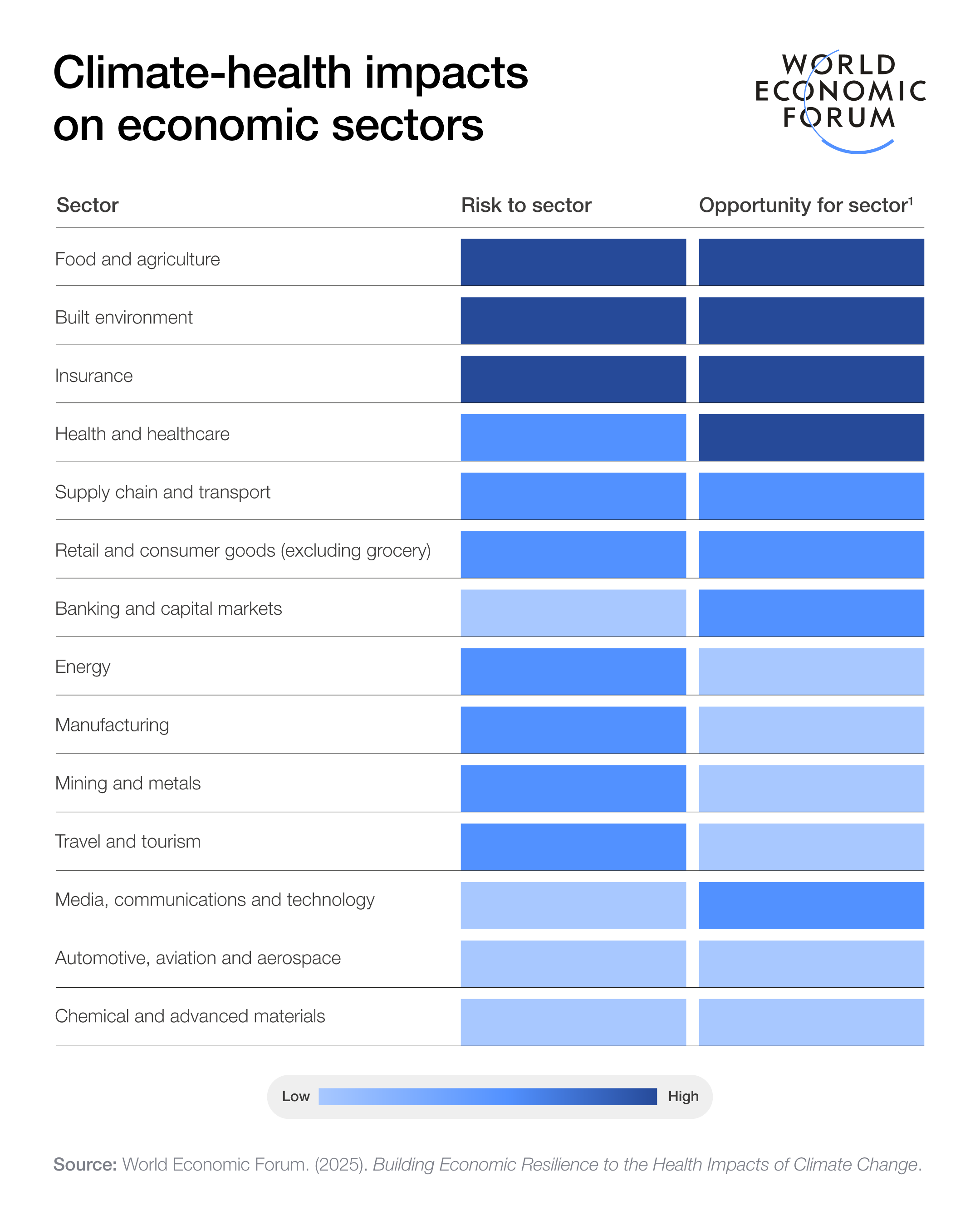
Beyond the four focus sectors of this report, others, including supply chain and transport, retail and consumer goods and energy, also face varying degrees of risk and opportunity. Companies across all industries can mitigate climate-health risks and unlock avenues for growth through three types of interventions:
- Employee protection initiatives – including occupational health safeguards, heat-responsive health coverage and modified working hours to limit heat and disease exposure.
- Improving climate resilience of systems – by protecting critical infrastructure and through the deployment of risk monitoring and early-warning systems to anticipate and mitigate health disruptions.
- Products, services and community engagement – by scaling health-protective products, educating workers and communities, and establishing preparedness plans.
While these interventions apply broadly, each economic sector experiences climate-health risks and opportunities differently. Tailoring interventions to the unique challenges and economic roles of each sector is essential for building effective resilience strategies.
A decisive moment to deliver sustainable growth
The economic case for embedding health resilience into business strategy is clear. Delaying adaptation can lead to mounting productivity losses, supply chain disruptions and financial liabilities.
Early, proactive investment in health resilience leads to long-term stability, innovation and growth.
Every business leader and investor has a unique opportunity to safeguard their workforce and the communities and economies they depend on. Protecting the workforce and consumers’ health is a strategic imperative fundamental to thriving in a warming world.
Don't miss any update on this topic
Create a free account and access your personalized content collection with our latest publications and analyses.
License and Republishing
World Economic Forum articles may be republished in accordance with the Creative Commons Attribution-NonCommercial-NoDerivatives 4.0 International Public License, and in accordance with our Terms of Use.
The views expressed in this article are those of the author alone and not the World Economic Forum.
Stay up to date:
Climate and Health


Forum Stories newsletter
Bringing you weekly curated insights and analysis on the global issues that matter.
More on Climate Action and Waste Reduction See all

Steve Rochlin and Judith Ketelslegers
March 26, 2026


