3 steps to industrial competitiveness amidst geopolitical uncertainty
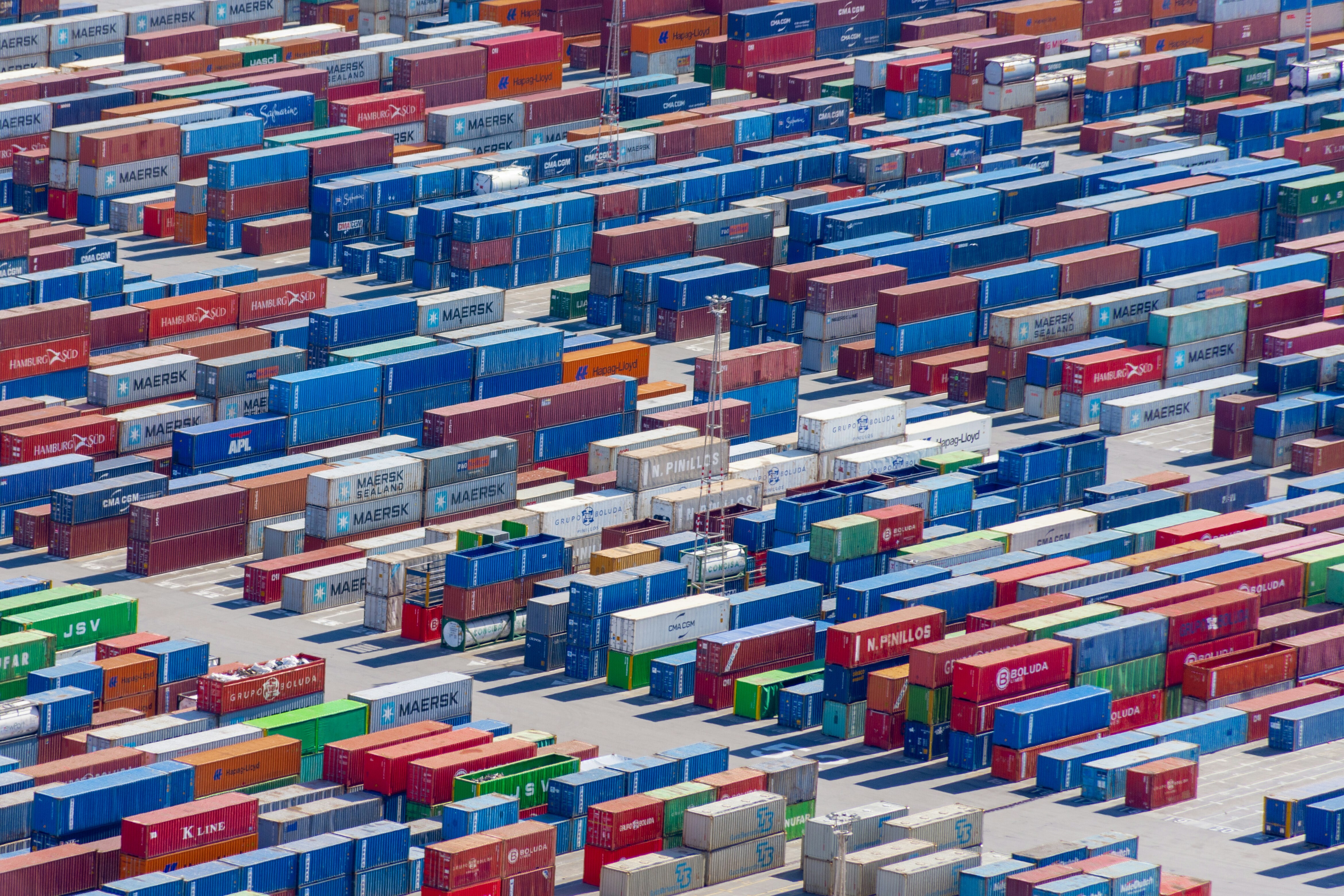
The C-Suite must identify strategies to strengthen industrial competitiveness Image: Usnplash/Noel Broda
Mourad Tamoud
Chief Supply Chain Officer and Executive Vice-President, Global Supply Chain Operations, Schneider ElectricKathy Wengel
Executive Vice-President, Chief Technical Operations and Risk Officer, Johnson & Johnson- Geopolitical turbulence is reshaping global manufacturing and supply chains, creating simultaneous shocks on both supply and demand.
- Lessons from past disruptions show that innovation often advances in difficult contexts and today, artificial intelligence is emerging as the defining technology of resilience.
- The World Economic Forum’s Community of Chief Operating, Supply Chain and Procurement Officers is working with industry, governments and experts, identifying strategies that defend, de-risk and diversify operations for sustainable competitiveness.
Post pandemic, manufacturers and supply chain leaders agreed that stronger systems and technologies were essential to handle future volatility, as was caused by the disruptions of COVID-19. Now, as recent headlines indicate, we’re about to see if those lessons truly took root.
The dual shock difference
Operations and supply chain leaders have been traditionally taught to discern whether a potential disruption stems from a supply shock or a demand shock. If recent history has taught us anything, however, it is that the global disruptions of today can be characterized by a “dual shock,” affecting supply and demand simultaneously.
This dual shock manifests differently across industries and countries, causing crippling input constraints to some sectors and eroding demand for others as shifting tariffs and policies alter market dynamics.
Similarly, countries with strong domestic alternatives or established regional alliances may weather these disruptions more effectively than those heavily dependent on now-contentious trade relationships.
...as with every historic leap forward, innovation must be deployed with care.
”Factors such as enterprise size, resource availability, regional market exposure, supply chain complexity and financial health can affect the severity of a shock. Smaller firms often lack the capital buffers or diversified supplier networks to help absorb external disruptions.
Likewise, companies deeply integrated into global supply chains or heavily reliant on specific regional markets may be more vulnerable to geopolitical instability. Conversely, organizations with robust contingency planning, diversified operations and strong financial resilience are better positioned to navigate turbulence and emerge stronger.
For manufacturers, the lesson is clear: resilience cannot be built by standing still. Progress requires belief, dynamism and constant innovation – especially when faced with adversity.
To thrive amid global uncertainty, companies need conviction and foresight – dismantling silos, anticipating risks and deepening collaboration across teams and sectors.
Effective responses demand close stakeholder partnerships across commercial, government affairs, research and development, operations, manufacturing and finance to encompass supply constraints and demand fluctuations comprehensively within solutions.
Amid this complex landscape, manufacturers can’t afford to wait and see. Building resilient supply chains requires action, even amid geopolitical uncertainty. With manufacturing accounting for nearly $16 trillion of global gross domestic product, the stakes are high. Forward-looking companies will act decisively across three key areas:
3 strategies for industrial competitiveness
1. Defend your position
The first imperative is to shore up the existing market position. While innovation drives growth, leveraging current competitive advantages remains essential for defending your business. Accelerate initiatives that expand processes and management routines from top-performing facilities across your operational network.
By standardizing what works well, you create a stronger foundation to withstand turbulence and defend your business.
Defend your margins through multiple levers
Start by tightening inventory practices across your network to free up capital. As supply chains shift closer to end markets, redesign your network to cut transportation costs and improve efficiency.
Work more closely with core suppliers to secure preferred pricing agreements that safeguard margins during market volatility.
2. De-risk your operations
While “risk” manifests in countless ways, periods of uncertainty require a focus on the most critical vulnerabilities. Manufacturers should prioritize two primary risk categories: supplier resilience and market access pathways.
Re-engage suppliers systematically
While there are undoubtedly agile small and medium-sized suppliers (SMEs) that can take an innovation-first approach to their business, for most SMEs, capital constraints limit heavy investment in new technology.
It is essential to address the resulting technological imbalance across supply networks by implementing supplier support programmes that strengthen critical relationships, while building ecosystem-wide resilience. This collaboration builds mutual advantage while creating flexibility to respond to shifting trade conditions.
Geopolitical tensions are converging in ways that require more sophisticated strategies than in past disruption cycles.
”Actively explore substitutes
Reassess whether products with specific historical specifications could maintain operational effectiveness with alternatives. Establishing contingency offtake agreements creates optionality when preferred suppliers face constraints.
This substitute identification process should become systematized rather than reactive, building a portfolio of alternatives ready for activation.
Leverage AI capabilities strategically
The proliferation of AI-powered supply chain solutions offers unprecedented opportunities to navigate disruption.
While generative AI applications receive outsized attention, the true value lies in AI’s ability to analyze vast datasets to identify viable substitutes, optimize inventory positions and predict disruption patterns before they manifest.
With proper data foundations, AI becomes an essential tool for modelling complex scenario planning that would overwhelm traditional analytical approaches.
3. Diversify strategically
More than 90% of manufacturing executives prioritize regional supply chain strategies; yet, global supply chains remain the backbone of industrial competitiveness. No single country or region can deliver all the capabilities required for resilient, efficient and sustainable production.
Strengthen regional alliances
Amidst this rewiring, as countries implement economic policies that strengthen local industrial capacity, we simultaneously witness the fortification of regional economic alliances, particularly among nations with limited individual economic leverage (e.g. the Association of Southeast Asian Nations).
Balance regional depth with global reach
The most effective business leaders are combining regional depth with global reach. They are consolidating supplier bases within key regions that offer advantages in areas such as labour and skills, intelligent infrastructure, technological capacity and policy alignment, while maintaining cross-regional networks to ensure agility and risk mitigation.
Reconfigure value chains for reslience
This approach reconfigures value chains to balance cost competitiveness with risk competitiveness, creating a network optimized for efficiency and resilience.
AI: The differentiator in disruption response
Throughout these steps, AI emerges as today’s defining innovation for navigating uncertainty, much like mechanization, steam power and railways reshaped the landscape of the first Industrial Revolution.
Then, as now, breakthrough technologies transformed not just individual firms but entire industries, enabling them to adapt to geopolitical upheavals and accelerate competitiveness.
Unlike in previous disruption cycles, today’s supply chain leaders have access to AI capabilities that can:
- Process and analyse enormous datasets to identify emerging risks before they cascade.
- Model complex scenarios accounting for thousands of variables.
- Recommend optimal inventory positioning based on predicted disruption patterns.
- Identify non-obvious supplier alternatives and material substitutes.
- Predict demand shifts resulting from geopolitical tensions.
Yet, as with every historic leap forward, innovation must be deployed with care. Effective adoption of AI requires addressing practical considerations such as data quality and governance, implementation costs and return on investment timelines, employee skill development, integration with existing ecosystems and scalability for organizations of different sizes.
Companies that deploy these capabilities effectively will respond to disruption with unprecedented speed and precision. Rather than broad, reactive interventions, AI enables targeted, proactive responses calibrated to specific patterns of disruption. This represents perhaps the most significant advancement in supply chain resilience since the pandemic began.
The convergence of geopolitical tensions demands more sophisticated response strategies than previous disruption cycles. No matter what the political dynamics are, we know that we must continue innovating supply chains to stay resilient and competitive
The path forward isn’t passive observation but active adaptation.
Don't miss any update on this topic
Create a free account and access your personalized content collection with our latest publications and analyses.
License and Republishing
World Economic Forum articles may be republished in accordance with the Creative Commons Attribution-NonCommercial-NoDerivatives 4.0 International Public License, and in accordance with our Terms of Use.
The views expressed in this article are those of the author alone and not the World Economic Forum.
Stay up to date:
Geopolitics


Forum Stories newsletter
Bringing you weekly curated insights and analysis on the global issues that matter.
More on Supply Chains and TransportationSee all

Jack Barrie and Janez Potocnik
April 2, 2026