5 ways to fund disaster resilience for a safer future
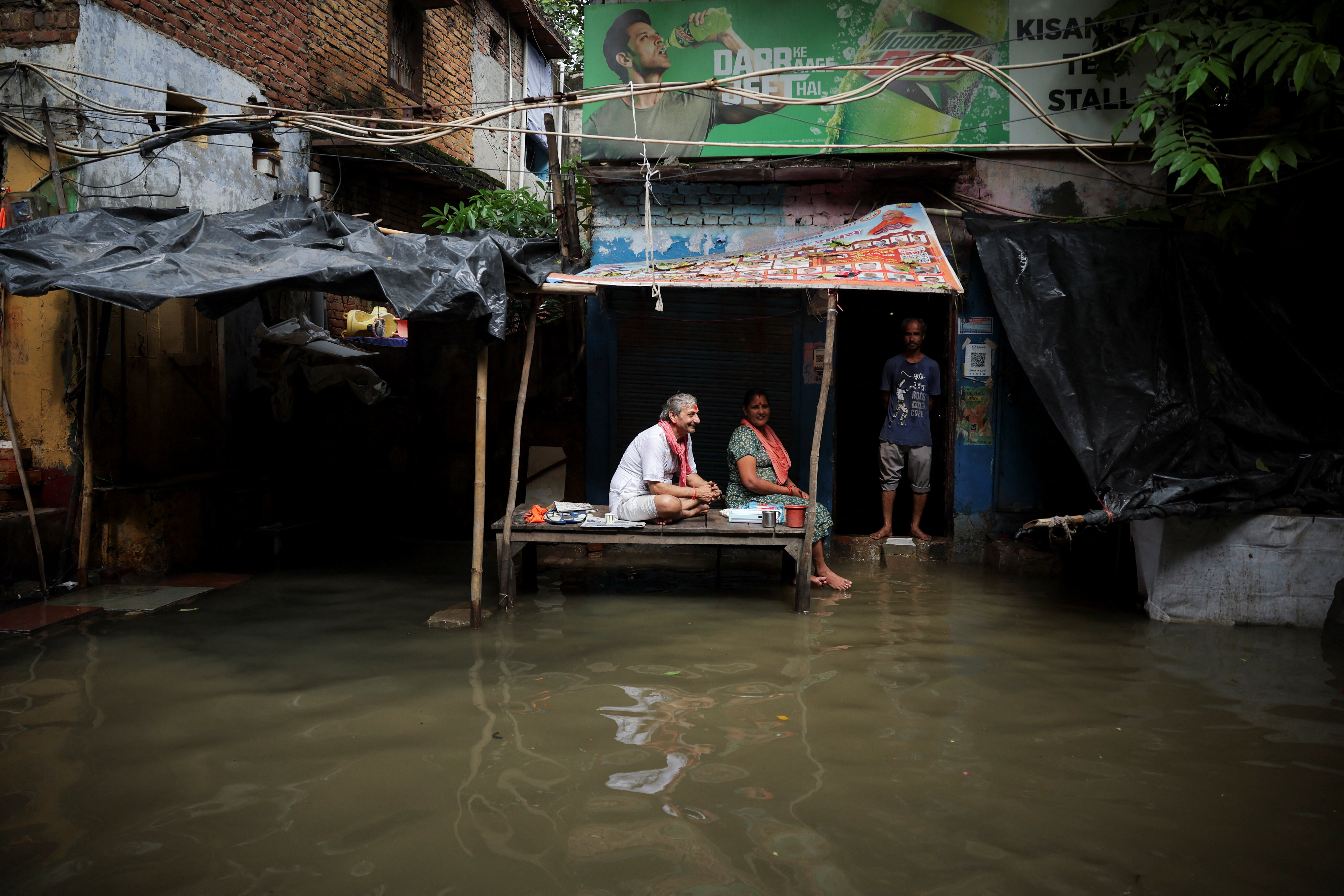
Resilience remains underfunded despite disasters becoming more frequent, intensive and expensive. Image: Reuters/Anushree Fadnavis
Shoko Noda
UN Assistant Secretary-General, UNDP Assistant Administrator and Director of the Crisis Bureau, United Nations Development Programme (UNDP)Kamal Kishore
Special Representative for Disaster Risk Reduction, United Nations Office for Disaster Risk Reduction (UNDRR)- Disasters are becoming more more frequent, more intense and more expensive – with the poorest countries in the world bearing the brunt.
- Yet resilience – the ability of communities and economies to anticipate, withstand and recover from disasters – remains underfunded.
- Investing in resilience is essential and we can improve funding for anticipating, withstanding and recovering from disasters in five ways.
Disasters are no longer rare events. They are becoming more frequent, more intense and more expensive – with the poorest countries bearing the brunt.
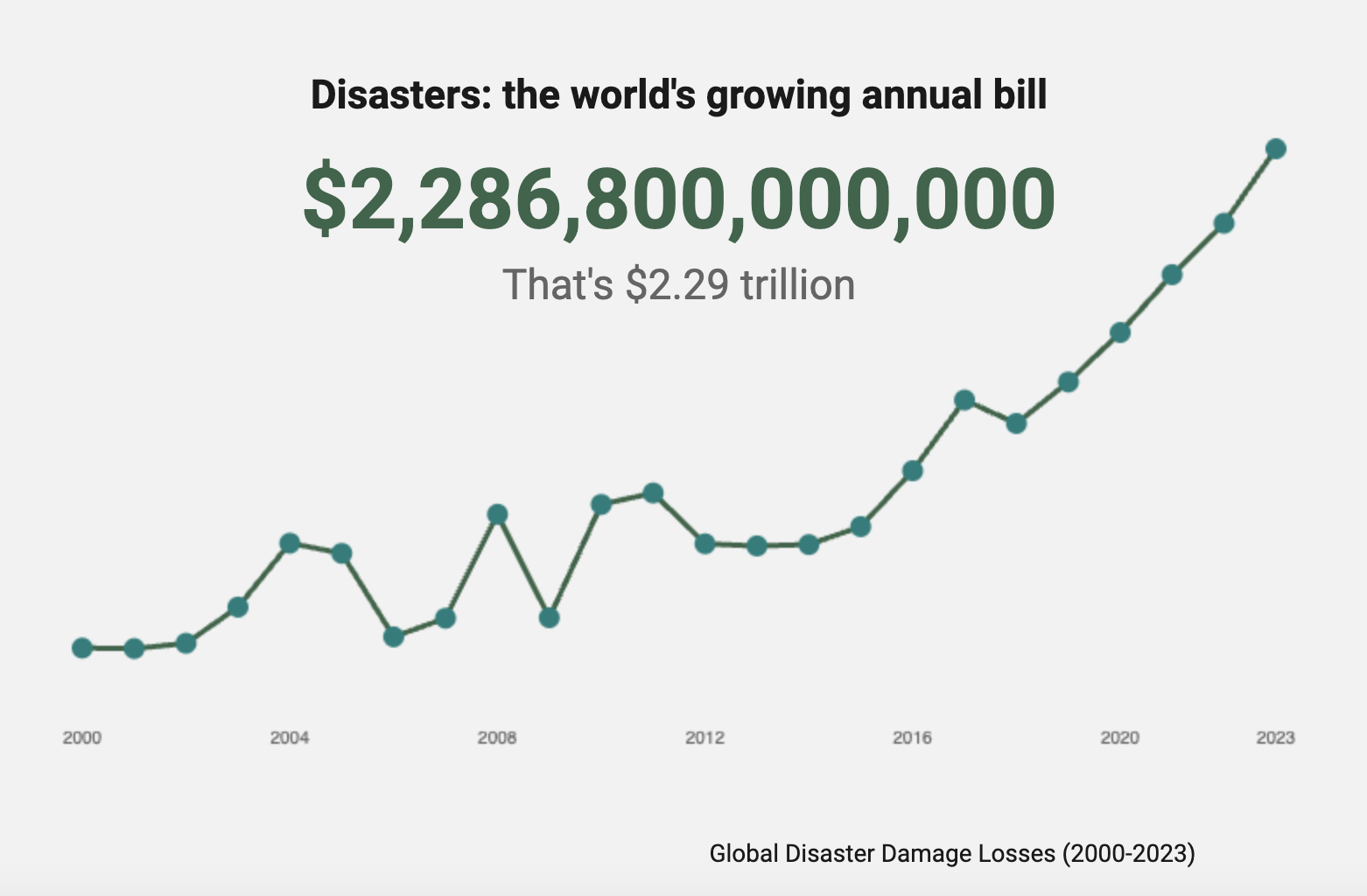
The Global Assessment Report on Disaster Risk Reduction (GAR) 2025 highlights that direct disaster costs have grown to approximately $202 billion annually, and that the true costs could be over $2.3 trillion, when cascading and ecosystem costs are taken into account.
In addition, the "big five" disasters – earthquakes, floods, storms, droughts and heatwaves – account for over 95% of direct losses in the past two decades, many of which are preventable.
Yet resilience – the ability of people, communities and economies to anticipate, withstand and recover from disasters – remains underfunded. Fewer than 2% of international aid projects cite disaster risk reduction as an objective, and governments often allocate less than 1% of public budgets to it. We continue to spend far more on repairing damage than preventing it.
This model is unsustainable in an era of growing disaster costs. Investing in resilience is not just rational, but essential.
Building resilience to anticipate, withstand and recover from disasters
Here are five ways to build resilience.
1. Make development risk-informed
Every new bridge, school or housing project carries a choice: address disaster risks or ignore them. Too often, risks are ignored. Homes and infrastructure are still built in hazard-prone areas, causing repeated destruction and wasted resources. It is much cheaper and easier to protect development by avoiding risks from day one.
In Tunisia, climate and hazard risk analysis is guiding both national strategies and local planning. Municipalities are now using flood and drought risk maps to guide land use decisions. This means construction projects are no longer being approved in floodplains, and new roads are built away from unstable terrain.
Risk-proofing development ensures progress is not undone by the next disaster.
2. Dedicate funding for resilience
For risks that cannot be avoided, dedicating funds to address them is far more cost-effective than bearing the full brunt of disaster losses. World Bank analysis shows that making infrastructure resilient adds just 3% to costs but yields $4 in benefits for every $1 invested.
In Chile, authorities regularly test the resilience of infrastructure across six systems – water, energy, transport, health, education and telecommunications. The results: hospitals keep running during earthquakes, transport corridors stay open during floods, and power grids withstand storms.
3. Mobilize everyone’s investment
Governments cannot build resilience alone. About 75% of all capital investment globally comes from the private sector, meaning businesses, financial institutions and investors have a prime role.
Embedding disaster risk reduction into everyday business decisions protects workers, customers and supply chains from disruptions. For financial institutions, it means factoring climate and disaster risks into lending and investment choices, which helps stabilize markets and economies. And for investors, demanding risk-informed portfolios ensures capital flows toward safer, more sustainable projects.
Neptune Flood Insurance is a US-based company that has shown rapid growth by offering affordable, technology-driven flood insurance. Insuring homes and other infrastructure worth $100 billion across the US, it is now targeting a $2.76 billion valuation in the stock market, demonstrating that investors are beginning to see disaster risk reduction as a smart place to put their money.
When private capital aligns with resilience, protection grows faster than risk.
4. Insure people and economies
During disasters, it is not only buildings that collapse but also livelihoods. Farmers, shopkeepers and informal workers often lose everything overnight. Entire nations also see years of progress wiped out as public finances are diverted towards reconstruction.
Insurance can protect both people and economies, helping communities recover quickly and preventing wider economic disruptions.
In Samoa, a parametric insurance model is protecting farmers, fisherfolk and small businesses against the financial impacts of extreme weather. The scheme pays out a portion of the insured sum 24-48 hours before a disaster strikes, based on early warning triggers. This keeps businesses afloat, helps farmers recover faster and prevents economies from sliding into debt.
Countries are also beginning to shield their budgets against disaster shocks. In the Caribbean, the Caribbean Catastrophe Risk Insurance Facility (CCRIF) offers parametric insurance that provides rapid payouts based on predefined conditions such as wind speed or rainfall. This model enables governments to access funds within 14 days, supporting immediate response and easing fiscal strain.
When communities bounce back quickly, and countries recover without derailing budgets, development is sustainable.
5. Expand early warning
Early warning systems not only save lives but also reduce economic losses. An early warning of just 24 hours can reduce potential damages by 30%. That is why the United Nations Office of Disaster Risk Reduction (UNDRR) and the United Nations Development Programme (UNDP) are among the many UN agencies working to expand Early Warnings for All by 2027.
Across seven of the world’s most climate-vulnerable nations – Antigua & Barbuda, Cambodia, Chad, Ecuador, Ethiopia, Fiji and Somalia – multi-hazard early warning systems are being strengthened, benefitting more than 26 million people. Forecasts, risk assessments and last-mile alerts help communities act early.
We must build on such efforts and scale up successes. Like the Climate Risk and Early Warning Systems (CREWS) initiative, which has expanded early warning services to nearly 400 million people across 77 countries – more than a third of which are affected by conflict or fragility – since 2015.
Every extra hour of early warning is a life, a livelihood or a future secured.
Why scaling up investment in resilience is vital
From early warnings to risk-informed planning, the solutions to prevent disasters already exist.
We have seen this firsthand while working together, when in the aftermath of the 2005 Kashmir earthquake, Pakistan significantly strengthened their disaster management systems.
How the Forum helps leaders make sense of regional, trade and geopolitical shifts
In India too, we worked together in our respective roles as UNDP and government representatives to support establishment of national and local disaster management authorities, early warning mechanisms and building codes that institutionalized resilience, protecting millions of lives and critical infrastructure.
Much progress has been made, but the task is far from finished. As global humanitarian needs continue to outpace resources, scaling up investment in resilience is the only way to reduce human suffering and safeguard hard-won development gains.
Don't miss any update on this topic
Create a free account and access your personalized content collection with our latest publications and analyses.
License and Republishing
World Economic Forum articles may be republished in accordance with the Creative Commons Attribution-NonCommercial-NoDerivatives 4.0 International Public License, and in accordance with our Terms of Use.
The views expressed in this article are those of the author alone and not the World Economic Forum.
Stay up to date:
Humanitarian Action
Related topics:


Forum Stories newsletter
Bringing you weekly curated insights and analysis on the global issues that matter.
More on Resilience, Peace and SecuritySee all

Naoko Tochibayashi
February 24, 2026


