Why Africa can't afford a semantic debate on natural capital
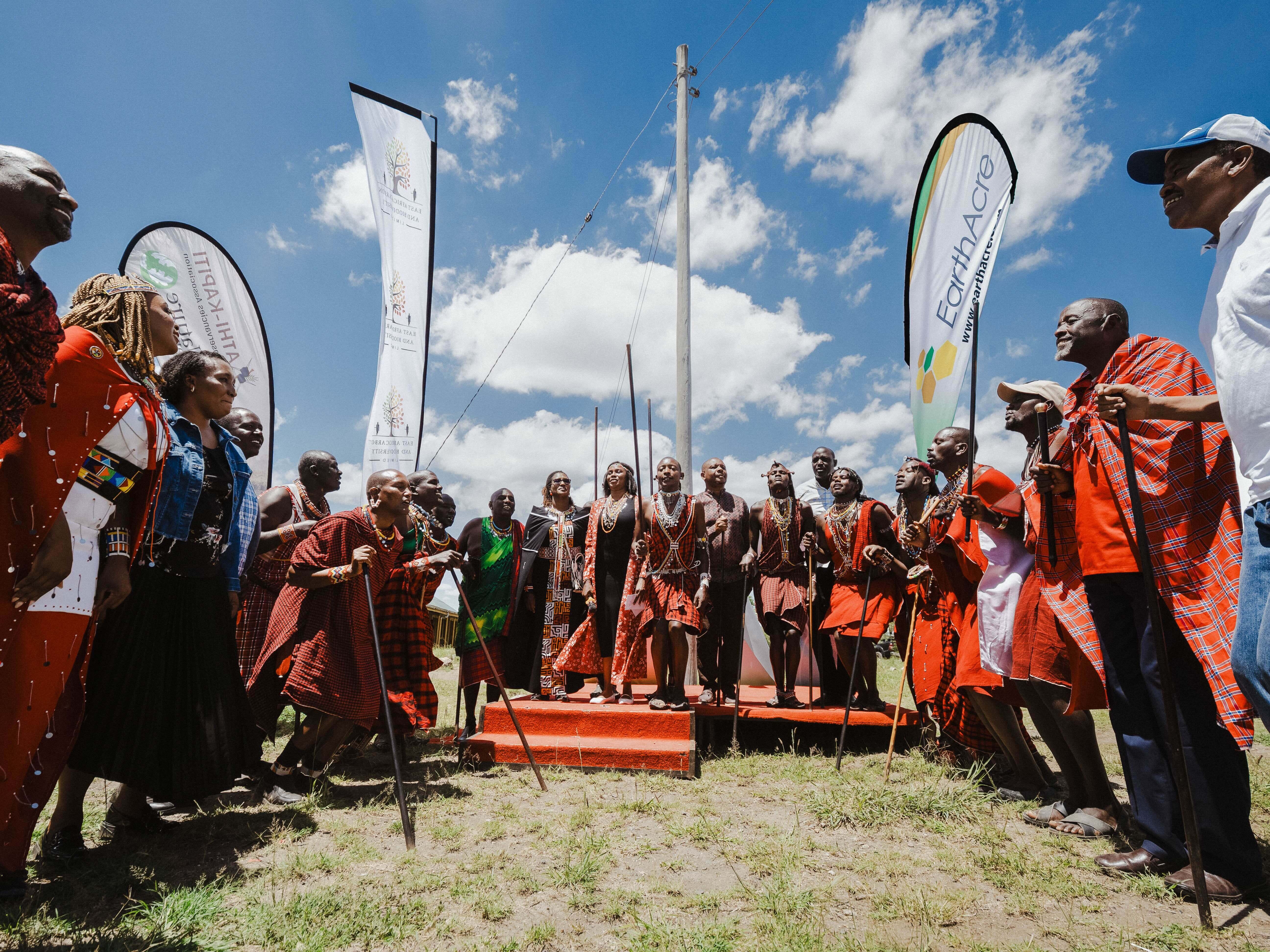
EarthAcre, a conservation and technology initiative, gives direct payments to landowners to keep wildlife corridors open Image: EarthAcre, Inc
Dorothy Abade-Maseke
Africa Lead, Nature Finance and Taskforce on Nature-related Financial Disclosures (TNFD); Head, ANCA Secretariat, Financial Sector Deepening Africa - FSD Africa- Africa loses an estimated $195 billion in natural capital every year.
- Unless domestic and international capital flows are significantly scaled, the continent faces deepening crises of food insecurity, water scarcity and biodiversity collapse.
- Capital must be channelled into protecting the natural assets that underpin the continent’s development and the planet’s stability.
Across global sustainability circles, the phrase 'natural capital' sometimes draws criticism. Proponents point to the term’s benign definition of simply being the global stock of natural resources and its positive usage in accounting and valuation as a way of managing our impact on nature. Detractors fear that it's another form of capitalism masquerading as environmentalism, arguing it boils down ecosystems into commodities, turning forests, rivers and wildlife into balance-sheet entries.
In Africa, however, this debate misses the point. The continent cannot afford the luxury of prolonged arguments over terminology. The more urgent task is mobilizing finance at scale to protect ecosystems, support livelihoods and build resilience.
Crisis: Natural wealth at risk
Africa’s ecological wealth is vast and globally significant. It spans around 20% of the world’s landmass, is home to a quarter of global mammal species, a fifth of bird species and contains some of the last great assemblages of large wildlife. Its ecosystems are powerful global climate assets, similar to the Amazon rainforest or Great Barrier Reef:
- The Congo Basin holds 240 million hectares of tropical forest across eight countries, storing billions of tonnes of carbon.
- The continent’s peatlands, concentrated in the Congo Basin and surrounding regions, store more than 35 billion tonnes of carbon.
- Mangroves, spanning 20% of the world’s total, protect coastlines and support fisheries and are vital to food security.
This wealth is eroding. Africa loses an estimated $195 billion in natural capital every year. Already, 20% of the continent’s land is degraded and up to 70% of tropical forests could face severe degradation by 2100 if current trends persist. The costs of inaction are mounting for Africa and the world.
Africa stands at a decisive moment – can it meet this crisis with confidence? Official development assistance is declining, forcing countries to look beyond aid to fund development and nature protection. Unless domestic and international capital flows are significantly scaled, the continent faces deepening crises of food insecurity, water scarcity and biodiversity collapse.
How the Forum helps leaders align climate action with nature-positive growth
Confidence: The language of capital matters (semantics don’t)
Africa is not without means. Its high-net-worth individuals control $2.5 trillion in investable assets, equivalent to the combined assets of banks, pension funds and insurance firms across the continent. Most of this wealth, however, is invested offshore. By 2034, the number of African millionaires is projected to grow by 65%, exceeding 223,000 individuals. Redirecting even a fraction of this capital into local, nature-linked investments would transform Africa’s ecological and economic future.
The word 'capital' signals value, investment and growth. It speaks directly to the people who hold the levers of large-scale finance – ministers of finance, treasuries and institutional investors. Without framing nature as capital, ecosystems risk being treated as peripheral, worthy only of philanthropy, rather than core to economic stability and prosperity.
Kenya offers a striking example. EarthAcre, a conservation and technology initiative, has begun enabling landowners to receive direct payments for keeping wildlife corridors open around Nairobi National Park and Amboseli.
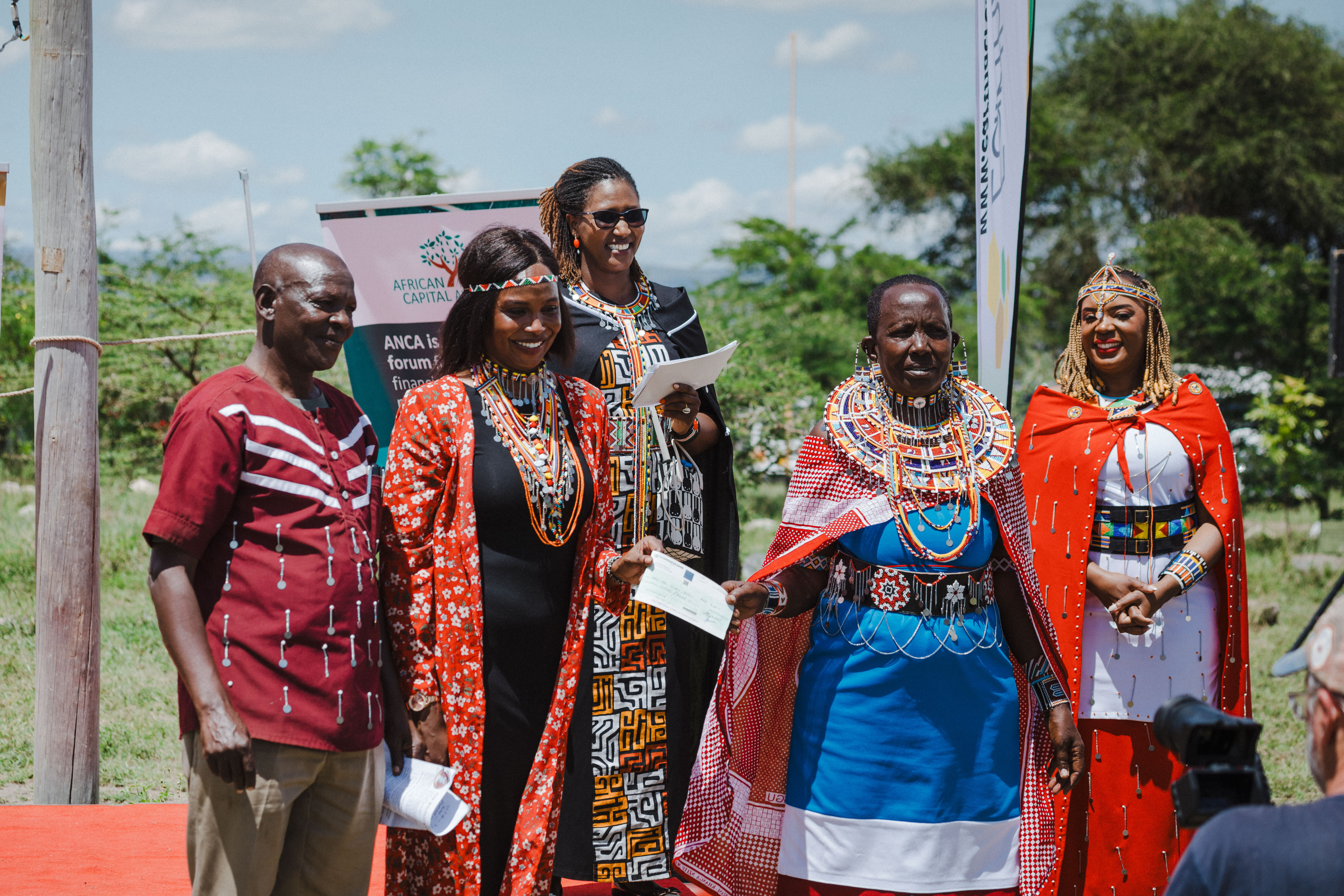
Communities describe it as “mbesa ya kaboni, mbesa ya biodavisiti (money for biodiversity, money for carbon).” For them, natural capital is not about commodification, but about connecting ancestral stewardship with modern finance to deliver livelihoods and security.
At the sovereign level, Gabon’s $500 million debt-for-nature swap, the first in Africa, demonstrated how structuring ecosystems as capital can unlock large-scale finance. As highlighted in the World Economic Forum’s Finance Solutions for Nature report, such mechanisms are no longer fringe experiments, but core tools for resilience.
Sovereign green bonds and blended-finance facilities across Africa prove the point: when nature is presented in the language of capital, doors open. Ecosystems stop being seen as costs to manage and start being valued as the assets that secure water, food and climate.
Yet some argue the term 'natural capital' should be abandoned, part of a broader backlash against sustainability buzzwords like net zero, carbon neutral, nature positive or circular economy. Critics warn that such phrases risk becoming clichés that dilute understanding or accountability.
Leaders, such as Marco Lambertini, counter that discarding them risks erasing the ambition they embody. The same applies here.
Africa at a crossroads: Meeting crisis with confidence
The challenge, therefore, is not the term, but how it is used. In Africa, natural capital can and should mean fairness, stewardship and resilience. It is not about selling nature to the highest bidder. It is about recognizing value, mobilizing capital and ensuring that those who protect ecosystems, often at personal and economic cost, are the ones who benefit.
So, moving past the semantic debate, what structural barriers do we need to solve?
- Limited access to finance and high transaction costs: These can make projects such as reforestation or watershed restoration appear too risky or early-stage.
- Gaps in technical and financial capacity: These prevent local actors from developing bankable projects that meet international standards.
- Underdeveloped pipelines: This means investors often claim there are “no viable projects,” while community-led initiatives remain invisible or unsupported.
- Fragmented data: This makes it difficult to assess, value and track natural assets with confidence.
Together, these barriers create a vicious cycle: innovators are underfunded, ecosystems degrade further and Africa’s natural wealth remains under-invested. Catalytic capital is urgently needed to break this cycle by de-risking early-stage projects, strengthening capacity and building robust pipelines that connect domestic wealth with nature-linked opportunities.
Survival not commodification
Africa does not have the privilege of theoretical disputes while its ecosystems and communities are under siege. Nature remains undervalued and under-financed and nowhere is this paradox sharper than in Africa, the fastest-growing continent. The task at hand now is to channel capital into protecting the natural assets that underpin the continent’s development and the planet’s stability. The solution lies not in renaming the rose, but ensuring its fragrance remains justice, protection and investment in those who keep nature alive. It is survival not commodification. And it is Africa’s best chance to seize this decisive moment.
The authors are Members of the World Economic Forum’s Global Future Council on Natural Capital, 2025-26. Click on this link to find out more about this and get involved.
Don't miss any update on this topic
Create a free account and access your personalized content collection with our latest publications and analyses.
License and Republishing
World Economic Forum articles may be republished in accordance with the Creative Commons Attribution-NonCommercial-NoDerivatives 4.0 International Public License, and in accordance with our Terms of Use.
The views expressed in this article are those of the author alone and not the World Economic Forum.
Stay up to date:
Africa
Related topics:


Forum Stories newsletter
Bringing you weekly curated insights and analysis on the global issues that matter.
More on Nature and BiodiversitySee all

Felipe Carazo and Lindsey Prowse
March 27, 2026