How the bioeconomy is impacting all 5 of our senses
Biotechnology is already shaking up a range of sectors including agriculture, medicine and construction. Image: Unsplash/ethan
- Biotechnology is increasingly woven into our everyday lives, while the bioeconomy is emerging as a viable way to tackle challenges like the climate crisis and food insecurity.
- From gene therapy that restores hearing to bioengineered plants and fabrics, biotech is already having a tangible impact on all five of our senses.
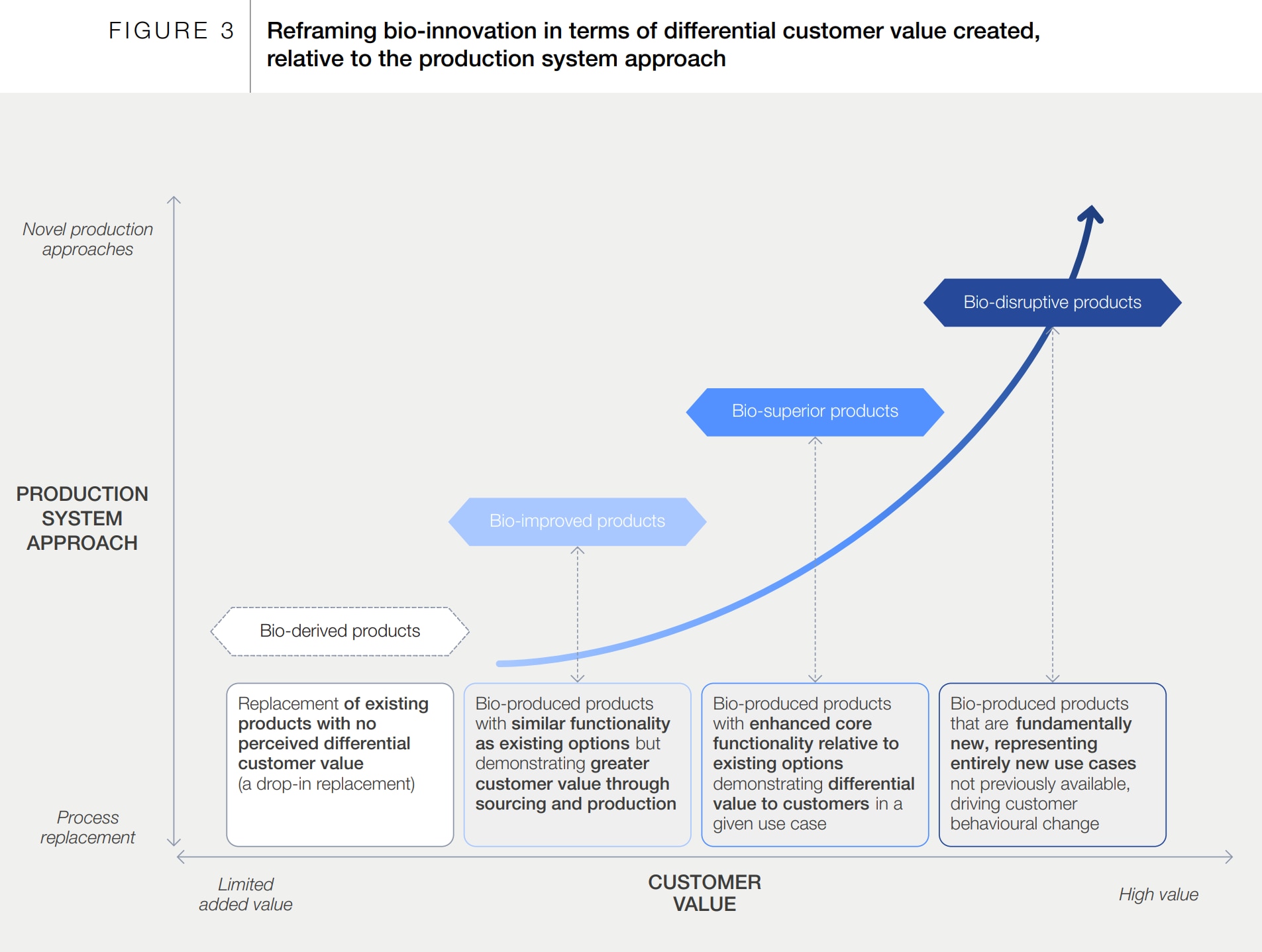
- Innovations in biotech also support a circular economy by creating sustainable products for cosmetics, food and medicine, according to the Forum’s Next Generation Bio-Innovation: Delivering Commercial Value report.
You may not know it, but biotechnology is already woven into the everyday experiences that shape how we sense the world around us. And as the world continues to pursue avenues to combat global challenges like the climate crisis and food insecurity, the bioeconomy is emerging as an ever-more viable option.
An economic system that combines renewable biological resources – like crops, forests, fish, animals and microorganisms – with innovative technologies like AI and machine learning, the bioeconomy aims to produce food, materials, energy, chemicals and other industrial goods in a more sustainable way.
It encompasses the production, trade, distribution, management and consumption of goods, processes, tools and services that arise from biological resources or biological transformation.
While this rapidly developing field holds immense promise, it also raises important questions about governance, ethics and ensuring equitable access that need to be carefully navigated.
By reducing our dependence on fossil fuels, minimizing waste and contributing to a circular economy, the bioeconomy has the potential to shape more sustainable ways of producing food, managing resources and protecting biodiversity. “The bioeconomy provides a unique opportunity where the physical, digital and biological worlds converge,” says the World Economic Forum’s report, Accelerating the tech-driven bioeconomy.
Biotechnology is shaking up agriculture, medicine and construction, for example, with pest-resistant crops, organ printing and bio-based building materials. And it is set to revolutionize more aspects of our lives. Biotech is not just for medicine and industry, it’s for daily life – and is already impacting all five of our senses. Here’s how.
Touch: Skincare and textiles
Hyaluronic acid (HA) is used in many skincare products as a non-chemical-based hydrating agent; in fact it’s so ubiquitous in the beauty industry, the global market for it is currently valued at over $11 billion. HA traditionally used to be extracted from rooster combs, but bio-producing it means that much HA now is “animal-component free, has lower production costs [and] reduced environmental pollution,” according to the Forum’s report, Next Generation Bio-Innovation: Delivering Commercial Value. This makes it both more scalable and sustainable – so even if supply chains are disrupted, consumers can still count on access to their favourite hydrating skincare, with eco-friendly options that support a reliable and responsible beauty industry.
Enzymit, in partnership with Cosun, recently became the world’s first company to produce HA at pilot-scale using an enzymatic, cell-free process. The majority of bioengineered HA is produced by fermenting bacteria. Enzymit's new technique bypasses the need for living cells altogether, meaning it is safer, sustainable and can be adjusted in size and quantity, depending on the needs of the end product. Enzymit says that “by combining AI-designed enzymes with a robust cell-free system, we’ve removed biological bottlenecks and proven that precision manufacturing of biomolecules is no longer limited by what cells can or can’t do.”
While no one has created a real-life Spider-Man yet, it seems the superhero’s spidery silk is within reach. A mascara for the cosmetics line, Haus Labs by Lady Gaga, uses a bioengineered polypeptide that creates a “web-like matrix” to add volume.
Bavarian company AMSilk has made a biomaterial that is said to be two and a half times stronger than steel, yet luxuriously soft. Their lab-grown silk proteins can be manufactured as super-fine yarn for the fashion industry, or sturdier material for the interiors of vehicles. What’s more, the yarns are either fully recyclable or biodegradable at lifecycle end, with zero microplastic pollution.
Danish fashion label GANNI has produced a bag made with a bacterial leather alternative, created by London biotech company Modern Synthesis. Made without harming animals and with no polluting plastics or chemicals, it could also generate lower emissions than animal leather.
Hearing: Gene therapy
For those people born profoundly deaf, the options have been implants, sign language and lip reading. Now, thanks to biotechnology, there is another route available. In 2024, a one-year-old girl in the UK had her hearing restored using pioneering gene therapy that repaired damaged hair cells. Since then, 11 more children with profound hearing loss have taken part in the trial by Regeneron Pharmaceuticals, with all but one experiencing improvement in their hearing at the 24-week mark.
“What I am hoping is that we can start to use gene therapy in young children ... where we actually restore the hearing and they don't have to have cochlear implants and other technologies that have to be replaced,” ear surgeon Professor Manohar Bance told BBC News.
Smell: Bioengineering scent
If sustainability had a scent, it might well be bioengineered patchouli. A popular plant for the base of fragrances, patchouli is currently overharvested, leading to deforestation (to make ever more plantations), soil degradation and, as a result, increased incidences of landslides and flooding.
Instead of harvesting patchouli to make these fragrances, a lab-grown version can elicit the same olfactory effect, reducing the environmental impact and also ensuring consistency. So successful is the process, DSM-Firmenich’s bioengineered sandalwood can be found in Jean Paul Gaultier and Rabanne scents.
More surprisingly, fatbergs – the build-up of mainly cooking oils that clog sewers – are being recycled into perfume. It’s a complex process by which bacteria are added to a sterilized specimen of fatberg that then proceeds to eat it, producing a chemical with a pine-like smell, the BBC reports.
Sight: Vision restoration and natural dyes
Blindness could become a thing of the past if current technological breakthroughs are anything to go by. Regenerative cell therapies are providing a third option for people facing a choice between invasive surgery and not being able to see.
Labs are producing bioengineered corneas from collagen, offering the potential of a safe, affordable alternative to human donors. This is something Next Big Innovation Labs is developing in India, using its TRIVIMA bioprinting platform.
Vibrant colours play a key role in the attractiveness of both food and clothing. Traditionally, adding synthetic colouring to either product impacts the environment at some point during the lifecycle process. Now, natural food dyes and bio-based clothes dyes are offering more sustainable alternatives.
And in the plant world, nighttime can now be lit up by firefly petunias – genetically engineered plants from US company, Light Bio, which incorporate genes from a bioluminescent mushroom to create flowers that glow green in the dark.
Taste: Bio-based meals
While plant-based food is nothing new, biotechnology is taking it to the next level – reshaping food, making it healthier, tastier, as well as longer-lasting.
To tackle food waste, Bota Bio has developed natural shelf-life extenders. Using cane sugar or glucose as a base, antimicrobial compounds are produced that can prevent food from deteriorating – meaning that we can enjoy chemical-free, fresh food for longer periods of time. Teaming up with Helia, their biotechnology techniques can also enhance flavour and texture.
Another company, String Bio, uses methane – a major contributor to global warming – as a basis for producing alternative protein products which can then be turned into food for animals, plants and humans. Some of the methane String Bio collects is from food waste, so the process is also contributing to the circular economy.
Whether we know it or not, biotech is no longer hiding in labs; it’s shaping the way we smell, see, taste, touch and even hear the world around us. From fragrances generated by microbes to glowing plants, and from bioengineered silk to vision restoration, these breakthroughs demonstrate how and why the bioeconomy is rapidly growing.
By leveraging the power of biotechnology and embracing the principles of a circular economy, these innovations are not only enhancing our sensory experiences, but are also paving the way for a more resilient and sustainable future for all of us.
Don't miss any update on this topic
Create a free account and access your personalized content collection with our latest publications and analyses.
License and Republishing
World Economic Forum articles may be republished in accordance with the Creative Commons Attribution-NonCommercial-NoDerivatives 4.0 International Public License, and in accordance with our Terms of Use.
The views expressed in this article are those of the author alone and not the World Economic Forum.
Stay up to date:
Biotechnology


Forum Stories newsletter
Bringing you weekly curated insights and analysis on the global issues that matter.
More on Nature and BiodiversitySee all

Adriana Mata and Judith Ketelslegers
April 9, 2026


