Climate adaptation finance 'running on empty', and other climate and nature news

Climate-vulnerable countries like Tuvalu are in great need of climate adaptation finance. Image: REUTERS/Kirsty Needham
- This round-up contains the key nature and climate news from the past fortnight.
- Top nature and climate news: $310 billion annual climate adaptation finance gap; First half of 2025 costliest on record for US on climate; 64 countries submit their Nationally Determined Contributions.
1. Serious gaps in climate adaptation finance, UNEP says
'The world is gearing up for climate resilience – without the money to get there', a report from the United Nations Environment Programme (UNEP) has found.
UNEP estimates that developing countries will need between $310-365 billion per year for adaptation between now and 2035 to prepare for the impacts of climate change.
Yet in 2023, developed nations provided just under $26 billion in adaptation finance, as the chart below illustrates. "Even amid tight budgets and competing priorities, the reality is simple: if we do not invest in adaptation now, we will face escalating costs every year," said Inger Andersen, Executive Director of UNEP.
The report sets a clear message ahead of the UN climate change conference, COP30, later this month: we need a global push to increase adaptation finance from both public and private sources.
Ahead of the conference, Brazil's COP30 summit president Andre Correa do Lago told Reuters in an interview that he aims to create a "package of resources" to address this financing gap during the summit: "Some will come from rich countries, some come from philanthropy, and above all, the attention of multilateral development banks for adaptation," he said.
2. First half of 2025 costliest on record for US climate disasters
The US has experienced its most costly first half of the year on record for major climate disasters, a study from Climate Central has found.
During the first six months of 2025, there were 14 separate billion-dollar weather and climate disasters in the US, costing $101.4 billion in total.
As the chart below shows, with 14 events already this year, 2025 is well above the long-term annual average of nine billion-dollar events per year.
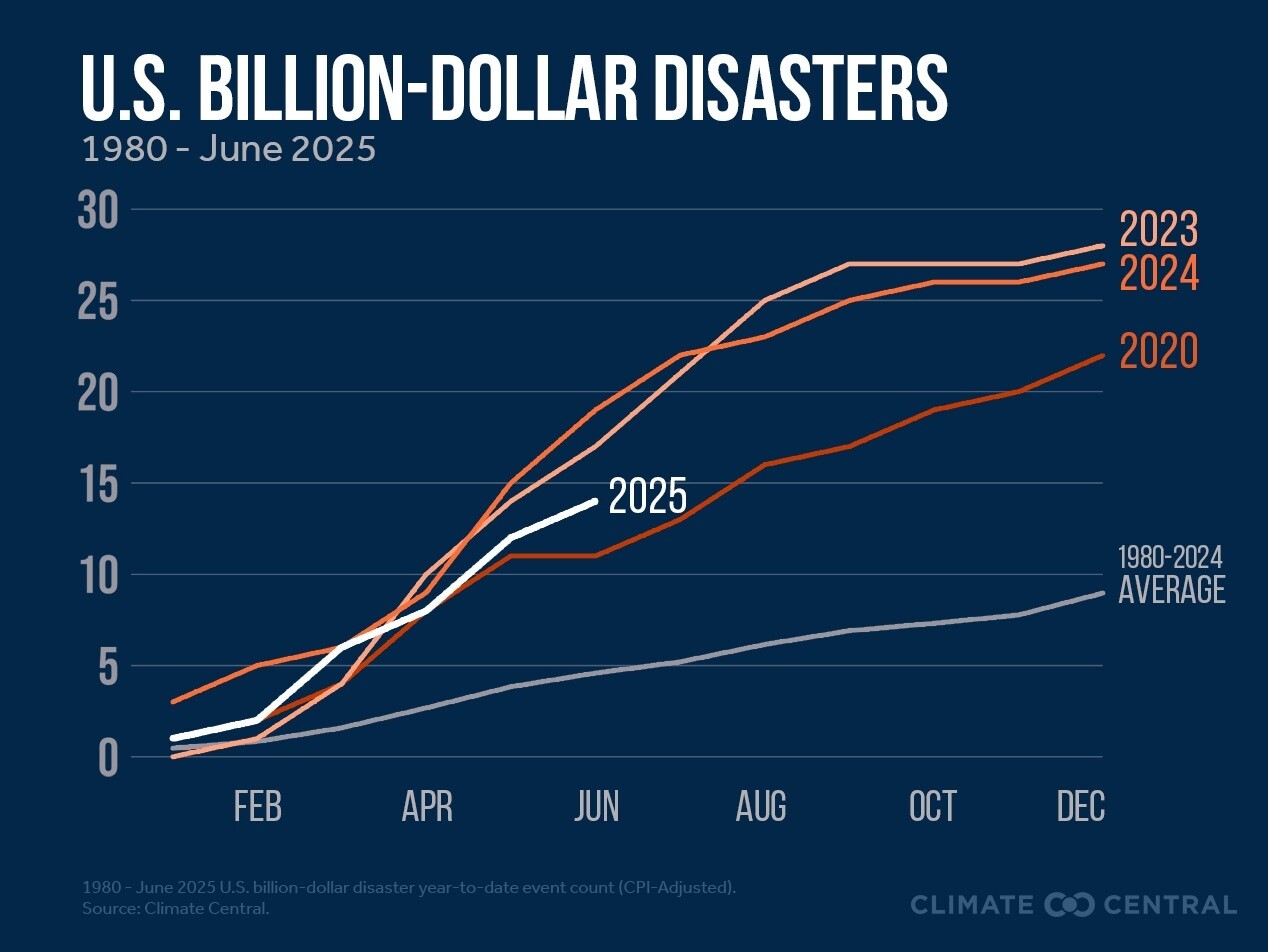
The costliest event so far this year has been the Los Angeles wildfires back in January, which exceeded $60 billion. This was also the costliest US wildfire event to date, and makes it the only top-10 event for the nation that wasn't a hurricane.
3. News in brief: Other top nature and climate stories
Nationally Determined Contributions (NDCs): By 2025, countries were required to submit their third generation of NDCs, representing their most ambitious climate pledges yet. Despite this, only 64 countries have submitted their plans to cut carbon ahead of COP30. The UN Framework Convention on Climate Change's latest synthesis report stated that "major acceleration is still needed in terms of delivering faster and deeper emission reductions and ensuring that the vast benefits of strong climate action reach all countries and peoples".
The threat of rising heat: Higher temperatures have led to a 63% increase in heat-related deaths since the 1990s, with an estimated 546,000 average annual deaths from 2012 to 2021, meaning one person every minute dies from extreme heat, according to the 2025 edition of the Lancet Countdown on Health and Climate Change.
$6 billion Jordan water project: The world's largest multilateral climate fund has confirmed its largest financial commitment ever, helping to build a $6 billion water desalination project in Jordan. The project will 'desalinate 300 million cubic metres of water annually, covering about 40% of municipal needs by 2030 and 45% by 2040'.
EU eases deforestation law: The European Commission has proposed a further softening of the deforestation reporting burdens for many smallholders. However, it has rescinded its decision to delay the implementation of the law by another year, instead opting to come into effect on 30 December, 2025.
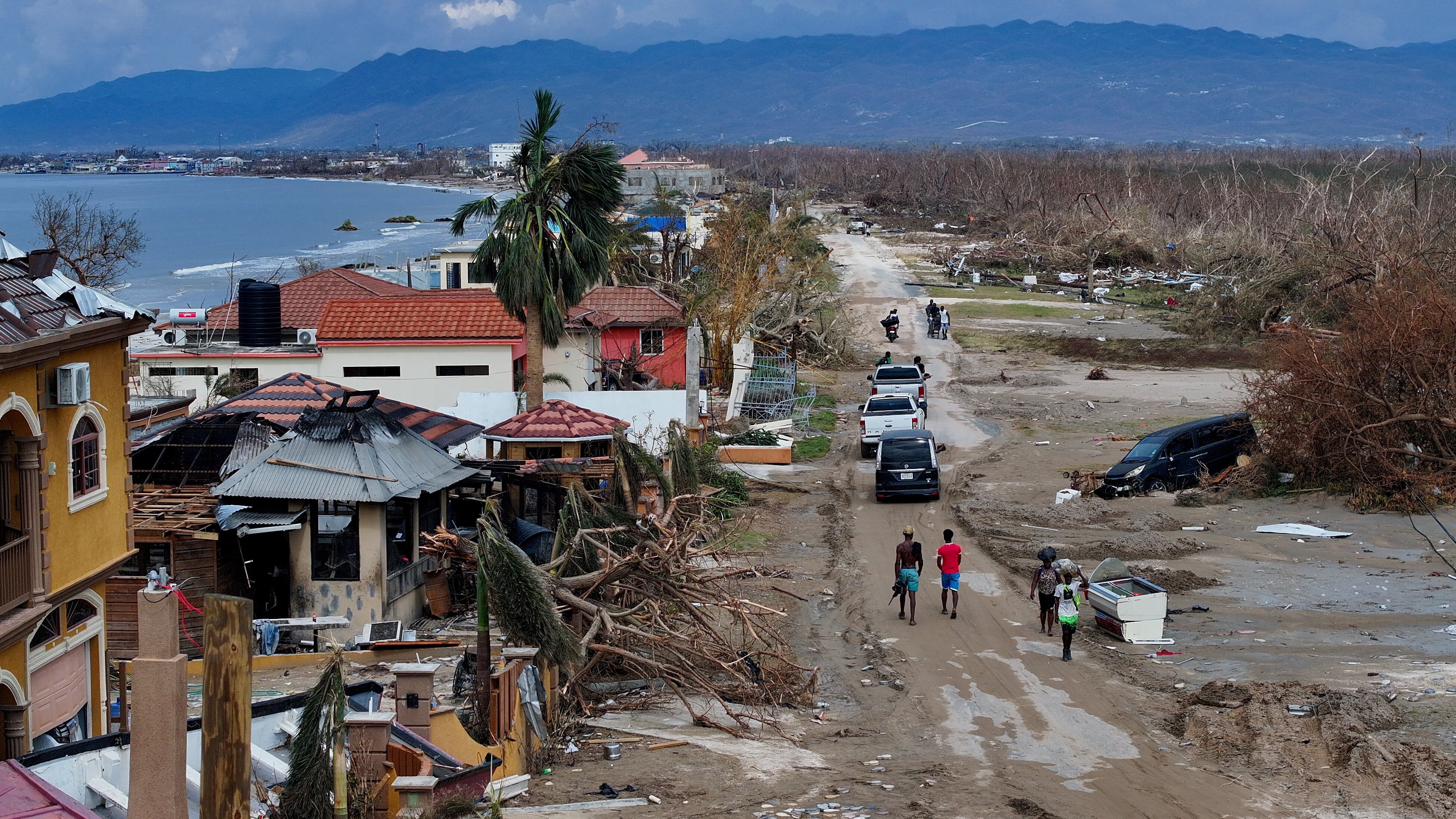
Hurricane Melissa: The Category 5 hurricane tore through much of the northern Caribbean last week, leaving hundreds of thousands without power and damaging other critical infrastructure and causing significant loss of life.
4. More on the nature and climate crisis from Forum Stories
COP30 in Brazil: What is at stake? COP30 is the next meeting of the group of 198 Parties that have signed the UN Framework Convention on Climate Change, taking place in Belém, Brazil, between 10-21 November. Among the main items on the agenda are countries' NDCs, financing adaptation and nature, and food systems transformation. Our handy explainer dives into what to know about the UN Climate Summit and what it hopes to achieve this year.
Is climate scepticism really on the rise? For many of us, it might feel like climate denial is getting louder online, but Texas Tech professor Katharine Hayhoe says that polling data shows that most people now recognize the climate is changing. Watch the video below to hear what she has to say:
Why 'nature positive' is the only sustainable way forward: The rate at which governments and businesses are destroying the environment is unsustainable. We all rely on nature to survive, yet we're degrading it faster than we're restoring it. In this episode of Radio Davos, nature conservationist Marco Lambertini puts the case for going 'nature positive' – getting companies and countries to account for their impact on nature and find ways to conserve and restore more than they destroy. Listen to the full episode below.
License and Republishing
World Economic Forum articles may be republished in accordance with the Creative Commons Attribution-NonCommercial-NoDerivatives 4.0 International Public License, and in accordance with our Terms of Use.
The views expressed in this article are those of the author alone and not the World Economic Forum.
Related topics:

Forum Stories newsletter
Bringing you weekly curated insights and analysis on the global issues that matter.
More on Climate Action and Waste Reduction See all

Lin O’Grady and Alice Charles
April 7, 2026


