COP30: How the bioeconomy helps people, planet and profit to exist in harmony
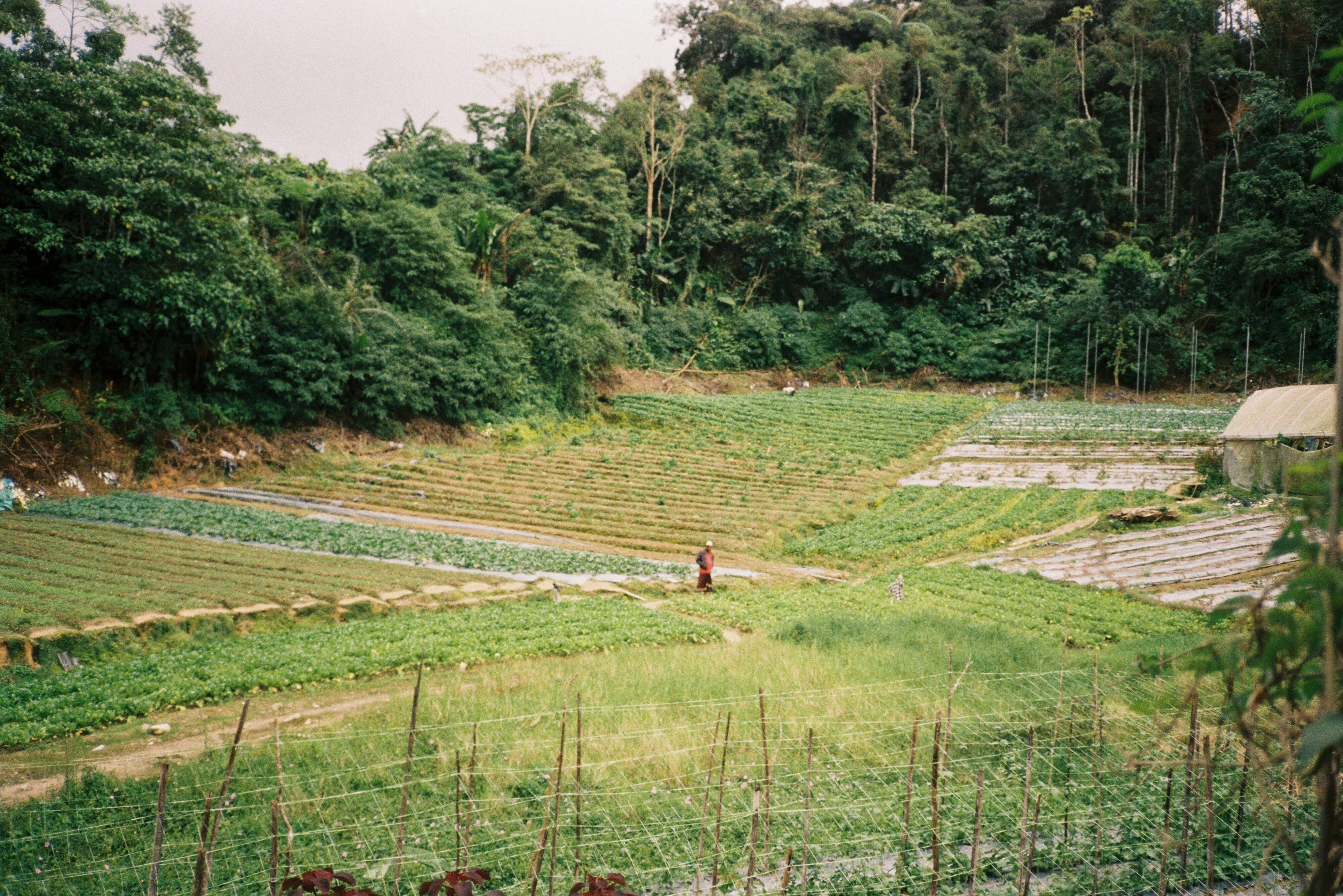
At COP30 in Belém, Brazil, participants will discuss five dimensions of the bioeconomy, including agriculture, forests and biotechnology. Image: Unsplash/CeceliaChang
- A sustainable bioeconomy uses natural resources in a regenerative way that's mindful of justice and ethics, and contributes to a nature-positive future.
- COP30 in Belém, Brazil will address five bioeconomy issues: forests, agriculture, social bioeconomy, biotechnology and finance.
- The private sector can support the bioeconomy by speeding up efforts to cut its negative impacts and improve its positive footprint on nature.
The development of a sustainable, circular and nature-positive bioeconomy is high on the agenda for the Brazilian government as it prepares to host COP30 in the Amazon from 10-21 November 2025.
In this piece about the bioeconomy and its importance to discussions during the event, the COP30 Special Envoy for Bioeconomy Marcelo Behar speaks to Marco Lambertini, Convener of the Nature Positive Initiative, which represents conservation organizations, businesses and finance coalitions in support of their long-term efforts to deliver nature-positive outcomes.
Here’s what they had to say about what the bioeconomy means to them and how to ensure the concept is promoted in ways that benefit nature, social justice and the effort to tackle the climate crisis.
Defining the bioeconomy
Marco Lambertini: So, Marcelo, what do you understand by the word "bioeconomy"?
Marcelo Behar: The Brazilian government describes it as a model of productive and economic development that uses natural resources in a sustainable, regenerative and conservationist manner, and which is based on justice, ethics and inclusion. Of course, the etymology of economy is “house rules” and “bio” means “of life” – perhaps that is the easiest way to understand it.
A sustainable bioeconomy is one where humankind follows rules to allow people to live and produce the things we need in ways that take nature into consideration, that work with and respect traditional communities, that are less resource-intensive and that are, as much as possible, circular.
Marco Lambertini: From where has the concept emerged?
Marcelo Behar: The EU has had a bioeconomy strategy since 2012 and there have been discussions in the Global South about developing a social bioeconomy – which also emphasizes social justice, inclusion and equity – for at least 20 years.
But the concept has been given a boost by Brazil’s decision to make the bioeconomy a priority for COP30, as well as agreement among the G20 on 10 high-level principles to guide the development of the bioeconomy.
Of particular note is Principle 5, which calls for sustainable consumption and production, the efficient and circular use of biological resources, and the restoration and regeneration of degraded areas and ecosystems.
This principle connects the three UN environmental conventions – on desertification, biodiversity and climate – in a common goal, namely to develop a global economy that no longer requires the emissions of 42 gigatonnes of carbon dioxide and the destruction of 10 million hectares of forests every year. That is what the bioeconomy is aiming for.
Tackling climate change
Marco Lambertini: What is the role of the bioeconomy in addressing climate change?
Marcelo Behar: The bioeconomy is the connector between how to decarbonize and tackle the crisis in nature at the same time. By helping to conserve nature, a sustainable bioeconomy will slow climate change. And nature is the biggest facilitator to bring down carbon emissions.
Marco Lambertini: Yes, and I would add that, by adopting nature-positive practices and delivering nature-positive outcomes, the nature-positive bioeconomy will halt and reverse the destruction of nature, contributing substantially to stabilizing the climate.
Today, natural ecosystems absorb more than half of the CO2 emissions we emit annually to the atmosphere. By conserving existing nature and restoring what we have degraded, we will deliver a world with more nature than there was previously.
The protection and regeneration of land, freshwater and marine ecosystems will increase nature’s ability to absorb carbon. Soil is also a massive carbon sequestration ecosystem. Even soil that is used productively for agriculture can be managed in such a way as to absorb and retain much more carbon than it does today.
Marco Lambertini: How does a sustainable bioeconomy help deliver social justice?
Marcelo Behar: It’s key. The 10 Principles explicitly call for the bioeconomy to contribute to “the fair and equitable sharing of benefits” of genetic resources and traditional knowledge. There is an element of just transition here, to allow the Indigenous populations that are already protecting the nature-rich areas that contain 80% of the Earth’s biodiversity to be fairly recognized and rewarded.
We need to move from the paradigm of commoditizing everything and bringing prices down as low as possible. People should be willing to pay a little more to expand their diets to incorporate the vitamins, flavours and ingredients that nature provides. The bioeconomy can connect the dots and make a more respectful contract with traditional communities on the one side and more conscious consumers on the other.
Marco Lambertini: I fully agree. The fundamental principle here is that, if we degrade and destabilize nature, we as humans lose, and the most vulnerable in the world will lose first and lose most. The only way to build a people-positive future is to prioritize a nature-positive future – which includes creating a bioeconomy inspired by sustainability principles and nature-positive practices.
The bioeconomy at COP30
Marco Lambertini: How can COP30 promote a sustainable bioeconomy?
Marcelo Behar: COP30 aims to address five dimensions of the bioeconomy.
On forests, the planned Tropical Forests Forever Facility aims to mobilize $125 billion to conserve standing forests. And we are creating the Earth Investment Engine to build a pipeline of investible bioeconomy opportunities.
In agriculture, we are working to harness carbon markets to support more sustainable agriculture, and we have a plan for integrating crops, cattle and forests.
Building on your point about a people-positive future, we have numerous initiatives planned to promote the social bioeconomy, particularly to dramatically expand our work with traditional communities.
For biotechnology, Brazil’s International Chamber of Commerce has published a report showing how the bioeconomy could generate $100-140 billion for the country. We’ll present the ways that this can be accomplished during COP30.
Finally, for finance, there are many discussions ongoing, but the frameworks that you and the Nature Positive Initiative are helping to develop with other institutions and thinkers will begin to create the connectivity between investment, climate and nature. Those are my hopes for COP30.
Marco Lambertini: Absolutely, and building on this, the key thing I would like to see from COP30 is for the private sector to step up. Its awareness of the material risks we face from nature destabilization has greatly increased, but the transition is not moving fast enough. Companies need to take much more decisive action by supporting and lobbying for political leadership.
Brazil gives a lot of emphasis to the interconnectedness of climate and nature as a fundamental issue for society and economy. Companies and financial institutions need to embrace strategies and mitigation actions that reduce their negative impacts and massively improve their positive footprint on nature and climate, and on a very aggressive timeline.
Change is inevitable. We either embrace it and drive it, or it’s inflicted upon us by nature herself. The future can be bright. We can build a prosperous, just and safe future for us and our children. The choice is ours.
A longer version of this discussion has been published by the Nature Positive Initiative.
Don't miss any update on this topic
Create a free account and access your personalized content collection with our latest publications and analyses.
License and Republishing
World Economic Forum articles may be republished in accordance with the Creative Commons Attribution-NonCommercial-NoDerivatives 4.0 International Public License, and in accordance with our Terms of Use.
The views expressed in this article are those of the author alone and not the World Economic Forum.
Stay up to date:
Circular Economy
Related topics:


Forum Stories newsletter
Bringing you weekly curated insights and analysis on the global issues that matter.
More on Circular EconomySee all

Pedro Gomez, Hernan J.F. Saenz and III
March 12, 2026


