Final week of COP30 talks, and other climate and nature news
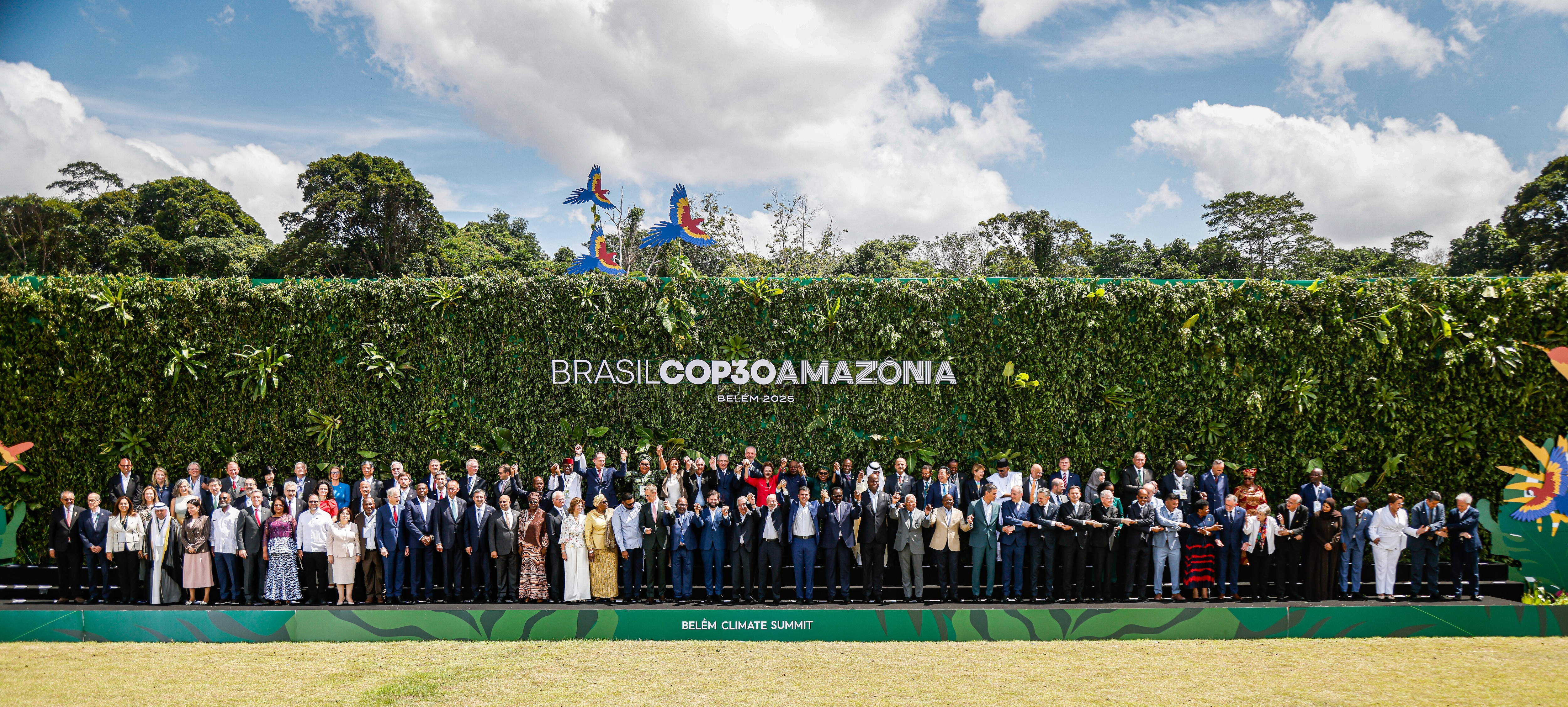
Here's what happened in the first week of COP30 talks. Image: Hermes Caruzo/COP30
- This round-up contains the key nature and climate news from the past fortnight.
- Top nature and climate news: The final week of COP30 talks commence; Fossil fuel emissions set to rise in 2025; Prince William announces 2025 Earthshot Prize Winners.
1. Final week of COP30 talks begins
The final week of the United Nations' (UN) Climate Change Conference, COP30, is underway. The gathering of Parties to the UN Framework Convention on Climate Change is taking place in Belém from 10-21 November, with most signatories represented.
As the last stretch of negotiations begins, here’s a look at what the first week delivered:
- A sense of togetherness: The UN's Climate Change Executive Secretary, Simon Stiell, told delegates: "In this arena of COP30, your job here is not to fight one another – your job here is to fight this climate crisis, together."
- Defeating climate deniers: "It is time to face reality," warned Brazil's President Luiz Inácio Lula da Silva in his opening address, who called on delegates to fight fake news and climate denialism. "COP30 must be the COP of truth. It is time to take the scientific warnings seriously," he warned.
- Combatting climate disinformation: Ten countries have endorsed the 'Declaration on Information Integrity on Climate Change', which commits the signatories to addressing climate disinformation and promoting accurate, evidence-based information on climate issues.
- Emphasis on digital tools: The Green Digital Action Hub and AI Climate Institute launched, empowering developing nations with tools and data to design their own climate solutions.
- Financing for forests: The Tropical Forest Forever Facility was announced to protect tropical forests, along with pledges supporting Indigenous Peoples, local communities and land rights.
- Health in a changing climate: The Belém Health Action Plan received 80 endorsements from 30 countries and 50 partners among civil society and IGOs so far, marking "a milestone in making adaptation of the health sector a priority through a roadmap for countries to build resilient health systems and accelerate global cooperation". So far, $300 million has been pledged to the initiative.
To learn more about the priorities for this final week of talks about COP30, explore some of our other content across Forum Stories below.


2. Fossil fuel emissions to rise again in 2025
Global carbon emissions from fossil fuels are projected to rise by 1.1% in 2025 – reaching a record high, according to new research by the Global Carbon Project.
Emissions from fossil fuels and cement are forecast to increase to 38.1 billion tonnes of CO2 in 2025, as the chart below shows.
Despite this increase, total emissions from all human activities in 2025 are expected to reach 42.2 billion tonnes of CO2, which is marginally down from the 42.4 billion society produced last year, as changes in renewables and deforestation have helped to bring total emissions down.
3. News in brief: Other top nature and climate stories
Earthshot Prize 2025 winners: Prince William announced the sixth annual winners of his environmental awards, who each receive £1 million to fund their endeavours. Winning projects included forest restoration in Brazil, clean air initiatives in Bogotá, an international ocean treaty, sustainable fashion in Lagos and community climate support in Bangladesh.
European Union backs 2040 climate target: The EU has approved a plan to cut greenhouse gas emissions by 90% by 2040, with 5% of these cuts potentially coming from abroad via carbon credits. How individual countries will meet the target has not yet been decided, and the bloc has promised strict standards for carbon credits to ensure their effectiveness.
Johan Rockström underscores why CO2 removal is vital: 10 billion tonnes must be captured from the atmosphere each year to avoid crossing catastrophic tipping points, the climate scientist warns. We recently spoke with Rockström, who shared three strategies to help keep global warming within 1.5°C in the video below.
Iran's water crisis: The nation is facing its worst water crisis in decades, with Tehran’s reservoirs at half capacity and officials warning the capital could soon become uninhabitable without rain. With 10% of the country's dams almost dry, citizens are urged to install storage tanks as emergency measures, while officials appeal for rainfall and promise stricter conservation policies.
Puffins make a return: The vulnerable seabirds have returned to the Isle of Muck, just off the coast of Northern Ireland, for the first time in 25 years after a successful project removed invasive brown rats. While puffins remain red-listed and vulnerable, hopes are high that the first chicks will hatch on the island next summer.
4. More on the nature and climate crisis from Forum Stories
Making the green transition work for people and economies: As society moves towards greater sustainability, the shift can be more effective when the needs of people and individual economies are taken into account, according to a new report published by the World Economic Forum and McKinsey & Company. Making the Green Transition Work for People and the Economy, outlines strategies to address these changing needs amid geopolitical disruption, persistent inflation and inequality. Read more about it in this article, or by watching the video below.
Lessons in sustainable agriculture: Can farming be productive and profitable, but without damaging nature and adding to greenhouse gases? This Brazilian entrepreneur, interviewed for Radio Davos, says so. In an episode co-hosted with the Forum's Tropical Forest Alliance, learn what lessons agricultural activity in the Amazon has for the rest of the world.
License and Republishing
World Economic Forum articles may be republished in accordance with the Creative Commons Attribution-NonCommercial-NoDerivatives 4.0 International Public License, and in accordance with our Terms of Use.
The views expressed in this article are those of the author alone and not the World Economic Forum.
Related topics:

Forum Stories newsletter
Bringing you weekly curated insights and analysis on the global issues that matter.
More on Climate Action and Waste Reduction See all

Shantanu Srivastava and Tanya Rana
March 5, 2026


