What green logistics innovation in emerging markets can teach us
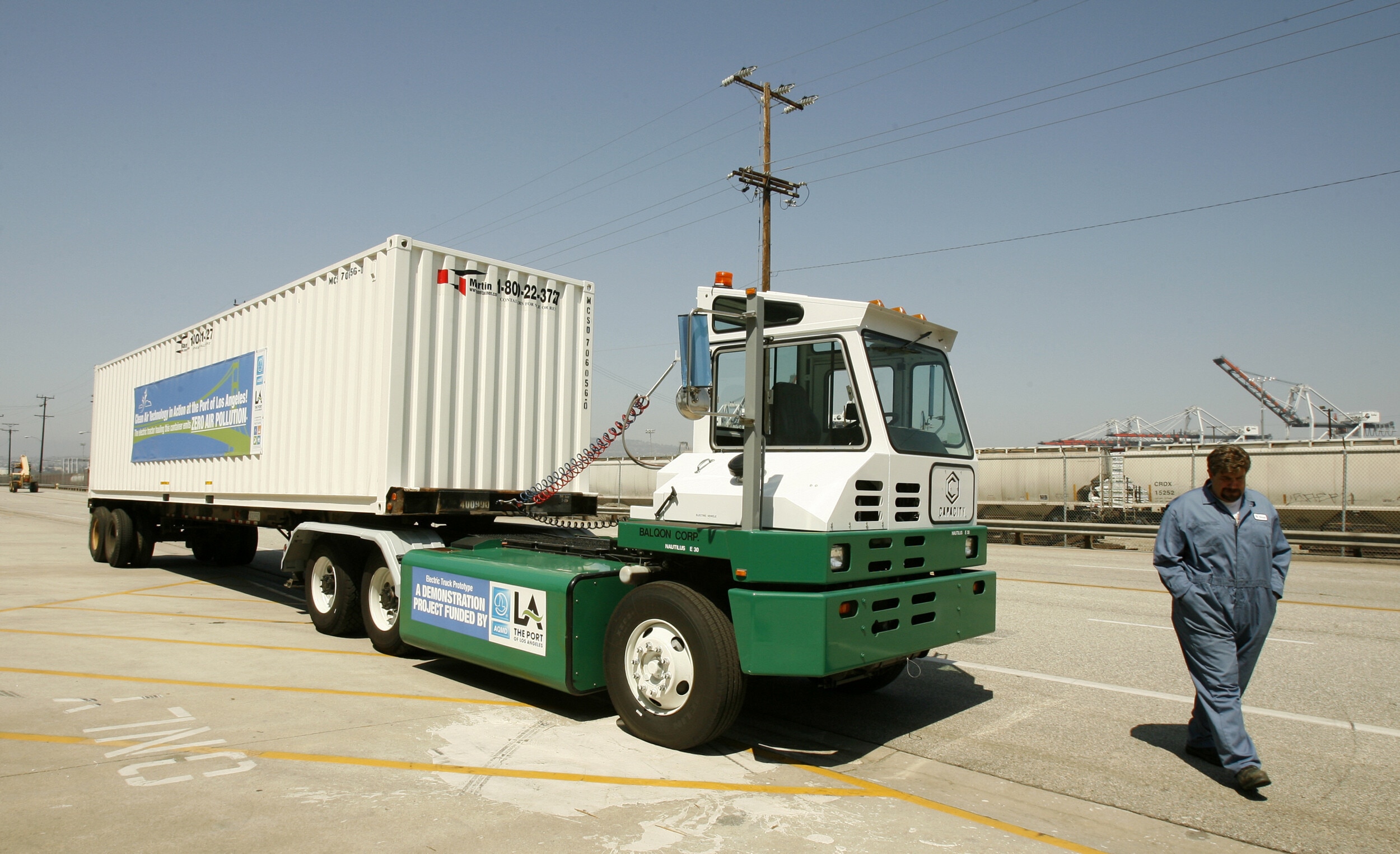
Green logistics can advance commerce and the decarbonization agenda. Image: REUTERS/Mario Anzuoni
Wee Kean Fong
Head of Nature and Climate, Content and Programming, Greater China, World Economic Forum- The green logistics market offers a strategic pathway that can support global trade while reducing greenhouse gas emissions.
- Examples from emerging markets across the value chain offer lessons on the feasibility and economic viability of green logistics.
- A new report outlines the opportunities and challenges presented by green logistics innovations and offers a blueprint towards scalable solutions.
The logistics sector sits at the heart of global commerce, projected to be an $8 trillion powerhouse by 2028. It moves the world’s goods and supports 10% of global jobs, yet also fuels up to 11% of greenhouse gas emissions. While maritime shipping still carries more than 60% of global freight, the tides are shifting.
Rapid e-commerce growth and reshaped supply chains are propelling road and rail freight forward, with demand expected to more than double and grow 2.7 times by 2050.
Shifting trade patterns, climate urgency and digitalization now bring the sector to a critical inflection point, with significant challenges looming, including infrastructure gaps, decarbonization demands and cost pressures. These underscore the urgent need for more sustainable and resilient solutions.
Green logistics has emerged as a compelling way forward, leveraging innovative technologies and business models to enhance efficiency, reduce emissions and align with changing regulatory and societal expectations.
Emerging markets show the way
Emerging markets and developing economies, at various stages of maturity, are making notable progress and offering valuable lessons that demonstrate green logistics as a feasible and economically viable option.
The insight report, Green Logistics Innovation for Emerging Markets: Driving Competitiveness and Shared Value, takes a cross-cutting perspective on the logistics ecosystem, bringing to light a holistic spectrum of green opportunities.
No single actor can scale green logistics on their own.
”By adopting a full value-chain lens, the report maps out key opportunities and collaborative action points needed to unlock scalable impact. It also draws on practical learnings and best practices from industry leaders, translating real-world experience into actions for stakeholders who are driving the transition.
The report looked at industry practices across emerging markets and identified 15 technology and business model innovations across four key themes to drive transformation:
- Green fuel production and use.
- Green vehicle and propulsion manufacturing and adoption.
- Green infrastructure construction.
- Digital and green operational enhancement.
In combination, these levers can unlock system-wide decarbonization and efficiency.
While six industry cases in the report illustrate practical pathways for innovation, their broader adoption and scaling depend on overcoming key systemic barriers:
- Fragmented policy and regulation add uncertainty to an already unpredictable investment landscape. The lack of clear, stable and harmonized frameworks, especially for cross-border logistics, discourages long-term commitment. Meanwhile, inconsistent incentives and the lack of unified standards limit the scalable adoption of green technologies and innovation.
- There are limited financial resources to cover high upfront and operational costs, compounded by a shortage of skilled technicians, engineers and data analysts. The “green premium” associated with advanced technologies, such as hydrogen systems and automated infrastructure, deters investors.
- A lack of ecosystem-wide alignment and persistent data fragmentation impede coordinated progress. Disconnected collaboration across the value chain results in interoperability gaps, inefficient resource allocation and inconsistent technology adoption. Limited data integration restricts supply chain visibility, performance benchmarking and systemic optimization.
Without tackling these barriers, innovations stay limited to pilot projects.
Blueprint to scale green logistics transformation
To address these barriers, the report offers a coherent and practical playbook, underpinned by the need for coordination.
1. Build an integrated policy and regulatory framework
Turn national strategies into sector-specific roadmaps with aligned policies and standards. Use targeted incentives, such as tax benefits and green procurement, to lower barriers, de-risk investment and ensure long-term stability and cross-sector consistency for a coherent, synchronized transition across the value chain.
In addition, cross-regional and inter-departmental coordination reinforces consistency, while innovation sandboxes, such as pilot zones, provide a platform to test new technologies and business models, informing adaptive policies.
Policies can also ensure technology neutrality, supporting a diverse range of mature, feasible and affordable solutions tailored to local contexts.
2. Mobilize green finance
Public actors are pivotal in bridging financing gaps for logistics decarbonization in emerging markets, absorbing risks that deter private capital.
Supporting early-stage innovations, such as hydrogen freight and artificial intelligence logistics solutions, through grants, state-backed venture funding and concessions helps overcome the “valley of death” – the critical stage where many technologies stall between pilot and commercialization.
Blended finance mechanisms can scale proven solutions and empower micro-, small- and medium-sized enterprises, while public-private partnerships address infrastructure gaps in charging networks and green logistics zones.
Climate-aligned investment further drives long-term value, de-risking operations and supporting the transition to resilient, low-emission logistics systems. Integrating these tools is key to unlocking scalable, future-ready solutions.
3. Upskill the workforce
A green logistics transition requires a skilled, motivated workforce equipped with the knowledge to thrive in low-carbon, digital logistics environments.
Cross-sector, contextualized programmes, co-designed by governments, industry and vocational institutions and supported by digital tools, can equip frontline staff and future professionals with the expertise to drive system-wide transformation.
Equally important is fostering green behaviours through incentives, such as performance bonuses, to embed sustainability into decision-making. Linking individual actions to measurable sustainability goals further builds a shared sense of ownership and accountability.
4. Cultivate ecosystem collaboration
Logistics decarbonization in emerging markets needs cross-value-chain collaboration to overcome systemic fragmentation. Governments provide direction, regulatory frameworks and testbeds that enable scale.
Leading industry pioneers can orchestrate partnerships, align stakeholders and champion common standards, shared infrastructure and joint investments. Together, these efforts synchronize technology deployment, foster data sharing and de-risk innovation, turning collaboration into a catalyst for resilience, efficiency and sustainable growth.
A global agenda for green logistics
No single actor can scale green logistics on their own. It demands coordinated action across the entire value chain by governments, industry, finance, academia and civil society that must:
- Governments: Establish coherent regulations, mobilize capital through incentives, nurture industry development and encourage global collaboration.
- Industry: Engage in multistakeholder dialogue, upskill workforces and scale solutions through alliances and public-private partnerships.
- Shippers and cargo owners: Secure long-term agreements and aggregate demand to reduce risk.
- Financial institutions: Expand blended financing to unlock large-scale investment.
- Academia and civil society: Build talent pipelines, translate research into application and provide knowledge support.
Together, these actors form a shared agenda. The window for pilots is closing and the moment for scaling green logistics is now.
Explore the full insight paper for a detailed analysis of 15 innovation levers and dive into six industry case studies and a four-step blueprint.
Don't miss any update on this topic
Create a free account and access your personalized content collection with our latest publications and analyses.
License and Republishing
World Economic Forum articles may be republished in accordance with the Creative Commons Attribution-NonCommercial-NoDerivatives 4.0 International Public License, and in accordance with our Terms of Use.
The views expressed in this article are those of the author alone and not the World Economic Forum.
Stay up to date:
Transport
Related topics:


Forum Stories newsletter
Bringing you weekly curated insights and analysis on the global issues that matter.
More on Climate Action and Waste Reduction See all

Laetitia Gardé and Marc Delobelle
February 26, 2026


