How Japan is redesigning mobility for its changing society
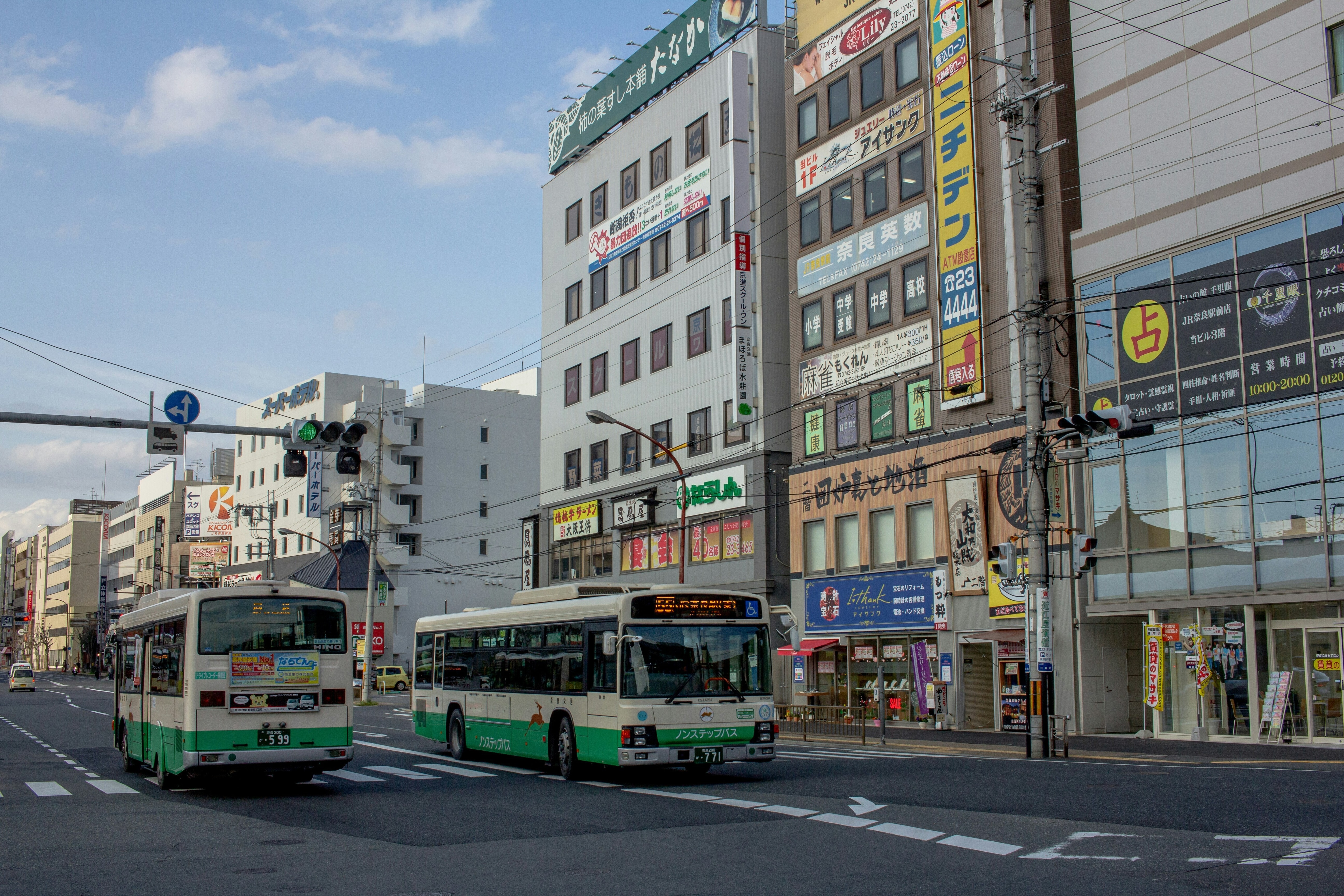
Ensuring the continuity of essential public services like transportation has become a more pressing issue in Japan. Image: Unsplash/Michael Pfister
- Ensuring the continuity of essential public services like transportation has become an increasingly pressing issue in Japan.
- Over 20% of the population lives more than 500 meters from a train station and more than 300 meters from a bus stop.
- Both government and industry stakeholders in Japan are working to redesign transportation services, while leveraging digital technologies.
As populations age and shrink, ensuring the continuity of essential public services has become an increasingly pressing issue. In Japan, where depopulation in rural areas and population ageing continue to accelerate, labour shortages have become a critical challenge for maintaining regional transportation services.
One example is the emergence of “transportation deserts,” where residents lack access to public transportation within a reasonable distance from their homes. According to a survey, 20.7% of the population lives more than 500 meters from a train station and more than 300 meters from a bus stop. In some rural areas, taxi operators have withdrawn entirely, limiting mobility for the elderly, who make up nearly 30% of the population, as well as for those who do not own a car. This has further constrained access to essential goods, services and opportunities.
Transportation operators themselves also face multiple, intersecting pressures, including workforce shortages and deteriorating financial conditions. A nationwide survey of bus, rail, and passenger ship operators found that 55% reported difficulty sustaining their current routes, rising to nearly 70% among bus operators. More than 90% of bus operators and roughly 60% of rail operators reported declines in number of staff since 2019, and 40% expressed strong concern about the need for systemic reforms.
In response, both government and industry stakeholders in Japan are working to redesign transportation services, and leveraging digital technologies to improve efficiency and sustainability.
Government-led initiatives
In July 2024, the Ministry of Land, Infrastructure, Transport and Tourism (MLIT) launched the Transportation Desert Resolution Headquarters to address areas where services including taxis and rideshare options are unavailable within 30 minutes of request. Working in collaboration with local governments and operators, the initiative aims to assess regional needs and identify effective measures tailored to each community.
How is the World Economic Forum promoting sustainable and inclusive mobility systems?
In 2025, MLIT also launched the Local Mobility DX: MaaS 2.0 initiative. The project promotes digital transformation across four dimensions: service delivery, data integration, management frameworks and business process standardization in the effort to redesign regional mobility systems and resolve transportation disparities. 15 pilot projects have been selected for implementation in 2025.
One of these projects involves a partnership with Future Architect, a firm specialized in business and IT design. The initiative focuses on standardizing business processes in the bus sector. Currently, variations in operational procedures, IT systems, and data formats among bus companies make cross-operator collaboration difficult. By establishing national standards, the project aims to reduce system deployment and replacement costs, improve data interoperability, and enhance operational efficiency. This transition from individually optimized systems to shared foundation is expected not only to improve user convenience, but also enable new service innovation and strengthen the broader transportation ecosystem.
Another initiative is underway in partnership with Fujitsu, which is developing an integrated simulation system for regional transportation management. Introducing new mobility models can be challenging due to uncertainty regarding cost-effectiveness and operational impact; by applying digital rehearsal technologies, the system enables repeated simulations under varying conditions including fleet size, routes and service hours, and evaluates them from both user experience and financial perspectives. These visualized outcomes support evidence-based planning and help build consensus among local governments, operators and residents, facilitating the design of sustainable transportation models tailored to regional needs.
Toyota’s experimental mobility city highlights industry-driven innovation
Private-sector initiatives are also advancing. In September 2025, Toyota Motor Corporation opened “Woven City,” an experimental urban testbed built on a former factory site spanning approximately 708,000 square meters. Designed as a “living laboratory,” the city will eventually accommodate approximately 360 residents who will live, work and interact with new technologies as they are developed and implemented.
The city enables real-world testing of mobility innovations that are challenging to deploy on public roads – such as connected infrastructure where pedestrian signals automatically adjust based on vehicle proximity. In addition, an underground loop pathway allows experimentation with autonomous delivery and waste collection robots, supporting the development of logistics and mobility services integrated into everyday life.
Transportation system innovation for a resilient and inclusive society
Public transportation systems, including buses, railways and taxis, are essential to daily life. Amid ongoing demographic shifts and operational constraints, efforts to optimize routes, workflows and service models are progressing across Japan. These initiatives are not solely focused on improving efficiency or reducing costs, but also aim to design flexible mobility systems that respond to local needs and sustain reliable access to essential services.
By leveraging data and digital innovation, Japan’s efforts to build transportation systems that are resilient, inclusive and capable of sustainably supporting future populations continue apace.
Don't miss any update on this topic
Create a free account and access your personalized content collection with our latest publications and analyses.
License and Republishing
World Economic Forum articles may be republished in accordance with the Creative Commons Attribution-NonCommercial-NoDerivatives 4.0 International Public License, and in accordance with our Terms of Use.
The views expressed in this article are those of the author alone and not the World Economic Forum.
Stay up to date:
Japan


Forum Stories newsletter
Bringing you weekly curated insights and analysis on the global issues that matter.
More on Built Environment and InfrastructureSee all

Asoz Rashid
April 1, 2026


