What a unique approach to marine restoration can teach about tackling biodiversity loss
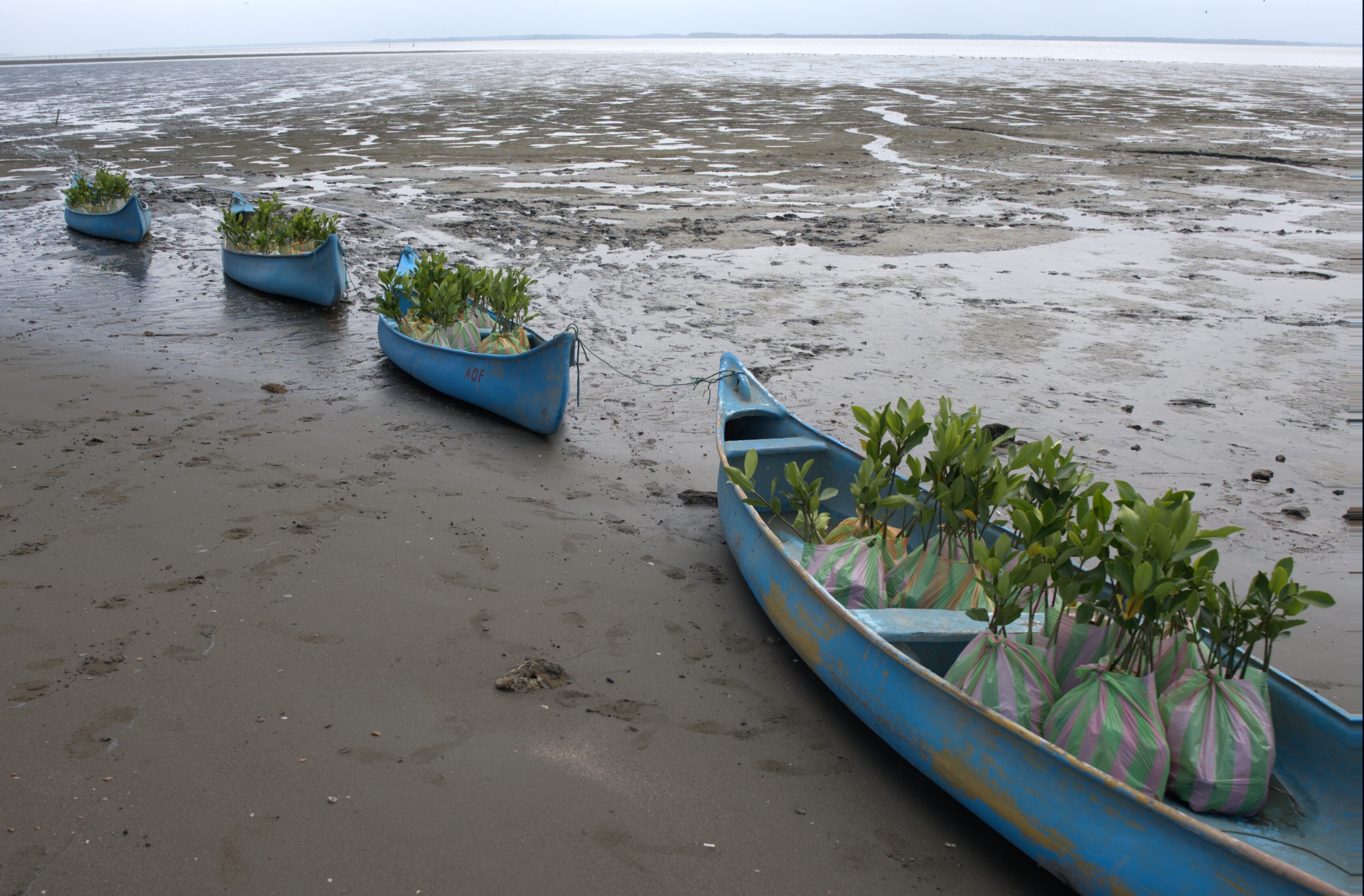
Scaling habitat restoration requires an enabling environment encompassing the right policy, financing and partnerships Image: REUTERS/Guillermo Granja
- Fine dredged sediments are often discarded at sea and are notoriously difficult to manage but can be repurposed to help solve a convergence of several environmental challenges.
- A new mangrove island in the Guayas Delta, built from repurposed dredged sediments, was co-designed with local communities for habitat restoration.
- Scaling habitat restoration requires an enabling environment of policy reform, appropriate financing and partnerships between construction firms, scientists, communities and regulators.
Fine dredged sediments, often discarded at sea, are typically seen as unwanted byproducts of port and channel dredging. Yet as climate change and biodiversity loss intensify, the need for scalable nature-based solutions becomes urgent.
One such solution – AquaForest – demonstrates how the circular reuse of dredged sediments can unlock new pathways for ecological restoration and climate resilience.
A convergence of problems
As a maritime construction firm, our company, Jan De Nul, holds a 25-year concession for maintaining the access channel to the port of Guayaquil, Ecuador, meaning we are responsible for ensuring safe and navigable waters by regularly dredging the channel to remove sediment buildup.
Dredged sediments are notoriously difficult to manage. They are often fine-grained, unstable and potentially contaminated, making disposal a logistical and environmental challenge. Traditionally, these sediments are dumped at sea or stored in containment sites, contributing little to ecological or economic value.
In Guayaquil, the recurring need to dredge the channel raised a critical question: could these sediments be repurposed to stabilize the coast and restore degraded ecosystems? Coastal erosion, habitat loss and sediment disposal were converging problems and we needed a solution that addressed all three.
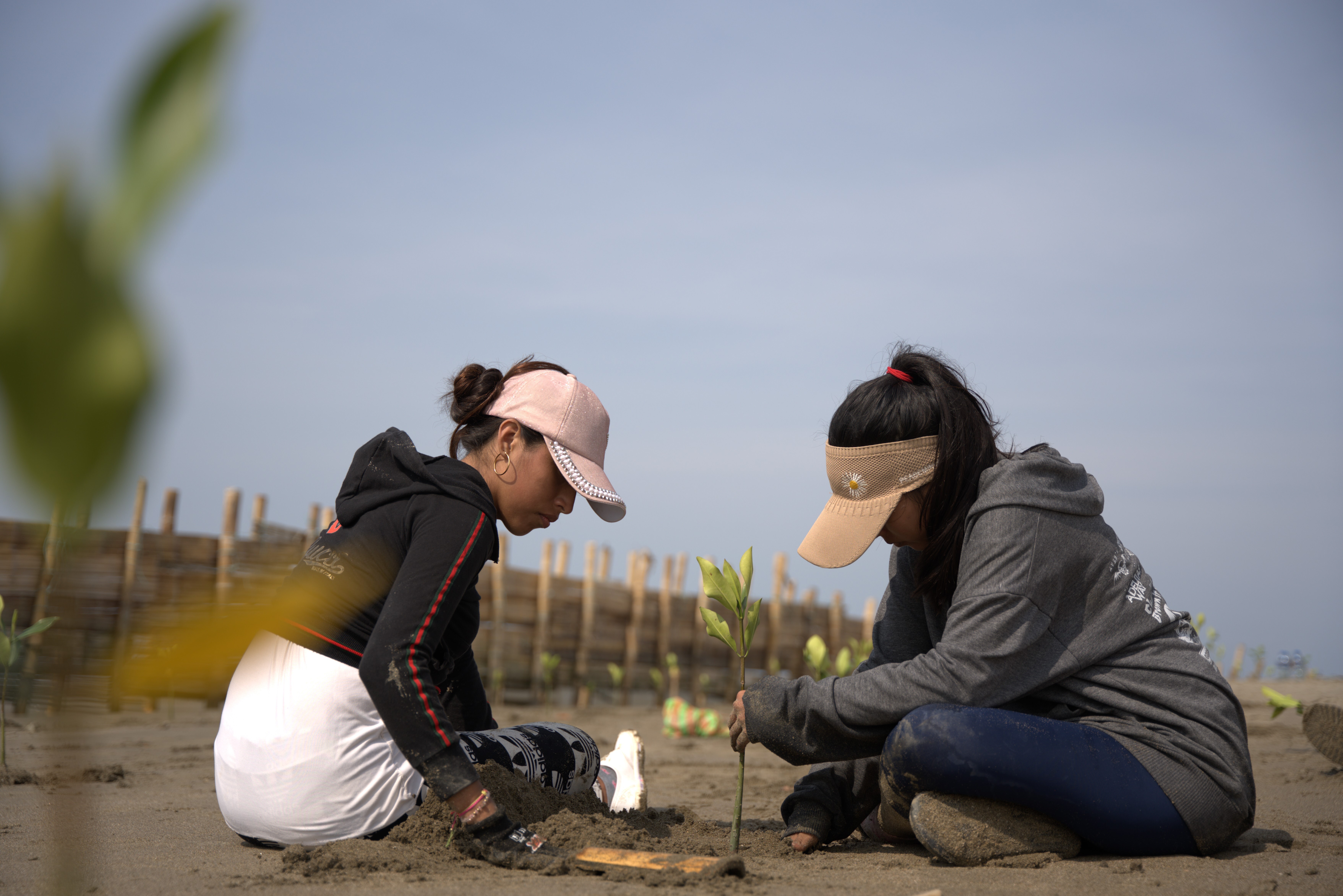
Moreover, Jan De Nul collaborates with local communities in our projects – many of whom rely on mangrove ecosystems for fishing, crab collection and protection from storm surges. Engaging with these communities became a cornerstone of the project. Their insights, needs and knowledge shaped our approach and helped us co-create within AquaForest.
Building a new island ecosystem
Our proposed solution was to elevate an existing sand flat in the Guayas Delta – an intertidal zone composed of compacted sand and silt – into a new island ecosystem, known as the AquaForest.
The Guayas Delta, located in western Ecuador, is one of the country’s most ecologically significant estuarine systems, home to extensive mangrove forests and rich biodiversity.
We drew inspiration from mangrove forests, one of nature's most effective coastal stabilizers and we designed AquaForest as a living, adaptive structure.
Unlike traditional fixed stabilization structures, such as concrete dikes or groynes, mangroves provide critical functions, including erosion control, biodiversity support, water quality improvement, carbon sequestration and climate change mitigation, along with significant socio-economic benefits.
To ensure feasibility, we conducted a year-long field investigation. This included:
- Visiting mangrove areas to identify growth parameters.
- Testing nature-based erosion protection measures.
- Collaborating with partner universities to validate mangrove nursing in dredged sediments.
These investigations were crucial to confirm that mangroves could thrive in repurposed sediments and that the island design would withstand hydrodynamic forces. The hydraulic stability of the design was also verified using hydrodynamic modelling to simulate the interaction between waves, currents, sediments and structures and presented to the relevant authorities.
Based on this data, we co-created with local stakeholders to develop an eco-engineered mangrove island design incorporating optimal conditions for mangrove development, including: protection of the island against wave and current action, use of suitable types of sediments, establishing effective drainage conditions on the island and developing a tailored afforestation plan.
Multi-level impact
The AquaForest project has focuses on tangible results:
- Environmental: The creation of a new mangrove island contributes to erosion control, biodiversity enhancement and carbon sequestration.
- Regulatory: The project received environmental permits and passed feasibility assessments, setting a precedent for future nature-based infrastructure.
- Scientific: It generated new data on mangrove growth in eco-engineered environments, informing future restoration efforts.
- Social: It created new opportunities for eco-tourism, sustainable fishing and community-led conservation.
Community and stakeholder engagement
Local stakeholders were integral to every phase. We began by mapping communities and initiating open dialogue to understand their needs. Key activities included:
- Appointing a community relations officer.
- Establishing information committees.
- Reporting transparently to authorities.
- Partnering with universities and local actors for long-term monitoring.
Awareness-raising workshops educated communities on mangrove restoration, while skill-building sessions empowered them to diversify income sources. These included training in eco-tourism, sustainable aquaculture and governance practices to ensure long-term stewardship.
A formal commitment act – signed by the consortium, community representatives and stakeholders – cemented shared responsibilities and ensures a smooth transition from a Living Lab to a mature ecosystem.
Scaling habitat restoration
As governments and institutions increasingly prioritize climate-aligned infrastructure, demand for nature-based solutions such as AquaForest is set to grow. But scaling requires more than technical success. It demands:
- Policy reform to accommodate innovative restoration approaches.
- Financial mechanisms such as blue bonds, biodiversity credits and incentive-focused Payment for Ecosystem Services schemes.
- Cross-sector collaboration between construction firms, scientists, communities and regulators.
If this shift doesn’t happen, we risk missing a critical opportunity to turn ecological threats into regenerative solutions.
AquaForest shows that with the right partnerships and vision, even dredged waste can become a foundation for biodiversity, resilience and community empowerment.
Don't miss any update on this topic
Create a free account and access your personalized content collection with our latest publications and analyses.
License and Republishing
World Economic Forum articles may be republished in accordance with the Creative Commons Attribution-NonCommercial-NoDerivatives 4.0 International Public License, and in accordance with our Terms of Use.
The views expressed in this article are those of the author alone and not the World Economic Forum.
Stay up to date:
Ocean


Forum Stories newsletter
Bringing you weekly curated insights and analysis on the global issues that matter.
More on Nature and BiodiversitySee all

Felipe Carazo and Lindsey Prowse
March 27, 2026