How innovative insurance products help boards ensure business resilience amidst climate uncertainty
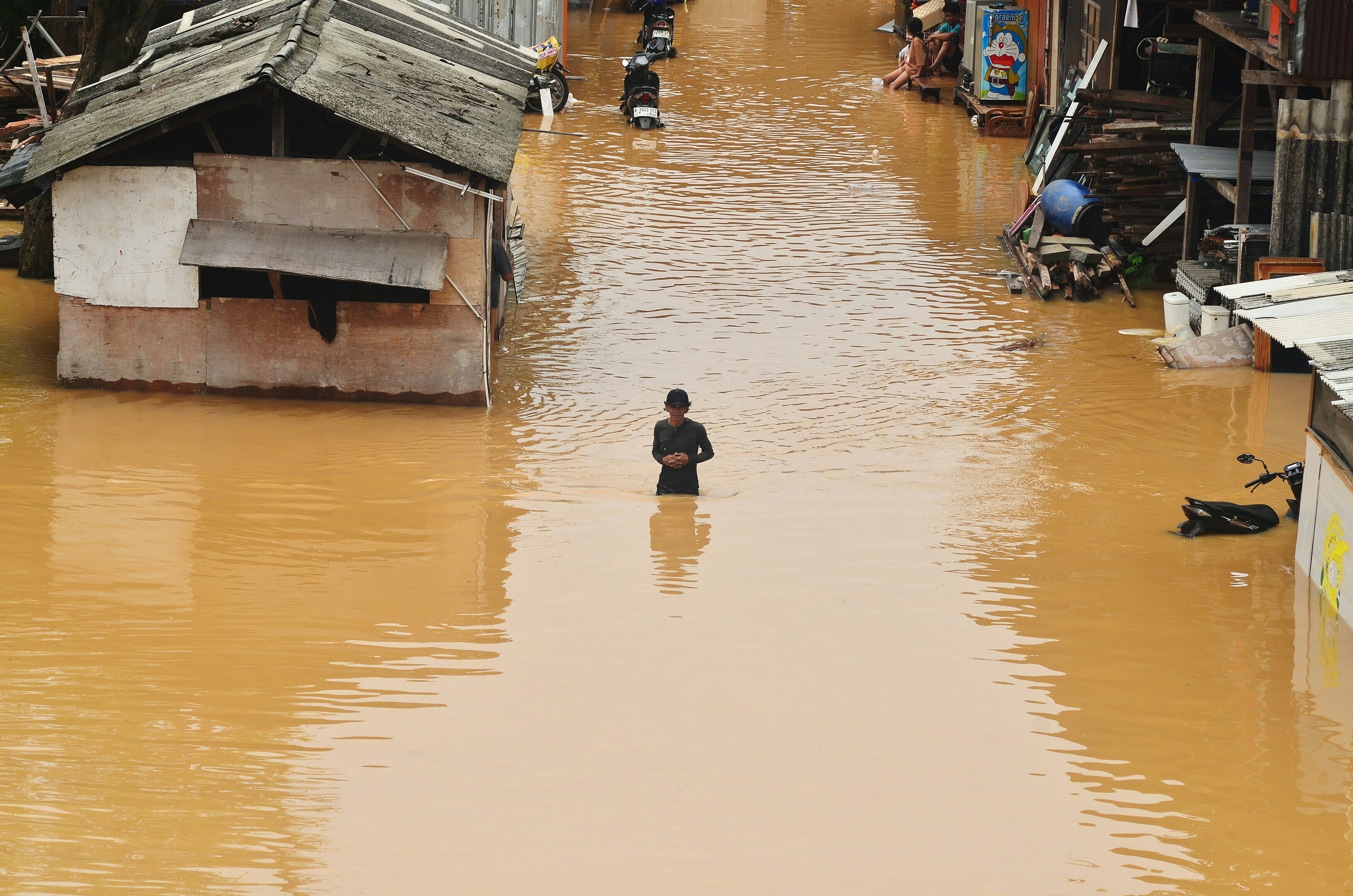
Innovative insurance products can protect against climate disasters Image: Photo by Iqro Rinaldi on Unsplash
- As climate risks intensify, boards can no longer rely on traditional insurance to protect their company's value.
- Insurance innovation is reshaping corporate resilience and corporates and insurance companies are collaborating for long-term resilience and growth.
- These new products help businesses stay resilient and ahead of their competition as climate events become more unpredictable and severe.
As climate risks intensify, boards can no longer rely on traditional insurance to protect their company's value. A new wave of innovative insurance models — from parametric policies to sustainability-linked coverage and resilience bonds — offer boards proactive tools to future-proof assets, stabilize operations and unlock long-term value creation.
In our October 2025 article Rethinking climate risk and insurance can help boards boost company value and resilience, we revealed five blind spots that leave company assets exposed. Here, I explore how insurance innovation is reshaping corporate resilience and how corporates and insurance companies can co-create to achieve long-term resilience and growth.
How the Forum helps leaders make sense of regional, trade and geopolitical shifts
Evolution of climate physical risk insurance
The landscape of climate risk insurance is evolving rapidly. Propelled by advances in geospatial analytics, AI-driven modelling and cross-sector collaboration, insurance mechanisms are emerging that go beyond loss recovery to strengthen resilience.
The market is not short of climate physical risk modelling, with tools ranging from proprietary software developed by insurance companies, such as Zurich Insurance, AXA and Swiss Re, to solutions offered by specialized data analytics firms and the 'Big Four' consultancies. This year, Swiss Re partnered with MSCI to enhance climate risk assessment models that provide asset-level intelligence on climate hazards, such as floods, wildfires, hurricanes, typhoons, cyclones, extreme heat, drought and sea-level rise. These modelling capabilities now form the foundation for many of the insurance mechanisms that have emerged commercially.
The commercial coverage that surfaced three to four years ago was driven by efforts of the World Bank Group dating back to 2016, usually in collaboration with governments in developing countries. Since then, advances in geospatial, asset-level intelligence, increased modelling accuracy in the frequency and severity of natural disasters, as well as heightened awareness towards climate-related risks and losses, have accelerated the development of innovative insurance products. These technologies enable more transparent, data-driven triggers — essential for scaling new forms of climate-risk transfer.
The World Bank and International Finance Corporation participated in the Global Innovation Lab for Climate Finance, which included developing new insurance mechanisms for emerging markets. One such mechanism was paying benefits based on a pre-determined index; with index insurance helping stabilize incomes for an estimated 2.5 billion small farmers globally. The index objectively tracks indicators, such as rainfall and livestock mortality rates, to estimate losses incurred from severe weather or catastrophic events. This represents a significant shift towards objective, parametric-style coverage, reducing the time and administrative burden associated with traditional loss assessments.
The largest effort is the Global Index Insurance Facility, a multi-donor fund managed by IFC and the World Bank, servicing 1.3 million farmers across 31 countries. This provides the blueprint for a commercial analogue, with parametric insurance now being offered by AXA and Zurich Insurance. These early development-led initiatives demonstrate the operational viability of index-based products, paving the way for broader commercial expansion.
Africa Risk Capacity is a programme that pays benefits when a pre-agreed threshold event occurs, such as a sufficiently severe deviation from normal rainfall levels. The World Bank Group, along with private insurers, supports similar programmes in the Caribbean and Pacific regions. Private insurers benefit because it reduces losses to the national economy and the fast deployment of payments accelerates recovery. In 2013, the World Bank facilitated a drought-related climate insurance arrangement for Uruguay, administered by Swiss Re, which affected hydropower supply. Such programmes help demonstrate the viability of parametric approaches, laying the groundwork for broader commercial adoption.
Innovative insurance products available today
Here are some new and increasingly relevant insurance solutions that help organizations better assess, manage and transfer climate-related risks.
Parametric insurance
Data suggests that parametric insurance helps businesses build resilience.
Unlike traditional insurance, which relies on assessing actual losses, parametric insurance is based on pre-defined indices, such as rainfall or temperature, enabling broader coverage than the specified events included in conventional policies and helping to bridge critical protection gaps. Because payouts are triggered automatically when an index reaches the agreed threshold, payments are made rapidly, with no need for claims assessments or debates over asset impairment, and policyholders retain full discretion over how payouts are used. This structure enhances transparency, reduces administrative costs for insurers and the insured and can help stabilize economic development in vulnerable communities.
Zurich Insurance collaborated with the Blue Marble and Blink Parametric on parametric insurance, endorsed by the Indonesian government. This covers coffee farmers and travellers who suffered from flight disruptions.
As climate hazards become more frequent and severe, the speed and objectivity of parametric triggers are attracting growing interest from businesses and governments.
Sustainability-linked insurance
Beyond risk transfer, insurers are also beginning to embed incentives for climate adaptation into policy structures.
AXA, Marsh and Link Asset Management (Link) launched in Hong Kong in April this year an innovative sustainability-linked insurance instrument. They published a whitepaper which provides a blueprint for real estate companies and insurers on how to leverage sustainability-linked insurance to reward climate adaptation efforts and incentivize climate resilience investments.
Resilience bonds
While sustainability-linked insurance encourages investment in resilience at the asset level, resilience bonds mobilize capital for resilience at the infrastructure or city level.
Catastrophic bonds are effective instruments to transfer risk to investors, rather than burdening taxpayers or policymakers, especially where damages are astronomical.
Resilience bonds finance projects that minimize losses by strengthening flood defences or building sturdier infrastructure. These tools channel more money into preventive measures, while distributing the financial exposure in a way that bolsters long-term sustainability.
The TOKYO Resilience Bond was issued in October as a world first. Protecting key infrastructure in the Tokyo metropolitan area of Japan against high tides, floods from heavy rain, storms and resulting damages is of utmost importance to the city’s resilience. It complies with a robust framework and has obtained a third-party evaluation report. Being certified by the Climate Bonds Initiative, the financial burden is shared between the local government and private investors.
These bonds illustrate how capital markets can be mobilized for post-disaster recovery and for proactive resilience-building.
Targeted consultancy for major clients
Complementing these financial instruments, insurers are also expanding advisory services to help clients strengthen climate preparedness.
Global insurers, such as Zurich Insurance, AXA, Munich Re and Tokio Marine & Fire Insurance, offer consultancy services to major and climate-vulnerable clients. Clients’ sustainability and finance teams work with the insurance companies’ engineers and consultants to devise more effective adaptation plans, ensuring assets are better protected and insurance premiums can be potentially shaved.
Zurich Insurance has taken this a step further by segregating consulting services into a dedicated Resilience Solutions (ZRS) business – distinct from its underwriting department. One notable example is the close collaboration of Zurich’s engineers and A.P. Moller-Maersk (Maersk) – operating around 70 port terminals and 700 container vessels globally.
Self-insured alternatives
Some corporates are also exploring hybrid or self-insured models, particularly where scale enables internal risk pooling.
Maersk has an in-house logistics insurance arm, Maersk Cargo Insurance (MSI), that provides protection for physical shipment loss, which could be climate-related. Maersk selected ZRS, in part, due to its existing strong relationship with the Zurich Insurance Group. Zurich’s digital expertise in marine insurance supports Maersk’s online cargo insurance solution and provides risk transfer and fronting services to MSI. It has been providing risk engineering surveys on property and business interruption exposures since early 2021.
Together, these instruments and services demonstrate how the insurance industry is evolving from a payer of losses to an active partner in climate resilience, helping clients anticipate, reduce and transfer risks in more effective ways.
With the advancement of technology, such as artificial intelligence, geospatial imaging, digital platforms and availability of data, insurance companies are proactively co-creating solutions with their valued clients, while partnering with other service providers that complement their strengths. These products help businesses stay resilient and ahead of their competition as climate events become more unpredictable and severe.
As more boards recognize that the prevailing risk transfer tool – traditional insurance – may become unavailable or unaffordable, the demand for innovative products and services will rise, as will broader offerings and better pricing. Boards, as good stewards of their companies, are to enquire, learn and adopt non-traditional measures to ensure long-term firm value protection and creation.
Don't miss any update on this topic
Create a free account and access your personalized content collection with our latest publications and analyses.
License and Republishing
World Economic Forum articles may be republished in accordance with the Creative Commons Attribution-NonCommercial-NoDerivatives 4.0 International Public License, and in accordance with our Terms of Use.
The views expressed in this article are those of the author alone and not the World Economic Forum.
Stay up to date:
Climate Crisis


Forum Stories newsletter
Bringing you weekly curated insights and analysis on the global issues that matter.
More on Climate Action and Waste Reduction See all

Michael Kent and Christina Eng
March 16, 2026