How will we pay for the energy transition? Here's a quick guide
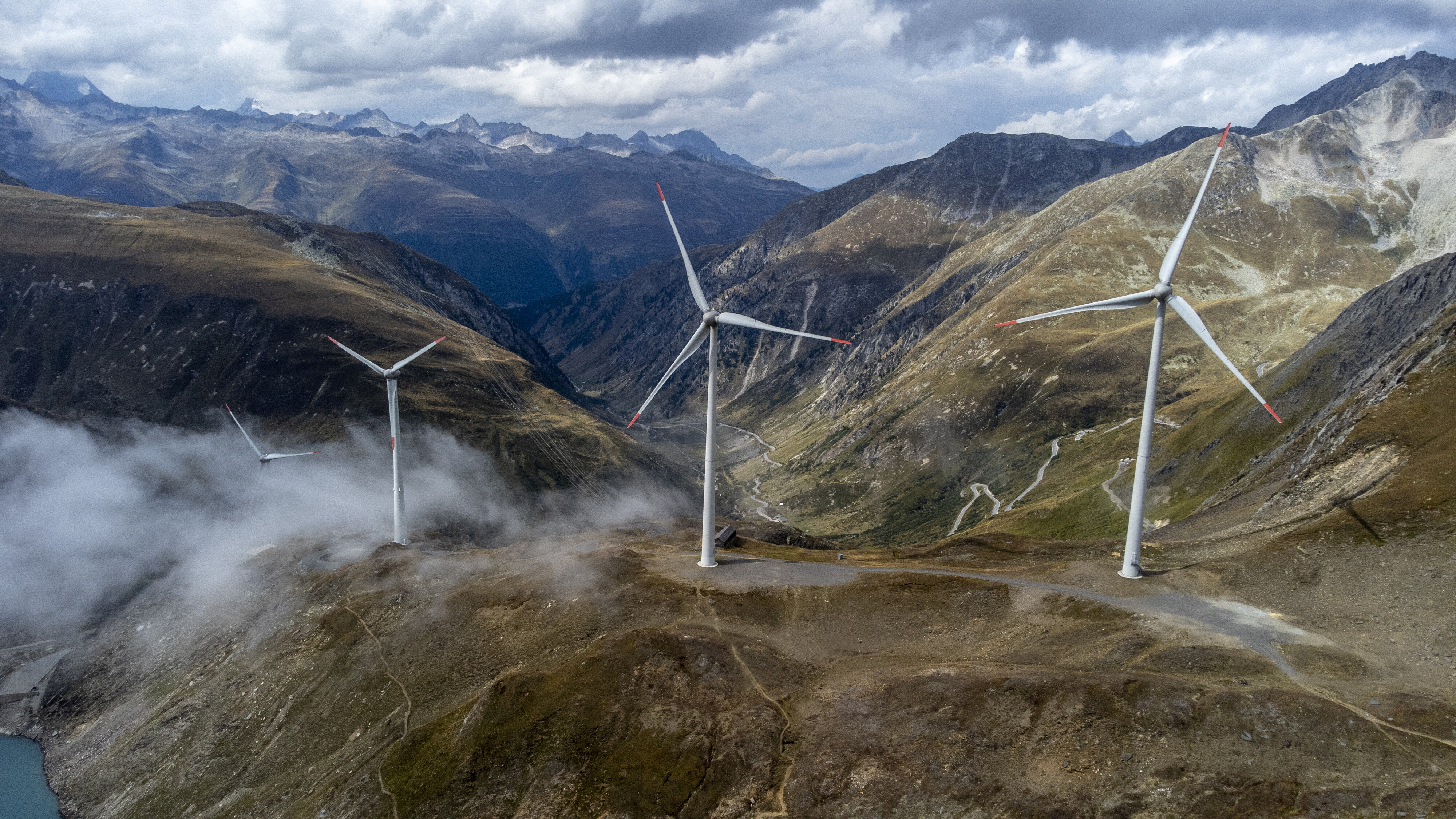
How to pay for the energy transition is a crucial question of our time. Image: REUTERS/Denis Balibouse/File Photo
- There remains a $2.2 trillion annual gap between what we pay and what is needed to deliver the energy transition.
- Financing the energy transition is a complex task that all levels of society will be involved in.
- Managing risk, spurring innovation and setting expectations for costs and benefits are all essential.
Clean energy investment has more than doubled since 2020, and supports more than 16 million jobs worldwide. Nevertheless, there remains a $2.2 trillion annual gap between present investments and the financing necessary to realize the future of global energy systems.
As highlighted in a collection recently published on the World Economic Forum’s Strategic Intelligence platform, renewable energy systems can offer more energy for lower costs – to countries’ finances, the environment and our health – than traditional fossil-based operations. The question is how to marshal the resources to realize that potential.
That energy transition is not only about the climate or innovative new technologies – it is also a finance story about how countries, companies, international organizations and individuals can mobilize trillions of dollars to seize this generational opportunity.
Financing innovation as a priority
Energy systems of the future do not need to rely on the funding mechanisms of the past.
Consumer-level programmes have already had a profound impact on the energy transition. Think, for example, of tax incentives for the purchase of electric vehicles, heat pumps, or solar panels. Taking these policies a step further, performance-based contracts can use residential energy sources like solar panels to add electricity to local grids. These contracts can align incentives in a way that produces more energy, reduces upfront costs to users and drives the deployment of new systems.
Many renewable projects use power purchase agreements or feed-in tariffs that lock in stable pricing for years or decades, providing budget certainty for utilities and consumers. Power purchase agreements funded 19 gigawatts worth of new capacity in Europe in 2024, and issuers are beginning to integrate battery storage into such contracts to guarantee continuous energy supplies.
One unique purchase agreement is seen in Frontier Climate, an advanced market commitment to fund carbon removal programmes. Frontier Climate was founded by companies including Stripe, Alphabet, Shopify, Meta and McKinsey. It aggregates funding for future carbon removal projects, and since its launch in 2022, it has raised more than $1 billion. Those funds send a signal to startups, engineers, researchers and investors that significant and predictable financing will be available for carbon removal.
How will we finance energy transition infrastructure?
Putting money into existing infrastructure is not always as attractive as investing in innovative new technologies – but such work is vital.
A prime example is the $14.3 trillion investment shortfall projected for upgrading and expanding global electric grids by 2050. While some basic infrastructure expenses can be covered with revenue from ongoing operations, the magnitude of needs can be prohibitively costly.
In some cases, the private sector has stepped in to rejuvenate and modernize existing infrastructure. In late 2024, Microsoft entered into a power-purchase agreement with the US energy company Constellation. In that deal, Constellation pledged to restart a decommissioned nuclear power plant and Microsoft committed to purchasing energy from that plant over the next 20 years. Such arrangements can supply technology companies with much-needed electricity for their expanding data centres and AI operations, while also rejuvenating energy infrastructure.
It is also important to remember that the new infrastructure of today will become the legacy infrastructure of tomorrow. Globally, the number of energy facilities is growing substantially, and such facilities will remain part of countries’ energy systems far into the future. Existing infrastructure should be upgraded to work hand-in-hand with these new systems to meet increased demand and bolster resilience. New systems should be built with flexibility and future upgrades in mind.
Managing risk for the energy transition
The rapidly increasing energy demand across Latin America, Africa and South-East Asia presents a tremendous opportunity for large-scale renewable projects. However, perceived risk is a major challenge in countries that face political instability, fluctuating currencies and underdeveloped regulatory frameworks, all of which can deter investors. While climate finance has significantly increased in many emerging markets, much more will be needed for successful energy transitions worldwide.
Multilateral development banks have been able to establish finance structures like the World Bank’s effort with Scaling Solar in Senegal, Zambia and Uzbekistan. Similarly, the International Finance Corporation supports investments and green bonds for renewable energy projects by pooling support from many countries and financial institutions, thereby reducing the risks to any one stakeholder. The Multilateral Investment Guarantee Agency, part of the World Bank, also makes private capital available to provide financial guarantees for development projects in emerging markets, which otherwise would be seen as too risky.
Insufficient data on the long-term performance of renewable energy systems can make risk assessments challenging even in wealthy countries, which frequently results in higher costs of capital or underinvestment in promising projects. Public-private partnerships can be attractive methods for realizing such large-scale, riskier endeavours. In those arrangements, governments can bring regulatory authority, policy guidance and funding or loan guarantees that reduce the risk profile of energy projects and make them more attractive investments.
By working together, governments and private sector companies can share resources, risks and downstream rewards to fund and deliver energy projects.
Understanding the costs and benefits
The energy transition requires spending money, but failing to embrace the transition will be even more expensive. Discussions about fossil-based energy often fail to factor in its true costs, including government subsidies, high prices for consumers and the future cost of damage to our health and the environment.
By developing innovative financing instruments, taking advantage of existing infrastructure and developing frameworks to balance risk, it will be possible to close trillion-dollar funding gaps and move the world to the energy sources of the future.
It will require investment – and the future will belong to those who can mobilize the funds to realize this potential.
Don't miss any update on this topic
Create a free account and access your personalized content collection with our latest publications and analyses.
License and Republishing
World Economic Forum articles may be republished in accordance with the Creative Commons Attribution-NonCommercial-NoDerivatives 4.0 International Public License, and in accordance with our Terms of Use.
The views expressed in this article are those of the author alone and not the World Economic Forum.
Stay up to date:
Energy Transition


Forum Stories newsletter
Bringing you weekly curated insights and analysis on the global issues that matter.
More on Energy TransitionSee all

Kingsmill Bond and Sumant Sinha
March 25, 2026


