Opinion
How Africa’s energy transition can break the resource curse
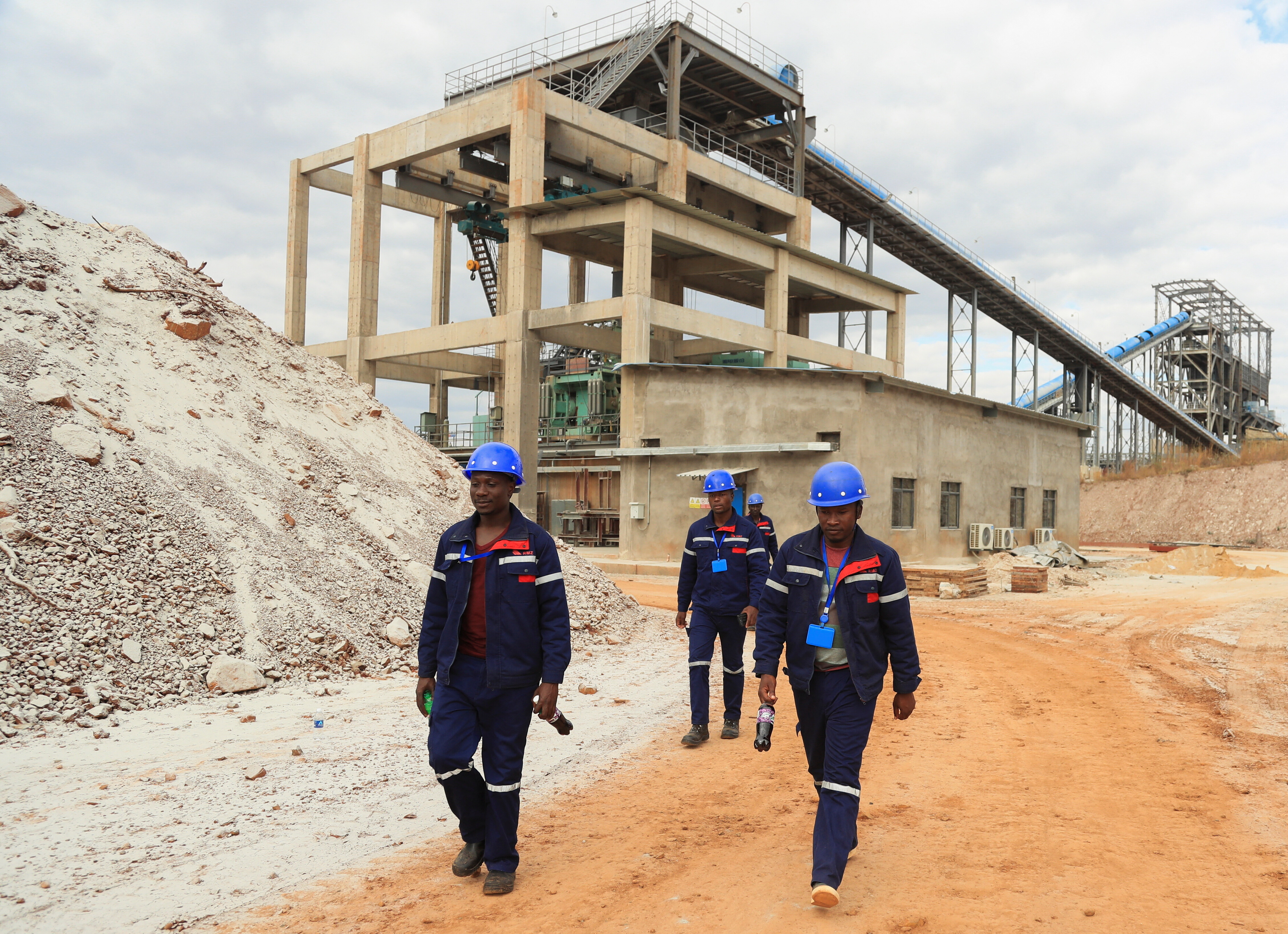
Africa's mineral riches are vital to the global energy transition Image: Reuters/Philimon Bulawayo
Ezgi Canpolat
Climate and AI & Digital Lead, Social Development, Eastern & Southern Africa, World Bank Group- Africa's mineral riches are vital to the global energy transition – but historic exploitation could repeat itself if they do not benefit local economies.
- A new World Bank study outlines the potential environmental and social costs if this wealth departs elsewhere.
- The study offers six pathways to ensuring these resources generate the millions of jobs needed by young Africans over the next decade.
For decades, Africa’s mineral riches have fuelled a paradox: Vast underground wealth paired with poverty above. Now the energy transition places the continent at the heart of global decarbonization. Africa holds 75% of global cobalt, 68% of manganese, and 59% of graphite reserves. Yet without deliberate action, these resources risk repeating history: Extraction that bypasses local economies and deepens inequality.
The stakes are generational. Over 360 million young Africans will enter the workforce in the next decade. Without bold action, more than half risk being shut out of productive work – despite sitting atop the very minerals needed to power clean energy technologies that are supposed to be at the vanguard of 21st-century industry.
A new era for resource power
This isn’t a commodity boom that will bust. Demand for energy transition minerals will triple by 2030 and quadruple by 2040, fuelled by the structural shift to decarbonization and mounting climate pressures.
A new World Bank study across Eastern and Southern Africa, with deep dives into Burundi, Democratic Republic of Congo (DRC), Malawi, South Africa and Zambia, makes the stakes clear: Without deliberate action, this transition risks becoming just another wave of extraction without transformation, deepening exclusion and igniting new fault-lines. The research charts both pathways forward and pressure points to avoid:
Six pathways to convert minerals into jobs in Africa
The study offers concrete strategies to ensure mineral wealth generates the 211 million jobs over the next decade that young Africans need:
1. Community voice in decision-making
Enforceable legal frameworks giving affected communities substantive roles in mining decisions, including employment commitments, training programmes and benefit-sharing arrangements; and accessible grievance mechanisms. Civil society support should enable communities to advocate effectively for local hiring and economic participation.
2. Strategic infrastructure investments
Investment in renewable energy, transport corridors (like the Lobito Atlantic Railway) and industrial zones that serve both mining operations and surrounding communities.
3. Inclusive workforce development
Technical training programmes co-designed with industry to match actual job requirements. Successful programmes combine classroom instruction with on-the-job experience and placement services. Such initiatives must intentionally address structural barriers preventing women, youth and minorities from accessing opportunities. Inclusion frameworks need teeth, including monitoring systems and leadership accountability.
4. Formalizing artisanal mining to preserve livelihoods
Rather than criminalizing artisanal operators, creating realistic pathways to formalization through affordable licensing, designated mining zones, access to formal markets, and technical and financial support. Gender-responsive strategies should ensure women’s participation.
5. Governance capacity that matches ambition
Building technical capability of regulatory bodies through sustained support, including tools, training and resources for independent monitoring. Transparency mechanisms, including public disclosure of mineral contracts, revenues and beneficial ownership.
6. Local content policies that work
Targeted procurement strategies incentivizing companies to source from domestic suppliers, particularly SMEs. Supplier development programmes, access to finance, capacity-building on industry standards. But these must be intentionally inclusive, as women-owned businesses and marginalized entrepreneurs remain locked out without deliberate targeting.
Critical pressure points that could derail progress on energy transition
Without deliberate action on these pathways, the study identifies critical pressure points where growing demand intersects with entrenched exclusion:
1. Environmental and social costs: the overlooked risks
While the green energy transition demands critical minerals, it can also present a sustainability paradox. Mining for these transition minerals can intensify environmental degradation, including land disruption, water scarcity, pollution and biodiversity loss – threatening ecosystems and communities alike. The social costs are equally significant: displacement of local populations, disruption of livelihoods, and human rights impacts often go overlooked amid the urgency for clean energy.
2. The employment squeeze: large-scale vs. artisanal mining
Across the region, artisanal and small-scale mining (ASM) sustains millions of livelihoods and produces substantial mineral output. Yet governments and international buyers increasingly favour large-scale operations, viewing them as better aligned with ESG standards, even though they typically create fewer jobs per tonne of mineral extracted. The result? Growing tensions, confrontations and missed employment opportunities.
3. The value-addition gap
Raw ore leaves African ports. Finished batteries return as imports. This pattern persists because moving up the value chain, from extraction to processing to manufacturing, requires simultaneous advances in energy infrastructure, technical skills and policy coordination that most African nations have struggled to develop. Zambia and DRC are developing battery precursor facilities. South Africa’s manufacturing base positions it for component production. But the window is closing. Governments across Africa are now negotiating long-term mining contracts with multinational companies. The terms they accept, whether requiring local processing, technology transfer, joint ventures, or allowing simple extraction and export, will determine whether countries capture processing jobs or remain locked in pure extraction for another generation.
4. Skills mismatch and training gaps
Even when mining operations expand, jobs remain unfilled because workers lack required skills. Technical and vocational training programmes rarely align with industry needs. Without deliberate investment in education, technical training tailored to sector needs, and programmes that intentionally target women and marginalized groups, mineral development will create jobs that locals cannot fill; instead, they use imported expertise where local employment was promised.
5. Systematic exclusion
Women and marginalized groups face persistent barriers. In South Africa, women make up just 12-13% of the formal mining workforce and earn 40% less than men. In the DRC, it’s only 4%. Similar exclusions affect Indigenous communities, migrants and persons with disabilities, many of whom face legal and institutional barriers to formal participation. For example, in Malawi and Zambia, ASM licenses are restricted to citizens, barring migrant inclusion.
6. Communities without voice
Mining consultations do not systematically include the people most affected. In South Africa’s platinum belt, company consultations have largely excluded women, youth and farm dwellers, yet these groups bear direct impacts. In Zambia, where some
traditional leaders negotiate deals without broader community input, the result is
benefit-sharing agreements that don’t reflect local employment needs.
The choice ahead
Companies and governments now recognize that the fastest path to secure supply chains involves genuine partnerships with local communities that deliver measurable outcomes: local hiring, skills training, supplier development and quality jobs. Between 2021-2023, protests disrupted 334 mining sites across copper, cobalt, lithium and nickel projects, demonstrating that a social license to operate can now serve as veto power.
It’s time to prove that climate action and justice go hand in hand. Africa’s resources must not only fuel a green future – they must build one that is fair for all. Let’s make the green transition truly just: one quality job, one inclusive deal, one empowered community at a time.
Don't miss any update on this topic
Create a free account and access your personalized content collection with our latest publications and analyses.
License and Republishing
World Economic Forum articles may be republished in accordance with the Creative Commons Attribution-NonCommercial-NoDerivatives 4.0 International Public License, and in accordance with our Terms of Use.
The views expressed in this article are those of the author alone and not the World Economic Forum.
Stay up to date:
Africa


Forum Stories newsletter
Bringing you weekly curated insights and analysis on the global issues that matter.


