10 ways to turbocharge public-private partnerships in global development
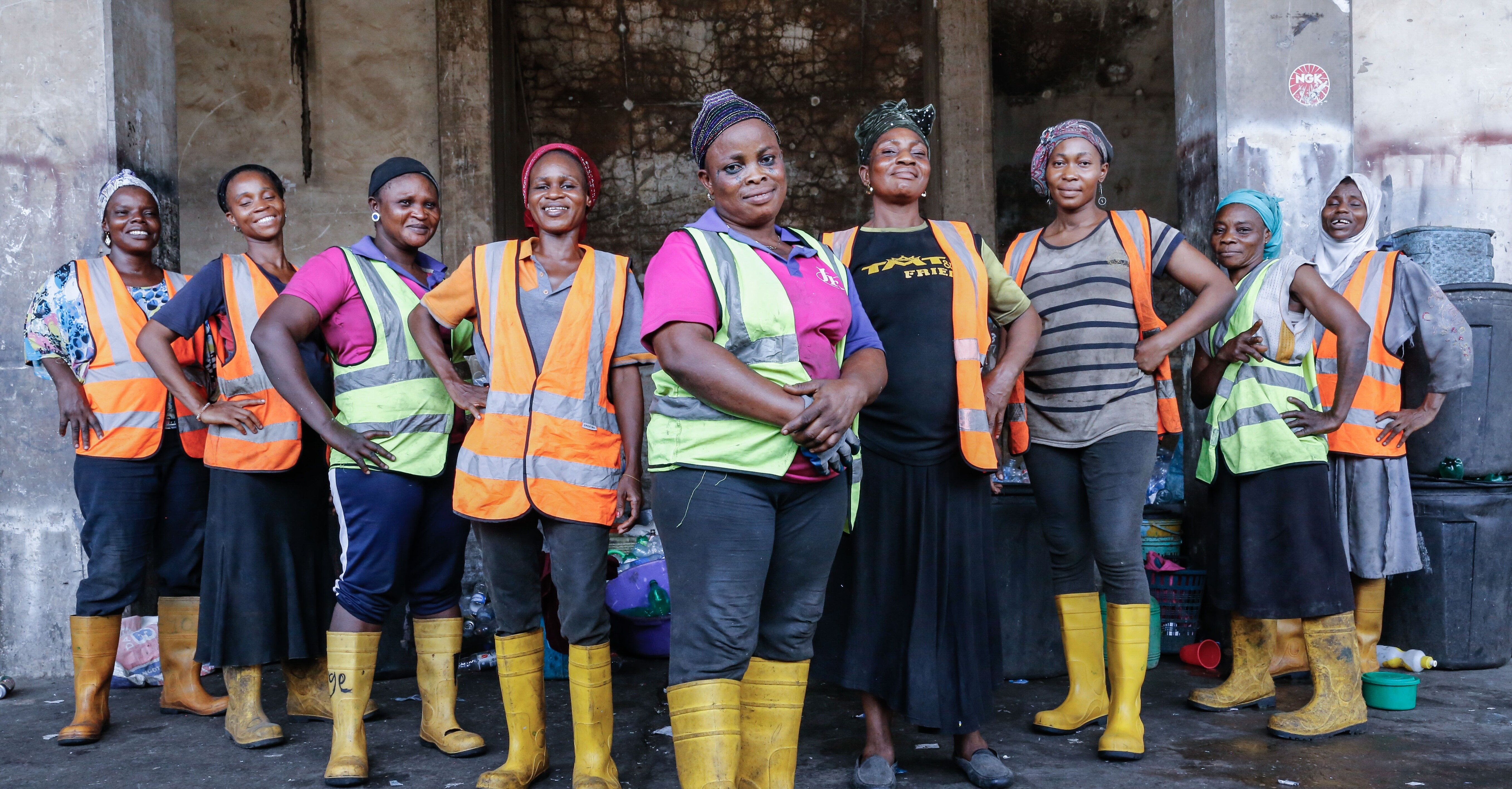
Ten lessons for success in public-private partnerships. Image: NYANCHO NWANRI
- Since 2015, Unilever, the UK’s FCDO and EY have collaborated via the TRANSFORM initiative to support impact enterprises in Africa and Asia.
- Too often, public-private partnerships are hindered by contrasting organisational cultures, power imbalances and differing objectives.
- But it can be done: as the initiative marks 10 years, we lay out below our 10 lessons for success.
Public-private partnerships are hard to get right, especially in global development. The sheer complexity of social and environmental challenges makes collaboration across sectors difficult. But it can be done.
Since 2015, Unilever, the UK Government’s Foreign, Commonwealth and Development Office (FCDO) and EY have collaborated through the TRANSFORM initiative, which supports impact enterprises across Africa and Asia. Over a decade of cooperation, we’ve positively impacted over 19 million lives, from business owners, to workers, customers and people in the wider community. Successful impact enterprises have provided people with access to clean water and sanitation, healthcare in rural areas, and opportunities to make a living.
As we mark ten years, here are our ten lessons for success:
1. Understand each other
Research on TRANSFORM from the University of Cambridge shows organizations must understand each other’s priorities, ways of working, audiences and ‘red lines’. It’s not only how to define your different contributions to the collaboration, but also how to navigate evolving contexts together.
With TRANSFORM, the UK government wanted to create lasting impact while ensuring responsible use of public funds, Unilever wanted to test new business models and further its sustainability aims, and EY teams focus on bringing stakeholders together to effect change.
2. Make it mutually beneficial
Mutuality is key to TRANSFORM’s success. Our partnership has supported over 140 social enterprises, but, at the same time, it’s driven additional business impacts for Unilever and EY.
For instance, one of our social enterprises is Boost – a digital platform facilitating small shopkeepers in Kenya and Senegal to order products via WhatsApp, allowing them to access the best prices and avoid closing to restock. We piloted the platform with Unilever’s largest distributor in Nairobi, increasing the number of small shops selling Unilever products by 20% and providing the shopkeepers with direct access to the best pricing for the first time.
At the same time, people with purpose thrive. By giving private sector employees opportunities to support social enterprises through TRANSFORM coaching, and gain insights into the start-up and purpose-led business mindset, internal culture can flourish.
3. Embrace your differences
Partnership isn’t about competition or uniformity; it’s about working together to create broad solutions to complex problems. In our case, Unilever offers impact entrepreneurs both funding and access to its supply chains. FCDO provides innovation grants, and EY provides pro bono business advice. Together, we offer a holistic support system.
Take Bhumijo, a social enterprise building public toilets in Bangladesh: FCDO funded the building of five new facilities; EY provided tax and legislative advice; and, subsequently, Unilever brand Domestos signed an on-site advertising deal with the enterprise. On the back of these complementary inputs, Bhumijo now has 70 toilets, serving more than 2.5 million people.
4. Activate local leadership
Decision-making must be decentralised, so local actors – who best understand their communities’ needs – have the authority, resources and capacity to lead. When TRANSFORM was looking for new impact enterprise partners in East Africa, we handed decision-making powers over to local colleagues who better understand the context and specific challenges. This regionalised approach has now been replicated six additional times across Africa and Asia.
5. Share your learnings
Rapid, systemic progress is only possible if everyone in the development community shares their learnings. Make your insights and research freely available, especially as collaborations mobilise resources and multiply impacts far beyond the capabilities of any single entity.
6. Go beyond funding
Funding is obviously essential but can only do so much. To maximise impacts, also offer coaching, workshops, tools, problem-solving help and introductions to key connections.
For example, using Unilever’s networks and business knowledge, we supported Reeddi – a Nigerian solar-charged battery rental enterprise – to test a new distribution model using shops as battery rental points, creating a new income stream for shopkeepers.
The pilot deployed 500 units, and Reeddi has since reached over 10,000 customers, helping them save 40% on daily energy costs.
7. Reset the power dynamic
Remember that you have much to learn too. Let those on-the-ground lead, with funders and supporters acting as champions rather than directors. We always help ensure that our impact entrepreneurs retain ownership of their enterprises and efforts to scale up. In fact, one of our projects, the Association of Green Champions in Kenya, started as an NGO, but evolved into a new kind of agroforestry impact enterprise due to its founders’ innovative leadership.
8. Build for self-sufficiency
Plan long term. Equip projects and enterprises so they can become self-sustaining and attract further investment to deliver impact beyond your programmes. For example, we helped Nigerian-based enterprise Wecyclers, which helps people with no formal waste collection make money out of recycling via a fleet of cargo bikes. Our support enabled them to develop a franchise model and expand beyond Lagos, opening 26 new franchises and securing investment to build its own recycling plant.
9. Stay flexible
Accept that progress rarely follows a straight line; be responsive to shifting real-world challenges. A significant example of this was the COVID-19 pandemic, during which we launched the Survive & Thrive initiative to help our impact enterprises adapt. This included access to funding and help to run initiatives like the provision of handwashing stations and Personal Protective Equipment (PPE), and the activation of rural support networks.
10. Design inclusive outreach
Make sure that your programmes address barriers faced by marginalised groups. Our research into gender inclusivity showed that existing social development networks often leave women out. As a result, our communications and evaluation partners have been trained on using more inclusive language in our literature.
Too often, public-private partnerships are hindered by contrasting organisational cultures, power imbalances and differing objectives.
Yet, when we tackle these challenges with understanding, mutuality, transparency, local leadership, flexibility, self-sufficiency and inclusivity, we can make meaningful, long-term impact possible. It’s how to achieve real progress in global development at the requisite scale and speed.
Disclaimer: The views reflected in this article are the views of the author and do not necessarily reflect the views of the global EY organisation or its member firms.
Don't miss any update on this topic
Create a free account and access your personalized content collection with our latest publications and analyses.
License and Republishing
World Economic Forum articles may be republished in accordance with the Creative Commons Attribution-NonCommercial-NoDerivatives 4.0 International Public License, and in accordance with our Terms of Use.
The views expressed in this article are those of the author alone and not the World Economic Forum.
Stay up to date:
Social Innovation


Forum Stories newsletter
Bringing you weekly curated insights and analysis on the global issues that matter.