Brazil's restoration industry could power the global bioeconomy
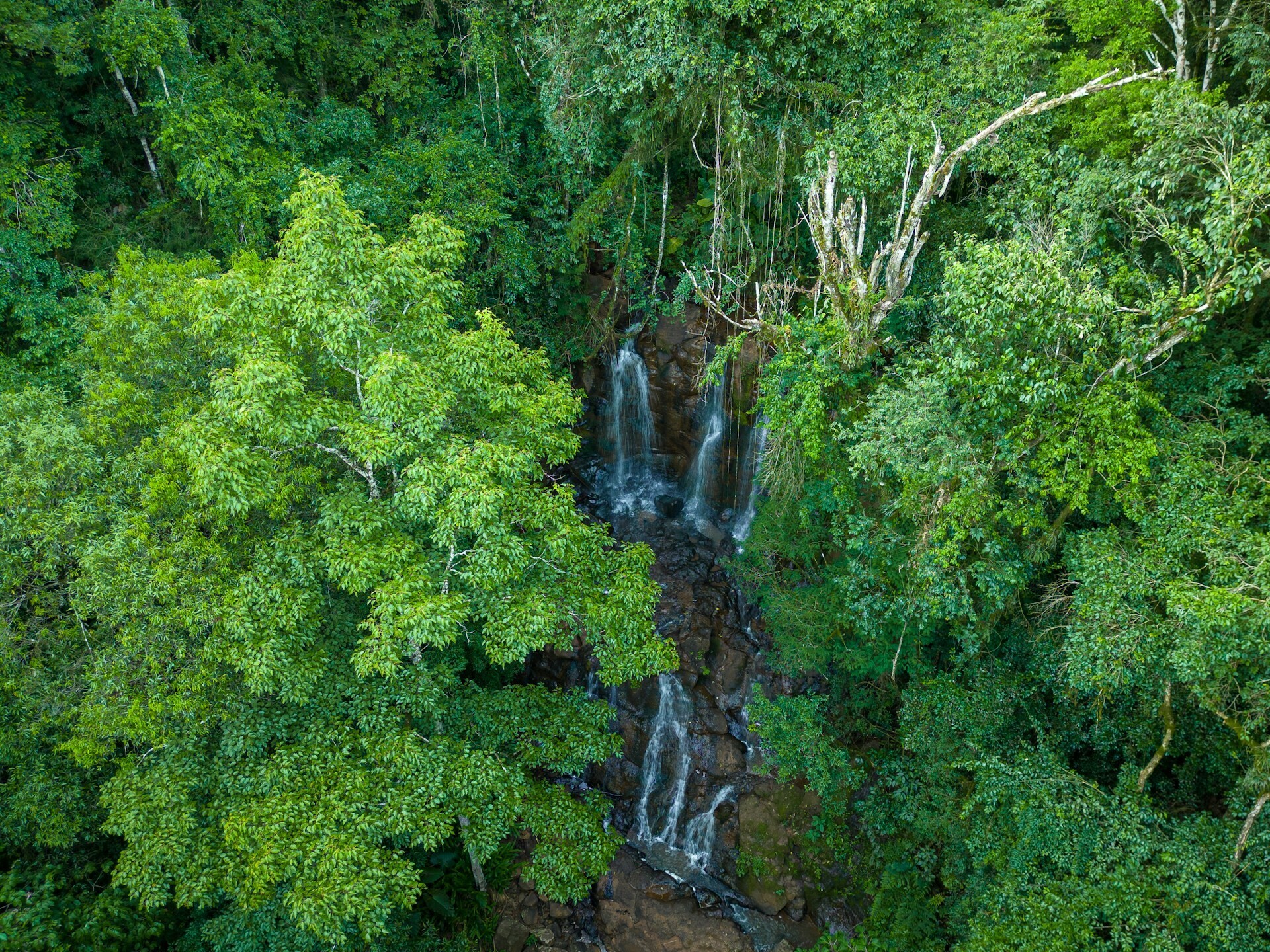
In Brazil, large-scale ecosystem restoration is becoming the foundation of a new regenerative economic model. Image: Unsplash/João Pedro Schmitz
- In Brazil’s Pará state, large-scale ecosystem restoration is becoming the foundation of a regenerative economic model that replaces traditional extractive practices.
- To expand its bioeconomy, Brazil is optimizing its natural capital by fostering collaboration between the private sector, academia and NGOs to restore ecosystems at scale and develop nature-based value chains.
- As global interest in regenerative models grows, Brazil highlights the importance of integrating local livelihoods and Indigenous leadership, sending long-term market signals with clear industrial policies.
For several years, I have been following the emerging narrative of the bioeconomy, defined by the EU’s 2025 Bioeconomy Strategy as "the activities that deliver sustainable solutions based on biological resources to create added value". However, its true potential only became clear to me when I visited the Brazilian Amazon.
In Belém and across the State of Pará, the bioeconomy is not an abstract sustainability agenda, but a real economic transition that is beginning to replace our extractive economic model with a regenerative one.
At the heart of this transition is a trend that remains underrecognized in boardrooms and finance ministries alike: ecosystem restoration. Far from being a niche environmental activity, large-scale restoration is emerging as the necessary investment in the biological infrastructure on which we can build a thriving bioeconomy.
Brazil’s catalytic leadership
COP30 delivered a turning point for the bioeconomy, launching the Global Bioeconomy Challenge, four multilateral working groups, direct Amazon investments and innovation hubs. New investment coalitions focus on new value chains, including forest and landscape restoration, regenerative agriculture and bio-based materials that depend on healthy soils and resilient watersheds.
During COP30, I had the opportunity to visit one of the inspiring bioeconomy startups in Pará. Mombak is a four-year-old company that is now running the largest reforestation project with native species in the Amazon on 20,000 hectares, about four times the size of Manhattan. It’s still a long way to go towards the estimated 24 million hectares in the Amazon that require restoration, but it is a good start. Similar companies have emerged across Brazil, including Re.Green, winner of the 2025 Earthshot Prize, and Biomas, Belterra and others.
Today, carbon credits are the main financial driver of large-scale restoration in Brazil. But far larger markets are already in sight: food, energy, materials, chemicals, pharmaceuticals and water. All of them depend fundamentally on functioning ecosystems.
Consider food. Modern human nutrition is built on a narrow biological base. Just a few dozen crops deliver nearly all of our calories; three – wheat, rice and maize – supply more than half of humanity’s energy intake. Yet scientists estimate that up to 30,000 plant species are edible, with thousands of native food plants in the Amazon alone.
Extreme biological simplification makes our current global food system vulnerable to climate shocks, pests and disease – and it constrains both nutrition and economic opportunity. Restoration is the gateway to diversifying this biological portfolio.
The same logic applies to energy and raw materials for a wide range of industries. Biomass supply chains, bio-based construction materials, advanced biofuels, pharmaceuticals and biochemicals all depend on healthy soils, stable hydrology and resilient landscapes.
Ecosystem restoration as a booming business
To kickstart the bioeconomy, Brazil is turning its sights on regaining its natural capital. Not only has the government sharply reduced deforestation rates. There are efforts underway to restore ecosystems at significant scale, enabling new nature-based value chains, including in rural and Indigenous territories that steward high‑value biodiversity.
For example, there are around 15 million hectares of degraded land in the Mata Atlântica region. Over the past 30 years, NGOs and academia have built extensive knowledge and experience by successfully restoring one million hectares. Pioneering private-sector companies are now joining the coalition of 350 public-sector and civil-society organizations behind the Pacto Mata Atlântica. The new combination of private capital with the accumulated knowledge of NGOs and academia, enhanced by technologies such as AI, is boosting restoration numbers.
An exemplary company for the new bioeconomy is Courageous Land. This startup optimizes land restoration through agroforestry and can collaborate seamlessly with thousands of smallholder farmers and agricultural commodity traders using agentic AI. Beginning with a 100,000-hectare restoration pilot supported by the United Nations, this approach is now being extended to other regions of Brazil.
The Cerrado and the Amazon are also attracting restoration investors. The Federal Government of Brazil and the State of Pará have begun opening public land for restoration concessions. Other states will follow. Government support provides much-needed long-term planning and investment security for restoration companies and investors.
BTG Pactual’s Timberland Investment Group, one of the world’s largest timberland investors, is on track to mobilize $1 billion to restore and reforest degraded land across Latin America, with its first large-scale project on a former cattle ranch in Brazil’s Cerrado biome. And the Brazil Restoration & Bioeconomy Finance Coalition aims to invest a total of $10 billion.
From a macroeconomic perspective, restoring land increases water, energy, food security and carbon storage, and creates jobs and markets in rural areas, making it a more effective potential use of public incentives than many current subsidies.
What can we learn from Brazil for the bioeconomy?
As the European Union gears up to restore at least 20 percent of its land and seas by 2030 – a goal of the EU Nature Restoration Law – and other countries are preparing to invest more in restoration, we can draw some key lessons:
- People first: As the bioeconomy stretches from local value chains to industrial biofuels, we should keep good governance at its core. From Brazil's socio-bioeconomy frameworks to Indonesia's experience with the Responsible Bioeconomy model and King Charles's Circular Bioeconomy Alliance, the message is clear: tenure rights, local livelihoods and Indigenous leadership are essential.
- Clear industrial policies: As nature shifts from a perceived luxury to the center of the economy, we need long-term market signals. Fiscal policies, in particular, could redirect much of $7 trillion in harmful subsidies each year towards restoration, to benefit people and society at large, including in rural areas.
- Public-private partnerships: Initiating nature restoration at unprecedented scale requires "the best of both worlds": public enabling conditions, including concessional finance, combined with the entrepreneurial vision, speed and scale of the private sector. Academia, philanthropy and civil society can catalyse, guide and inform this significant transformation, as exemplified by the Mata Atlântica.
Restoration, when implemented well, is one of the rare agendas that delivers simultaneously for climate, biodiversity, food security, economic resilience and social inclusion. We can all benefit.
The choice facing decision-makers is therefore not whether to invest in restoration, but whether to do so at the speed and scale that the next decade demands. If we succeed, we will not only stabilize the climate and halt biodiversity loss – we will lay the biological foundation of the 21st-century economy.
Don't miss any update on this topic
Create a free account and access your personalized content collection with our latest publications and analyses.
License and Republishing
World Economic Forum articles may be republished in accordance with the Creative Commons Attribution-NonCommercial-NoDerivatives 4.0 International Public License, and in accordance with our Terms of Use.
The views expressed in this article are those of the author alone and not the World Economic Forum.
Stay up to date:
Brazil
Related topics:


Forum Stories newsletter
Bringing you weekly curated insights and analysis on the global issues that matter.
More on Built Environment and InfrastructureSee all

Marcela Guerrero Casas, Mikhail Manuel and Shabari Shaily-Gerber
March 3, 2026


