Jobs and skills transformation: What to know at Davos 2026
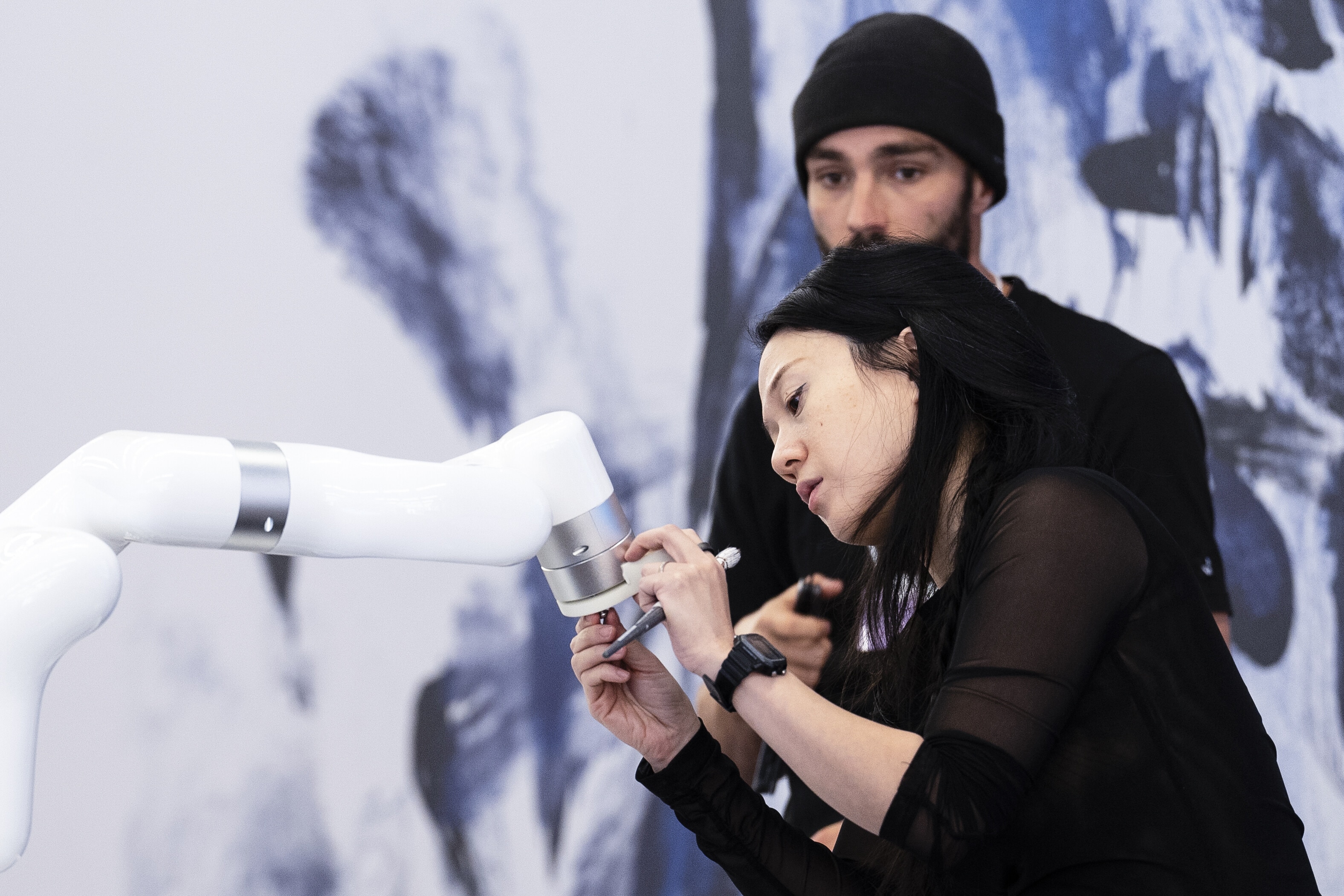
AI's transformation of jobs and skills will be a key topic at the World Economic Forum's Annual Meeting 2026 in Davos. Image: World Economic Forum/Pascal Bitz
- Jobs and skills profiles are being transformed by frontier technologies, with businesses aiming to improve their productivity and competitiveness.
- Yet, this transformation is happening in a macro context of geoeconomic volatility that creates uncertainty for businesses' strategies and talent management.
- Here are the top trends that will shape discussions at the World Economic Forum's Annual Meeting in Davos 2026.
Long-established job and skills profiles are being shaken up by frontier technologies such as artificial intelligence (AI), robotics and automation, as businesses adopt them to improve productivity and competitiveness. As we head to Davos for the World Economic Forum’s Annual Meeting, here are some of the top trends for jobs and skills in 2026.
How geoeconomics and technology are shaping the jobs market
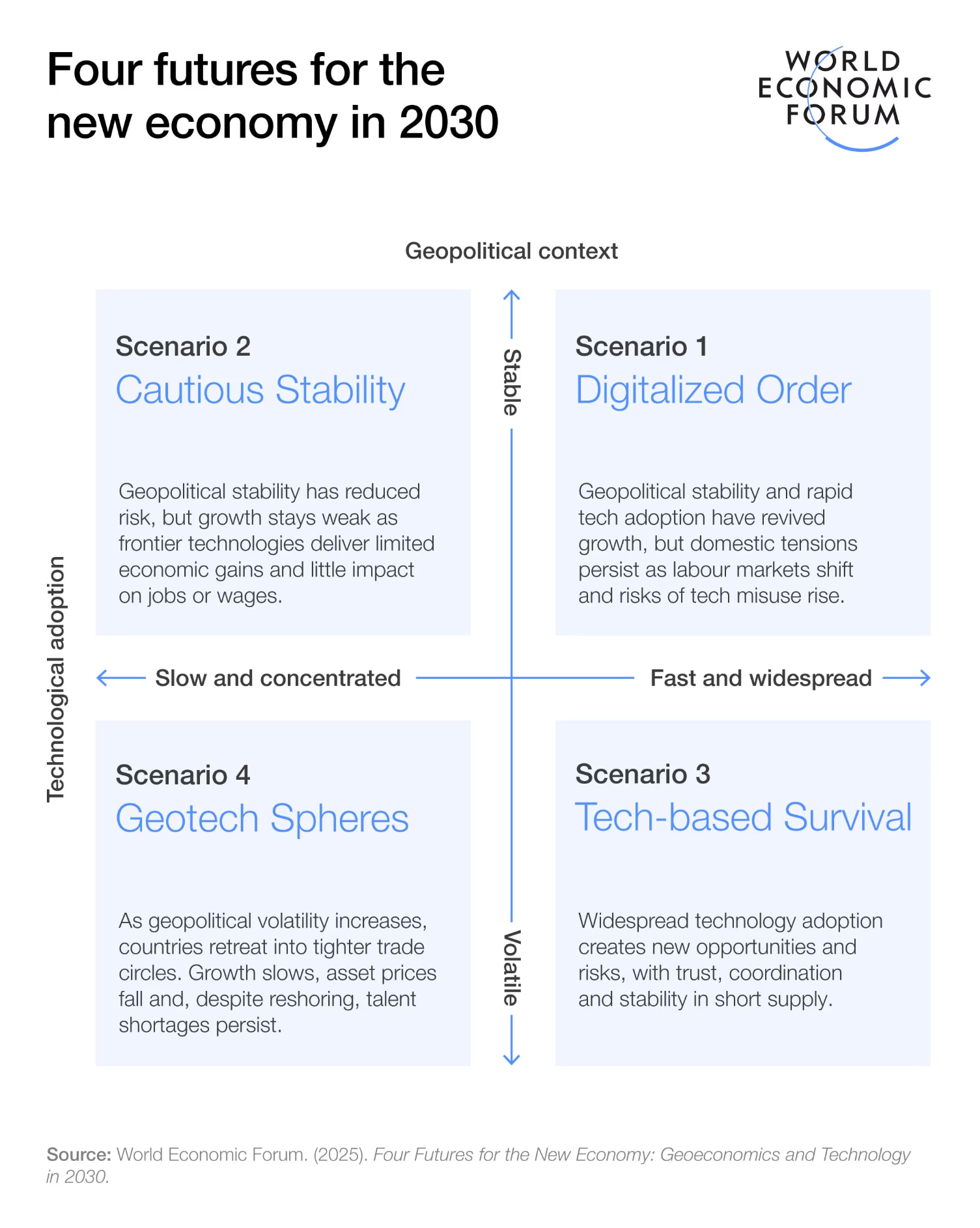
After a long period of relative geoeconomic stability, geopolitics, frontier technologies, rising government interventionism, economic volatility and talent shortages are all contributing to businesses facing a more turbulent environment and greater uncertainty for their business strategies. The World Economic Forum’s Four Futures for the New Economy: Geoeconomics and Technology in 2030 looks at potential scenarios for how these trends may shape the future of the global economy.
How the Forum helps leaders make sense of AI and collaborate on responsible innovation
These scenarios begin with a positive outlook on moving to a “digitalized order”, where stabilized geopolitics and rapid tech adoption boost global growth, despite some labour disruptions. The “cautious stability” scenario lowers risk premiums and shocks but shows stagnant growth as frontier tech like AI is only gradually adopted, with minimal impact on jobs and wages. "Tech-based survival” depicts a world with abundant opportunities but ongoing geopolitical instability. The fourth scenario introduces "geotech spheres", where countries mainly trade with allies, tech impacts diminish, and while reshoring jobs reduces polarization, talent shortages grow.
Hear from leading economists on how technological disruption is helping to create the most complex economic environment in decades in the Chief Economists Briefing: What to Expect in 2026.
Four possible AI futures for businesses and talent
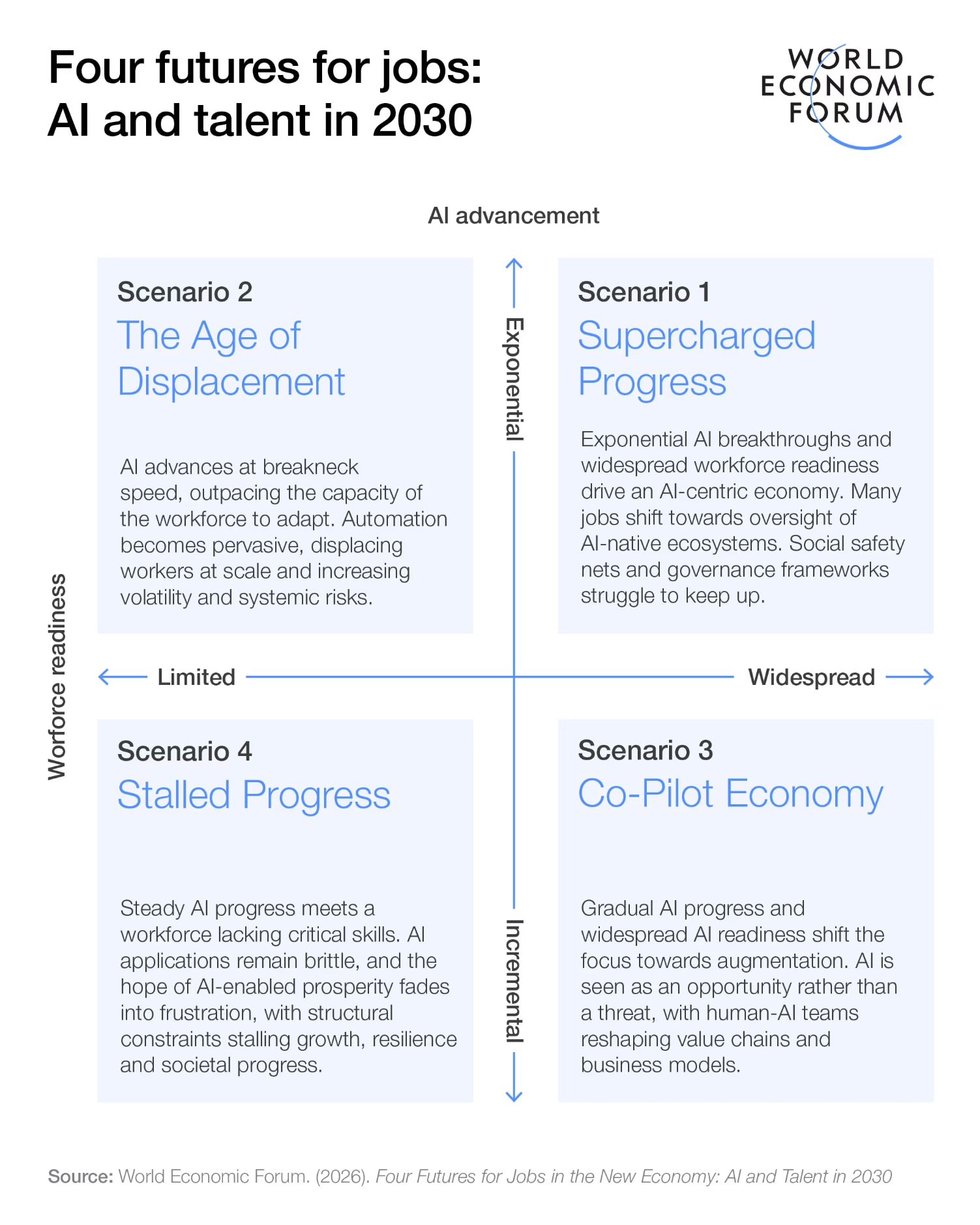
With the business community still divided on the impact and direction of AI, the Forum's Four Futures for Jobs in the New Economy: AI and Talent in 2030 report paints four possible scenarios for the future of jobs.
“Supercharged progress” sees AI boosting productivity and innovation, with workers shifting to new roles quickly, but social safety nets, ethics and governance lag. In the “age of displacement” scenario, rapid tech advances outpace workers’ reskilling, causing talent shortages, increased automation, unemployment and social division. The “co-pilot economy” features incremental AI growth, enhancing human expertise for a gradual business transformation. Finally, “stalled progress” involves a mix of lagging workforce readiness and tech adoption, leading to uneven productivity gains and economic stagnation.
In Corporate Ladders, AI Reshuffled, speakers including Andrew Ng, Founder of DeepLearning.AI, will discuss how companies and workers can adapt to ensure that career growth is still possible despite disruptions.
Why rewarding humanity remains key
The four AI impact scenarios emphasize a key point: the promise of AI can only be realized if people have the right skills. AI is transforming digital skillsets, while wages for AI roles have increased by 27% since 2019, the World Economic Forum’s New Economy Skills: Building AI, Data and Digital Capabilities for Growth highlights. Yet businesses are struggling to recruit as workers are not acquiring AI skills at the required pace. At the same time, another white paper, New Economy Skills: Unlocking the Human Advantage, points to the growing importance of human-centric skills such as creativity, innovation and adaptability. These are both the hardest to automate and valued by employers, but they are often invisible in the job market compared to AI technical skills. The issue stems from a lack of measurement and standards, which need to be addressed.
Will.i.am joins the session, When Code and Creativity Collide, to explore AI’s intersection with human creativity and the broader implications for authorship and equity.
What to look out for at the Annual Meeting in Davos
How business leaders can approach the job market given the volatile and unpredictable future the world faces will be a key focus at the World Economic Forum’s Annual Meeting in Davos. The following initiatives will launch during Davos week:
- Nine leading platform economy companies launched global principles for the platform-enabled economy, guided by the Forum's Good Work Framework. Built around access and opportunity, earnings and benefits, and safe working environments, the principles provide a shared foundation for responsible leadership and support dialogue on fair, inclusive and sustainable platform economies.
- AI at Work: From Productivity Hacks to Organizational Transformation, a paper from the C&T Industry Strategy Officers Community, will launch at the Annual Meeting.
- Six years after its launch, the Reskilling Revolution Initiative has mobilized commitments to reach 1 billion globally by 2030 with access to better education, skills and economic opportunity. More than 25 leading tech companies announced a pledge to support 120 million workers’ reskilling by 2030, focusing on digital technologies, skills development, and clear pathways to future jobs.
- New national skills accelerators will launch in India, joining a global network of 45 accelerators that have collectively already benefitted 14.8 million individuals by bringing together government, business and civil society to advance employment, skills development and inclusive economic growth.
- The Forum is launching a Learning-to-Earning Sandbox, bringing together universities, employers and governments to co-design scalable models that integrate education with paid work — building on work-integrated degrees, apprenticeships, micro-credentials and internships to link skills development directly to employment and create best practices that can be replicated across sectors and regions.
For more information about the programme for the World Economic Forum Annual Meeting 2026 in Davos, please click here.
License and Republishing
World Economic Forum articles may be republished in accordance with the Creative Commons Attribution-NonCommercial-NoDerivatives 4.0 International Public License, and in accordance with our Terms of Use.
The views expressed in this article are those of the author alone and not the World Economic Forum.

Forum Stories newsletter
Bringing you weekly curated insights and analysis on the global issues that matter.
More on Jobs and the Future of WorkSee all

Neeti Mehta Shukla
February 27, 2026


