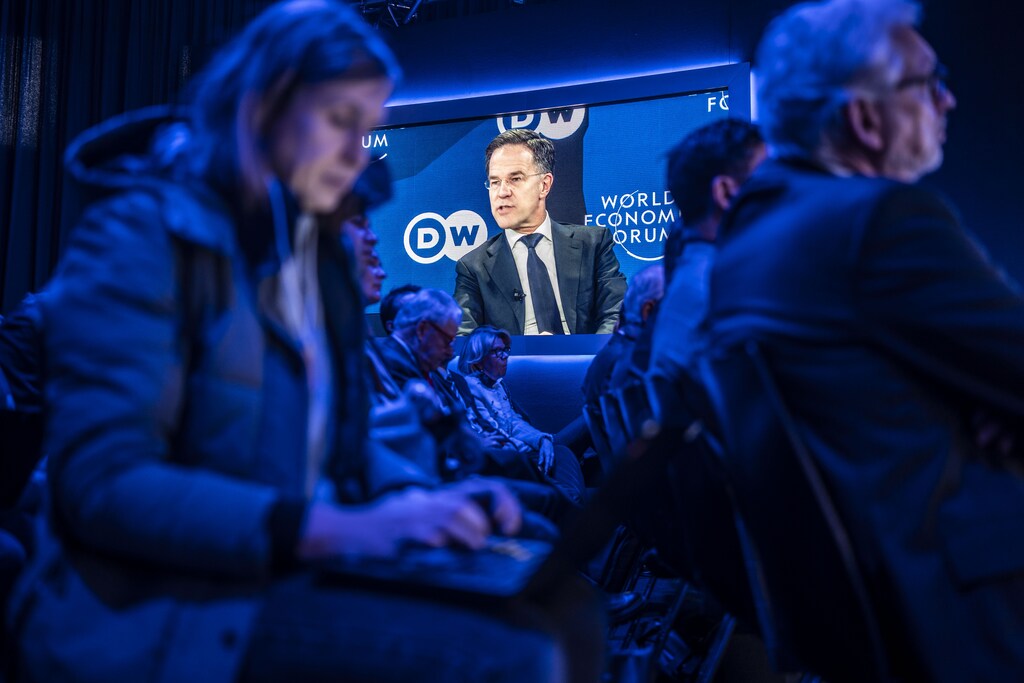
The region aims to lean into an outward embrace that distinguishes it as economic nationalism intensifies.
“We're under a lot of pressure.”
Sometimes the obvious merits a mention, and the Belgian prime minister delivered. A year ago, the mood hanging over Europe-related discussions at the Annual Meeting in Davos was moribund. This year, these conversations adopted a more urgent but constructive tone – thanks to heightened trans-Atlantic stakes.
Much of the media coverage as the meeting commenced focused on worsened tensions over a very big island in the Arctic. In the halls of the Davos Congress Centre and beyond, that was layered over long-simmering anxieties about an ongoing conflict on the region’s eastern flank in Ukraine, and existential questions about its economic prospects.
European Commission President Ursula von der Leyen sought to set the tone. “Europe needs an urgency mindset,” she said during a special address. It must also, she emphasized, open itself up further to the rest of the world.
In particular, to those parts that have not made clear that commerce going forward will involve near-constant uncertainty and threatened tariffs. “Nostalgia will not bring back the old order,” von der Leyen said. “Hoping for things to revert soon will not fix the structural dependencies we have.”
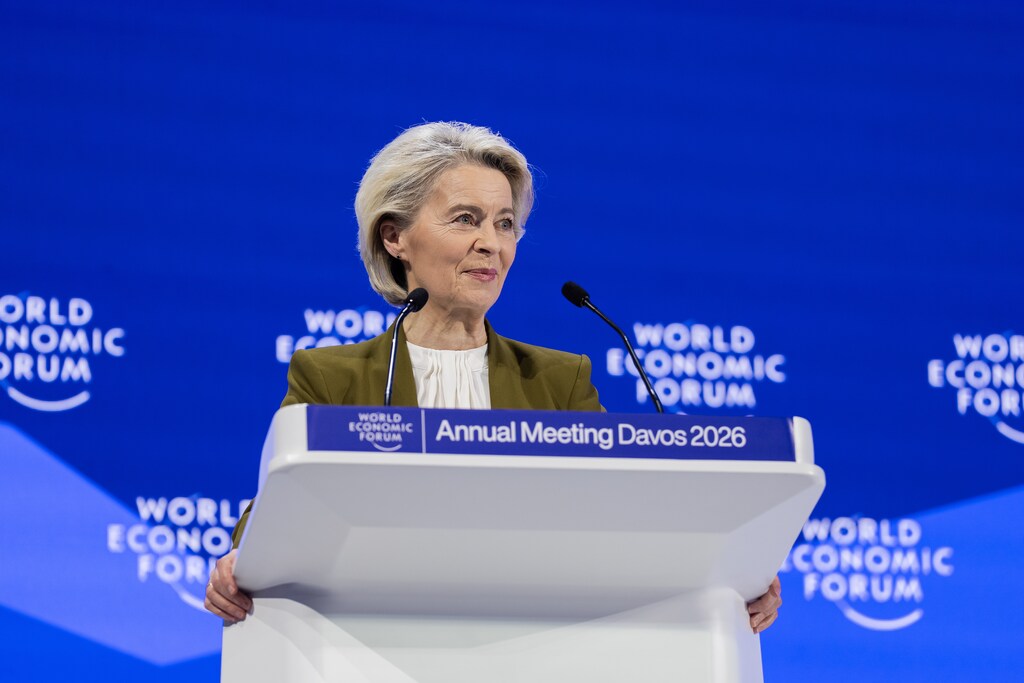
Addressing those dependencies means branching out. Von der Leyen flagged the EU’s biggest-ever trade deal signed recently with a large bloc of South American countries (since challenged by EU lawmakers), and described an even bigger ambition: the weekend after Davos, she planned to travel to India to make headway on the “mother of all (trade) deals,” potentially creating a single market of 2 billion people that would account for nearly a quarter of global GDP.
Von der Leyen offered up a tag line: “Europe will always choose the world, and the world is ready to choose Europe.”
On the sidelines of Davos, an entrepreneur who chose to build her startup in Europe seconded the sense of urgency.
Hélène Huby, the founder and CEO of The Exploration Company, which is trying to develop Europe’s first reusable space vehicle, noted that a substantial share of the most valuable companies in the world didn’t exist a few decades ago. Where will Europe’s economy be decades from now?
“This is very simple,” she said. “If we're not able to build these kinds of companies, we’ll be just nowhere in the next 50 years.”
Western alliance wrangling in real time
As questions about the fate of Greenland and an alliance with the US that’s held firm for 76 years intensified, European leaders dealt with them in front of the cameras, in real time.
Their appearances took on an amplified sense of urgency. German Chancellor Friedrich Merz coupled gratitude for US efforts to secure the Arctic with a warning that any US attempt to seize European territory in the region by force would be “unacceptable” (and a reminder that it was once the US encouraging Germany to embrace international alliances based on trust, in the aftermath of a war).
Look at the situation we’re in, French President Emanuel Macron said during his own address; “conflict has been normalized.” Greater “economic sovereignty” for Europe is essential, but so is cooperation. “Protection doesn’t mean protectionism,” he said.
After the leaders of longstanding EU members had their say, an aspirant took the stage with his own message for them: get your act together, please.
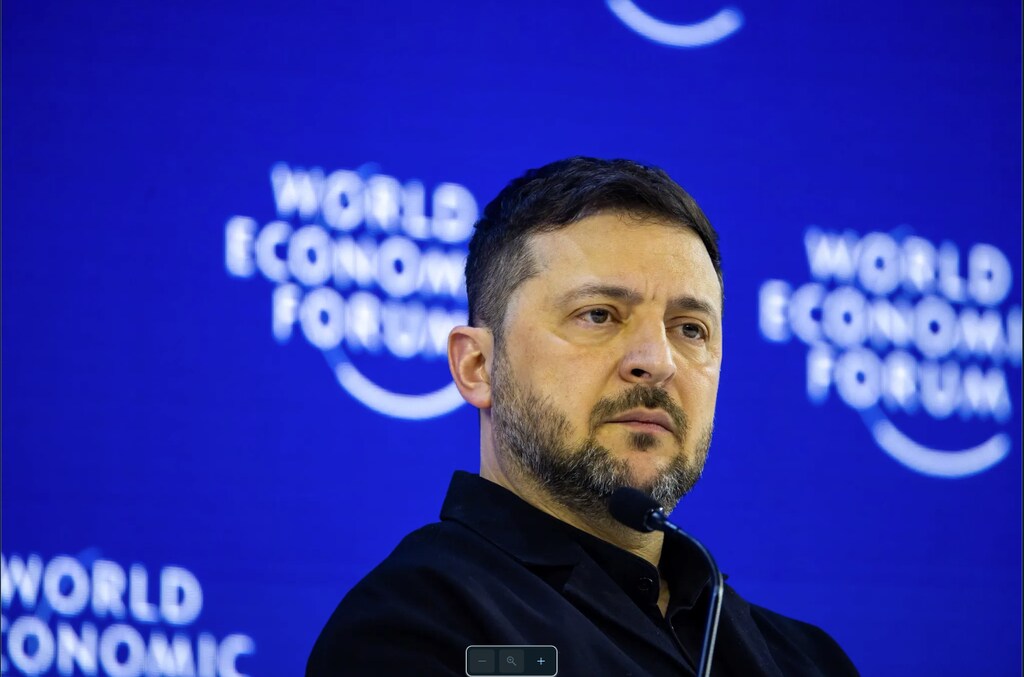
Ukrainian President Volodymyr Zelenskyy seized the opportunity to deliver a call for the continent to make a bolder and more unified effort to look after itself. “We should not degrade ourselves to secondary roles,” he said, while referencing the region’s smattering of troops sent to Greenland recently as an intended show of resolve.
“If you send 40 soldiers to Greenland,” he said, “what message does it send?” And not just to the US, he suggested, but elsewhere, too.
Chancellor Merz had added an important caveat to any talk of a more assertive Europe on the global stage: it must be backed up by a more resilient economy.
To that end, a potential advantage for Europe may be its “incredibly strong” industrial-manufacturing base, according to NVIDIA CEO Jensen Huang, who made an appearance on-stage at Davos. The US may have led the “era of software,” Huang said, but with a vast fusion of artificial intelligence and machines on the horizon, that base means “robotics is a once-in-a-generation opportunity for the European nations.”
A once-in-a-generation reset of relations was also on the Davos agenda for Europe.
Asked during a Davos session whether Europe could really defend itself without the aid of the US, Finnish President Alexander Stubb didn’t hesitate: “Unequivocally, yes,” he replied.
But even here, there were signals that the region remained open to seeking cooperation. “We have to do more,” NATO Secretary General Mark Rutte said of European contributions to its own defence, during the same session. “We have to protect the Arctic.”
When an audience member asked whether Europeans should feel safe amid all of the recent talk about a regional defence-spending surge, Rutte offered a version of “yes”: “If you want to prevent war, prepare for war.”
There was no avoiding the region’s pacifist roots, however.
The EU is a superpower, though not in terms of defence, European Investment Bank President Nadia Calviño said from the stage at Davos.
After all, she said, in reference to the post-war origins of the region’s single market, “the European Union project is a project for peace.”