Energy is the new frontline of security: Lessons from Ukraine’s battle-tested system
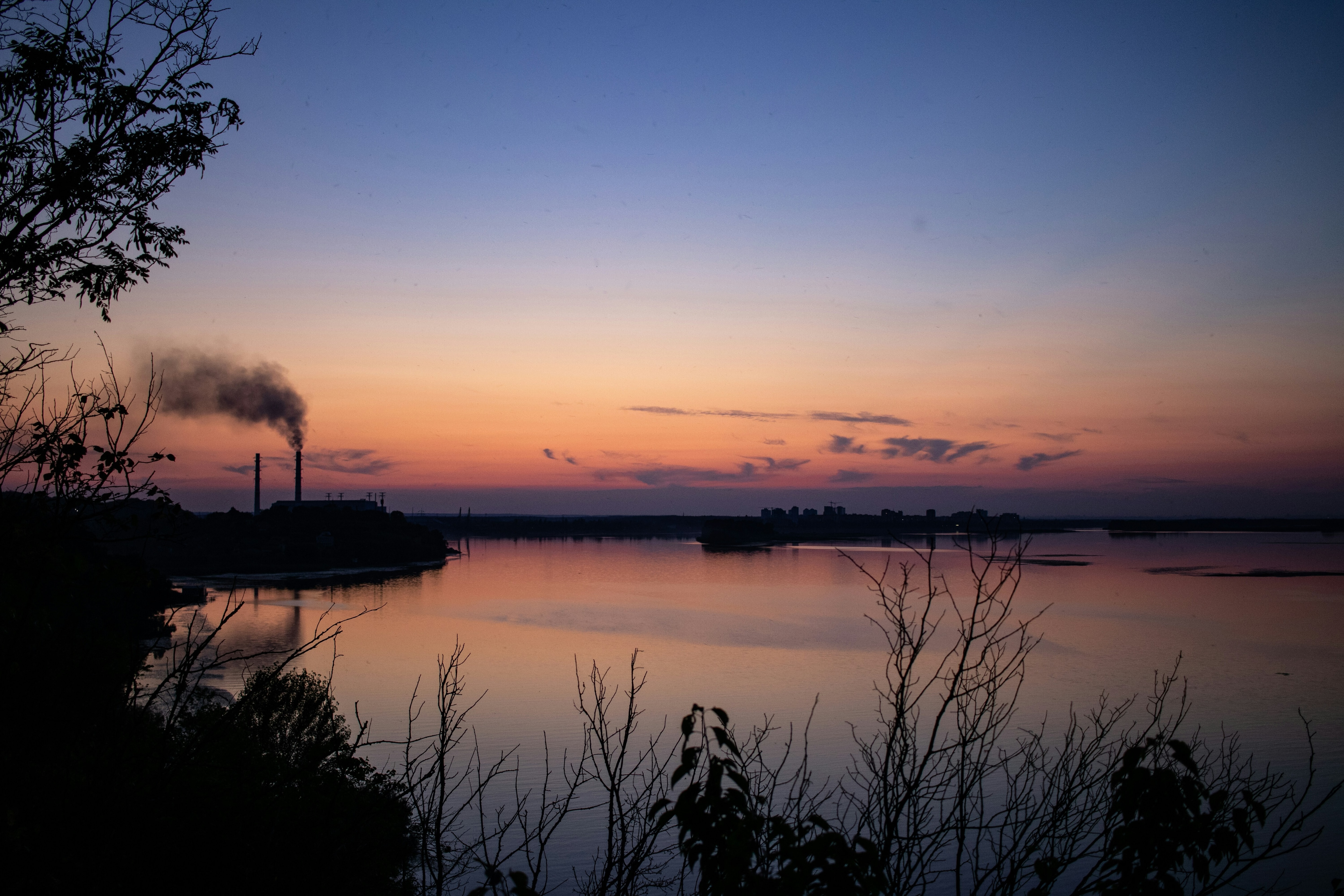
Power plants across Ukraine have suffered hundreds of attacks in recent years, creating the need to rethink energy security. Image: Unsplash/opiekhov
- Over the past four years, fossil fuel power plants across Ukraine have suffered hundreds of missile and drone attacks.
- Small, distributed renewable assets can provide a more resilient alternative to large, centralised fossil fuel assets.
- Leaders meeting at the World Economic Forum Annual Meeting 2026 under the theme ‘A Spirit of Dialogue’ will explore the challenges and innovations driving the future of industries including the energy sector.
Attacks on energy infrastructure have become a defining feature in Russia’s invasion of Ukraine. They are now so serious that President Zelensky declared an energy emergency on 14 January 2026.
The threat to energy is not limited to this country, however. Across the West, these attacks are ringing alarm bells about the vulnerability of energy systems from enemies willing to engage in hybrid warfare, as well as using outright force. The good news is that Ukraine’s resilient and innovative response offers valuable lessons in how to thwart one of the greatest emerging threats to security.
Ukraine has been learning these painful lessons for more than a decade. This winter, however, attacks on civilian power stations, grids, gas production and mines have been unprecedented in their scale and ferocity. The resulting power outages last longer and are more frequent, impacting critical services like water treatment and transportation and turning everyday activities like browsing the internet, cooking a meal or lighting a home into a struggle.
Power outages are no longer a side effect of war, they are often the objective. And this is turning energy into one of the most explosive frontlines of the war in Ukraine. You can’t see it on a map, but this frontline passes through every substation, power line and transformer in Ukraine. The first lesson for policy-makers and energy companies around the world must be to realise that energy security and national security are now indistinguishable.
Building national energy security
Ukraine needs an energy system that can withstand shocks and support national resilience, while simultaneously bridging the gap to a clean energy future. But the fleet of coal-fired power plants owned by DTEK, Ukraine's largest private energy company, has been attacked more than 220 times since February 2022. Large, centralised fossil fuel assets are now incapable of offering the security Ukraine needs.
That's why, as we work around the clock repairing these assets to keep the lights on across Ukraine this winter, DTEK and its shareholder Rinat Akhmetov have initiated the biggest investment programme in the company's history to fund the construction of decentralized energy resources like wind, solar and energy storage. These renewable resources are not only clean technologies, but they are also more resilient infrastructure. Smaller, distributed assets are harder to target, quicker to repair and more capable of stabilizing the grid during emergencies.
By early 2024, Ukraine had added nearly 1,500 megawatts (MW) of new solar capacity – enough to power around 400,000 households. Businesses and households are investing in distributed generation and battery storage, turning decentralization into a security response. These assets raise the need for more flexibility in the energy system, which can be provided by battery energy storage systems.
Investments in battery storage are also picking up. One recent investment by DTEK in partnership with Fluence Energy in September 2025 has provided Ukraine with six battery energy storage sites with 200 MW of total capacity. These assets are becoming increasingly important due to repeated Russian strikes on Ukraine’s generation capacity.
Forming partnerships in a contested world
The revitalization of Ukraine’s energy system is being driven by a coalition of partners, from governments and international financial institutions to private investors, technology companies and insurers willing to take risks in a contested environment.
The EU and US have been central to this effort and institutions such as the European Investment Bank, the European Bank for Reconstruction and Development (EBRD) and the US Development Finance Corporation (DFC) are well placed to support projects that prioritise resilience and long-term energy security. The World Economic Forum also has a unique role to play as a connector between sectors that too often operate in silos.
Risk-sharing mechanisms are already proving their value. Support for projects like the Tyligulska Wind Power Plant backed by DTEK, Vestas and Danish EIFO, and initiatives like Resilient Independent Solar Energy (RISE) from DTEK and Octopus Energy, are helping to make distributed energy projects bankable, even during war. Other Ukrainian developers are also advancing wind projects with support from EBRD and IFC. These partnerships are turning energy from a vulnerable target into a strategic asset.
Collaborating on energy security
These partnerships have been forged under pressure, but this is exactly the kind of cooperation the world will need more of in an era of instability and fragmentation. Ukraine’s experience shows that energy, defence, finance, technology and diplomacy are increasingly becoming interlinked.
As diplomats work on pathways towards a just and lasting peace in Ukraine, energy must be part of that conversation. And Ukraine’s experience shows that energy transformation is also a national security project. Energy systems can weaken states, or they can help defend them. They can delay or accelerate peace and reconstruction.
Ukraine is paying a high price to learn these lessons about energy security. The global community must support Ukraine’s recovery but it must also learn from it and apply those lessons everywhere before similar crises come to other nations’ doorsteps.
Don't miss any update on this topic
Create a free account and access your personalized content collection with our latest publications and analyses.
License and Republishing
World Economic Forum articles may be republished in accordance with the Creative Commons Attribution-NonCommercial-NoDerivatives 4.0 International Public License, and in accordance with our Terms of Use.
The views expressed in this article are those of the author alone and not the World Economic Forum.
Stay up to date:
Cybersecurity
Related topics:


Forum Stories newsletter
Bringing you weekly curated insights and analysis on the global issues that matter.
More on Global CooperationSee all

Alireza Haghighi and Khalid Alaamer
February 24, 2026


