How Gulf nations are building an advantage in an age of global volatility
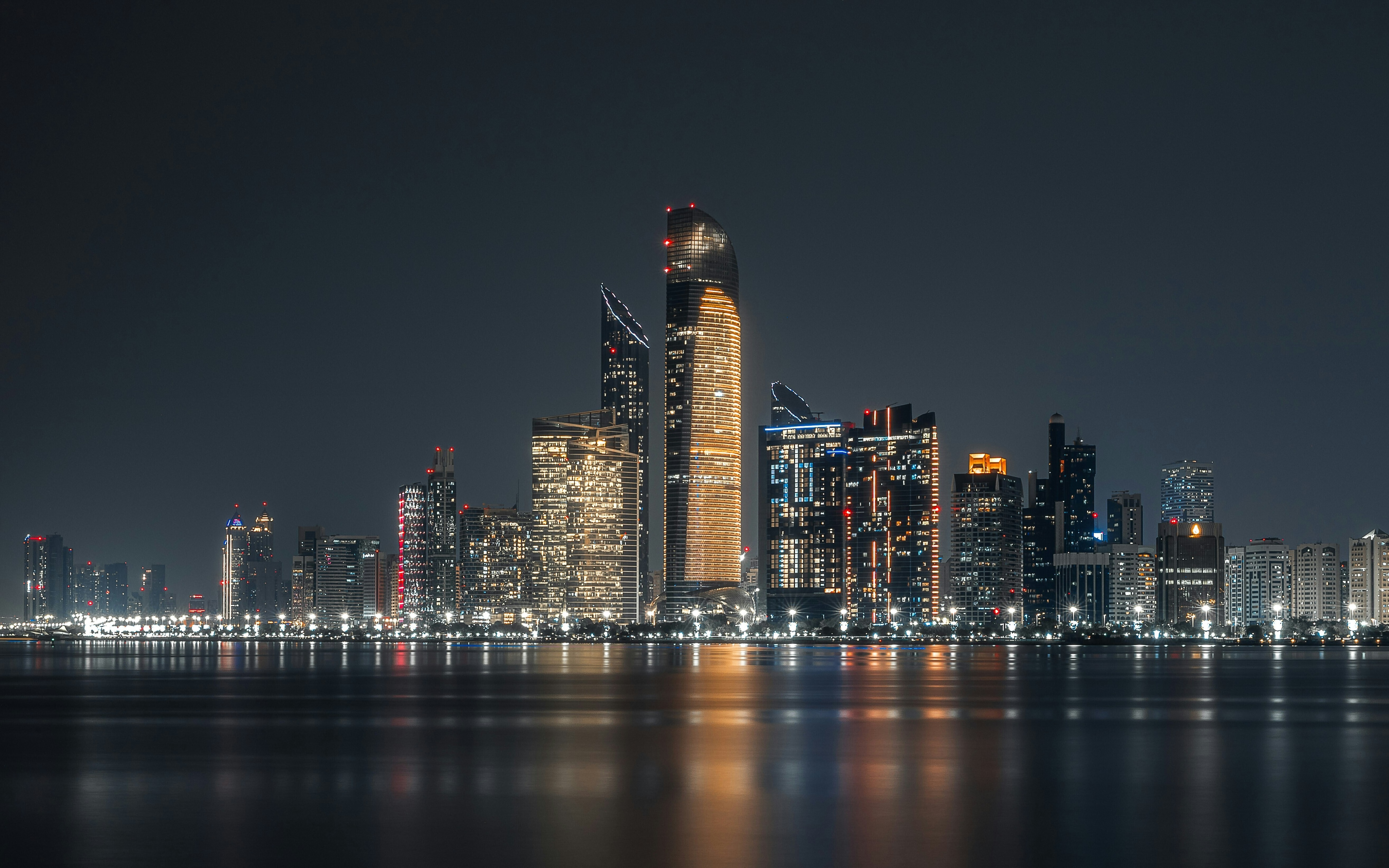
Abu Dhabi, United Arab Emirates. Amid global economic realignment, Gulf nations are accelerating their own transformation by building centres of excellence in innovation, technology and the energy transition. Image: Unsplash/LeonMacapagal
- The global economy is entering a new era of realignment due to trade tensions, technological transformation and shifting energy dynamics.
- Gulf nations are taking steps to ensure they are strategically prepared and well-positioned in this new era.
- Participants at the World Economic Forum Annual Meeting 2026 will examine the challenges and innovations affecting future economic growth.
The global economy has entered a period of structural realignment. Evolving trade dynamics, advances in technology and the energy transition are reshaping the foundations of global competitiveness.
At a time when many economies are reassessing their growth models, Gulf nations are accelerating their own transformation. This is underpinned by generational reform, massive investment and deliberate efforts to build centres of excellence in innovation, technology and the energy transition.
Few regions have invested in strategic infrastructure at the scale seen recently in the Gulf. These projects are reshaping the region’s economic base and elevating its role in global trade and capital flows.
Gulf nations are building closer transportation links to Asia, Africa and Europe. Saudi Arabia’s 950 km Landbridge railway line will cut Red Sea to Gulf transit times and unlock new manufacturing and logistics corridors. The Kingdom’s $267 billion logistics investment programme aims to create 59 planned logistics zones by 2030. The United Arab Emirates (UAE) hosts one of the world’s top 10 container ports and the busiest airport for international passengers, while Qatar operates the world’s eighth-busiest cargo airport. Together, these assets form a connected, resilient and competitive trade platform.
Digital infrastructure is expanding with equal intensity. The UAE and Saudi Arabia are deploying 5G and digital government assets, while also investing heavily in artificial intelligence (AI)-ready, renewably powered infrastructure. Data-centre demand in both markets is set to surge by 2030, underpinned by mega-projects such as the UAE’s planned Stargate AI campus, part of a 5 gigawatt (GW) hub, and Saudi Arabia’s 6GW data centre pipeline.
These platforms will enable cloud computing, advanced analytics, digital health and precision manufacturing across the region, positioning the Gulf as both a physical and digital super-connector.
A strategic commitment to the energy transition
Gulf nations have long been global leaders in energy production. Now that leadership is evolving. From hydrocarbons to clean power, the region is extending its capabilities into the technologies and systems that will define the next era of global energy.
The Gulf’s approach to the energy transition has accelerated significantly. The UAE’s Masdar is now one of the world’s largest renewable energy investors, with projects in more than 40 countries. Saudi Arabia is advancing giga projects that integrate utility-scale renewables, green hydrogen and sustainable urban design.
The economic logic is clear. The World Bank estimates that green-growth models could lift regional GDP to $13 trillion by 2050 – double the business-as-usual trajectory. PwC places the GCC sustainable-finance opportunity at roughly $2 trillion with the potential to create one million jobs.
Investments across carbon capture, advanced materials and next-generation fuels underscore the Gulf’s aim to remain a producer and exporter of energy solutions, both for today’s system and for the emerging low-carbon economy.
Talent and innovation ecosystems
People are a central pillar of Gulf nations' plans for the future, with new policies covering education, R&D and attracting talent to the region.
In 2024, education accounted for 15% of the UAE’s federal budget. Saudi Arabia increased R&D spending by 30% that year also, and launched the Human Capability Development Program in 2021 to equip its workforce with advanced technical skills. Long-term residency pathways, including the UAE’s Golden Visa, have made Dubai and Abu Dhabi magnets for global talent.
Innovation ecosystems are expanding too. Abu Dhabi’s Hub71, Riyadh’s Digital City and Dubai’s technology zones now host start-ups, venture studios and R&D teams focused on AI, biotech, fintech and clean energy. These ecosystems are strengthened by sovereign wealth funds that back venture capital platforms and attract global innovators to the region.
Still, the path forward requires stronger research institutions, deeper university and industry collaboration, and continued expansion of STEM talent pipelines.
Diversification and industrial strength
Competition in advanced manufacturing is intensifying globally. The Gulf’s integrated approach – targeting sectors, ensuring infrastructure readiness and implementing regulatory reform – is helping it to build capacity in this space, even from a low initial base.
Diversification is reshaping the structure of Gulf economies. Saudi Arabia’s National Industrial Development and Logistics Program is expanding domestic capability across manufacturing, mining, mobility and renewable energy components. The UAE’s Make it in the Emirates initiative is accelerating local production in aerospace, pharmaceuticals, semiconductors and electric vehicles.
These industrial strategies are reinforced by modern trade infrastructure and regulatory reform. This includes digitizing customs processes, expanding free zones, implementing integrated tariffs and establishing digital trade corridors.
As global supply chains reorganise, the Gulf’s relative openness and low tariff exposure have strengthened its appeal. Asian greenfield investment has risen more than six-fold since 2018, with roughly three-quarters directed to manufacturing. The region is becoming both a production base and a growth market for expanding Asian firms.
At the same time, the Gulf is emerging as one of the world’s most attractive markets for logistics investment. The regional freight and logistics market was valued at $172 billion in 2024 but is projected to reach nearly $300 billion by 2033 as industrial growth translates into demand for warehousing, distribution and multimodal capacity. The Agility Emerging Markets Index, which evaluates the logistics competitiveness of 50 major emerging economies, identifies the Gulf as a standout region for stability and resilience. Investors are responding accordingly.
A model of strategic resilience
The next wave of global growth will come from economies that can align capital, talent, infrastructure and execution. Gulf nations are assembling those elements at scale and with speed and policy clarity. In a world defined by fragmentation and uneven investment cycles, this coherence is becoming the region’s most durable competitive strength.
The signals of change are already visible. Saudi Arabia is now the world’s fifth-largest IPO market, while it and the UAE both rank among the global top 20 for AI talent. The UAE ranks fifth worldwide in the latest IMD World Competitiveness Rankings of 69 economies.
The Gulf’s ability to integrate physical and digital infrastructure, expand human capital and create long-term investment opportunities positions it to help shape the economic architecture of a realigning world for decades to come.
Don't miss any update on this topic
Create a free account and access your personalized content collection with our latest publications and analyses.
License and Republishing
World Economic Forum articles may be republished in accordance with the Creative Commons Attribution-NonCommercial-NoDerivatives 4.0 International Public License, and in accordance with our Terms of Use.
The views expressed in this article are those of the author alone and not the World Economic Forum.
Stay up to date:
Trade and Investment
Related topics:


Forum Stories newsletter
Bringing you weekly curated insights and analysis on the global issues that matter.
More on Economic GrowthSee all

Larry Fitzgerald Jr and Kelvin Beachum Jr
April 6, 2026