Opinion
Why the Baltic Sea moved to the centre of Europe's energy map
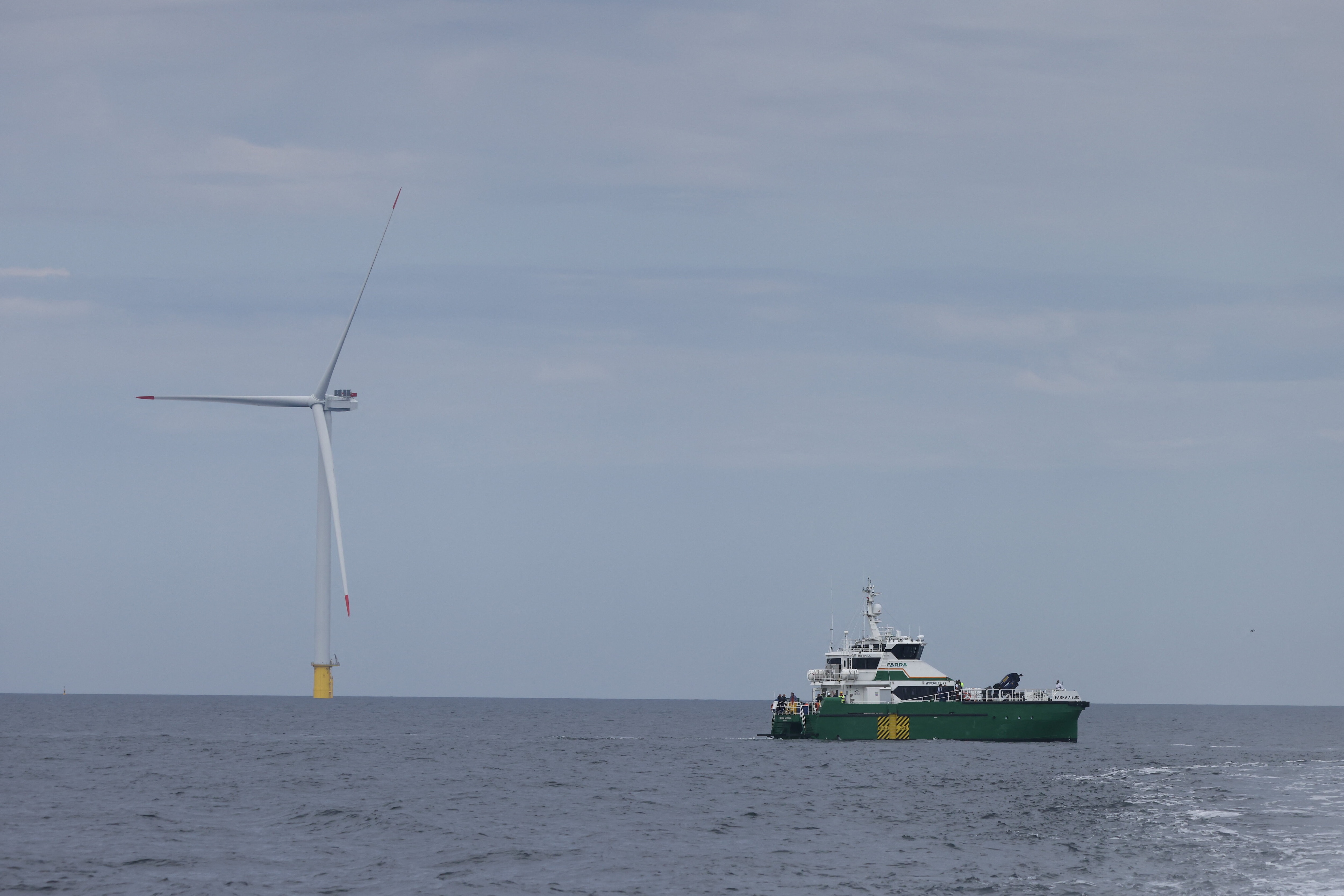
The Baltic Sea is growing in importance to the European energy equation. Image: REUTERS/Lukasz Glowala
- As Europe’s energy landscape evolves new strategic hotspots for resilience and growth are emerging, notably the Baltic Sea.
- The countries of the Baltic Sea region and Central and Eastern Europe have built their energy policies around security of supply for many years.
- Baltic Sea countries are also well-established and fast-growing markets for new energy developments, supporting progress towards the EU’s decarbonization goals.
Europe’s energy choices today are influenced by four forces – and each of them is converging in the Baltic Sea.
First, Russia’s war in Ukraine has reshaped the EU’s sense of physical and economic security. Second, a rapidly shifting geopolitical environment is altering trade flows and investment patterns. Third, the EU is pushing ahead with one of the world’s most ambitious decarbonization agendas. And finally, a global race for competitiveness is forcing Europe to rethink its industrial strategy — with energy costs and supply chains at the heart of this rethink.
The 2022 energy crisis made these pressures visible all at once. Russia’s invasion sent shockwaves across commodity markets, drove up electricity prices and transformed trade routes. It shifted the centre of gravity on Europe’s energy map. A continent that had historically relied on piped gas and oil supplies from Russia has had to move away from traditional east–west flows towards molecules travelling west to east, increasing the role of liquefied natural gas (LNG) and sea-borne trade routes.
The Baltic Sea has seized this moment and has become a new focal point for multiple dimensions of Europe’s energy strategy.
Gas as a redefining factor in Europe’s energy framework
For decades, Central and Eastern Europe was hard-wired to Russia through a dense web of pipelines. Western Europe followed a similar path, building out infrastructure to ship gas across the continent from the east.
By 2021, however, the model was fraying: Russia restricted gas flows, sending wholesale prices sharply higher. The full-scale assault on Ukraine in 2022 intensified the crisis and triggered an EU-wide scramble to diversify supply.

The Baltic Sea as a new energy gateway
In 2022 – a tumultuous year for the European energy sector – the Baltic Sea emerged as a gateway to new energy trade routes.
A mix of existing, under-construction and planned LNG terminals, floating storage and regasification units (FSRUs) – which receive LNG from long-haul LNG ships and then reload LNG onto smaller ships that can access tighter ports or other locations – and oil ports around the Baltic has given both coastal and landlocked countries access to global markets – and crucially, to non-Russian suppliers.
The shift did not come out of nowhere. For years, Baltic states warned of the risks tied to Russian hydrocarbons. Poland, Lithuania and Finland invested accordingly. Poland’s Świnoujście LNG terminal – commissioned at the end of 2015 and now capable of handling 8.3 billion cubic metres (bcm) a year – was a precursor of things to come for Poland. Lithuania took a similar approach with its FSRU in Klaipėda in 2014.
A second infrastructural wave followed: Balticconnector and Baltic Pipe, with capacities of 2.6 bcm and 10 bcm respectively. Both were completed before the war, and both proved timely.
More is coming. Two additional FSRUs are being developed in the Bay of Gdańsk. Once operational, they will boost Poland’s LNG import capacity to roughly three times its pre-war level, enabling the country to supply the wider region with non-Russian gas. These investments complement Poland’s role in the “Baltic Gate”, a north–south gas corridor running through CEE and connecting the Baltic coast to Ukraine, the Czech Republic and Slovakia.
In short: when Europe most needed redundancy in its energy system, the Baltic delivered it.
Delivering resilience through decarbonization
The Baltic’s growing importance is not limited to gas. Owing to its strategic location – it is an efficient and crucial supply route for Russia bordered by NATO countries – many refer to the Baltic as the “NATO lake”. Since 2022, the region has assumed a dual role: diversifying supply while accelerating decarbonization.
The stakes are considerable. The Baltic Sea region accounts for roughly one-third of the EU’s CO₂ emissions and energy demand. The eight countries bordering the sea — Poland, Lithuania, Latvia, Estonia, Finland, Sweden, Denmark and Germany — thus exercise immense influence over Europe’s decarbonization trajectory.
The Nordics, long pioneers of renewable expansion, are now joined by countries such as Poland, Germany, Lithuania, Latvia and Estonia, all seeing rapid increases in renewable capacity and anticipating large-scale electrification – a structural shift that will redefine their power systems.
The Baltic Sea region offers some of Europe’s strongest potential for offshore wind. ORLEN and S&P estimate the offshore energy potential of the Baltic at 93 GW. Yet vast potential remains untapped.
The Baltic Sea plays a crucial role in multiple areas of decarbonization. Momentum is building around hydrogen and e-fuels. The sea could serve as a storage basin for CO₂ captured from industrial processes. Last, but not least, its contribution to the resurgence of nuclear power adds another layer to the low-carbon supply.
Meanwhile, the region is becoming more physically connected: expanding interconnectors are knitting national grids together. In 2025, Lithuania, Latvia and Estonia synchronized with the EU power system, fully detaching from Russia.
The Baltic’s future role — and what it demands
The long-term diversification policies implemented by Baltic region countries, including Poland, deserve recognition. But the task now is to look ahead and maximize the Baltic’s potential for future growth and durable competitive advantage for Europe.
To develop its full potential – offshore wind, carbon capture, hydrogen and derivatives, nuclear and low-carbon fuels – the Baltic will need deeper cooperation among governments, regulators and industry. The region should also occupy a central place in the EU’s energy agenda, with frameworks that reflect its unique characteristics and enable long-term investment.
What the Baltic requires is not a single solution but a multi-vector transition: technology-neutral, collaborative and pragmatic.
As the largest energy company in CEE, Poland’s leading gas supplier, and the first offshore developer in Poland, ORLEN is directly engaged in these processes. The Group is committed to shaping the Baltic’s emerging energy landscape – and to supporting the region in becoming one of Europe’s principal centres of energy growth.
Don't miss any update on this topic
Create a free account and access your personalized content collection with our latest publications and analyses.
License and Republishing
World Economic Forum articles may be republished in accordance with the Creative Commons Attribution-NonCommercial-NoDerivatives 4.0 International Public License, and in accordance with our Terms of Use.
The views expressed in this article are those of the author alone and not the World Economic Forum.
Stay up to date:
Geopolitics
Related topics:


Forum Stories newsletter
Bringing you weekly curated insights and analysis on the global issues that matter.
More on Energy TransitionSee all

Ifeanyi Chukwudi
April 3, 2026


