As the humanitarian needs of children rise, new alliances are key for a stable future
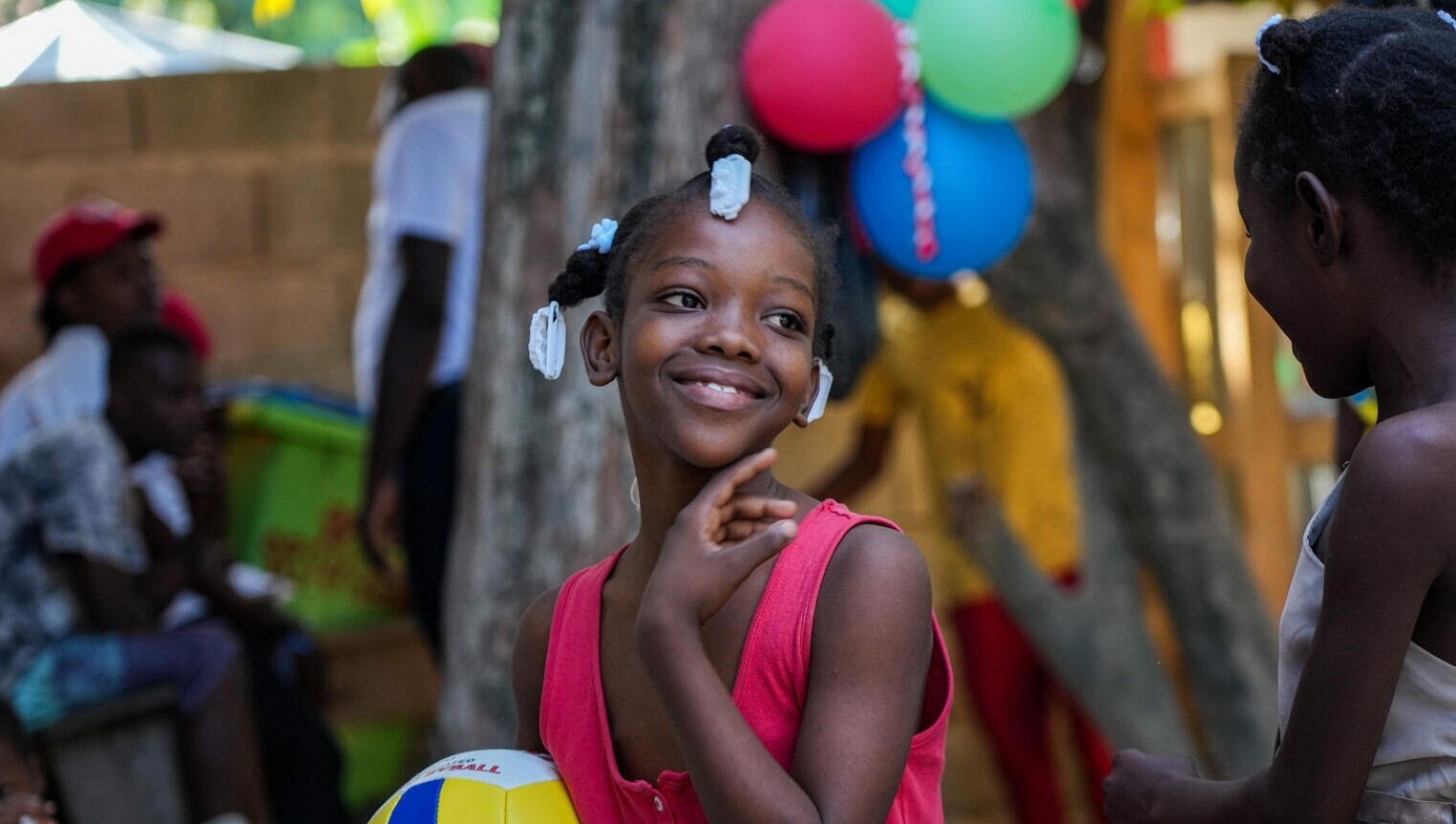
UNICEF is launching the Alliance for Children in Emergencies at Davos. Image: UNICEF/Herold Josep
- There are record numbers of children caught in conflicts with no end in sight; risks endured today will have impacts lasting beyond childhood.
- Only by investing in children and the global humanitarian architecture designed to protect them can we truly build a stable future.
- New and innovative public-private partnerships and alliances, like the Alliance for Children in Emergencies, are key.
We stand at a crossroads that will determine the future of the planet and its people. New and protracted conflicts, rising hunger, global funding cuts, and collapsing basic services are driving humanitarian needs for children to extreme levels worldwide. Childhoods are being shaped by violence, displacement, hunger and fear, instead of the safety, warmth, healthy growth, play and learning that children deserve.
Globally, an estimated 200 million children will require humanitarian assistance this year, their rights under constant attack. The numbers of children displaced from their homes continue to break records, with many trapped in protracted displacement for years. Yet, in the last two years, the overall decrease in humanitarian contributions, along with increased earmarking of funds, means there is less flexible funding to address children’s critical needs.
The mothers and children I have met in recent months, during missions to Sudan and South Sudan, ask me why the world has forgotten them. They are stalked by hunger and disease, their lives threatened by violence and increasingly extreme weather events. Their stories are similar to those told by children in 34 humanitarian crises we are responding to across the globe, many of them silent and outside the headlines.
As grave violations against children rise, humanitarian access is shrinking and there is an unprecedented decline in international aid. Now, the systems that children rely on are breaking down at the exact moment when they are needed most.
Children pay price for geopolitics
This crisis for children is putting life-saving emergency programmes at risk, jeopardizing the safety and survival of children. UNICEF teams are on the frontline of this unravelling of international support as, day in and day out in countries like Bangladesh, Haiti and the Democratic Republic of the Congo, they are forced to make impossible decisions. Should they focus limited supplies and services on children in one place over another? How can they choose between lifesaving immunization or nutrition interventions? Which supplies that children depend on to survive should be scaled back first?
No child should pay the price for geopolitics. The Gates Foundation has warned that 2025 is likely to be the first year, after decades of remarkable progress, that we will see a rise in the number of deaths of children under five years old. This is unacceptable and should send shockwaves around the world.
This is not only a crisis for children but a wider threat to global health, security and prosperity. We know from our eight decades of working with partners to deliver services for children and advocate for their rights that investing in a child benefits their entire family, community, country, and local and national economy.
The return on investment would impress any boardroom. Over the past generation, the world has reduced the deaths of children under five by a staggering 61 per cent. Immunization, which saves 4.4 million lives each year and costs only $35 per child, has delivered over $1.5trillion in global health and economic benefits. But the cost of inaction is potentially catastrophic as disease outbreaks pay no respect to borders.
Alliance for Children in Emergencies
That is why UNICEF is launching the Alliance for Children in Emergencies at Davos to bring together businesses united in their commitment to protecting children affected by conflict, disaster or displacement and leverage their expertise in areas like supply chain management and technological and financial innovation.
Through flexible funding, expertise and influence, the Alliance is one example of how a collective force for impact can support rapid response and long-term resilience where and when it’s needed the most. Business leaders understand that investing in children is not only a moral imperative, but also a smart economic decision.
Today, children are facing faster, deeper climate- and conflict-driven crises, yet most funding still arrives only after foreseeable shocks cause malnutrition, displacement and school drop-out. Scaling pre-arranged and risk-informed finance can save children’s lives, improve their well-being, while also reducing the overall costs of a humanitarian response and building resilience. Evidence shows that every $1 invested in anticipatory interventions yields between roughly $2 and $7 in avoided losses and added benefits.
UNICEF’s Today and Tomorrow initiative is the first pre-arranged and trigger-based financing solution for children to protect them from climate and disaster risks. We have aligned over $11.5 million in insurance payouts with over $13 million investments across 8 countries, reaching at least 1 million beneficiaries, half of them women and girls.
In the face of deep uncertainty and rising global needs, UNICEF is more focused than ever. Eighty years after our foundation, born of a crisis the world vowed never to allow to happen again, we are doubling down on the essentials, powered by a clear sense of purpose and an unshakable commitment to children.
Through collective action, innovative finance and new public-private partnerships, we can end malnutrition and immunize children against deadly diseases, protect children, even in the most fragile settings, and ensure the delivery of quality education to every child.
Don't miss any update on this topic
Create a free account and access your personalized content collection with our latest publications and analyses.
License and Republishing
World Economic Forum articles may be republished in accordance with the Creative Commons Attribution-NonCommercial-NoDerivatives 4.0 International Public License, and in accordance with our Terms of Use.
The views expressed in this article are those of the author alone and not the World Economic Forum.
Stay up to date:
Humanitarian Action


Forum Stories newsletter
Bringing you weekly curated insights and analysis on the global issues that matter.
More on Education and SkillsSee all

Neeti Mehta Shukla
February 27, 2026


