Industrial AI has the power to transform disaster response, but only if we work together
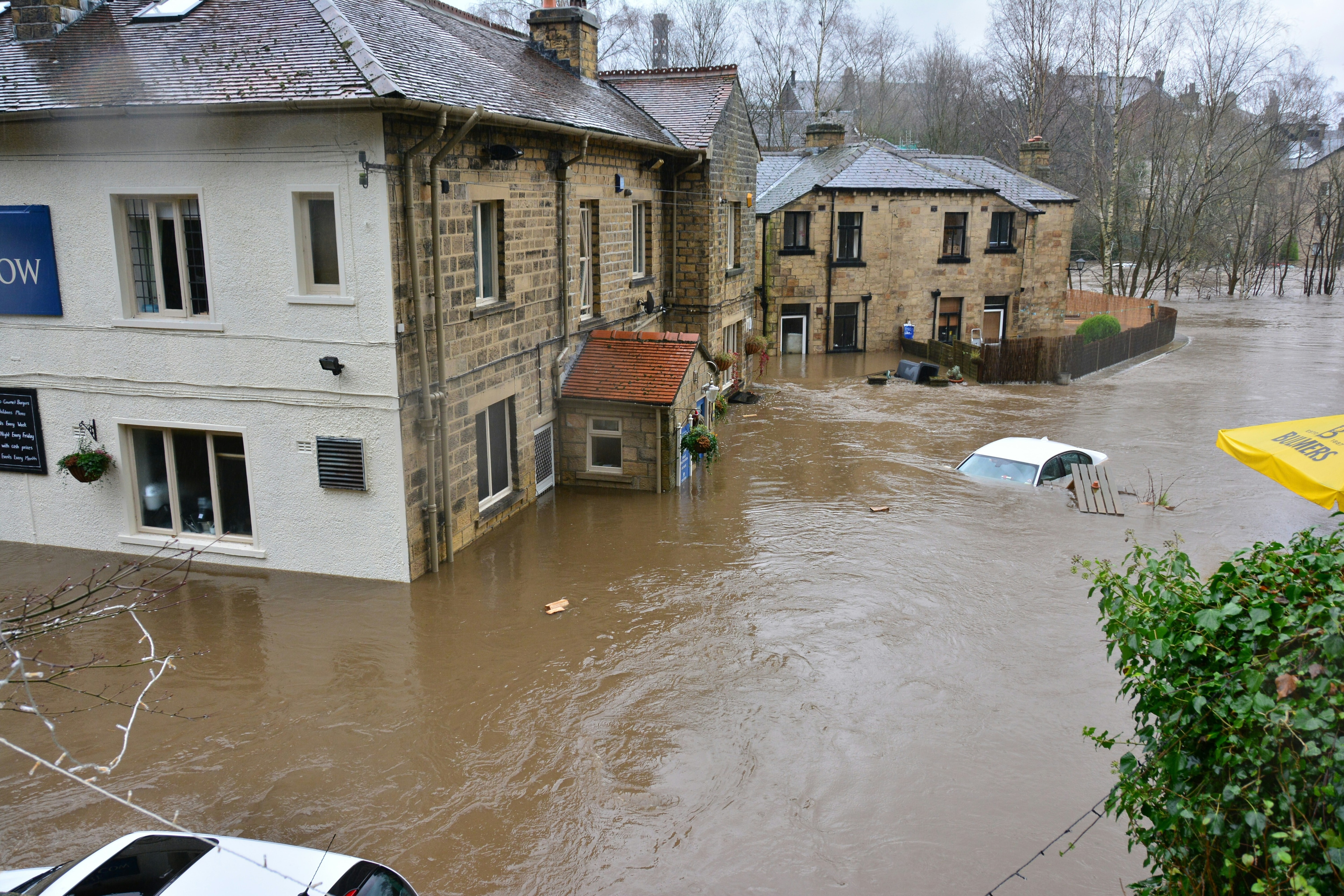
Industrial AI has the power to shift how we respond to disasters: from chaotic and reactive, to orchestrated and effective. Image: Unsplash/Chris Gallagher
- First responders often work with outdated tools, resulting in longer outages, depleted resources, and communities remaining isolated for extended periods.
- Industrial AI has the power to shift how we respond to disasters, moving from chaotic and reactive to orchestrated and effective.
- The private and public sectors need to step up and seize the opportunity that industrial AI presents to lead intelligent, coordinated responses that restore water, power and connection fast.
Minnesota, mid-winter. A snowstorm blows through the city, leaving chaos in its wake.
This isn’t the gentle snow day you remember from when you were a kid. This is 500,000 homes without power, drivers stranded on rural highways and flights grounded. Meanwhile, forty feet up a utility pole, a technician is trying to get the lights back on. They're squinting at a part in low visibility. There's no signal to check the fix or call for back-up.
And they’re on the clock: back at ground level, families wait out the storm in cold, dark homes.
When disaster hits, frontline workers must mobilize
It’s not just the emergency service workers. It’s the gas and electric technicians, the telecoms engineers reconnecting communities, the water companies keeping wildfires tamed.
But, too often, these responders are going to battle armed with last century’s tools. Complex recovery efforts are running on clipboards and stacks of paper. And there’s a price: longer outages, drained resources and communities shut off for longer.
Once, we could afford to maintain this kind of status quo. Climate-driven disasters could be weathered through sheer grit and determination. But not anymore.
Natural disasters – from heatwaves to wildfires, hurricanes to floods – have become frighteningly common. In 2023, there were 415 natural disasters worldwide, up from 123 in 1980. Major events like these aren’t just increasing in frequency, but force – eight of the ten costliest disasters since 1900 have happened in the last 20 years.
The problem has become so extensive, we’ve got to change how we solve it. Or get buried in the fallout.
It’s no longer enough to rely on a patchwork of heroic local efforts, dependent on brave individuals frustrated by fragmented infrastructure and delayed communications. The biggest gains societies can make will now come at a system level: from smarter coordination across the utility companies, public agencies and communities as they put people’s lives back together. Not just from more trucks and tarpaulins.
Can industrial AI optimize disaster recovery?
This is one of the most compelling use cases for artificial intelligence (AI). ‘Industrial AI’ is just what it sounds like: AI built for plants, aircraft hangars or out in the field. It’s AI that lives outside of the hype machine, not promising a catch-all cure. But trained to fix specific, tangible problems in sectors where, some days, life is on the line.
And, it has the power to shift how we respond to disasters. From chaotic and reactive, to orchestrated and effective.
Before a disaster hits, planners are armed with an AI-powered command centre. It predicts where a severe storm, say, might move next – and maps that prediction onto a live view of every asset at risk. Plus, which parts are where and who's available.
That means the AI can answer the most pressing questions in a disaster scenario: Where should we focus restoration efforts first? Which power lines are most at risk of failure? Which cell tower gets the hospital back online?
How can industrial AI prioritize emergency responses?
These predictive analytics prioritize the deployment of crews on the ground. Crucially, it’s deployment that unites all the disparate utilities in the region – what US firms call ‘mutual aid’ – and speaks to their separate systems. Because in the eye of a storm, it doesn’t matter whose logo is on the side of the truck. What matters is pulling together and sharing resources to protect communities as quickly as possible.
Coordination like this happens without AI, but it can be painfully slow. Crews huddle in parking lots, awaiting orders. Locations and tasks are drawn up with a marker and whiteboard. Teams might wait days to be deployed – they might not even be used at all. All while vital infrastructure breaks down and families light candles in a blackout.
Industrial AI connects people, parts and places in the most efficient way possible. Teams are automatically deployed and rerouted in real time as the facts change. And, once technicians are on the job, they can analyze a part based on an image or video – identifying what’s gone wrong and guiding them through the fix to exact design specifications.
All of that means that signal, energy or water can be restored much faster.
To Brian Burdette, head of the emergency response team at SoCalGas – the US's largest natural gas distribution utility – that’s the crux of it. “If we can cut restoration times by getting crews to the right places with the right equipment, before the event even hits, then hospitals stay powered, field teams work safely and families return to warm homes faster."
This isn’t a hypothetical. These are technologies that are already being piloted, across energy, water and telecommunications.
How can collaboration optimize industrial AI?
But, if we’re to see a real impact, we need to enter into a spirit of openness and collaboration. We need nations and companies to pull together at a system-wide level, not just organization by organization or region by region.
For leaders in these sectors, that means treating disaster response as the core strategic capability it is. Putting in place AI-enabled workflows for every stage of a disaster – from prediction to customer comms – and being open to sharing systems with adjacent firms.
For policymakers, it means building a framework for AI-powered national resilience – the shared data standards, incentives and regulation that lets utilities, local governments and NGOs use AI to get the world back up and running. We must also mandate that firms have emergency response plans and technology that can work with each other.
As major disasters become a more pressing reality the world over, a piecemeal approach won’t save the day anymore. The private and public sectors need to step up – seizing the opportunity that industrial AI presents for intelligent, coordinated responses that restore water, power and connection faster. For the technician risking their life up forty-feet high in a snowstorm, we owe them that much.
Don't miss any update on this topic
Create a free account and access your personalized content collection with our latest publications and analyses.
License and Republishing
World Economic Forum articles may be republished in accordance with the Creative Commons Attribution-NonCommercial-NoDerivatives 4.0 International Public License, and in accordance with our Terms of Use.
The views expressed in this article are those of the author alone and not the World Economic Forum.
Stay up to date:
Artificial Intelligence
Related topics:


Forum Stories newsletter
Bringing you weekly curated insights and analysis on the global issues that matter.
More on Resilience, Peace and SecuritySee all

Naoko Tochibayashi
February 24, 2026


