How informal science spaces unlock learning for the world’s most excluded children
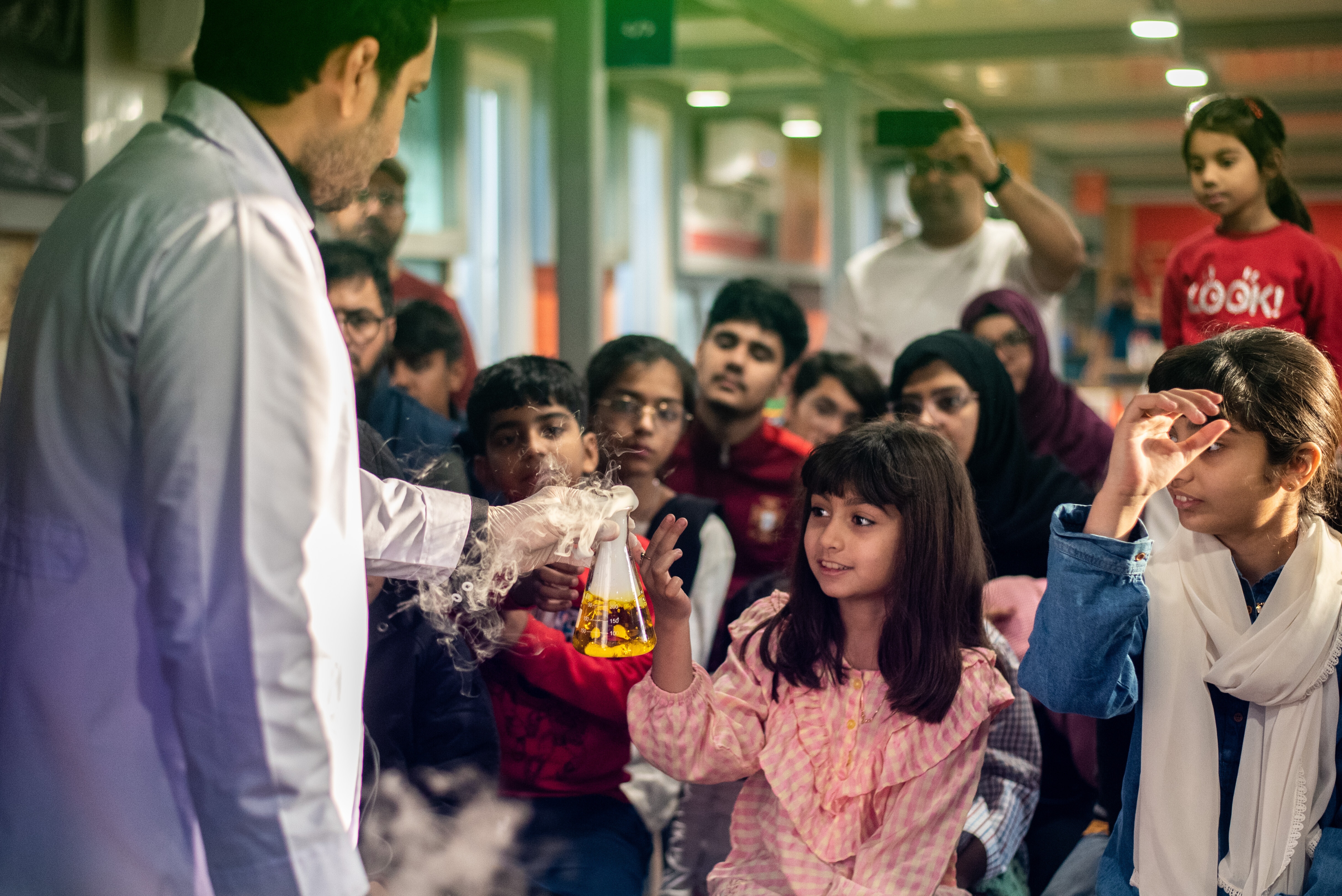
Informal science spaces offer a place where science is lived rather than observed from a distance. Image: The Dawood Foundation
- In 2024, over 250 million children and young people globally were out of school.
- The scale of exclusion makes it essential not only expand access to school but to rethink learning ecosystems.
- Informal science spaces offer what the formal system often cannot: a place where science is lived rather than observed from a distance.
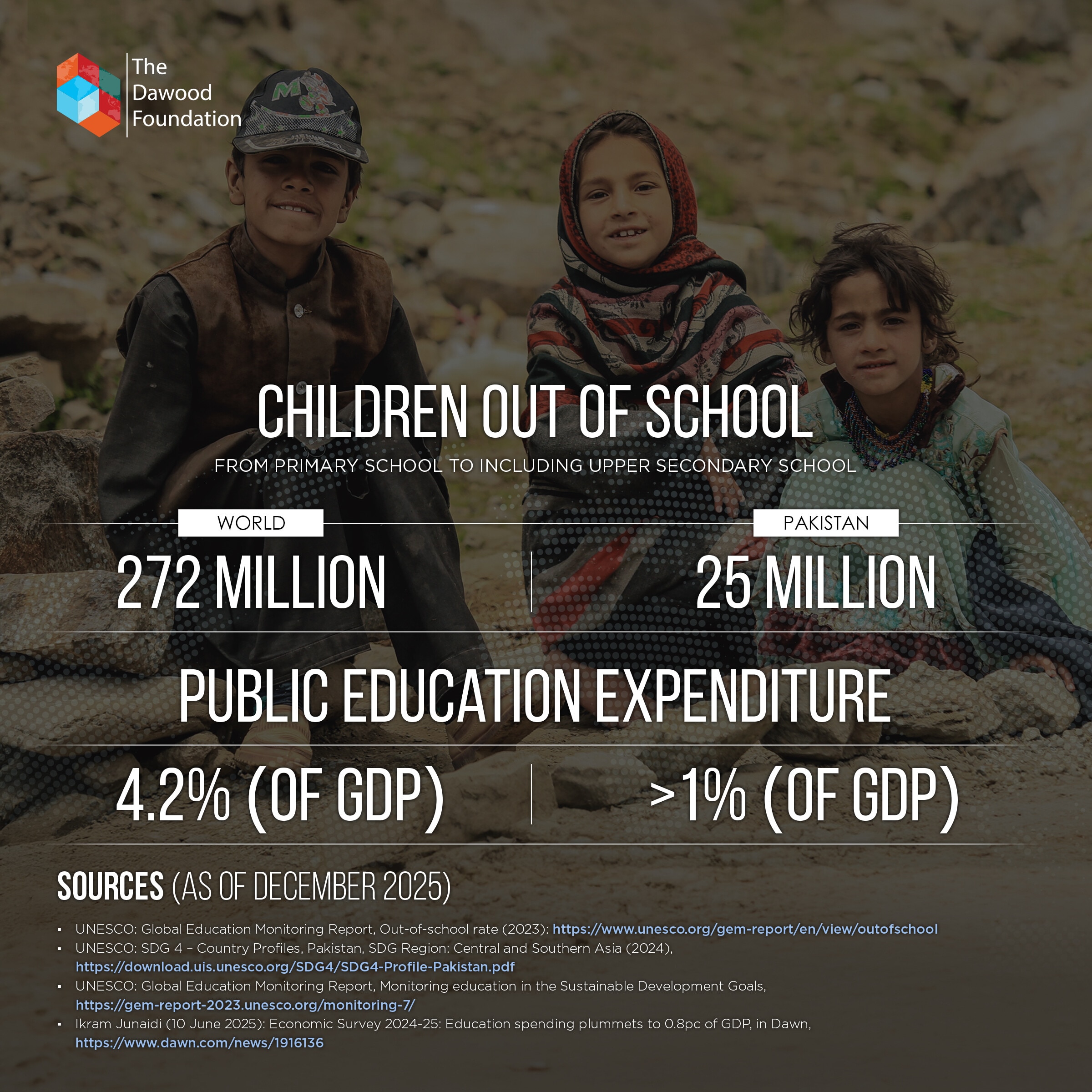
Around the world, education systems are under pressure. In 2024, over 250 million children and young people globally were out of school, according to UNESCO. Pakistan reflects this challenge starkly: with under 1% of GDP allocated to education, more than 25 million children remain excluded. This scale of exclusion makes it essential not only expand access to school but to rethink learning ecosystems, including informal spaces where curiosity, creativity and problem solving thrive.
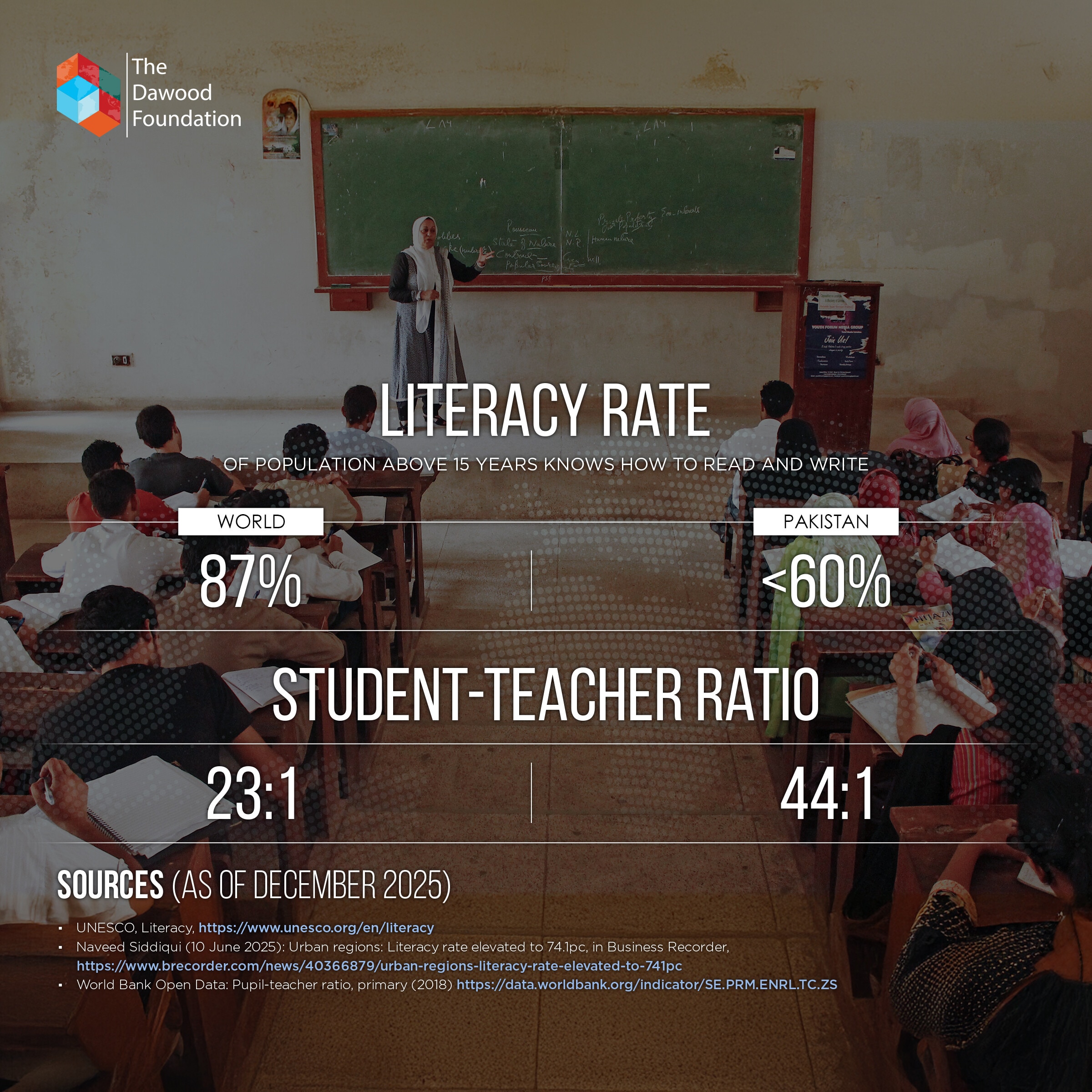
Inside classrooms, structural constrains further undermine learning. Overcrowded spaces and scarce resources, especially functioning science labs, limit hands-on learning and personalized instruction, a challenge compounded by the fact that more than 90% of government schools lack adequate labs and trained teachers. Combined with the impacts of COVID-19 and recurring climate shocks, including catastrophic floods, these deficits have widened learning gaps and exacerbated existing inequalities.
At the same time, societies everywhere are struggling to align education with rapid scientific discovery, technological transformation and the accelerating influence of artificial intelligence. Students today encounter more information than any previous generation, yet often struggle to connect their learning with meaning, as studies by UNESCO and the OECD show. As countries confront climate uncertainty, misinformation and social fragmentation, education must equip citizens not only with future-ready skills, but also with the curiosity, confidence and empathy needed for collective resilience.
Science education plays a critical role beyond curriculum content, nurturing critical thinking, evidence-based reasoning and shared knowledge, capabilities essential for making informed decisions in a rapidly changing world. When scientific literacy is strengthened both inside and outside the classroom, societies build a broader foundation for civic participation, trust and social cohesion.
Making science accessible
Rapid urban growth and limited public space can suppress learning opportunities in Global South cities, yet these cities also serve as hubs of creativity and innovation where new educational models can emerge. One such model has taken shape in Karachi’s Railway Colony.
The MagnifiScience Centre, established by The Dawood Foundation, is built on a simple but powerful idea: science should be accessible to everyone. It is an open interactive learning space in which experimentation drives the joy of discovery.
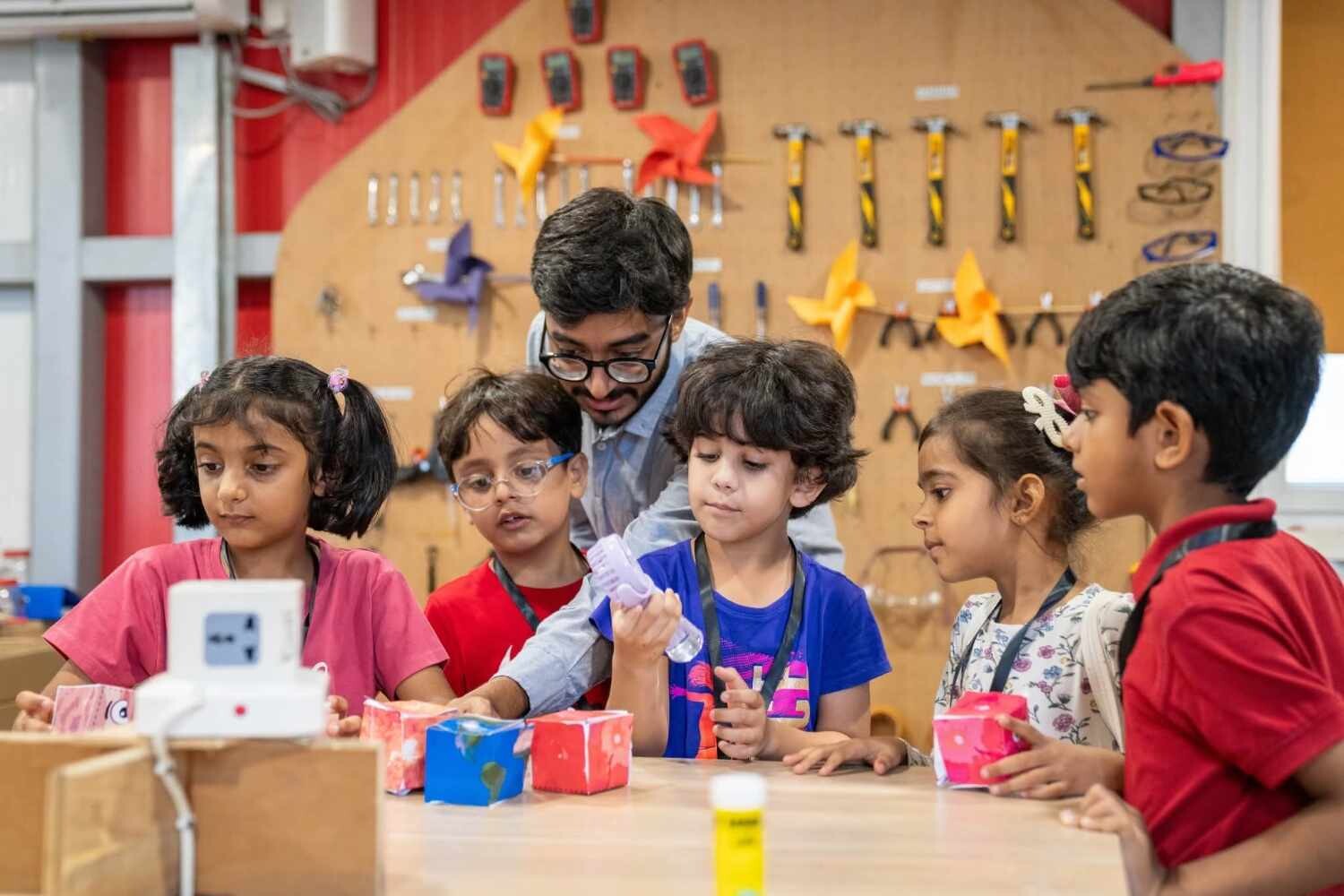
In a context where most students rarely encounter a functioning science lab, the centre offers what the formal system often cannot: a place where science is lived rather than observed from a distance. Visitors, from families to students to professionals, are encouraged to touch, explore and ask questions. Learning becomes active, social and multisensory. Informal learning provides freedom to explore at one’s own pace, encounter ideas beyond the curriculum, and learn in ways grounded in culture, community and lived experience. It creates shared experiences across ages, abilities and backgrounds, that foster empathy and social cohesion rather than a hierarchical one.
Ninety-five percent of the centre’s more than 400 exhibits are designed and built in-house using local materials, engineers, educators and craftspeople. This home-grown approach strengthens local talent, demonstrates community-driven innovation, and underscores that collaboration nurtures creativity in ways AI alone cannot replicate.
The centre operates as a living ecosystem rather than a conventional museum. Exhibits evolve with universities, artists and entrepreneurs, creating a living ecosystem where physics intersects with urban design, biology meets local heritage, and art and engineering co-create new ways of understanding.
These spaces are transformative, especially for girls and women, often constraint by mobility, safety and access to STEM. By providing inclusive, supportive environments, the centre helps build confidence and open pathways to scientific learning and future careers. Research shows that when mothers engage in learning, children’s motivation and outcomes also improve, reinforcing the long-term value of intergenerational learning.
Vital civic spaces for a fast-changing city
In cities like Karachi, where public spaces are limited, the MagnifiScience Centre also serves as a civic space. It offers room for reflection, exploration and connection, a form of “social infrastructure” as vital to urban resilience as transport systems, green areas or housing. By translating global challenges into tangible, hands-on experiences, the centre helps people understand complex ideas and fosters trust, agency and shared responsibility.
Visitors engage with themes that resonate globally: how cities grow, how humans perceive reality, how communication evolves, and how science supports sustainability. A child experimenting with sound waves develops not only an understanding of physics but also the focus and curiosity needed for lifelong learning. A family examining geological layers in this screen-free space begins to grasp the concept of deep time, and with it, a sense of humanity’s collective responsibility to the planet.
These moments reinforce a core outcome of informal learning: the ability to see oneself, see others and see the world through curiosity rather than judgment, expanding knowledge in an open and inclusive environment.
Creating ecosystems of learning
Policy-makers globally are asking how to prepare students for a future shaped by AI, climate transitions, and evolving labour markets. Yet the broader question is how to cultivate societies capable of understanding how to navigate uncertainty with resilience and empathy.
This requires ecosystems of learning, where schools work alongside cultural institutions, NGOs, universities and families to expand the spaces where curiosity and confidence can grow. Informal learning environments complement formal education by restoring a sense of awe, making science tangible, local and reconnecting knowledge with everyday experience. And they remind us that knowledge is not merely a set of facts, but a way of seeing the world that emerges through active participation.
Reimagining learning must focus on the widest gaps, ensuring every child gains access to curiosity, exploration and opportunity.
”For countries like Pakistan, where millions of children are excluded or underserved, such spaces offer more than enrichment. They provide alternative entry points into learning, pathways that may lead children and adults back into formal education, vocational training or future opportunities.
The world’s greatest discoveries rarely begin with perfect conditions. They begin with a simple question: What if? Spaces of inquiry, such as science centres, create the conditions for those questions to flourish. Reimagining learning must focus on the widest gaps, ensuring every child gains access to curiosity, exploration and opportunity, forming a blueprint for more informed, connected and resilient societies.
Don't miss any update on this topic
Create a free account and access your personalized content collection with our latest publications and analyses.
License and Republishing
World Economic Forum articles may be republished in accordance with the Creative Commons Attribution-NonCommercial-NoDerivatives 4.0 International Public License, and in accordance with our Terms of Use.
The views expressed in this article are those of the author alone and not the World Economic Forum.

Forum Stories newsletter
Bringing you weekly curated insights and analysis on the global issues that matter.