Scaling innovation at the intersection of the digital and energy transitions
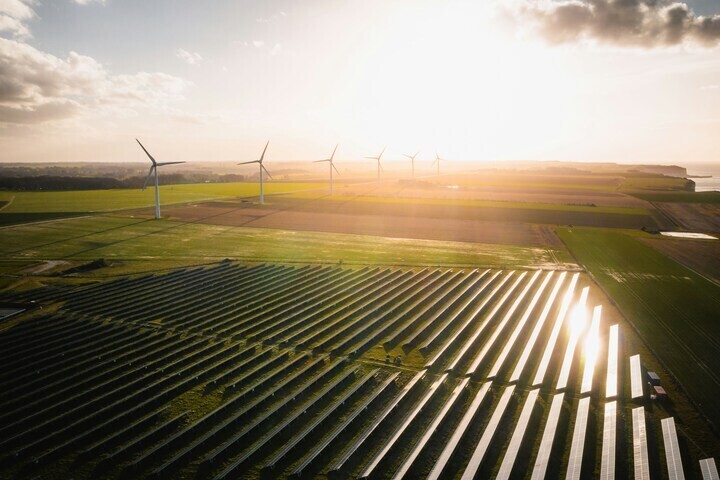
Aligning power and digital planning could accelerate more innovation to drive the energy transition. Image: Unsplash/Benoit Deschasaux
- Future global growth will depend on aligning digital expansion and energy system transformation.
- This means combining clear rules, smart financing and human capability that is enhanced by more training and investment in people.
- Leaders will gather at the World Economic Forum Annual Meeting 2026 to discuss how to protect the environment while also driving economic growth.
The next phase of global growth will be shaped by digital intelligence and the energy infrastructure that supports it. These two systems are interacting more every day. From artificial intelligence (AI) to advanced manufacturing, progress now requires digital and energy infrastructure to evolve in harmony to remain reliable, affordable and trusted.
Scale is also needed to turn promising ideas into everyday services. This requires shared rules, steady financing and human capability. It also requires clarity. When people understand how systems are governed, how data is used and how results are delivered, they engage more fully in change.
AI is already progressing from pilots to become integrated into companies’ daily operations; for example, by optimizing supply chains, supporting predictive maintenance and improving public services. At the same time, electricity demand is rising sharply, according to the International Energy Agency's Electricity Midyear Update 2025, buoyed by the growth of data centres, electrified mobility and high-tech manufacturing.
Under these circumstances, when digital and power planning diverge, systems can face delays, congestion and missed opportunities. But aligning them can help bottlenecks to disappear, costs to decline and energy company productivity to rise. This is why energy planning must now include data capacity, just as digital planning must account for power availability.
Creating clear rules and attracting finance
Accountability must be at the heart of the next phase of global growth. When implementing digital and energy innovations, organizations need to be transparent about who owns outcomes, what data informs decisions, how models are tested and how results are explained. The same clarity should extend to energy and market design.
Rules that are simple and consistent make projects bankable and accelerate delivery. The World Economic Forum’s Energy Transition Index 2025 highlights the role of good governance in unlocking private investment and scaling clean technologies.
Capital also follows clarity. Long-term contracts, transparent price signals and standard templates can shorten negotiation cycles and lower risk premiums. Across technologies, generation, storage, flexible assets and digital operations, confidence in governance can unlock investment. And then, when a large energy user signs a supply arrangement that adds capacity to the system, many stakeholders can benefit at once, including the developer, the operator, the customer and the wider community.
Meeting rising power demand sustainably will require major investment in generation, grid expansion and enabling infrastructure. Research published by the World Economic Forum in 2024 estimates that roughly $30 trillion in additional capital will be needed across key sectors and supporting infrastructure by 2050. Much of this must be invested in emerging markets. Financial tools such as blended finance and green securitization can direct funds to where they will have the greatest impact.
Making energy infrastructure the next enabler
Clarity will also help infrastructure to grow smarter, as well as larger. Energy transmission, distribution and storage networks need digital monitoring to improve reliability and flexibility. Interconnection and siting work best with coherent processes and aligned digital permitting tools.
Early coordination between a company's digital and power teams can prevent delays later. Put simply, each new unit of computing capacity a company commissions should be matched with a credible plan for clean supply and firm grid access. This should help reliability and affordability to rise together, while carbon footprints decline.
But technology only scales through people. Engineers must be fluent in both currents and code, operators must manage hybrid systems, and technicians must be able to maintain digital and power assets safely. Companies should invest in reskilling and apprenticeships to make this happen, ideally through partnerships with universities and local communities. Building skills in this way benefits the local economy by strengthening communities and the industrial base.
Lessons from Türkiye’s energy transition efforts
Emerging markets will carry much of the new demand for power and the opportunities this will bring. In Türkiye, competitive tenders have helped to scale renewable capacity, grid digitalization has improved operations and collaboration between public and private actors has fostered execution discipline.
Now, as part of the World Economic Forum’s Global Lighthouse Network and C4IR Türkiye, local industry is testing ways to apply AI to grid management and predictive maintenance, contributing insights that can benefit other markets.
Türkiye has taken several steps to accelerate its energy transition that could be used in other markets:
- Power purchase agreements (PPAs) tailored for large digital workloads can add renewable capacity efficiently.
- Joint site planning among system operators, local authorities and investors can speed up both power and data infrastructure.
- Comparable metrics published on energy and water use can build trust and empower communities and investors to make informed choices.
These actions do not need perfect conditions, they only require collaboration and clarity.
Cooperating to accelerate the energy transition
No country or company can deliver an energy transition agenda alone. Blended finance, clear taxonomies and shared standards among different countries and industries can help to reduce barriers and bring more projects to financial close.
Firms can contribute by sharing operational data, supporting skill development and designing projects that deliver visible benefits, faster public services, more resilient healthcare, safer factories and better living standards.
Joint action can be used to achieve reliability, affordability and sustainability together. To align the growth of digital systems with the efficiency and sustainability of power systems, keep rules clear, finance smart and people skilled.
Türkiye will continue to develop energy projects that add capacity, partnerships that strengthen the power grid and digital tools that lift system performance. This will help to deliver long-term progress through steady work, transparent delivery and results that people can feel in their daily lives.
Don't miss any update on this topic
Create a free account and access your personalized content collection with our latest publications and analyses.
License and Republishing
World Economic Forum articles may be republished in accordance with the Creative Commons Attribution-NonCommercial-NoDerivatives 4.0 International Public License, and in accordance with our Terms of Use.
The views expressed in this article are those of the author alone and not the World Economic Forum.
Stay up to date:
The Digital Economy
Related topics:


Forum Stories newsletter
Bringing you weekly curated insights and analysis on the global issues that matter.
More on Artificial IntelligenceSee all

Keith E. Ferrazzi and Wendy Smith
April 9, 2026


