Latin America at Davos 2026: From building trust, to Venezuela and trade insights
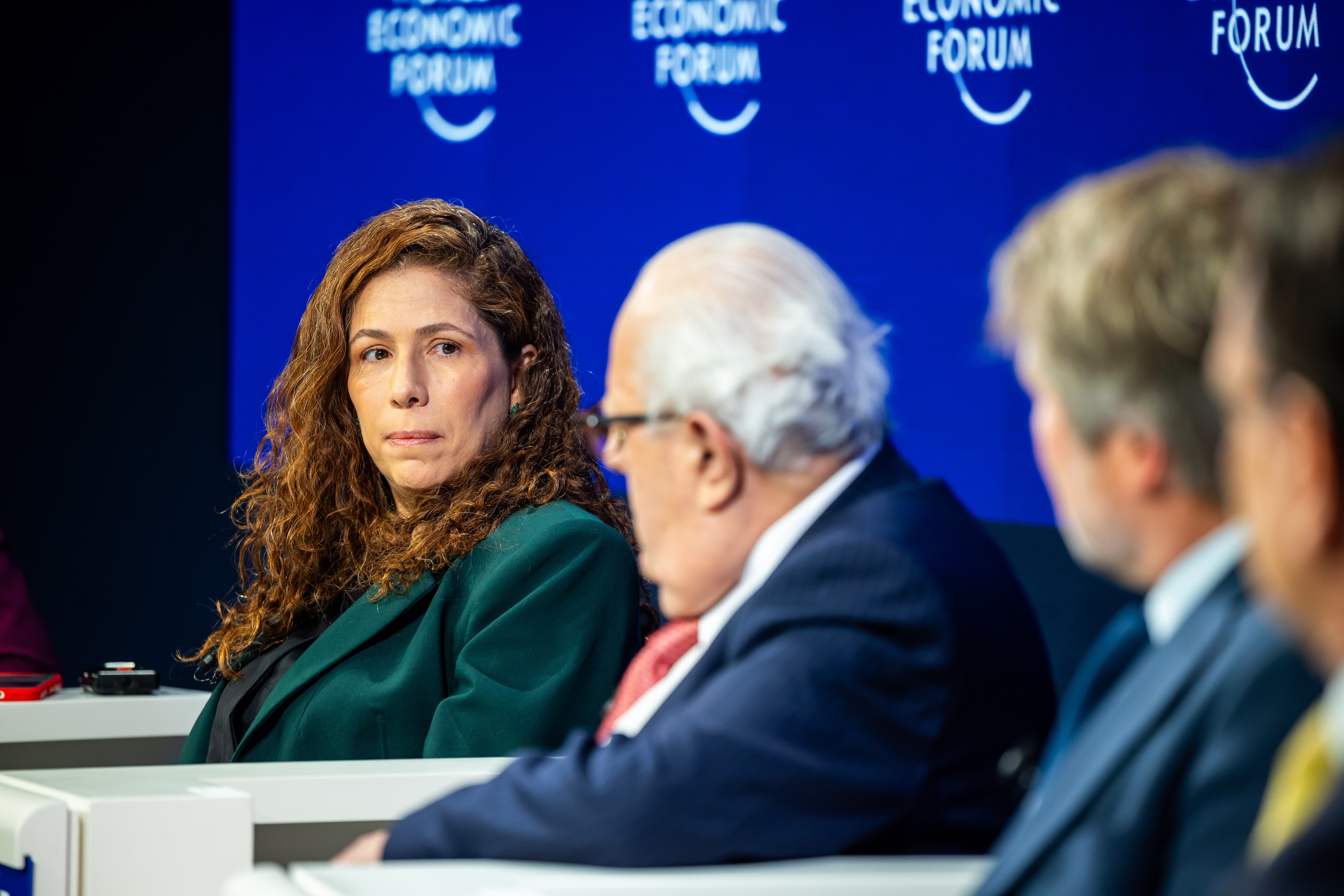
Latin America's strengths —from macroeconomic stability to potential sources of growth— were on the agenda, but geopolitical rivalry and fragile trust impact the landscape. Image: World Economic Forum
- Emerging and longstanding challenges shaped debates on the future of Latin America at the World Economic Forum Annual Meeting in Davos 2026.
- The region’s strengths – from macroeconomic stability to potential sources of growth – were on the agenda, but geopolitical rivalry and fragile trust remain challenging.
- Speakers debated renewables and critical minerals, growing digital ecosystems, and an investment-ready private sector, and analysed how to unlock opportunities amid geopolitical fragmentation.
Latin America and the Caribbean enter the coming decade with important strengths to navigate an increasingly complex landscape. Macroeconomic stability, abundant renewable energy and minerals critical to the energy transition are strengths, reinforced by expanding digital ecosystems and a private sector committed to partnering with governments to deliver investment and growth.
These advantages, however, coexist with a complex operating environment that is shaped by major-power rivalry and political fractures. There are also longstanding challenges around unlocking Latin America’s growth and productivity.
Policymakers, energy and geopolitical experts, and leaders from business and civil society debated the region's challenges and opportunities at the World Economic Forum’s Annual Meeting in Davos. Here are some of the top takeaways.
What next for Venezuela?
Geopolitical upheavals manifested clearly in Latin America in the wake of the US operation that removed Nicolas Maduro on 3 January. Venezuela's prospects surfaced repeatedly in discussions across several panels at Davos.
In the session "Venezuela: What Next?," panellists were doubtful that Washington's approach has yet translated into the pathway to legitimate governance for a durable economic recovery. Ricardo Hausmann, founder and director of Harvard University’s Growth Lab and a former Venezuelan Minister of Planning, argued that what is being touted as "stability" is better understood as coercion – marked by ‘ongoing political imprisonment and sweeping limits on basic freedoms by the current Venezuelan leadership’.
He said that the interim authorities lack legitimacy to establish a credible, investable framework – and argued that without a restoration of rights, Venezuela cannot persuade its 8-million strong diaspora to return home and rebuild the economy.
The agenda forward is to free the political prisoners, allow people to return, and set an electoral timetable that gives people the sense that it’s not the democratic transition – because the elections have not yet happened – but that it’s time to go back.
”Building on Hausmann's argument, Jeffry Frieden, professor of International and Public Affairs and Political Science at Columbia University, argued that foreign investment will only return if Venezuela delivers political stability. He noted that authoritarian regimes can sometimes provide predictability for market players but was sceptical about whether that would be enough to rebuild investors' long-term trust in Venezuela.
I think there are three prerequisites for a recovery of a foreign investment in Venezuela: political stability, political stability, and political stability. The question is whether you can have political stability without a transition to democracy and a recovery of rights.
”In the session "Rebuilding Trust in Latin America," Ecuador’s President Daniel Noboa highlighted that many Venezuelans living in Ecuador welcomed Maduro’s removal as a source of renewed hope — and a possible opening toward a democratic future. Meanwhile, Ilan Goldfajn, president of the Inter-American Development Bank (IDB), was asked about how the institution could support Venezuela's economic recovery. "We are in the business of trying to improve the lives of people in the region," said Goldfajn, but cautioned it can only step in after certain practicalities are met —for example, approval by its 48-member board — and when there are clear conditions for the possibility of sustainable recovery.
We are in the business of trying to improve the lives of people in the region.
”Navigating a tough landscape
Other sessions, however, highlighted Latin America's strengths to navigate a geopolitical landscape increasingly marked by US-China competition – a "new international disorder," reminded Juan Carlos Mora, CEO of Bancolombia, during the session "Breaking Latin America's Growth Ceiling." He said the best path for the region is likely not to align completely with one side or the other, but to benefit from both. Mora emphasised the role of the private sector in unlocking opportunities in areas such as infrastructure, provided the region's governments find a common ground to integrate and develop those opportunities at regional level.
We have a very eager private sector that wants to work with governments to invest. Infrastructure [projects] could help develop a lot of opportunities in the region.
During the same panel, policymakers from Mexico and Brazil offered two illustrative examples of industrial policies pursuing an agenda of growth and income distribution. Altagracia Gomez Sierra, Coordinator of the Regional Economic Development and Relocation Advisory Council of Mexico, described how the country stands to benefit from the current trend of nearshoring through "Plan Mexico," an ambitious vision for national development with 13 goals which include raising the country from the world's 12th to 10th economy, increasing investment to 28% of GDP by 2030, and reducing poverty and inequality.
[Plan Mexico] is about how we navigate a new world — one in which the paradigms of both the market economy and globalisation have fundamentally changed. Mexico has an opportunity to lead and show a different way to understand both market economies and globalisation.
”Offering a complementary perspective, Esther Dweck, Minister of Management and Innovation in Public Services of Brazil, highlighted the country's return to growth after a decade of underperformance. She attributed this turnaround to a combination of policies, including macroeconomic reorganisation and fiscal reform, alongside the restoration of public investment and the strengthening of social programmes.
In parallel, Brazil officially joined the First Movers Coalition as its 15th Government Partner during the Annual Meeting. It was a milestone reflecting years of collaboration with the World Economic Forum on industry resilience activities and it achieved synergies with the Belem Declaration on Sustainable Procurement, adopted during COP30.
Dweck described the EU–Mercosur agreement as an opportunity to break with the US-China polarization, and highlighted shared opportunities in infrastructure, productivity and social policies if Mercosur's main trading partners, Brazil and Argentina, align their political priorities.
One point that is critical for growth is deeper integration in Latin America. Now, the region is less integrated than other parts of the world. To unlock that potential, we need to focus on integrating key areas [across the region].
”Although Latin American economies are performing unevenly in terms of growth, macroeconomic instability is no longer a concern across the region, as Peru’s Central Bank Governor Julio Velarde highlighted. Velarde underscored that countries have already demonstrated resilience through independent central banks and credible monetary frameworks that have endured political pressure. Latin America’s growth constraints today lie elsewhere: low levels of trust, fractured politics, regulatory uncertainties, and weak productivity. Addressing them will be central to breaking the region’s growth ceiling, said James Scriven, CEO of IDB Invest.
Across the region, one of the biggest constraints we see is volatility — including uncertainty and a lack of trust in laws, institutions and currencies. The role of an institution like ours is to help mitigate those risks and help investors navigate uncertainty in our continent.
Argentina's president, Javier Milei, highlighted the fruits of reforming his country's economy during a Special Address. He emphasised the transition from negative growth to estimates above 4% for 2025, underpinned by fiscal discipline.
Since we took office in 2023, we have carried out 13,500 structural reforms, which today allow us to have a dynamically more efficient economy and will enable us to grow once again. That is to make Argentina great again.
”Boosting resilience and unlocking growth
Latin American leaders participated in panels across the Annual Meeting, highlighting the region's strength in the new economy, particularly the continent's role in the energy transition. Having grown nearly 6% in 2025, Paraguay is benefitting from being one of the few countries to achieve nearly 100% renewable electricity, thanks to hydropower.
In a session addressing how to close funding gaps in the energy transition, President Santiago Peña said the country is now planning to unlock investments in solar and is partnering with neighbours Brazil and Argentina to build a gas pipeline to help meet increased energy demand driven by technology use. Paraguay wants to leverage its abundance of energy, its stable legal framework, and reliable geopolitical alliances "as a magnet" to attract investments and become a digital hub, added Peña. However, he cautioned that countries should be wary of the domestic repercussions regarding the impact of technology on energy prices – which will weigh more heavily on those social sectors less able to adapt.
We need to raise this issue to the forefront of the discussion: how we are going to finance, how we are going to build alliances, and how we are going to deal with domestic policies. It is not going to be just the price of the megawatt; it is going to be the price of computing.
”Leaders emphasized that growth must be pursued within a broader framework of fairness and sustainability that spreads benefits across all sectors of society. Speaking in the session "How Can We Build Prosperity within Planetary Boundaries?," Alicia Bárcena Ibarra, secretary of Environment and Natural Resources of Mexico, said humanity needs to enter an "Age of Restoration". Stressing that "planetary boundaries are not negotiable", she argued that "restoration can be good business" and solutions can deliver benefits for climate, biodiversity and economic growth.
The Forum is working in collaboration with Latin American stakeholders to shape dialogue on public policies, outcomes and expanded opportunities in the region. Together with President José Raúl Mulino of Panamá, Børge Brende, President and CEO of the World Economic Forum, announced a Country Strategy Meeting to be held in Panama City in October 2026. It will bring together top public and private sector leaders to examine the country’s policies, priorities and opportunities as a key global trade hub.
In addition, a white paper by the World Economic Forum and McKinsey published during the Annual Meeting sheds light on the region’s AI competitiveness potential, showing how the Intelligent Age presents a strategic opportunity to boost regional productivity. The paper estimates that AI could lift productivity in Latin America by 1.9–2.3% annually but value capture remains limited. A regional AI Competitiveness Roadmap suggests key actions for measurable economic impact, while ensuring people-centric, sustainable development.
People-centred prosperity
Latin American leaders who attended Davos ensured that these broad debates – from AI and geopolitics to insecurity and the effects of climate – were also connected to people. Noboa pointed to the issue of security which ranks among Latin Americans' highest concerns, describing an ongoing "war against narco-terrorism" in which criminal organizations have adapted rapidly to state institutions, making traditional responses increasingly ineffective. Addressing insecurity, he suggested, is inseparable from the broader task of building prosperity in the region.
The real enemy is misery — having impoverished nations that possess billions, even trillions of dollars in resources, and still cannot guarantee three meals a day.
”Latin America's private sector, several participants argued, is committed to partnering with governments to deliver investment, build new sources of growth and create fairer societies. Speaking during the session "The Future of Inclusion," Luana Márquez García Osemela, Chief Sustainability Officer of iFood in Brazil emphasised that businesses must move beyond rhetoric and embed fairness into their operations.
In Latin America, gaps are structural. We need to shift from treating diversity and inclusion as a politicized debate and to focusing on how we change the system. Fairness, besides equal opportunity, is about the standards we accept in the workplace.
”Taken together, the discussions in Davos highlighted both the tectonic shifts shaping Latin America’s trajectory and the scale of the opportunities now emerging. Across the region, governments are responding to these transformations with ambitious industrial policies, new growth models and efforts to unlock productivity. The debates underscored that many crucial choices lie closer to home – in how governments, businesses and societies take in their own hands the task of translating Latin America’s assets into long-term, people-centred prosperity. A shared progress in the spirit of dialogue that defined Davos 2026.
Don't miss any update on this topic
Create a free account and access your personalized content collection with our latest publications and analyses.
License and Republishing
World Economic Forum articles may be republished in accordance with the Creative Commons Attribution-NonCommercial-NoDerivatives 4.0 International Public License, and in accordance with our Terms of Use.
The views expressed in this article are those of the author alone and not the World Economic Forum.
Stay up to date:
Latin America
Related topics:


Forum Stories newsletter
Bringing you weekly curated insights and analysis on the global issues that matter.
More on Geographies in DepthSee all

Andrea Willige
March 20, 2026


