The Middle East and North Africa at Davos 2026: Growth and tech ambitions to the fore
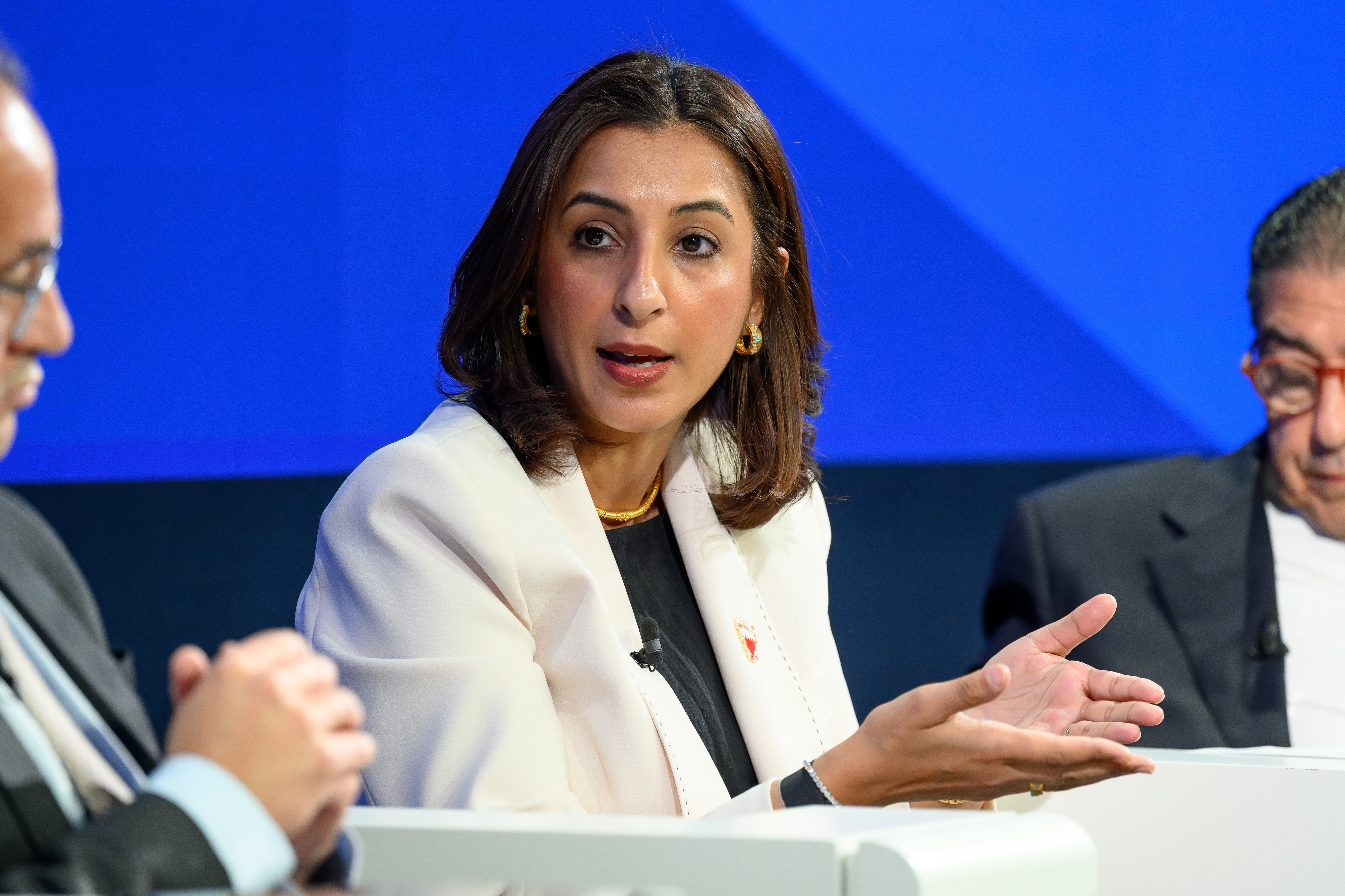
Leaders from across the Middle East focused on growth and delivering on the region's unique potential at Davos 2026. Image: World Economic Forum
- Leaders at the World Economic Forum Annual Meeting 2026 presented their priorities, with a focus on building pathways for peace and delivering sustainable growth in the region.
- The president of Egypt, the prime minister of Qatar, Morocco's head of government, the president of Israel, the prime minister of the Palestinian National Authority and other political leaders spoke of the need for lasting peace in the region.
- A significant contingent from the Gulf's private sector attended the meeting, including from the region's growing AI and data centre industry.
Geopolitics returned to centre stage at this year’s Annual Meeting in Davos. Greenland, Venezuela, the US, Europe, China, Iran and Gaza featured prominently in panels and coffee breaks alike.
Despite this backdrop of global and regional geopolitical headwinds, leaders from the Middle East and North Africa (MENA) were keen to highlight the opportunities for growth in the region.
From Morocco to Saudi Arabia, representatives from the region highlighted the economic shifts in full swing across MENA – from global sports tournaments hosted in North Africa to the rapid buildout of AI infrastructure in the Gulf.
Aspiration and confidence in North Africa
The tone of leaders from North Africa was one of confidence and aspiration: to move forward both as a collection of economies and as a region. They made clear their goal to seize on their advantages and carve a place for North Africa in a fast-changing global economy.
Egypt's plan for growth
Egypt led its Davos messaging with a focus on private sector-driven growth.
“Our world today faces monumental challenges on a development path. It witnesses profound transformations in the patterns of international cooperation in addition to a rising role of innovative tools of technological progress, digital transformation and AI applications,” Egyptian President Abdel Fattah El-Sisi said.
Egypt, he said, is committed to cooperation and dialogue for growth – and he pointed to trade deals the country has signed in recent years as evidence of this strategy in action.
“Creating an attractive business environment for the private sector is a fundamental basis in the process of development and modernisation,” El-Sisi said.
Alongside the Egyptian president, the Forum’s Brende announced a Country Strategy Meeting in Egypt in autumn 2026 in collaboration with the Egyptian government.
Their tone was one of confidence and aspiration: to move forward both as a collection of economies and as a region. They made clear their goal to seize on their advantages and carve a place for North Africa in a fast-changing global economy.
Morocco's infrastructure buildout
Morocco’s Head of Government spoke of the ambitions embodied in his country’s role as a host of the 2030 Fifa World Cup. That tournament, which is the world’s most-watched sporting event, comes hot on the heels of the country’s successful delivery of the African Cup of Nations, which drew millions of viewers worldwide.
The World Cup is expected to bring huge numbers of tourists to the country and has heralded a significant infrastructure investment drive, including $4 billion for upgrades to airports across the kingdom.
“The World Cup is only a milestone in a long-term strategy to transform the country with stadiums, digital networks, investment in culture, sustainable tourism, security and youth training,” Aziz Akhannouch, Head of Government for the Kingdom of Morocco, said.
AI's role in delivering growth
Technology and the growth potential of AI were front and centre – particularly for regional countries with advanced energy industries.
Nurturing the right talent was a core part of this. “Higher education needs to start infusing AI. We do have that in the UAE. We’re starting to work with universities to provide students with skills and the necessary toolsets to advance,” Sarah bint Yousif Al Amiri, Minister of Education of the UAE, said, adding that they’re focusing on basic AI literacy before moving on to more advanced upskilling.
Representatives from Saudi Arabia laid out their ambitions in AI, including a focus on ensuring the benefits AI buildout are felt by all.
“Everybody wants to build the infrastructure for it, but the essence of AI's power is it has to be accessible… Diffusion is not just within economies that have to compete, but I believe it has to be done globally,” Khalid Al-Falih, Minister of Investment for Saudi Arabia, said.
Speaking at the meeting’s closing remarks alongside Forum CEO Børge Brende, Saudi Arabia’s Minister of Economy and Planning Faisal Alibrahim announced the Global Collaboration and Growth Meeting to be held 22-23 April 2026 in Jeddah, Saudi Arabia. The meeting will focus on building common ground, reviving growth and transforming industry through innovation.
The Forum, together with the governments of Saudi Arabia, the UAE, the UN Industrial Development Organization and others, also agreed to national deployments of the Lighthouse Operating System, which is a strategic, scaleable and replicable blueprint for manufacturing and supply chain transformation.
“AI is coming – there’s no two ways about it. We just have to be ready, be prepared and make the best possible pathway to it,” Khaldoon Khalifa Al Mubarak, CEO of Abu Dhabi sovereign wealth fund Mubadala, which is investing billions in AI, said.
Leaders said they’re already seeing impact as they deploy AI technology in healthcare and logistics, and they zeroed in on their energy advantage as a competitive edge.
“We want to turn the energy sector to be more intelligent in terms of capitalizing on AI, and we have the applications and the talents and the infrastructure, and the most important thing in all of these is the data quality,” Amin Nasser, CEO of Aramco, said.
The Forum welcomed five new Centres into the Fourth Industrial Revolution Network during the meeting, including two within the UAE which will strengthen global collaboration on AI, quantum, robotics and space technologies.
A shared desire for peace
Politics was not entirely absent from discussions at Davos, with the future of Gaza staying a key topic.
“Gaza and Palestine is the core problem for the region, and if it is solved it will pay dividends for the entire region, not only for close neighbours like Egypt,” Ahmed Kouchouk, Minister of Finance for Egypt, said.
"The humanitarian situation [in Gaza], if you compare it to last year, it's maybe better, but it still needs a lot of intervention,” Qatar’s Prime Minister, Mohammed bin Abdulrahman bin Al Thani, said.
Isaac Herzog, President of Israel, expressed his desire to see the conflict end, emphasizing both the human and economic harms it has caused.
Mohammed Mustafa, Prime Minister of the Palestinian National Authority, also expressed his desire to see the conflict come to an end and stressed the need for a supportive and enabling environment in the reconstruction of Gaza.
Swiss President Guy Parmelin warned of "upheavals to come and potential flashpoints" around the world, including in Gaza, Sudan and Iran.
The US-hosted Board of Peace event was organized by the US Government and took place on the margins of the Annual Meeting. It included a significant focus on peace and recovery in Gaza. The Forum facilitated the session by providing space at the Davos Congress Centre.
Regional political and business leaders expressed hope that efforts to bring peace to the region will bring positive results. Discussions on the future of Gaza focused on the US’ role in peace negotiations.
Despite the shadow these issues cast on parts of the Middle East, those leaders present made it clear: their focus is on prosperity for their citizens, companies and for the region as a whole.
“The region is hungry for peace. The region wants to focus on economic development,” Noor Ali Alkhulaif, Minister of Sustainable Development of Bahrain, Chief Executive, Bahrain Economic Development Board, said.
Political stability is crucial in that effort, leaders said, but so too is investing in their people and their strengths – and that may be happening faster in the Middle East than in anywhere else in the world.
Don't miss any update on this topic
Create a free account and access your personalized content collection with our latest publications and analyses.
License and Republishing
World Economic Forum articles may be republished in accordance with the Creative Commons Attribution-NonCommercial-NoDerivatives 4.0 International Public License, and in accordance with our Terms of Use.
The views expressed in this article are those of the author alone and not the World Economic Forum.

Forum Stories newsletter
Bringing you weekly curated insights and analysis on the global issues that matter.
More on Geographies in DepthSee all

Abdulla bin Ahmed Al Khalifa
February 25, 2026


