What is 'minilateralism' and why is it on the rise?
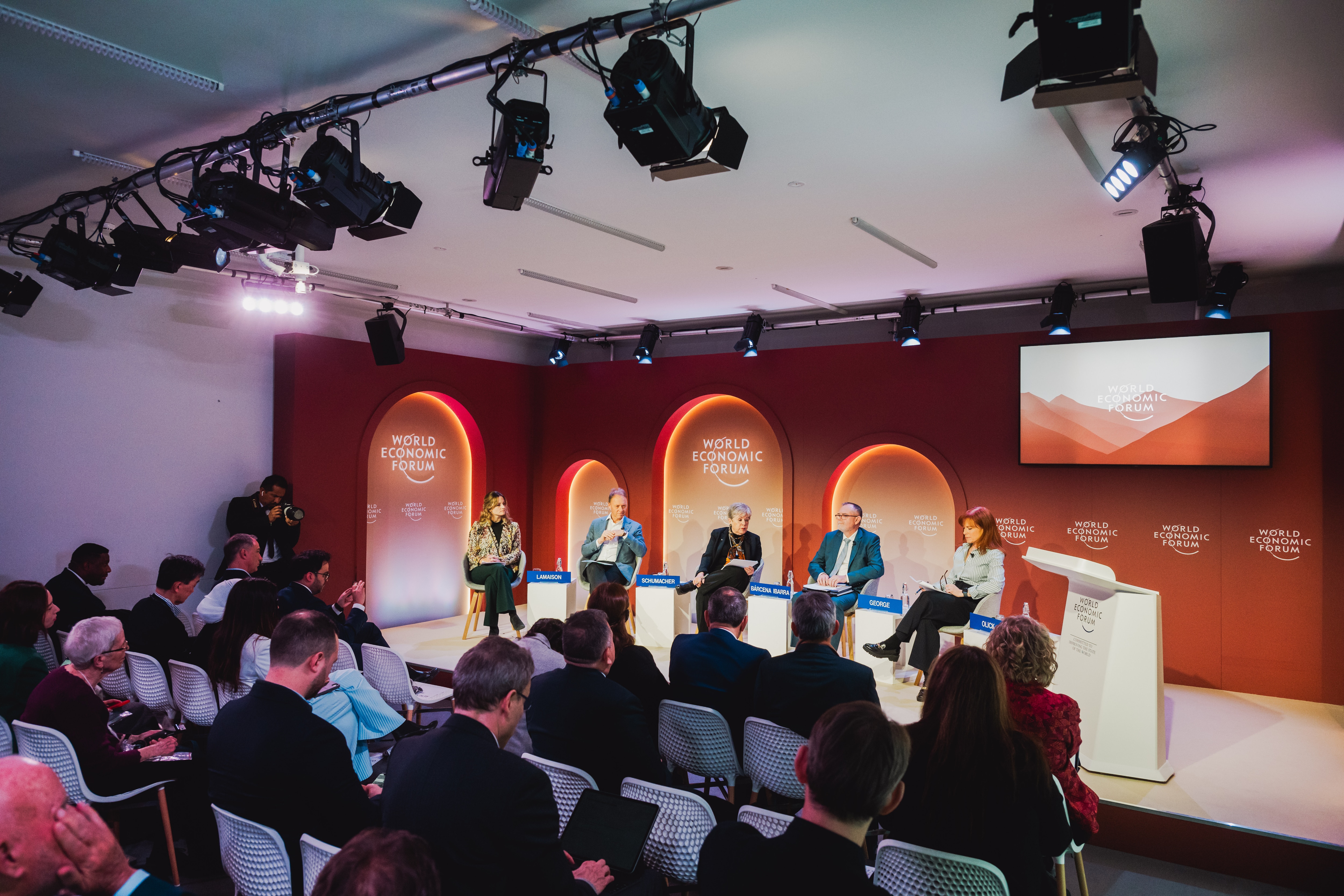
Where multilateralism proves difficult, minilateralism can make progress on the world’s biggest challenges. Image: World Economic Forum
- The World Economic Forum's Global Risks Report 2026 warns of a 'vacuum in global governance' as concerns around weakening multilateralism build.
- Community-driven structures, 'coalitions of the willing', or 'public-private consultation mechanisms' are filling the gap and providing alternative minilateral models of collaboration.
- Minilateralism or plurilateralism prioritize shared interests over shared values and typically involve small groups of countries or organizations collaborating to solve common problems.
At a moment marked by deep uncertainty, global cooperation finds a way.
"Cooperation is like water. If it sees it's being blocked, it just finds other ways because cooperation is a necessity and not a luxury."
"A new competitive order is taking shape as major powers seek to secure their spheres of interest", he explains. "In this shifting landscape, where cooperation looks markedly different than it did yesterday, collaborative approaches and the spirit of dialogue remain essential."
Minilaterlism on the rise
One such collaboration model is gaining momentum, finds the latest Global Cooperation Barometer, the annual assessment of global collaboration.
Smaller, more flexible groups of nations are working together to tackle specific challenges. This approach – minilateralism – is reshaping how countries collaborate, as cooperation finds new pathways.
As Happymon Jacob, Founder and Director, Council for Strategic and Defense Research (CSDR), told Radio Davos: "Some states in certain regions are coming together, and they're talking about connectivity. They're talking climate change. So even if multilateralism is failing... minilateralism is on the rise."
Minilateralism vs. multilateralism: What's the difference?
Multilateralism has defined the post-World War II international order through near-universal institutions like the UN, World Trade Organization, and World Health Organization.
These bodies operate through formal treaties, consensus-driven decision-making, international law and a unipolar geopolitical order – with structures designed for legitimacy, comprehensiveness and collective action. Last year saw this system in retreat and the rise of a multipolar landscape where confrontation has replaced collaboration.
Minilateralism, while not a new concept, is akin to 'plurilateralism' and takes a different approach. It typically involves small groups of countries or organizations collaborating to solve shared problems.
The crucial distinction lies in emphasis: minilateralism prioritizes shared interests over shared values or ideology, enabling nations with different worldviews to cooperate pragmatically on specific issues.
As Jacob explains it: "You might not like a certain country... but you go sit down with that country... and talk about common good. There is that positive... proactive approach to the international world."

The speed differential is striking. The I2U2 partnership between India, Israel, the UAE, and United States held its first leaders' summit less than a year after formation in 2022. Smaller groups bypass bureaucracy and political deadlock, allowing countries to act swiftly on urgent challenges.
But minilateralism doesn't come without risks. Proliferating coalitions could fragment the international order, creating conflicting agreements that undermine universal institutions.
And accountability remains problematic. Voluntary, non-binding commitments lack enforcement mechanisms. Leadership changes and bilateral tensions can derail initiatives.
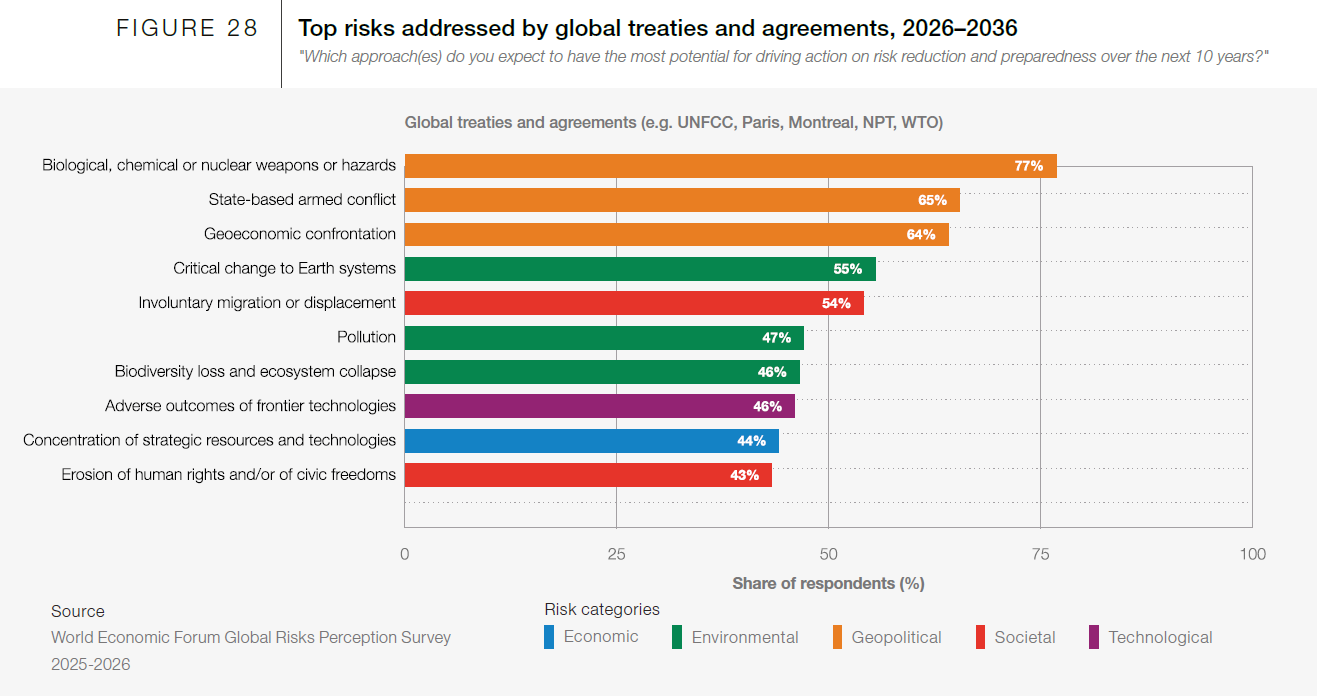
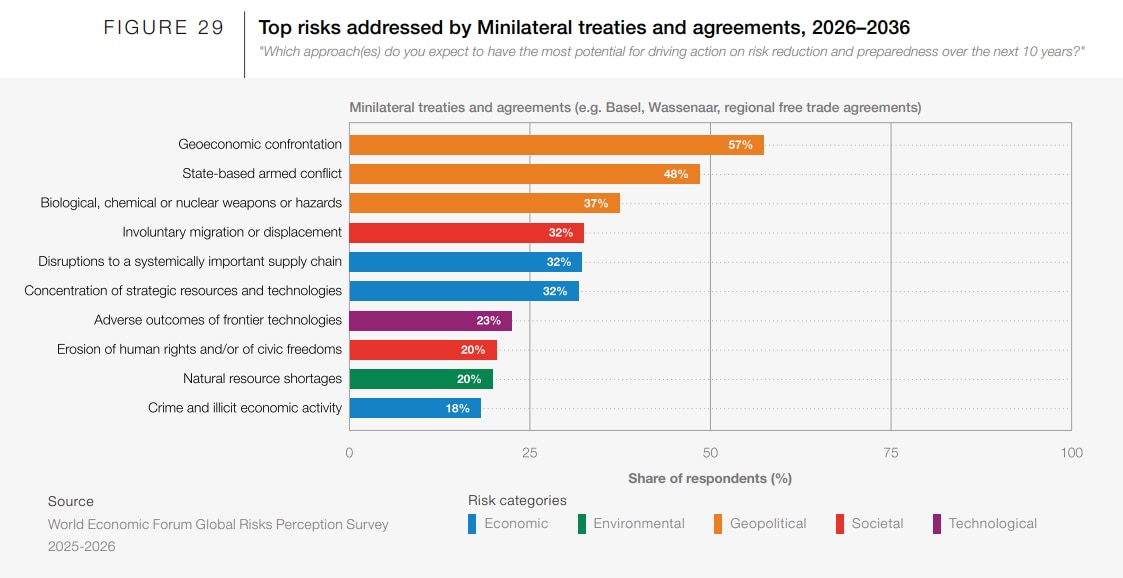
Minilateralism also cannot replace multilateralism for universal challenges - and for some risks (like biological, chemical or nuclear weapons or hazards) are seen as more effective for driving action. The latest Global Risks Report also suggests the two are not mutually exclusive, "It is critical for public, private and civil society stakeholders to continue to work together to support existing multilateral institutions wherever feasible."
How minilateralism is moving the world forward
All the 'lateralisms' are on the agenda at the World Economic Forum's Annual Meeting in Davos, which connects leaders from politics, business and civil society.
Since the Forum was founded in 1971, Davos has seen the events of history unfold and its minilateral convening power has had an impact: from helping to avert a war between Greece and Türkiye to hosting a handshake that sealed the end of apartheid.
Here's a snapshot of the small but high-impact initiatives and coalitions the Forum has helped to bring into being.

First Movers Coalition
The First Movers Coalition exemplifies minilateralism's practical impact. Launched in 2021 by the Forum and US government, it now numbers more than 100 members who have collectively made 125 purchasing commitments across six heavy-emitting sectors and carbon removal. Rather than waiting for comprehensive global treaties, the coalition is creating market demand that accelerates technological development and deployment. In September 2025, Spain became the 14th country to join.

Alliance of CEO Climate Leaders
The Alliance of CEO Climate Leaders operates similarly, bringing together 130 CEOs across 27 countries and 12 industries to drive emissions reductions and advocate for ambitious climate policies. In an open letter ahead of COP30, the alliance called for 13 action areas to accelerate the energy transition and drive growth.
GAVI, the Vaccine Alliance
GAVI, the Vaccine Alliance, was launched at Davos in 2000 and has pioneered the public-private minilateral model. Over the past 25 years, it has delivered more than 1.2 billion vaccine doses to children in lower-income countries. During COVID-19, GAVI helped to lead the COVAX distribution of 2 billion vaccine doses, averting an estimated 2.7 million deaths.
Reskilling Revolution
In 2020, the Reskilling Revolution was launched at Davos – and now counts more than 350 organizations involved in helping more than 700 million people by 2030 through improved education, skills and economic opportunity.
EDISON Alliance
A year later, the EDISON Alliance was launched, which has connected more than 1 billion people globally to essential digital services like healthcare, education and finance through a network of 200+ partners in over 100 countries.
The G20

The G20 represents around 85% of global GDP and came about after Davos in 1998 as a way to reform the global financial system in the wake of the Asian financial crisis. It consists of a body of 20 countries – made up of half developed and half developing economies. The G20 proved minilateralism's viability during the 2008 financial crisis as the "premier forum" for economic coordination, though it struggles at times to reach consensus.
Global Lighthouse Network
The Global Lighthouse Network consists of manufacturers who apply emerging technologies at scale to drive step-change financial, operational and sustainability improvements by transforming factories, value chains and business models. There are currently 201 lighthouses in the network, who share best practice.
AI Global Alliance
The AI Global Alliance supports the transformation of industries, helping organizations unlock new opportunities for innovation, efficiency, and growth. By fostering multistakeholder collaboration, it ensures that AI technologies evolve in ways that are responsible, impactful, and beneficial to society at large.
Launched in June 2023 after the Responsible AI Leadership Summit, the Alliance, led by the World Economic Forum’s Centre of AI Excellence, now comprises over 603 members from more than 500 organizations globally.
If we're now in the "golden age of minilateralism" as some experts claim, the question for 2026 is whether it can sustain momentum and avoid fragmenting global governance beyond repair.
The likely future involves a hybrid model: minilaterals addressing specific regional challenges while reformed multilateral institutions tackle universal threats. Size matters differently now – small enough to act decisively, yet substantial enough to deliver meaningful impact.
License and Republishing
World Economic Forum articles may be republished in accordance with the Creative Commons Attribution-NonCommercial-NoDerivatives 4.0 International Public License, and in accordance with our Terms of Use.
The views expressed in this article are those of the author alone and not the World Economic Forum.
Related topics:
Contents
Minilaterlism on the riseMinilateralism vs. multilateralism: What's the difference?How minilateralism is moving the world forwardFirst Movers CoalitionAlliance of CEO Climate LeadersGAVI, the Vaccine AllianceReskilling RevolutionEDISON AllianceThe G20Global Lighthouse NetworkAI Global Alliance
Forum Stories newsletter
Bringing you weekly curated insights and analysis on the global issues that matter.
More on Global CooperationSee all

Alireza Haghighi and Khalid Alaamer
February 24, 2026


