How Morocco is powering food security through clean energy and innovation
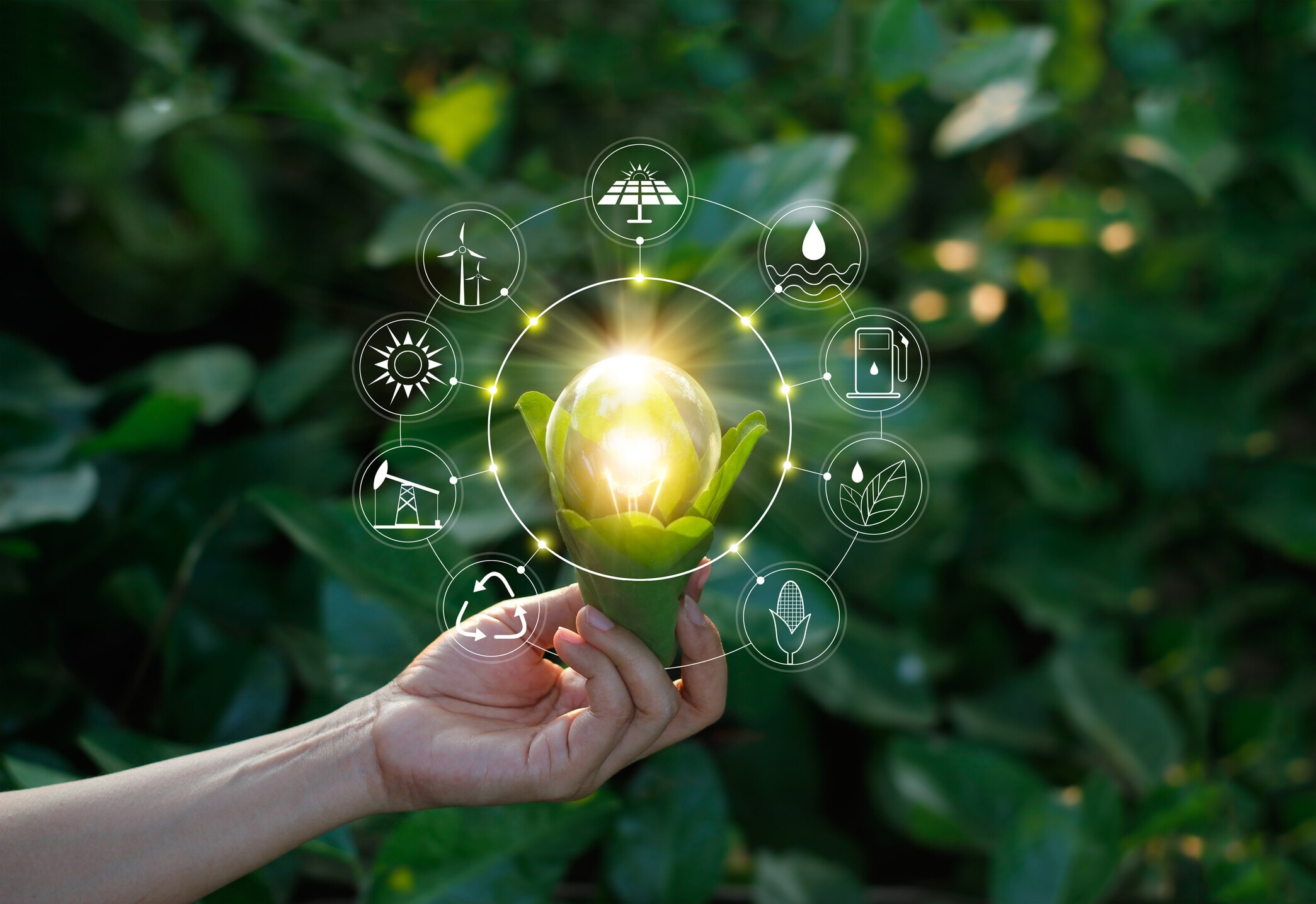
Morocco has around 70% of global phosphate reserves and vast renewable energy potential. Image: Getty Images/iStockphoto
- The world faces a dual challenge of feeding a rapidly expanding global population while drastically cutting greenhouse gas emissions.
- Agriculture and food systems will be central to both imperatives and Africa, home to 65% of the world's uncultivated arable lands, will be pivotal.
- Morocco's experience highlights how food security and decarbonization are interconnected technologically, socially and economically.
The world faces a dual challenge: feeding a population expected to reach 9.8 billion by 2050 while drastically reducing greenhouse gas emissions. Agriculture and food systems, responsible for nearly one-third of global emissions, are central to both imperatives.
Africa is pivotal in this equation: it holds around 65% of the world’s uncultivated arable land, yet remains a net food importer. Unlocking this potential requires a model combining soil health, clean energy, resource efficiency and inclusive growth.
Strengthening food security while decarbonizing value chains through sustainable agriculture, renewable energy, innovation and inclusive investment is a key opportunity for Africa’s sustainable future. Across the continent, new models connecting clean energy, circularity and smart agriculture are emerging – with Morocco at their forefront.
Morocco’s pivotal role in food security
As one of the world’s leading producers and among the top five global exporters of fertilizers, Morocco stands at the heart of the food security and climate action nexus in Africa. With around 70% of global phosphate reserves and vast renewable energy potential, the North African country is also well placed to pioneer a new model of sustainable agricultural growth.
Phosphates, together with nitrogen and potassium, form the three essential nutrients underpinning productivity and global food security. Beyond their agronomic value, sustainable phosphate-based fertilizers improve nutrient efficiency and help farmers adapt to climate stress.
Morocco offers a unique position as both a major agricultural producer and a leading supplier of customized low-carbon fertilizers. Home to one of the world’s foremost innovators in low-carbon fertilizer technology, the country exemplifies how feeding humanity and decarbonization are not competing but converging imperatives.
In line with its updated nationally determined contribution (NDC), Morocco has committed to cutting emissions by 21.6% unconditionally and up to 53% with international support by 2035, compared to a 2010 baseline. The phosphate industry represents 9% of Morocco’s mitigation target of 2035, underscoring its role in the low-carbon transition.
Challenge of balancing food security and decarbonization
Rising demand strains fertilizer supply chains, particularly phosphate-based nutrients, a vital element for soil fertility. To meet this demand, producers worldwide are ramping up capacity.
Morocco’s global phosphate-based fertilizer leader, OCP Group, has launched a major investment programme to increase production from 12 million tons in 2024 to 20 million tons by 2027, while targeting carbon neutrality on three scopes by 2040. This is even though the phosphate industry is a hard-to-abate sector.
Yet higher production means higher emissions, creating a core dilemma: how to meet rising food demand while cutting emissions. Meanwhile, decarbonization technologies remain largely immature and costly – carbon capture, utilization and storage (CCUS) can cost 50-200/Tco2 USD, according to the International Energy Agency – while rising energy costs, water scarcity and uneven access to technology deepen this challenge, particularly in the Global South.
For Africa, this highlights the need to diversify decarbonization pathways through investment in cost-effective technologies, renewable energy, green hydrogen and efficient resource management.
Driving transformation through energy, innovation and inclusion
Over the past decade, Morocco has anchored its energy transition in clean power, with landmark projects demonstrating how the country leverages its abundant solar and wind potential as a strategic advantage. In 2023, renewables (mainly solar and wind) accounted for 22% of total electricity generation – with Morocco aiming to reach 52 % by 2030.
This ambition extends to industry, where clean energy is a key driver of decarbonization. Morocco is on track to deploy several strategic projects, including one from OCP Green Energy (OGE), which is rolling out an ambitious renewable energy investment programme with a total planned capacity exceeding 1.2 GW that is aimed at supplying mining and industrial operations with 100% clean power by 2027.
The first phase of this programme consists of 202 MWp from solar farms at the largest photovoltaic power plant currently in operation in Morocco, which already supplies desalination and key industrial sites, advancing national climate goals and reducing fossil-fuel dependence.
In parallel, OCP Green Water (OGW) aims to meet all industrial water needs through desalination and reuse. With such business cases, coupling renewables with sustainable water use, Morocco is building an integrated model that cuts emissions and saves resources.
This momentum is being further accelerated through green hydrogen and ammonia. Morocco’s abundant renewable energy resources, including strong solar potential, consistent coastal winds and access to seawater for desalination, position the country among those with the highest potential for competitive green hydrogen production. Green hydrogen and ammonia will also support production of low-carbon phosphate-based fertilizers, aligning the country’s energy and food ambitions.
By combining renewable energy, green hydrogen and precision agriculture, Morocco is pioneering a low-carbon fertilizer model that cuts emissions and enhances efficiency.
OCP also carefully considers the impact of its programmes on people and communities, as they are integral to the transition. Programmes like Tourba and Al Moutmir, for example, use farmer-centred models to deliver science-based, low-carbon agricultural practices and technical assistance that help farmers adopt regenerative methods. Early results are promising, with up to 23 % yield gains, profitability increases of over 50 %, and up to 1.4 tons of carbon sequestered per hectare.
These programmes foster shared-learning among farmers, agronomists and researchers to develop climate-resilient solutions, showcasing scalable models across Africa that integrate renewable energy and low-carbon fertilizer into value chains, creating jobs, boosting yields and improving soil health.
A blueprint for global action to strengthen food security
Technology alone is not enough. To make decarbonization strengthen global food security, it must be accessible and affordable for farmers, especially in developing regions. Inclusive policies should ensure Global South participation, extending subsidy schemes for green hydrogen or low-carbon fertilizers to African producers.
Given the structural and technological barriers of phosphate-based fertilizer production to decarbonize all its hard-to-abate processes, a dedicated policy framework is needed to support innovation and targeted investment.
Risk-sharing mechanisms and clear market signals are key. Initiatives that return up to 50% to 80% of carbon credit revenues to farmers align local incentives with global goals, while low-carbon fertilizer standards and consumer demand create stable markets that reward sustainable food systems.
Morocco’s experience shows that food security and decarbonization are interconnected technologically, socially and economically, and require careful consideration of the energy, water and social implications of meeting this dual challenge. By combining renewable energy, sustainable agriculture and inclusive finance, Morocco provides a blueprint for developing countries to lead this transition.
Feeding the world while adapting to and mitigating climate risks is no longer a distant goal, it is already emerging where innovation, equity and shared prosperity meet.
The Global Future Council on Energy Nexus shares ideas and examples through its Energy Nexus Insights series, comprising blogs, articles and infographics, guides for public and private sector decision-makers, and sector analyses.
Don't miss any update on this topic
Create a free account and access your personalized content collection with our latest publications and analyses.
License and Republishing
World Economic Forum articles may be republished in accordance with the Creative Commons Attribution-NonCommercial-NoDerivatives 4.0 International Public License, and in accordance with our Terms of Use.
The views expressed in this article are those of the author alone and not the World Economic Forum.
Stay up to date:
Food Security
Related topics:


Forum Stories newsletter
Bringing you weekly curated insights and analysis on the global issues that matter.
More on Food, Water and Clean AirSee all

Michael Colarossi
April 7, 2026


