If this is a 'rupture' can the past help us see what comes next?

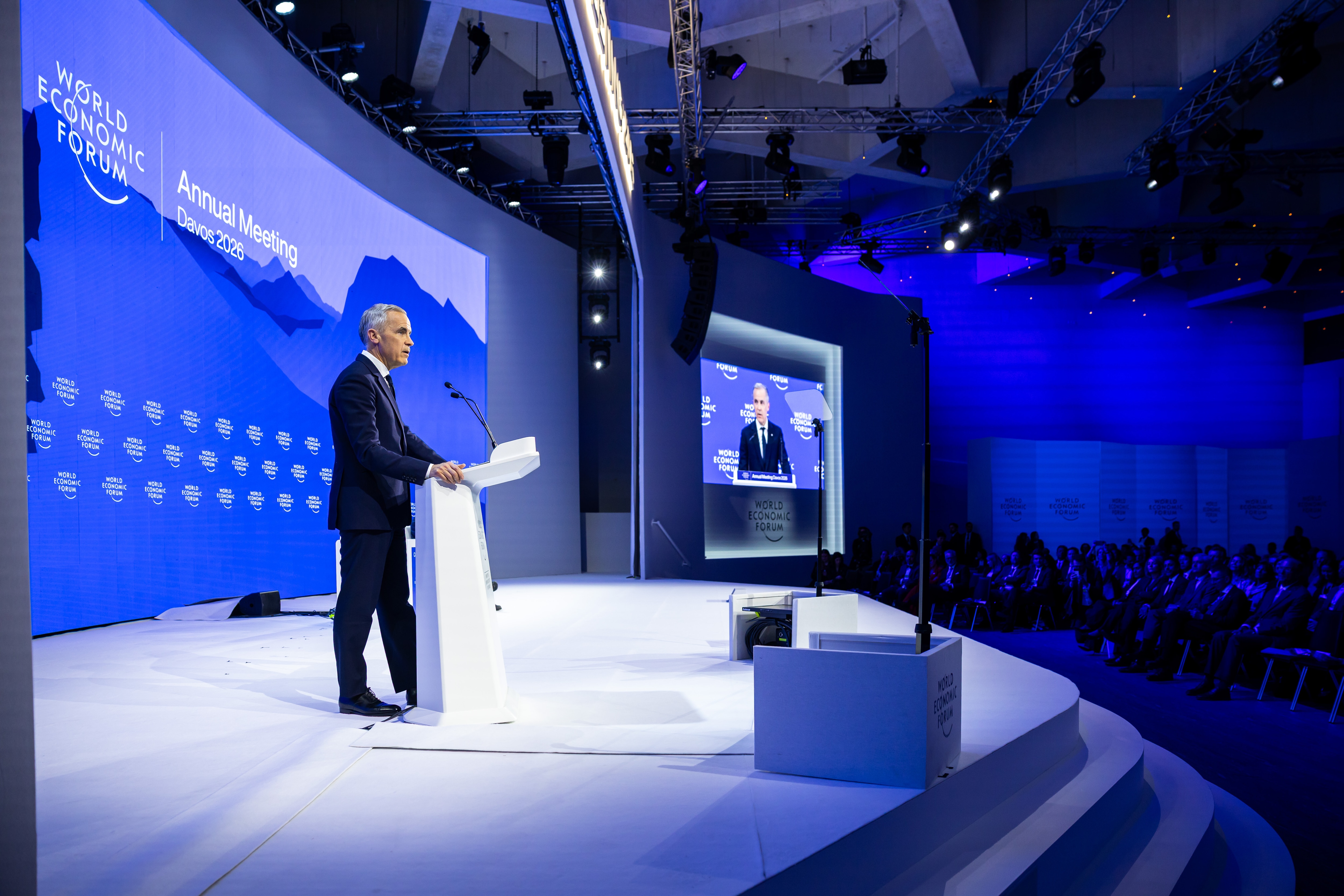
Audience members listen to Canadian Prime Minister Mark Carney's special address at Davos 2026. Image: World Economic Forum
- The idea that history might be able to help inform how we shape a better future was threaded throughout Davos 2026.
- It was reinforced by unsettling current geopolitical events and uncertainty about the promise and peril of artificial intelligence.
- We asked three well-suited participants to weigh in on whether looking back can help us see what’s coming.
It wasn’t an official theme last week at Davos, but it was ever-present: can callbacks to previous eras help us prepare for what might emerge from the tumultuous present?
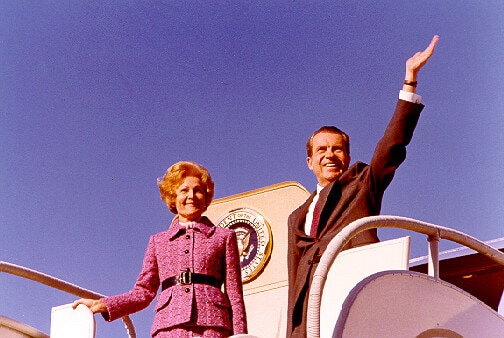
As the Annual Meeting began amid rising trans-Atlantic tensions between traditional allies, European Commission President Ursula von der Leyen invited everyone to consider at least one instructive historical event. An American president, she said, has just upended the post-World War II order – and Europe is scrambling for answers.
In this case, the president was Richard Nixon, the year was 1971, and the inciting incident was an abrupt decision to delink the value of the dollar from gold – changing “in an instant” the way a US-centred global financial system had functioned for decades.
“It was a warning to reduce our dependencies,” von der Leyen added. As Davos played out under a Greenland- and tariff-laden news cycle, there was discussion and debate about whether that warning has ever been heeded.
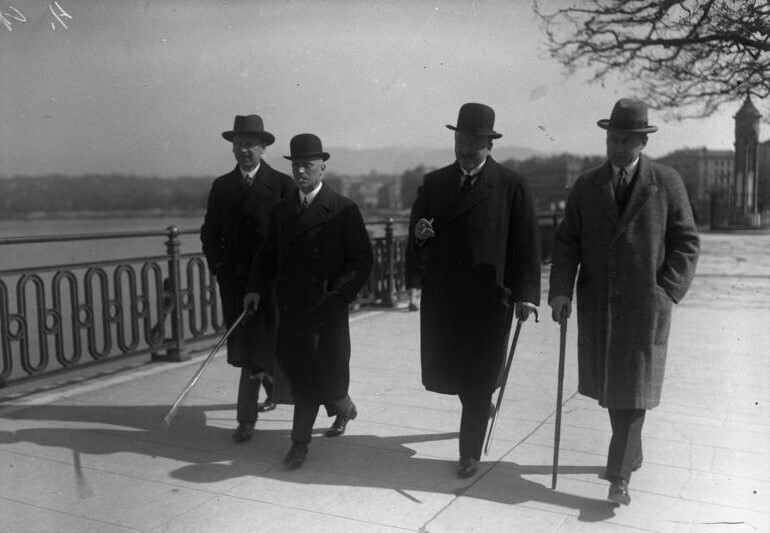
A panel with an almost-too-on-the-nose name followed. Are we essentially re-living the 1920s in the 2020s, it asked. Links between the frothy stock markets a century ago and today, whether driven by anticipation for automobiles or artificial intelligence, seem inescapable.
One particular attempt at Davos to mark our place in the timeline seemed to resonate more than others. Canadian Prime Minister Mark Carney described the current moment as “the end of a pleasant fiction.” If this is a “rupture” where middle powers may have to begin exercising strengths of their own on the global stage, as Carney described it, it points to a very different period of history yet to come.
On the sidelines of Davos, we asked three participants well versed in framing the past if it can really help us see at least some of what’s imminent.
Geopolitics, growth and new eras
“I don’t think there are cycles in history,” said Niall Ferguson.
A historian and Milbank Senior Fellow at Stanford University’s Hoover Institution, Ferguson said that would make things easier to predict, but reality is too chaotic and riddled with random shocks.
Still, history can help put things like the disquiet over Greenland that was clouding discussions at Davos into perspective. “We shouldn't suffer from a tremendous myopia about the past,” Ferguson said. “By comparison with, I don't know, the world in 1926 or ‘36 or ‘46, the geopolitical problems of 2026 are really quite minor.”
As to whether or not a “rupture” is underway that has middle powers seize the moment, or even spells the end of what Ferguson sees as a distinct period of history, clear evidence is lacking. “Certainly the 20th century became a very American century over time,” first thanks to oil and then silicon, he said. “It's much too early to say if we're in a new era. I'm not sure that American era is over or even close to over.”
What is over, or at least breaking down, according to Ray Dalio, is the global monetary system. Dalio, the hedge-fund founder and author, said gold is a good historical touchpoint; it’s always been “hard money,” in a “fiat” world where governments can now push policy buttons that affect the value of their currency and the allure of their debt – which can then be weaponized, should erstwhile friends choose to dump it.
The backdrop for this is global governance shifting “from a multilateral system to a unilateral system,” Dalio said, “which creates a greater sense of risk.”
Much is riding on the promise of AI, according to Carl-Benedikt Frey.
The Dieter Schwarz Associate Professor of AI & Work at Oxford University said if economies can’t pick up steam they “become a zero-sum game.” More mercenary impulses are rewarded, resentment curdles, and polarization worsens.
AI could curb that by delivering tangible productivity gains, Frey said. But there’ s a historical caveat. “If you go back to the first Industrial Revolution, it took around seven decades for the benefits of the factory system to trickle down to the broader population.” In the interim: the social strife of the Gilded Age and a lifetime of effort to root out corruption.
“That's how long it can often take for that correction to happen,” Frey said. “I only hope that it happens a lot quicker in the case of AI.”
Tech, markets and repetition
“The same things happen over and over again.”
Ray Dalio would know. The 76-year-old is credited with predicting the 2008 financial crisis. And that, he said, was only “because I understood the 1930s.”
Anything happening currently that reminds him of these historical reference points?
“It's important to understand that almost all great technological changes produce bubbles naturally,” Dalio said, “because nobody knows exactly how much to invest in something that is fantastic.”
If there is an AI investment bubble currently, it’s “not yet much of a bubble,” Dalio said. Still, the implications of a burst for employment levels and wealth are “profound.”
Understanding the long-established mechanics of financial markets and investor enthusiasm can help predict and prevent, Dalio said. “The nature of the beast right now is to gain that mechanical understanding,” he added, “the way a doctor would understand the cause-effect relationships and how things progress.”
Niall Ferguson said the technological arms race between the US and China bears some resemblance to the Cold War of the 20th century. “We have new technologies, of which artificial intelligence is probably the most important, that make this Cold War in some ways a more dangerous and unpredictable one,” he said.
Another tech-related peril with a historical parallel: the alienating impacts of social media.
“We've seen something like this before,” Ferguson said, “when the printing press radically altered the public sphere in Europe in the late 15th- and 16th century, and that produced a period of tremendous polarization.”
They may be messy, but great technological revolutions also “represent an empowerment of the individual,” Ferguson said. And that’s cause for optimism.
Carl-Benedikt Frey said the empowerment part faces real obstacles, however. The emergence of the personal computer and the internet in the 1990s only generated a decade-long productivity upsurge mostly confined to the US, which is “absolutely astounding,” Frey said. “That should tell us something.”
“The technology itself is not all that matters,” he said. “Institutions and incentives matter too.” The excitement about AI may dim, Frey said, if it isn’t regulated in a way that avoids becoming “dependent on a handful of companies.”
Market concentration matters, because it’s the smaller players that will take the bigger risks likely to result in new products and industries. “If all we had done since 1800 was automation, we would have productive agriculture, we'd have cheap textiles, but that would be about it,” Frey said. “We wouldn't have airplanes, rockets, vaccines, antibiotics, computers. Most material progress comes from doing new and previously inconceivable things.”
Energy presents another obstacle. James Watt is memorialized in history books because he “for the first time made a steam engine energy-efficient,” Frey said. That kicked off the Industrial Revolution.
“AI is still waiting for that moment.”
Global cooperation redux
Niall Ferguson thinks competition can be a very good thing.
There’s a school of thought, he noted, that the reason Europe was able to pull ahead of the rest of the world around 1600 is that competition propelled technological innovation forward.
Then there’s the kind of competition still unfolding in Ukraine. Competition may be good, Ferguson said, “but try to make it nonviolent. That seems like a pretty good lesson of history.”
“I don’t think we should be in the business of doing automatic, repetition-type stories about history,” Adam Tooze, a historian and director of the European Institute at Columbia University, said during a panel discussion at Davos. “I don’t think that’s how history works.”
He pointed to a Mark Twain quote: “History doesn’t repeat itself, but it often rhymes.”
Some rhymes connecting the period a century ago to the present, according to Tooze, include the dazzle of new technologies, and economies running on “a high-consumption bargain” liable to forsake fundamentals. There’s also, he said, the fact that the great powers that had prevailed in World War I were in a position to stabilize things – some of the same powers, he noted, that Canada’s Mark Carney had just cited in his Davos address as risking their hegemony by choosing to “go it alone.”
In the 1920s these countries failed at the politics side of things, including their fruitless effort to form an effective League of Nations, Tooze said. They were undone by “hubris and the failure of imagination.”
It’s a timeless combination.
Don't miss any update on this topic
Create a free account and access your personalized content collection with our latest publications and analyses.
License and Republishing
World Economic Forum articles may be republished in accordance with the Creative Commons Attribution-NonCommercial-NoDerivatives 4.0 International Public License, and in accordance with our Terms of Use.
The views expressed in this article are those of the author alone and not the World Economic Forum.

Forum Stories newsletter
Bringing you weekly curated insights and analysis on the global issues that matter.
More on Geo-Economics and PoliticsSee all

Francisco Betti, Hernan J.F. Saenz, III and Karen Harris
March 14, 2026


