How to scale carbon capture and storage and turn climate targets into action
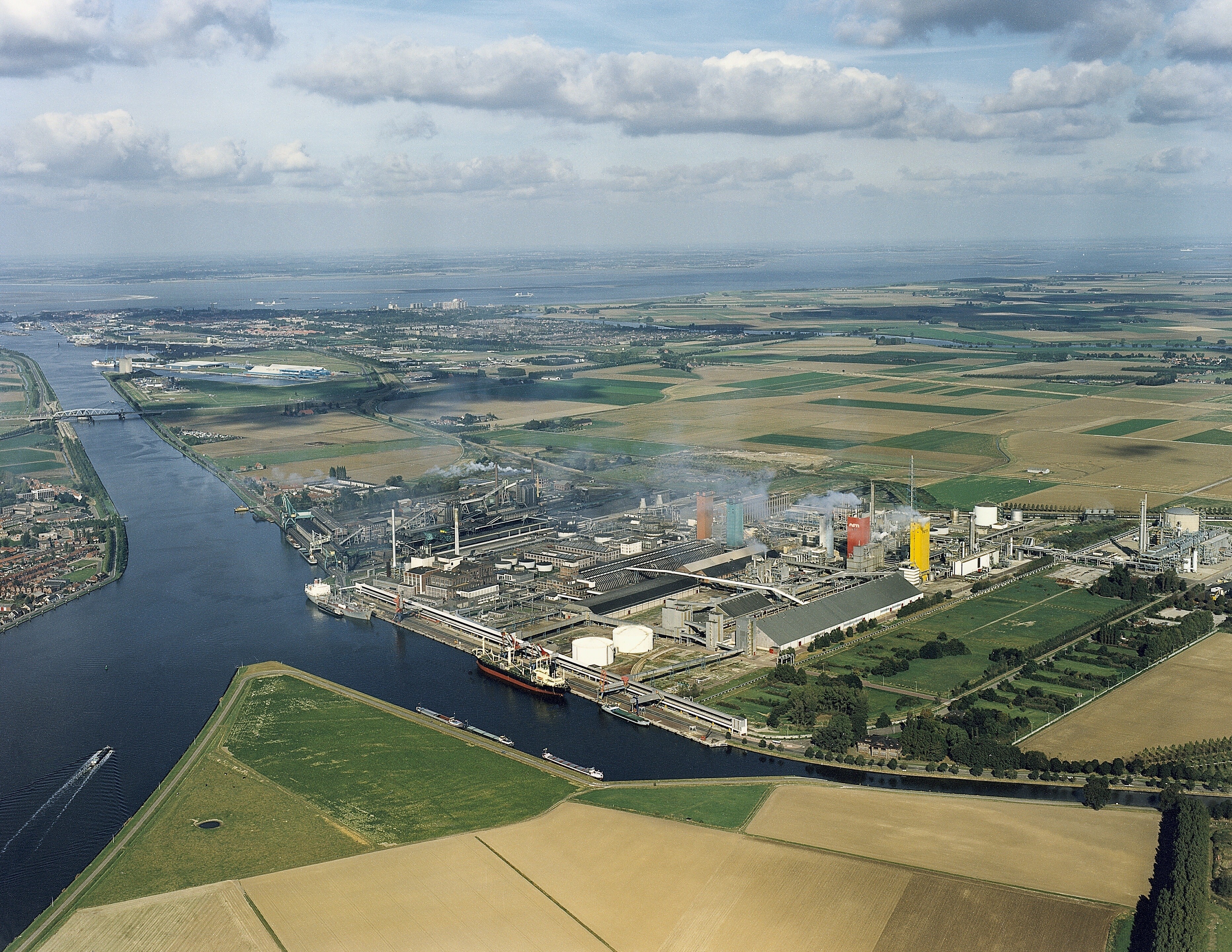
Carbon capture and storage can help cut industrial emissions, such as those from ammonia and fertilizer. production. Image: Sky picture/Yara
- The scale and complexity of tackling the climate crisis call for more than plans for the future; they demand solutions that work now.
- Carbon capture and storage enables us to cut industrial emissions while safeguarding systems we rely on, such as food and energy.
- Ammonia and fertilizer production are ripe for CCS, with one project capturing 800,000 tons of CO₂ a year to store under the seabed.
A decade ago, 195 countries committed to limiting global warming and protecting our planet with the signing of the Paris Agreement. Today, that vision is under pressure.
According to the UN, global temperatures are likely to cross 1.5°C within the next decade – a threshold that UN Secretary-General António Guterres calls a “red line for humanity”.
The scale and complexity of tackling the climate crisis demand more than plans for the future; they demand solutions that work today.
This is where carbon capture and storage (CCS) comes in: a proven, scalable solution that enables us to cut large industrial emissions while safeguarding the systems we rely on – from energy to food.
The energy and climate reality check
The UN warns that global temperatures are likely to exceed 1.5°C above pre-industrial levels within the next 10 years. “Every fraction of a degree means more hunger, displacement and loss,” Guterres reminded world leaders at COP30 in Belém, Brazil.
Food production illustrates the complexity of this challenge. Our food system alone accounts for nearly one-third of global greenhouse gas emissions. Meanwhile, fertilizers support roughly half of global food production, meaning reducing production is not an option. The task therefore is to produce and use fertilizers with dramatically lower emissions, without compromising global food security.
Many hope that renewables and the phase-out of fossil fuels will deliver net zero, but the energy reality is more complex. Natural gas remains an important part of Europe’s energy mix, particularly if we are to address the competitiveness challenges raised in the Draghi report – namely that electricity costs in Europe are two to three times higher than in the US, and gas four to five times higher.
Even as renewable energy expands, it is not growing fast enough to fully replace fossil fuels in industrial processes. This gap between long-term ambition and near-term reality is where CCS becomes indispensable.
A responsible industry and climate strategy must reflect both ambition and realism. Recognizing the continued role of fossil fuels in the transition is not about resisting change; it is about ensuring the transition succeeds.
Tackling hard-to-abate emissions through CCS
Fertilizer and ammonia production are clear candidates for both electrification and CCS. This is because carbon dioxide (CO₂) is released as a direct byproduct of chemical reactions in ammonia production – emissions that can be eliminated by capturing and storing them.
Yara illustrates how stakeholders can step up to this challenge. Since 2005, we have reduced our scope 1 and 2 emissions in the EU by more than 55% and nearly halved them globally through nitrous oxide abatement, electrification and energy efficiency.
What remains are the hardest-to-abate emissions from hydrogen production, where CO₂ is generated as an inherent part of the chemical process. Tackling these residual emissions at scale is where CCS becomes an indispensable, timely solution.
Ammonia and fertilizer production are well-suited to CCS as most ammonia plants in Europe use steam methane reforming, which inherently produces high-purity CO₂ as a by-product.
Companies like Yara have long captured, liquefied and safely handled this CO₂ for use in products such as sparkling drinks, greenhouses, fertilizers and diesel exhaust fluid AdBlue. This existing know-how and infrastructure make the ammonia sector ideally positioned to scale CCS quickly.
Beyond cutting onsite emissions, CCS unlocks new opportunities for low-carbon ammonia production for energy, shipping and industrial applications. In agriculture, CCS enables fertilizers to be produced with substantially lower emissions than conventional alternatives.
Yara’s Climate Choice fertilizers, which deliver 35-75% lower emissions than the same fertilizer produced without CCS, for example, are already being adopted by food companies globally seeking to reduce value chain emissions.
Plant where CCS is turning climate ambition into action
At Yara's flagship ammonia and fertilizer plant at Sluiskil, the Netherlands, carbon capture and storage is moving from theory to practice.
In 2026, the site will capture and liquefy up to 800,000 tons of CO₂ annually, which Northern Lights – operator of the world's first open-source CO2 transport and storage infrastructure – will then transport for permanent storage beneath the seabed on the Norwegian continental shelf.
Over 15 years, this single project will store up to 12 million tons of CO₂, which is roughly equivalent to removing 174,000 cars from the road each year.
Beyond its emissions impact, the project offers valuable insights into what is required to scale CCS.
Lesson 1: Technology neutrality is essential
The climate challenge is so great, and the timeline so short, that we do not have the luxury to pick only one or two technologies. Reaching climate targets at pace and scale requires using all solutions that can deliver real and verifiable emissions reductions.
Climate policy must therefore be technology-neutral, supporting effective carbon reductions regardless of the solution used. When policy focuses on outcomes rather than prescribing technologies, investments can move faster and decarbonization can scale.
Lesson 2: Market demand drives scale
Technology readiness alone does not guarantee deployment. Durable demand for lower-carbon products is essential to justify large investments and reach final investment decisions.
Even with infrastructure in place, low-carbon production typically comes with higher operating costs. Decarbonization can only scale if there is a clear market signal – customers who value and are willing to pay for products with a lower carbon footprint.
Creating demand for lower carbon products, whether through value chain commitments, standards or policy frameworks, is therefore decisive. When downstream actors value and reward lower emissions, investments upstream become viable.
Lesson 3: Policy must reduce risk and enable scale
Predictable policy frameworks are critical to de-risk CCS projects and accelerate deployment. This includes clear and harmonized approaches to carbon accounting and certification, access to CO₂ transport and storage infrastructure, and mechanisms that translate climate ambition into business cases.
Importantly, effective frameworks recognize that different industries face different realities. Sector-specific approaches, rather than one-size-fits-all solutions, are key to decarbonizing without undermining competitiveness or security of supply.
Why carbon capture and storage is a valuable tool for climate action
The window for keeping the 1.5°C goal within reach is closing fast. What matters now is delivering real emissions reductions in the years ahead.
CCS is already doing that in hard-to-abate sectors, translating climate ambition into practical action.
With the right frameworks in place, CCS can cut emissions at scale while safeguarding essential systems such as food production, industry and energy supply.
Guiding emissions towards safer levels under 1.5°C will require pragmatism as well as ambition – and the willingness to scale solutions that work today.
Don't miss any update on this topic
Create a free account and access your personalized content collection with our latest publications and analyses.
License and Republishing
World Economic Forum articles may be republished in accordance with the Creative Commons Attribution-NonCommercial-NoDerivatives 4.0 International Public License, and in accordance with our Terms of Use.
The views expressed in this article are those of the author alone and not the World Economic Forum.
Stay up to date:
CO2 Capture, Utilization and Storage

Forum Stories newsletter
Bringing you weekly curated insights and analysis on the global issues that matter.
More on Climate Action and Waste Reduction See all

Laetitia Gardé and Marc Delobelle
February 26, 2026


