What is Blue Davos and why is 2026 the 'Year of Water'? Everything you need to know
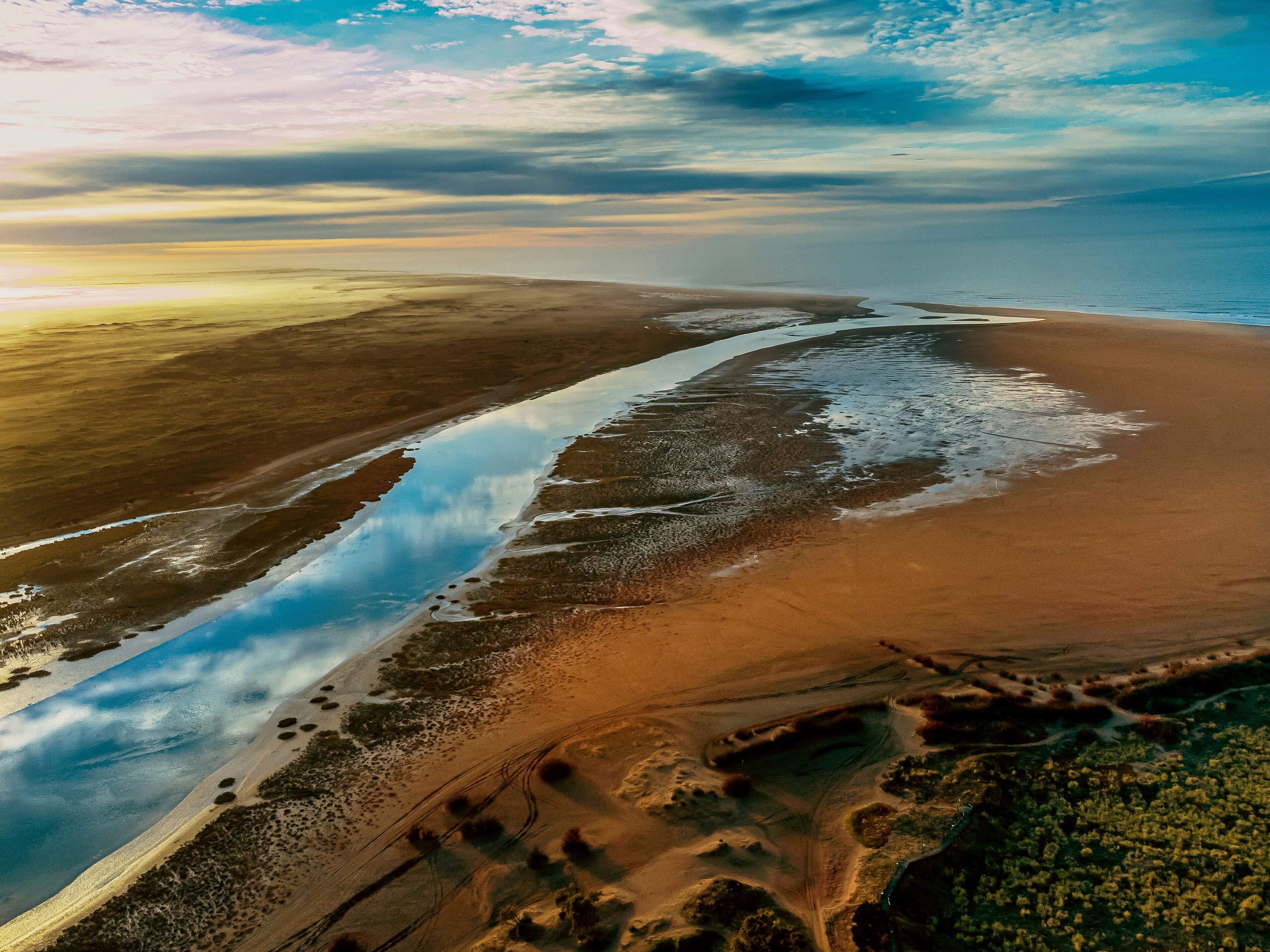
At the World Economic Forum's Annual Meeting in Blue Davos a blue thread will connect a host of events and announcements, highlighting the vital role of water ecosystems — from ocean to freshwater — in global stability, trade, livelihoods, food systems, and climate resilience. Image: Photo by Rafael Hoyos Weht (@rhweht)
.
- The world faces a global water cycle off-balance, affecting lives, livelihoods and undermining economic prosperity.
- 2026 will be an important year for freshwater and ocean ecosystems, culminating in December's UN Water Conference.
- At the World Economic Forum's Annual Meeting in Davos a blue thread will connect a host of events and announcements, highlighting the vital role of water ecosystems — from ocean to freshwater — in global stability, trade, livelihoods, food systems, and climate resilience.
- This blog will be updated throughout the Annual Meeting as Blue Davos initiatives are announced.
The planet’s entire water cycle, spanning oceans, atmosphere, and freshwater, is under strain.
In October 2024, rivers in the Amazon basin fell to historic low levels as Spain was experiencing the worst flooding in 30 years.
Last year saw similar extremes as the climate crisis pushed the hydrological cycle into unprecedented imbalance, making drought and flooding more intense and frequent.

Since 1900, the global land area affected by dry conditions has more than doubled, according to the OECD, impacting the availability of fresh drinking water and food production.
The World Bank estimates that almost a quarter of the global population – 1.8 billion people – are exposed to flood depths greater than 0.15 metres in a 1-in-100-year flood event, with the majority living in low- and middle-income countries.
Meanwhile the rate of ocean warming has quadrupled since the 1980s, which has cascading impacts including melting ice, rising sea levels and acidification.
We are seeing too much water in some places – floods, storms, rising seas – too little in others – droughts, scarcity, and drying rivers – and, increasingly, water that’s too polluted to use safely. What we're seeing is the Earth's water cycle is becoming increasingly out of balance.
As we enter 2026 – a 'Year of Water' that concludes with the third-ever UN Water Conference (Dec 2-4, UAE) in nearly 50 years – the world is at a critical moment when political will must finally match the scale of the crisis.
The water crisis will be high on the agenda at the World Economic Forum's Annual Meeting in Davos, with the launch of major new initiatives that aim to move the world forward on taking action on all water systems – ocean and freshwater.
The water crisis in 10 numbers
The out of balance water cycle impacts every sector, economy, and person.
2.1bn
people lack access to properly managed drinking water
3.4bn
people lack safely managed sanitation
75%
live in 101 countries that have been losing freshwater for 22 years
2/3
river basins either exceeded or fell short of discharge levels in 2024
450Gt
of ice lost from glaciers each year
1/2
the world's large lakes have lost the ability to recover
4
'mega-drying' regions have emerged in the Northern Hemisphere
31%
of global GDP will be exposed to high water stress by 2050
1 child
dies every two minutes from water-related diseases
≈$7tn
is needed for global infrastructure, including water, to meet the SDGs
Sources: Unicef; ScienceAdvances; UNESCO; ScienceAdvances; Water.org; Unicef; WMO; Geophysical Research Letters; WRI; PwC
These ‘too little, too much, and too polluted’ dynamics don't just impact water access or sanitation basic needs. With the world's hydrological cycle out of balance, instability leaves economies and businesses vulnerable to water-related shocks and stresses that impact everything from agriculture and industry, to the functioning of cities and communities.
With the overall annual economic value of water ecosystems estimated at $58 trillion, finance will be critical to unlock capital for water resilience, as the investment pipeline needed to address a global water crisis cannot be overstated. Yet, the World Bank suggests that only 2–3% of global investment in water is undertaken by private sector financing, highlighting the urgency of exploring innovative mechanisms, in tandem with appropriate valuing and risk-sharing models.
To tackle these challenges, the World Economic Forum is focusing on three key topic areas to protect freshwater: fit-for-purpose finance; basin-level partnerships; and innovation. Through a host of dialogues, thought leadership and partnership efforts, these priority action areas are showing signs of momentum.
Through Water.org's microfinance initiatives, 85 million people around the world can now turn on a tap or safely use a toilet because small, affordable loans gave them access to safe water or sanitation. Other initiatives, such as the Water Resilience Coalition, aim to grow the participation of the private sector in water-level action, modeling new models for cooperation. These examples show how water systems can be transformed through innovative approaches and multi-stakeholder collaboration. However, the complexity of the water crisis demands these ideas are scaled up, and fast.
Additionally, ocean innovation is experiencing an unprecedented moment of convergence: previously isolated forces, such as technology, capital, policy, and market demand, are now aligning in solutions. Blue economy venture capital funding has grown 7x over the last 8 years, with investment projected to reach $3 billion in 2025. Most critically, the private sector is recognizing both the risks of ocean degradation and the business opportunity in regeneration, with continued ocean degradation potentially jeopardizing up to $8.5 trillion over the next 15 years.
But investment alone is insufficient without addressing what water systems sustain: critical earth systems, food security and biodiversity.
'Blue foods' and the growing regenerative blue economy
More than 3 billion people get at least 20% of their nutrition from blue foods – fish, shellfish, algae and aquatic plants – and these sectors employ over 800 million people.
Blue foods carry a significantly lower carbon footprint than other protein sources and demand is expected to double by 2050 to meet global protein needs.

However, ocean acidification, overfishing and pollution threaten these systems along with ocean warming that intensifies tropical storms and hurricanes with huge consequences to biodiversity, economies and lives alike.
Sustainable expansion of blue food production is impossible without ocean protection and key guardrails are being put into place.
In September 2025, the High Seas Treaty was formally ratified after reaching the threshold needed to enter into force, and on 17 January became international law. It's the first legally binding agreement protecting marine life beyond national jurisdiction, covering two-thirds of ocean area previously lacking comprehensive protections.
In October 2025, the IUCN World Conservation Congress adopted a motion to protect the mesopelagic zone, or 'twilight zone' (200-1,000 metres deep), which contains 600 million metric tons of biomass and plays a critical role in climate regulation through the "biological pump" that moves carbon to ocean depths.
Building momentum at 'Blue Davos'
The Forum's Annual Meeting 2026 will build on this momentum, convening leaders to spur progress across three critical dimensions: freshwater access and management, blue food security and ocean protection.
Here are some of the sessions and launches that Davos:
- Session: Water in the Balance. Nearly 70% of climate impacts are tied to how water is managed, influencing everything from rising seas and prolonged droughts to disputes over shared waterways and the trade routes they support. The session focused on how societies can turn this challenge into an opportunity for a more secure and prosperous water future. Matt Damon, Co-founder, Water.org, announced the Get Blue initiative to expand access to safe water and sanitation worldwide. He spoke alongside conservationists, corporate leaders and advocates to explore how water stress is reshaping supply chains, ecosystems and access to essential services – and what solutions are starting to emerge. Watch the full session below.
- Session: Velocity of the Blue Economy. The blue economy is fast becoming one of the world’s most powerful engines for sustainable growth, set to be worth over $3 trillion a year by 2030. This session looked at how the ocean’s importance to economies and people is changing. Apostolos Tzitzikostas, Commissioner for Sustainable Transport and Tourism, European Commission, introduced a new strategy for ports that would address issues from energy to collaboration and sustainability, including fuels, in the maritime sector. "We need to have a comprehensive approach to address the issue of sustainability in our oceans... When it comes to the blue economy, no one actor can work alone, it has to be a collaboration."
Watch the full session below.
- Launch: Water Resilience Challenge Winners. The Water Resilience Challenge, led by UpLink in partnership with HCL Group and the World Economic Forum’s Food and Water Initiative, identifies and supports early-stage solutions that strengthen water resilience across infrastructure, industry, agriculture and urban systems. Through a global call for application, ten winning innovators have been selected as UpLink Ventures, also known as Aquapreneurs. Alongside global visibility, the winners are awarded non-dilutive funding, alongside access to a global ecosystem of investors, corporates and public-sector partners to support deployment and scale. The winners of the Water Resilience Challenge will be officially announced during the World Economic Forum Annual Meeting in Davos at the Make Water, Differently hub session, marking a milestone moment for early-stage water innovation on the global stage.
- Launch: Blue Food Innovation hub. With the support of UK DEFRA, the Forum is supporting the development of a Food Innovation Hub on Blue Foods in Ghana to demonstrate country-led transformation. Ghana’s sector is valued at roughly 600 million dollars and is growing six times faster than the national economy. The Hub’s ambition is to strengthen skills, improve standards and traceability and accelerate adoption of innovations in feed, genetics, processing, cold chain and fish health, creating a model that can inform regional pathways across Africa.
- White paper: Investing in Blue Foods: Innovation and Partnerships. This white paper provides a global assessment of blue food systems, including fisheries, aquaculture, seaweed and aquatic value chains, with a focused deep dive on Africa. It articulates the economic, nutrition, climate and livelihood case for responsibly scaling blue foods, maps key innovation opportunities across the value chain, and identifies the policy, investment and partnership enablers needed to drive inclusive growth.
- Launch: ACT for the Ocean and accompanying report, Financing the Ocean. Against this backdrop, the Forum is launching Accelerating Critical Transitions (ACT Ocean), an initiative building on the Forum’s foundational work and established communities in the ocean space. ACT Ocean aims to catalyze industry-led transitions across key ocean sectors and their supply chains, while fostering cross-sector collaboration to help move from fragmented efforts toward clearer priorities and scalable, real-world delivery.
- Briefing paper: The Ocean Economy Imperative: Defining Value, Managing Risk and Mobilizing Investment briefing paper calls for action to unlock the ocean’s potential as a driver of economic resilience and long-term value, emphasizing collaboration and decision-making today to shape a sustainable future.
- Report: As the first product for fit-for-purpose finance workstream, the Bridging the €6.5 Trillion Water Infrastructure Gap: A Playbook amplifies the voice of the global water industry within the World Economic Forum ecosystem. The report aims at sizing the global water infrastructure gap and assesses its socio-economic impacts in order to accelerate equity, resilience, circularity and innovation in the lead-up to the UN Water Conference.
- Other key commitments. These launches follow a series of key commitments made by the World Economic Forum and key collaborators earlier this January, including: a special letter of intent between Water.org and the World Economic Forum to explore innovative, non-profit solutions to drive fit-for-purpose water resilience work and access; a Memorandum of Understanding (MOU) with CEO Water Mandate (special initiative established by the UN Secretary General and the UN Global Compact) seeking to mobilize business leadership and collective action in support of sustainable water stewardship focusing on basin-level work; a MOU with the government of the UAE (Co-host of the UN Water Conference) to strengthen public-private collaboration for the December meeting.
License and Republishing
World Economic Forum articles may be republished in accordance with the Creative Commons Attribution-NonCommercial-NoDerivatives 4.0 International Public License, and in accordance with our Terms of Use.
The views expressed in this article are those of the author alone and not the World Economic Forum.
Related topics:

Forum Stories newsletter
Bringing you weekly curated insights and analysis on the global issues that matter.
More on Food, Water and Clean AirSee all

Moattar Samim
February 21, 2026


