Why new-styled partnerships offer beacons of hope for multilateralism
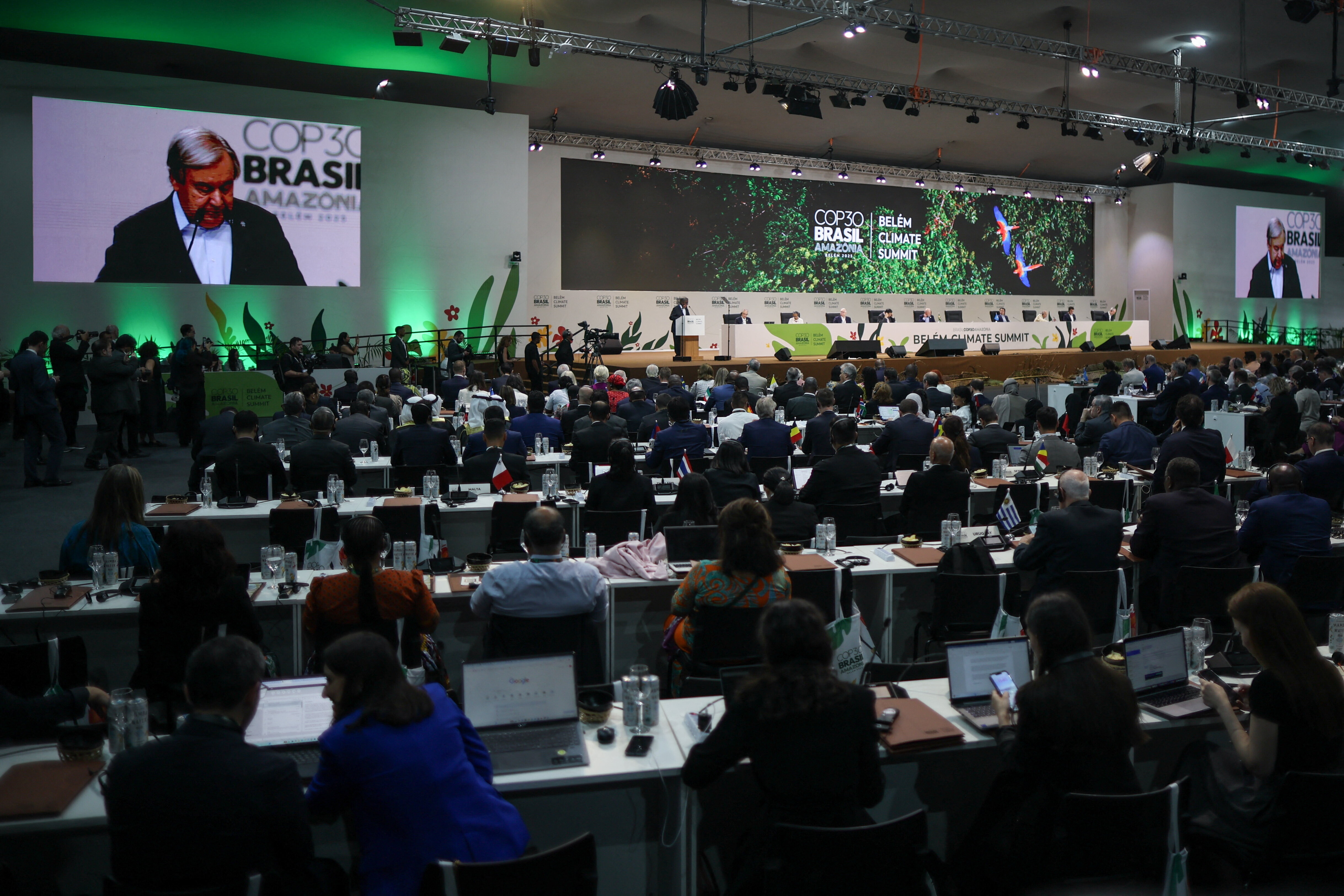
Multilateralism: New multilateral partnerships are reshaping global collaboration Image: REUTERS/Adriano Machado
- Despite global challenges such as nationalism and protectionism, collaborative approaches are gaining renewed focus, exemplified by recent and upcoming UN climate conferences and new partnership models.
- Effective multilateral action now relies on combining creative solutions, diverse expertise and new financial and governance mechanisms to address climate, nature and equity crises.
- The GAEA (Giving to Amplify Earth Action) platform shows that agile, inclusive and well-resourced collaborations can achieve measurable, transformative results quickly.
In today’s policy landscape, collaboration, partnership or multilateralism often take a backseat, yet they are essential to any serious attempt to tackle interrelated global challenges.
Encouragingly, there are signs of renewed attention to collective approaches. Notably, multilateralism became a central theme of the UN Climate Conference 2025 (COP30), while several world leaders used the UN General Assembly in September to reaffirm their commitment to joint action.
As we work towards COP31 in November, the emphasis is increasingly on collaboration with other nations and across civil society and Indigenous communities.
My work as Global Head of Partnerships and Philanthropic Engagement at the World Economic Forum has shown me that smart collective action offers a way forward. Its focus should be on innovative approaches and a convergence of ideas and resources, nimbly backed by the financial and technical support that helps scale up solutions swiftly.
For the most part, however, we continue to rely on traditional models, which are struggling in the face of changing geopolitics, economics and expectations. Both trust and official development assistance have declined in the past year (the latter by as much as 17%).
Concurrently, nationalism and protectionism have come to the fore, leaving our historic idea of multilateralism hobbled by great power politics and institutional gridlock.
Climate change, biodiversity loss, food insecurity and inequality can’t be addressed in isolation or by any individual actor or single sector. To some degree, progress will continue to be made in addressing climate change at an international level through the COP process.
COP30 has been framed as an “implementation COP”, while expectations are already building around COP31 as a moment for communities, businesses, social groups, individuals and families to participate in realizing climate action.
Realistically, however, high-level progress takes place at a relatively slow pace and yet, we need rapid action to address the climate and nature crises and their effects.
Just as the world is changing, our approach to things must change too. It’s here that I see signs of positive change. Through my work at the Forum, I’m witnessing the emergence of new forms of partnership and collaboration – multilateralism’s most potent tools. They are agile, inclusive by design and grounded in real-world action.
Innovative partnerships in action
Through GAEA (Giving to Amplify Earth Action), a platform launched in January 2023 to create a new generation of partnerships, we are bringing together catalytic actors from governments, businesses, philanthropies and communities.
This is helping to unearth new ways to source and unlock resources (financial and non-financial) and creating a vibrant, influential group focused on supporting solutions where markets are failing. We connect leaders for people, planet and sustainable progress.
GAEA’s 2026 Awards highlight a new wave of multilateral action, which is smaller in scale but faster, more experimental and often more effective. Among its latest award winners are two stand-out partnerships – the Sustainable Sovereign Debt Hub and the forest protection programme, Canopy Planet.
The Sustainable Sovereign Debt Hub is redefining how sovereign finance can serve sustainability goals, which is essential given how many low- and middle-income countries struggle with high debt and limited fiscal space. The hub serves as a convenor, bringing together all partners and ensuring that the issues of climate and nature are integrated into the sovereign debt structure that emerges.
Its partnership model is demonstrating that multilateralism can be reimagined through financial systems that reward sustainability and long-term stability. Already, the hub has piloted climate-resilient debt clauses and sustainability-linked bonds in countries such as Côte d’Ivoire, Slovenia and Thailand, and in doing so, is embedding resilience into the foundations of global finance.
Meanwhile, Canopy Planet is transforming the packaging and textile industries with work that demonstrates how environmental stewardship and market innovation can be mutually reinforcing, offering a blueprint for nature-positive growth.
By scaling up alternatives to wood-based materials, such as next-generation fibres made from agricultural and textile waste, it helps reduce deforestation and create viable new value chains.
Canopy Planet brings together brands, innovators, investors, producers and Indigenous communities to develop solutions together. Its results are impressive: 16.6 million hectares of forest have been safeguarded and an estimated $78 billion in investment potential has been unlocked.
What’s striking about these two examples is their three defining traits: the level of innovation, the convergence of ideas and the use of partnerships to scale up action.
Scaling collective solutions
Innovation extends beyond technology to include different types of financial mechanisms, new governance models and even a redefinition of who sits at the table. Similarly, convergence is swiftly becoming the new approach to project management, bringing together ideas, disciplines, sectors, talents and resources in ways that produce more efficient and transformative solutions.
Finally, size and the ability to grow are everything. These partnerships combine capital, creativity and collective credibility, often starting small but expanding rapidly as a result of their shared purpose.
Abandoning a multilateral mindset – and with it the value of collaboration and partnership – is not an option. The task, instead, is to reimagine it: to support the projects and coalitions that are redefining what effective cooperation looks like.
GAEA’s work highlights how the concept of partnership has already quickly evolved from “public-private” into something more flexible. A multistakeholder composition and the holistic approach GAEA brings to a project address perennial shortfalls such as relevant skills or knowledge, helping develop wider capacity, knowledge and a stock of best practices.
For now, this new approach remains the exception rather than the rule but as the GAEA Awards winners highlight, multilateralism is being reshaped and importantly, is delivering real change. Our task now is to strengthen these new models of partnership and collaboration, because only by doing so will we fundamentally shape sustainable markets and address the climate, nature and equity crises.
Don't miss any update on this topic
Create a free account and access your personalized content collection with our latest publications and analyses.
License and Republishing
World Economic Forum articles may be republished in accordance with the Creative Commons Attribution-NonCommercial-NoDerivatives 4.0 International Public License, and in accordance with our Terms of Use.
The views expressed in this article are those of the author alone and not the World Economic Forum.
Stay up to date:
Global Governance


Forum Stories newsletter
Bringing you weekly curated insights and analysis on the global issues that matter.
More on Global CooperationSee all

Markus Kirchschlager and Benedikt Gieger
March 20, 2026


