Underpriced climate risks threaten global economy, and other climate and nature news
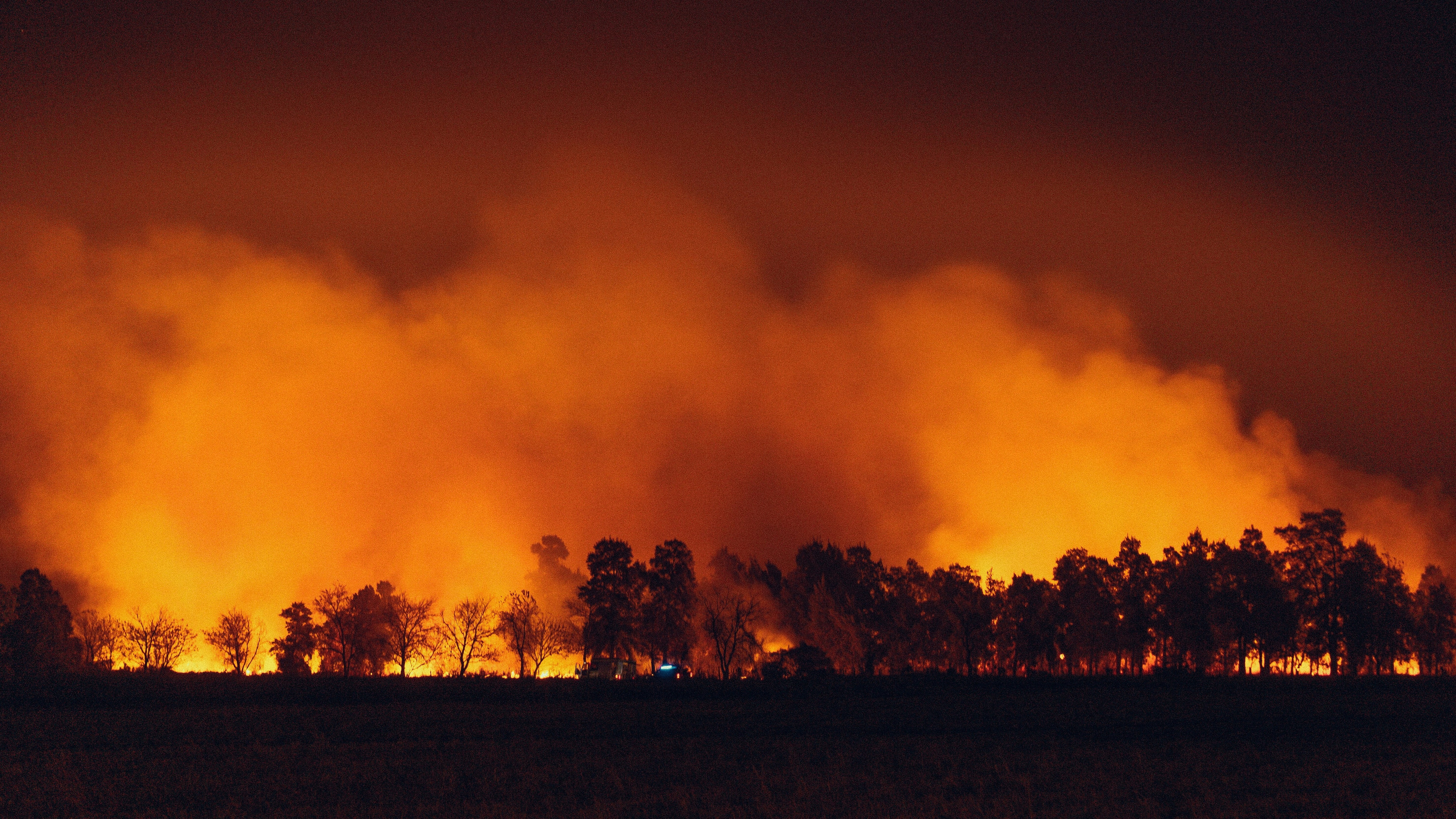
The risks of extreme weather disasters and climate tipping points are increasing fast. Image: Unsplash/Fachy Marín
- This round-up contains the key nature and climate news from the past fortnight.
- Top nature and climate news: Economic models underestimate climate risk; Extreme weather around the world in January; AI-powered weather-forecasting system reaches new heights.
1. EPA rule repealed in US
The Trump administration Thursday revoked a key scientific finding from the Environmental Protection Agency that served as the basis in the U.S. for regulating greenhouse gas emissions and regulating climate change, the New York Times reported.
The EPA's endangerment finding was established in 2009 and classified greenhouse gases such as carbon dioxide, methane and others as threats to public health. This finding helped to underpin emissions standards detailed in the Clean Air Act and other rules for cars, power plants, and oil and gas industry facilities. Revoking the rule dismantles the justification for addressing greenhouse gas emissions and, as the New York Times reports, could prevent future presidents from reinstating climate rules in the future.
2. Economic models are underpricing climate risks, report warns
The climate crisis is reshaping entire economies, with current economic models missing the real risks, from extreme weather to the breaching of tipping points.
Led by the University of Exeter’s Green Futures Solutions team, in partnership with Carbon Tracker, the Recalibrating Climate Risk report highlights how the focus on GDP misses much of the harm, including deaths, inequality, displacement, ecosystem loss and long‑term damage to wellbeing and productivity.
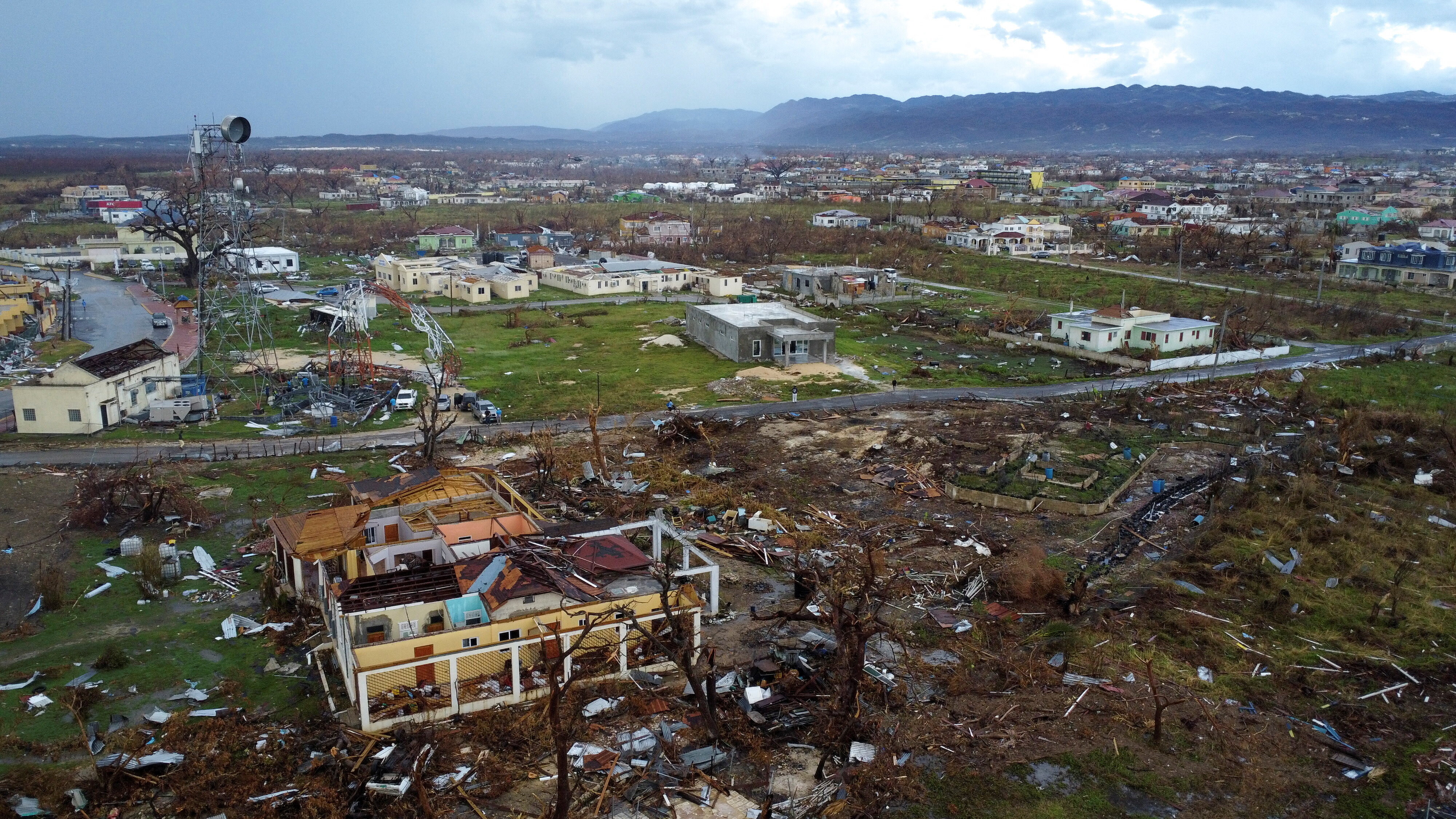
"Without broader metrics, climate risks will continue to be systematically discounted in macroeconomic planning," the authors warn.
Climate risks build up and interact over time, turning repeated shocks into systemic crises that standard models fail to capture. The report highlights that uncertainty and tail risks increase sharply beyond 2°C of warming, making precise damage estimates less reliable as potential losses grow rapidly.
So, what can be done? The report maps out the implications for regulators, banks, funds and other actors.
- Financial regulators and central banks should treat climate change as a core financial stability threat, not a niche environmental issue.
- Long‑term investors and pension funds cannot diversify away climate risk; accelerating the green transition reduces portfolio risk as well as emissions.
- Policymakers, regulators and investors must adopt more precautionary, robust and transparent approaches instead of relying on narrow GDP‑based scenarios.
3. Extreme weather marks the start of 2026
January has brought a turbulent start to the year, with extreme weather events worldwide taking a heavy toll, the World Meteorological Organization (WMO) reports.
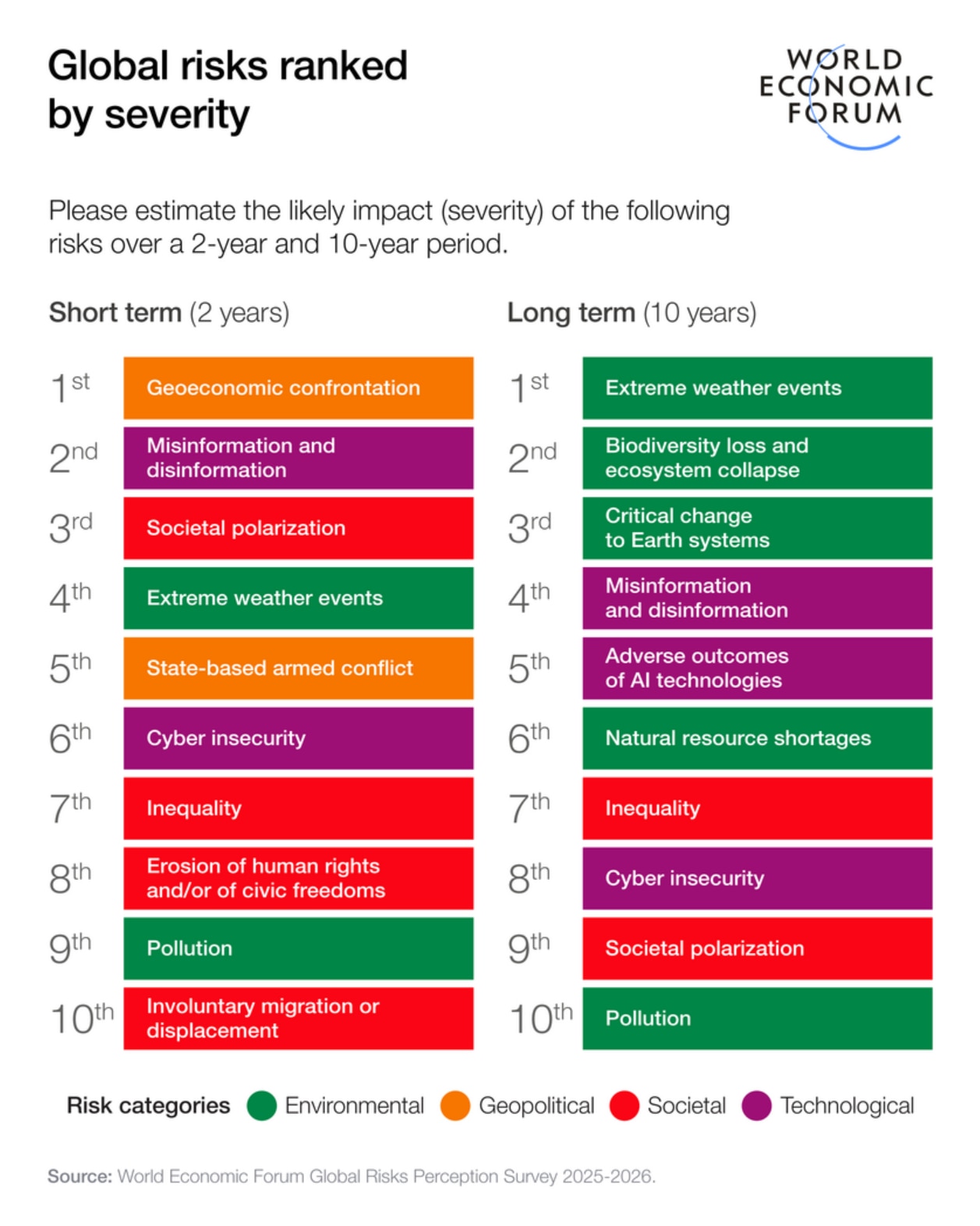
"It is no wonder that extreme weather consistently features as one of the top risks in the World Economic Forum’s flagship annual Global Risks Report. The number of people affected by weather and climate-related disasters continues to rise, year by year, and the terrible human impacts of this have been apparent on a day-by-day basis this January," said WMO Secretary-General Celeste Saulo.
Here are some of the extreme weather events seen around the world in January:
- Australia faced two heatwaves and fire weather conditions, with the town of Ceduna in South Australia reaching 49.5°C on 26 January.
- In Chile, deadly wildfires burned across Biobío and Ñuble regions, forcing tens of thousands to evacuate.
- North America was met with a winter storm in the last week of January, causing mass flight disruption and power outages across the continent.
- Portugal was hit by Storm Kristin, causing more than $4.7 billion in direct reconstruction costs.

4. News in brief: Other top nature and climate stories
Scientists launch AI-powered weather-forecasting system: Hong Kong University's new "DDMS" model can predict extreme weather, including thunderstorms and heavy rainfall, up to four hours ahead, improving accuracy by more than 15%.
New report highlights the impact of investing in nature. "For every dollar invested in nature, another 30 is spent destroying it." This is one of the many compelling statistics in a new UN Environment Programme (UNEP) report, the State of Finance for Nature 2026. The report calls for a change in global financing of Nature-based Solutions and for the phase out of harmful investments to deliver high returns.
How business can contribute to 2030 nature goals. A new assessment from the Intergovernmental Science-Policy Platform on Biodiversity and Ecosystem Services released this month offers 100 actions for measuring and reducing impacts on nature across business, government, civil society and more.
Malaysia bans e-waste imports: One of the world's top importers of plastic waste, the country has imposed a ban on these materials due to their harmful impact on the environment.
E-waste is no longer allowed to enter the country and strict enforcement will be needed involving all agencies.
—Azam Baki, Malaysia Anti-Corruption Commission chief commissioner
”EIB seeks to ease carbon market concerns: The European Investment Bank will bring forward $3.5 billion to help governments protect poorer citizens ahead of the European Union’s new carbon market, ETS2 (Emissions Trading System 2). The funds will support cleaner heating and transport options before CO2 pricing on fuels begins in 2028.
World's biggest environmental services payment platform in production: Agrotools, a leading Brazilian agricultural data services firm, is building a platform to pay farmers market-rate leases to maintain native forests. The scheme could preserve 30 million hectares of high-quality farmland, attract $15 billion over five years and help buyers offset carbon emissions.
5. More on the nature and climate crisis from Forum Stories
Davos 2026: How can we build prosperity within planetary boundaries? This year's Annual Meeting will be remembered as a week when geopolitics owned the stage – yet the climate and nature crisis persisted in the wings. "We are at a really, really decisive juncture,” announced Johan Rockström, Director of the Potsdam Institute for Climate Impact Research, and one of the world’s most highly regarded climate scientists. "Time is running out," he told delegates – "but it’s not too late".
Opening a session on climate and nature, Rockström presented key information to guide the panel discussion. He highlighted how, for the past 12,000 years, the planet has enjoyed an extraordinarily stable climate, giving human life a safe space within which to thrive. Yet within the next three to five years, scientists expect the planet to conclusively breach the 1.5°C barrier. "We are heading towards a disastrous, unmanageable in terms of scientific evidence, 3°C world in the next 75 years," he warned.
Find out what other leaders at Davos 2026 had to say on nature and climate in this roundup.
Plastics talks resume - what's needed now. This month saw the election of a new chair for the Intergovernmental Negotiating Committee on Plastic Pollution. As plastics talks resume, watch this special session recorded at the Annual Meeting in Davos on what's needed to make a global plastics treaty possible.
This mountaineer fought to survive on one of the world’s most dangerous mountains: Anurag Maloo survived a 300-metre fall into a glacier's crevasse and spent 72 hours trapped before a rescue team found him unconscious. He underwent extensive rehabilitation, having lost fingers on his right hand and needing to relearn how to stand and walk. Increasingly unpredictable mountain conditions can make such environments more hazardous for explorers and local communities. Watch his story in the video below:
License and Republishing
World Economic Forum articles may be republished in accordance with the Creative Commons Attribution-NonCommercial-NoDerivatives 4.0 International Public License, and in accordance with our Terms of Use.
The views expressed in this article are those of the author alone and not the World Economic Forum.
Related topics:

Forum Stories newsletter
Bringing you weekly curated insights and analysis on the global issues that matter.
More on Climate Action and Waste Reduction See all

Steve Rochlin and Judith Ketelslegers
March 26, 2026


