What small islands reveal about a blind spot in resilience thinking
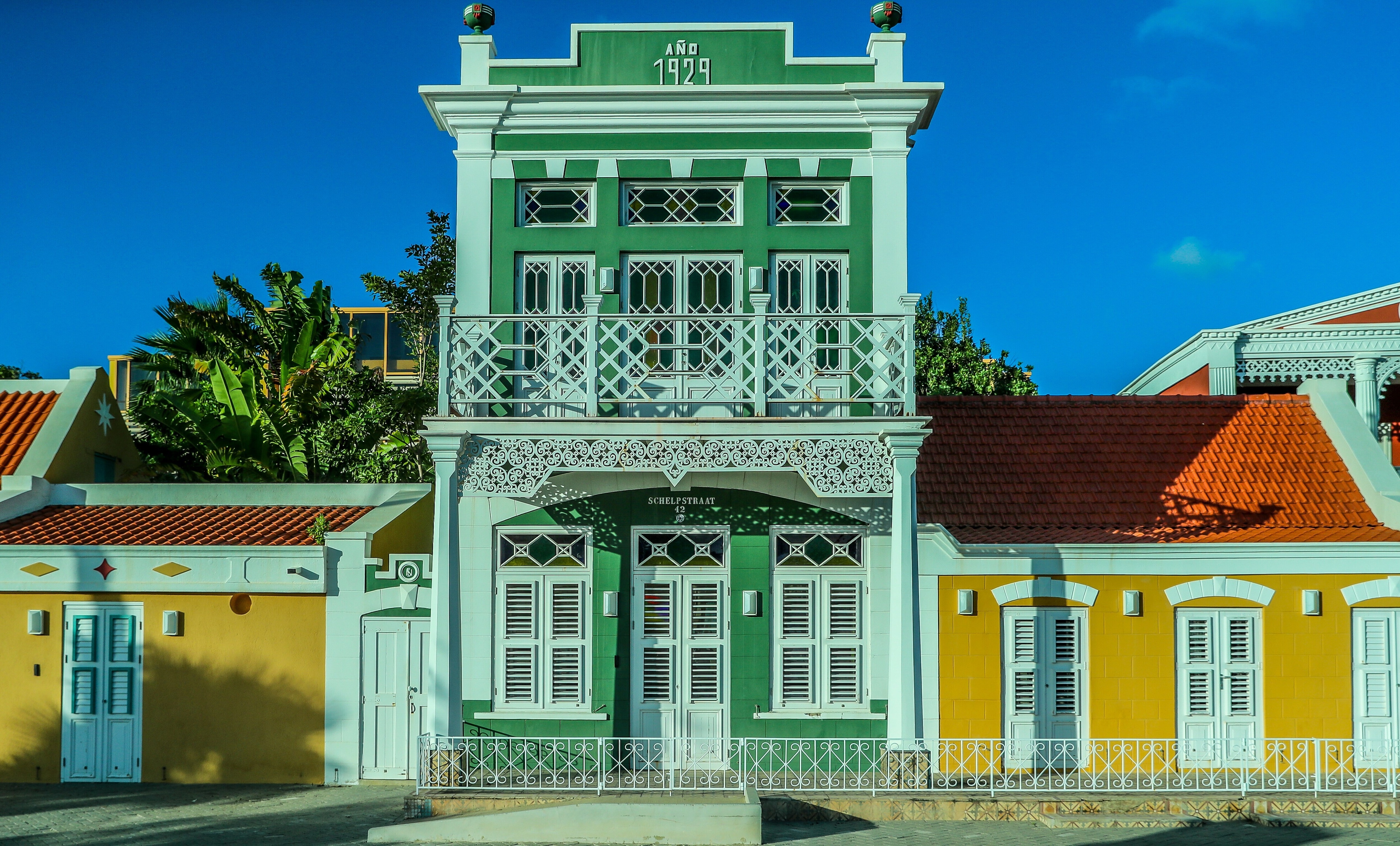
Small islands in the Caribbean must expand their outlook Image: Photo by Lex Melony on Unsplash
- When COVID-19 hit the Caribbean, the region's tourism-dependent economies collapsed almost overnight.
- Decades of optimizing for one kind of prosperity created acute exposure to a completely different kind of shock.
- Every nation, large and small, must have the capacity to adapt when conditions change.
Small islands are laboratories for understanding the limits of protection. The scale and intensity of the patterns found being played out in small island nations in the Caribbean will become increasingly relevant for any economy or organization navigating uncertainty.
We assume that building stronger defences makes us more resilient. Small islands suggest we're wrong.
When COVID-19 hit the Caribbean, the region's tourism-dependent economies collapsed almost overnight. Output in small states contracted by more than 7%, four times the rate of other emerging markets. But here's what most analysis misses: these economies weren't caught off-guard because they failed to prepare. They were caught because their preparation worked too well for too long.
Focusing on tourism had been a genuine success story. It delivered growth, jobs and foreign exchange. The problem was that decades of optimizing for one kind of prosperity created acute exposure to a completely different kind of shock.
The conch paradox
The queen conch builds one of nature's most sophisticated defensive structures. Its shell is so effective that the species thrived for millions of years across Caribbean waters. But that same shell makes the conch catastrophically slow to escape when conditions change. The protection is the vulnerability.
The same dynamic plays out in economic systems. The adaptations that make a system most resilient to familiar threats often leave it most exposed to novel ones. Specialization builds efficiency and competitive advantage, but also rigidity. Networks that transmit prosperity also transmit shocks. Optimization for known risks creates blind spots for unknown ones.
This is what I call the conch paradox: specialized resilience creates generalized vulnerability. This is a feature we rarely acknowledge.
How do small islands cope with natural disasters?
Small island developing states offer a stark illustration. These economies face average annual disaster costs equivalent to 18% of GDP. Over 40% are categorized as 'debt distressed' or at high risk of distress.
These statistics usually frame a story about external shocks hitting vulnerable places. The more interesting question is how that vulnerability got constructed in the first place.
The focus on tourism in the Caribbean didn't emerge from strategic planning sessions where leaders chose vulnerability. It emerged from fiscal survival. One economist describes it as 'firefighting mode.' This is when you're calculating next month's payroll, rather than modelling long-term scenarios, the development path that generates immediate revenue wins by default.
Aruba illustrates this pattern. When the island's oil refinery closed in 1985, there was no deliberation about alternative futures. There was fiscal panic. Tourism wasn't chosen through careful resilience analysis; it was the only option that could generate revenue fast enough to keep the government functioning. Four decades later, that emergency response had become an identity.
What looks like strategic choice was often path dependency compounded over decades.
Island economies didn't fail to diversify because policymakers were foolish. They failed because the same constraints that made them vulnerable also made alternatives difficult to pursue. Limited land, small populations, distance from markets, lack of economies of scale. The tourism shell formed because it was the adaptation that worked.
How the Forum helps leaders align climate action with nature-positive growth
Why this matters beyond small islands
If the conch paradox only applied to small nations, it would be analytically interesting but practically limited. But it doesn't.
The 84% of business leaders who feel unprepared for disruptions (according to the World Economic Forum's Resilience Pulse Check) face the same dynamic. Organizations optimize for efficiency, build specialized capabilities and create processes that work brilliantly until circumstances shift. Then the very strengths that drove that success become constraints on transformation.
As a previous Forum Stories piece states: "resilience used to mean recovery" but "today, disruption is no longer an exception." Taking that insight seriously means recognizing that our resilience investments may simultaneously be creating tomorrow's constraints.
The standard resilience framing focuses on closing gaps. The conch paradox suggests we also need to consider what adaptive capacity we're trading away to feel more protected.
Implications for policy and practice
None of this means we should stop investing in resilience. But we need to be honest about trade-offs.
Small islands need infrastructure, digital capacity and access to capital. But they also need policy space to experiment, fiscal buffers that allow strategic thinking beyond next month's crisis and metrics that value adaptive capacity, alongside specialized strength.
Business leaders face a version of this too. Competitive advantage matters, but so does the capacity to transform when conditions shift. That probably involves protecting some organizational capacity from efficiency pressures, measuring and rewarding learning alongside execution and having honest conversations about what your current success is making harder to do.
The answer to the conch paradox may involve maintaining the capacity to adapt when conditions change, rather than building ever-stronger defences against familiar threats.
How do we stay capable of transformation when everything we build makes us a little more rigid?
Don't miss any update on this topic
Create a free account and access your personalized content collection with our latest publications and analyses.
License and Republishing
World Economic Forum articles may be republished in accordance with the Creative Commons Attribution-NonCommercial-NoDerivatives 4.0 International Public License, and in accordance with our Terms of Use.
The views expressed in this article are those of the author alone and not the World Economic Forum.
Stay up to date:
Small and Medium-Sized Enterprises
Related topics:


Forum Stories newsletter
Bringing you weekly curated insights and analysis on the global issues that matter.
More on Resilience, Peace and SecuritySee all

Rumaitha Al Busaidi and Sarah Mostafa-Kamel
March 20, 2026


