Where systems are straining, progress is still possible – pathways from Davos 2026
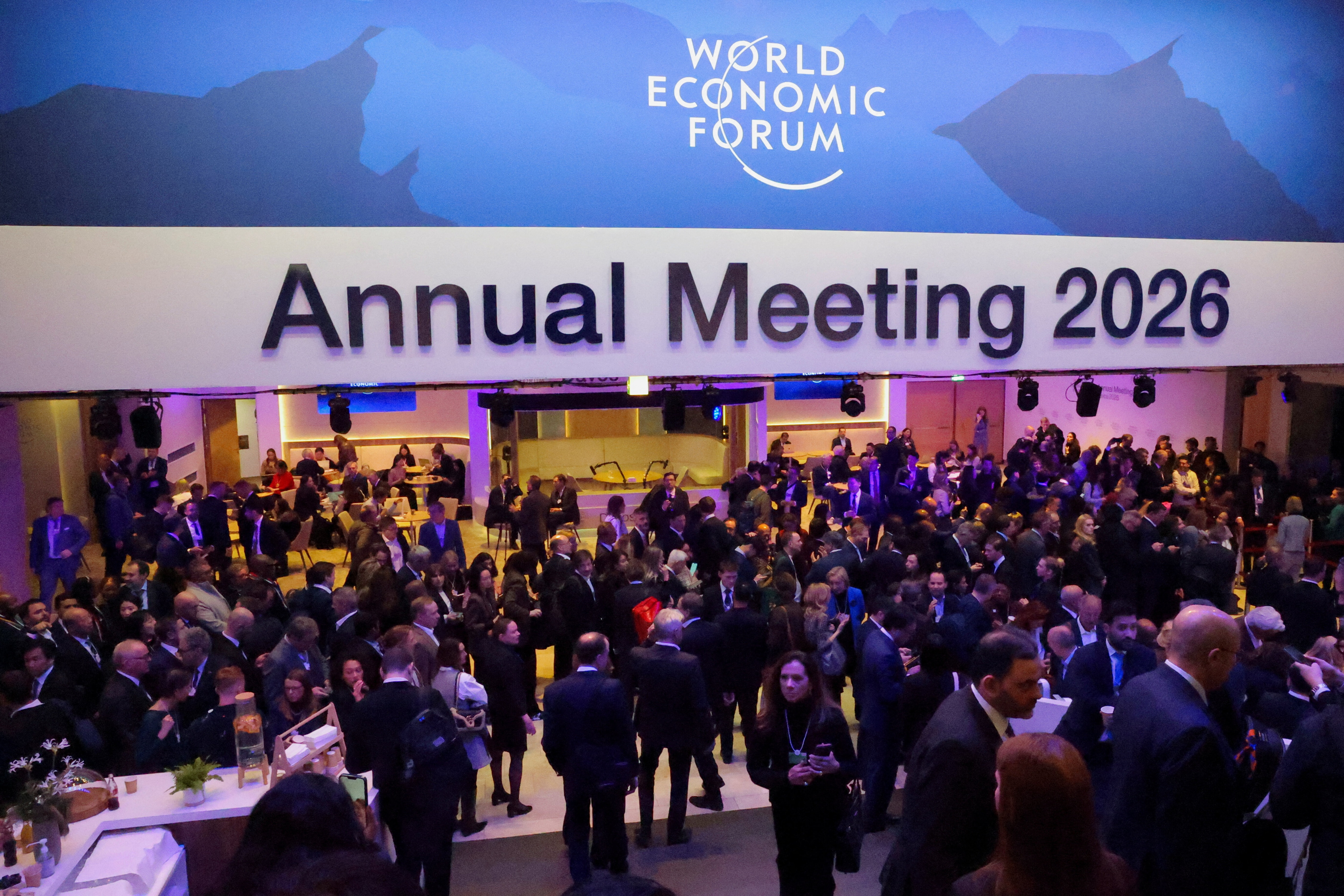
Over 100 Global Future Council members provided input at Davos 2026 Image: REUTERS/Denis Balibouse
- Even as fragmentation risks and other geopolitical concerns intensify, there is space for focused collaboration on shared priorities such as supply chain resilience, cybersecurity and critical minerals.
- Artificial intelligence and emerging technologies offer economy-wide productivity gains but durable, inclusive growth requires policy clarity, institutional credibility and sustained capital formation.
- Human capital, fair participation pathways and skills investment are central to economic renewal in an era of automation and demographic strain.
The World Economic Forum’s Annual Meeting 2026 held in Davos, Switzerland last month honed in on the spirit of dialogue.
The programme was built around five global challenges that demand public-private cooperation and practical follow-through: cooperation in a contested world, unlocking new sources of growth, investing in people, deploying innovation responsibly and building prosperity within planetary boundaries.
As a multistakeholder and knowledge network, encompassing experts across academia, business, government, civil society and international organizations, more than 100 council members from the Network of Global Future Councils went to Davos and contributed to 67 sessions, including awards, Betazones, hub sessions, issue briefings, Open Forum sessions, podcasts, stakeholder dialogues, town halls and workshops.
Here are some of their timely insights, nuggets of grounded expertise, and decision-relevant perspectives.
How can we cooperate in a more contested world?
Services is the fastest-growing component of international trade
”Council members weighed in on prospects of cooperation in a more contested world, focusing on the risks and systemic effects of global fragmentation and strategic rivalry between states.
They noted that trade tensions are extending beyond goods, with tariffs increasingly applied to services and that sovereignty and tariffs are being used as instruments of statecraft. The pursuit of national self-reliance and tighter border control places, they observed, is placing a growing strain on alliances and trade governance.
Participants recommended reducing strategic vulnerabilities while preserving channels for cooperation wherever possible. Supply chain resilience and critical mineral dependencies were framed as matters of national security.
Cybersecurity was also underscored as essential infrastructure, particularly for cross-border payments and digitized services, amid the rise of AI-enabled fraud. A central question emerged: how can states cooperate effectively without assuming that current geopolitical contestation is merely temporary?
Despite sharper competition, members emphasized pragmatic steps to sustain trust and preserve cooperation in areas where interests continue to align.
How can we unlock new sources of growth?
The growth conversation was anchored in investment, productivity and resilience under uncertainty.
While artificial intelligence (AI) was widely viewed as an economy-wide enabler with the potential to reshape productivity and capital formation, participants cautioned about execution risks, citing uneven infrastructure investment and the emergence of winner-take-most dynamics that could constrain broader growth.
Disruption is now systematic, it’s persistent and it’s accelerating
”Many agreed that unlocking new sources of growth required creating the policies and market conditions that encourage investors to commit capital. Weak investment and productivity were linked to uncertainty about policy direction, including concerns around trust in law, institutions and currency; institutional credibility of public authorities, particularly governments and central banks; and the stability and clarity of rules and regulatory frameworks across the economy, such as tax strategies and coherent AI regulation.
Public debt was mentioned as a systemic risk for many countries, contingent on whether growth arrives fast enough to stabilize fiscal dynamics.
Meanwhile, trade, capital flows and supply chains were portrayed as being rewired toward resilience and new corridors, reshaping competitiveness.
The discrepancy between the power of economics, the power production and the reliance on money, notably the dollar, and a failure in that context to build deep political connections for me is really what the [19]20s stand for.
”Overall, the message was that with clearer rules and sustained investment, there is scope to translate technological promise into more durable and inclusive growth outcomes.
How can we better invest in people?
Investing in people was identified as both a constraint and an opportunity, shaped by demographics, skills and labour force participation. Discussions linked the future labour force to shifting workforce geography, the rise of remote services and the expansion of cross-border hiring.
Skills, strategies and education capacity were seen as decisive in determining access to jobs, services and opportunity.
…often social polarization can come about when people cannot have dignity through the work that earns them a good living.
”Enabling mobility, protecting individual agency and sustaining inclusion emerged as central priorities, with assessment and selection systems viewed as critical gateways to diversity and career progression.
Participants highlighted growing uncertainty at the entry level as routine tasks become automated and AI capabilities expand. Preserving agency, they argued, will require sustained investment in skills, mentorship and new models of career architecture.
Risks to participation, including rising childcare costs, displacement pressures and strains linked to migration and border governance, were also underscored as tests of social stability and trust.
We're seeing women start to drop out of the workforce after gaining and gaining and gaining, especially mothers of very young children because of the cost of childcare.
”The forward emphasis was constructive: by building skills, fair pathways and supportive participation conditions, societies can keep human agency at the centre of economic and social renewal.
How can we deploy innovation at scale and responsibly?
Deploying innovation at scale and responsibly was framed as a test of both governance and trust, not just a technology challenge.
Participants underscored AI’s potential to raise productivity and unlock new sources of value, while warning that fragmented rules on data access, privacy and technical standards risk slowing adoption and limiting scale.
…we're seeing a generational shift under pressure, ready to lead.”
”Every ministry should be like a publicly listed company publishing their annual reports and developing a culture of information sharing in peace time so that when there is a crisis, people don't start questioning the credibility of your information...
”Conversations pointed to the need for clear, coherent frameworks that enable adoption while setting firm guardrails.
Further challenges were seen in the form of uneven regulation and data localization, which could raise costs and limit access to capital; and the need for trust as a precondition for adoption across workplaces and agriculture, particularly where questions of data ownership and benefit-sharing remain unresolved.
Cybersecurity was characterized as an ongoing investment imperative, while misinformation and attention capture were treated as systemic risks requiring accountability, education and stronger governance.
Technology is developed by humans, and therefore, as we develop any technology, we make design choices along the way.
”The concluding tone was optimistic but grounded – innovation must be paired with credible rules, strong rights protections and resilient digital infrastructure. Together, these form a realistic pathway to scaling technologies that earn and sustain public trust.
How can we build prosperity within planetary boundaries?
Building prosperity within planetary boundaries was presented as a series of real-world trade-offs among mitigation, adaptation, security and affordability. Discussions noted progress on renewables and mitigation.
While progress on renewable energy and emissions mitigation was acknowledged, total global emissions have yet to decline at the necessary scale, prompting renewed focus on adaptation technologies and clearer prioritization across competing objectives.
Priorities focused on incentives, measurement and system resilience. Agriculture was discussed as a major opportunity for mitigation and resilience. However, there was disagreement on what to reward and how to avoid unintended consequences, such as the climate impacts on livelihoods and food security.
The caution was that one-size-fits-all transitions to a more sustainable world can raise affordability risks.
Discussions also underscored trade-offs in energy and industrial strategy, noting the infrastructure demands of powering AI and the strain on ageing grids.
Acute risks were elevated, including glacier retreat with a high potential to threaten freshwater supply, food production, hydropower, drought buffering and biodiversity.
…information is power. Information where it wasn't existing before the data is power, and the data also enables women to play a more equal role now in the market because they have information and they have power.
”Looking forward, restoration and conservation are key, which were presented as practical, investable pathways that link resilience, climate action and long-term value creation.
The Councils from the Network of Global Future Councils will continue to advance their work throughout 2026, generating insights, convenings and contributing across the Forum’s communities and initiatives. Follow the latest updates and outputs on the Global Future Councils site.
License and Republishing
World Economic Forum articles may be republished in accordance with the Creative Commons Attribution-NonCommercial-NoDerivatives 4.0 International Public License, and in accordance with our Terms of Use.
The views expressed in this article are those of the author alone and not the World Economic Forum.

Forum Stories newsletter
Bringing you weekly curated insights and analysis on the global issues that matter.