When floods rise, so does debt. It doesn't have to be that way
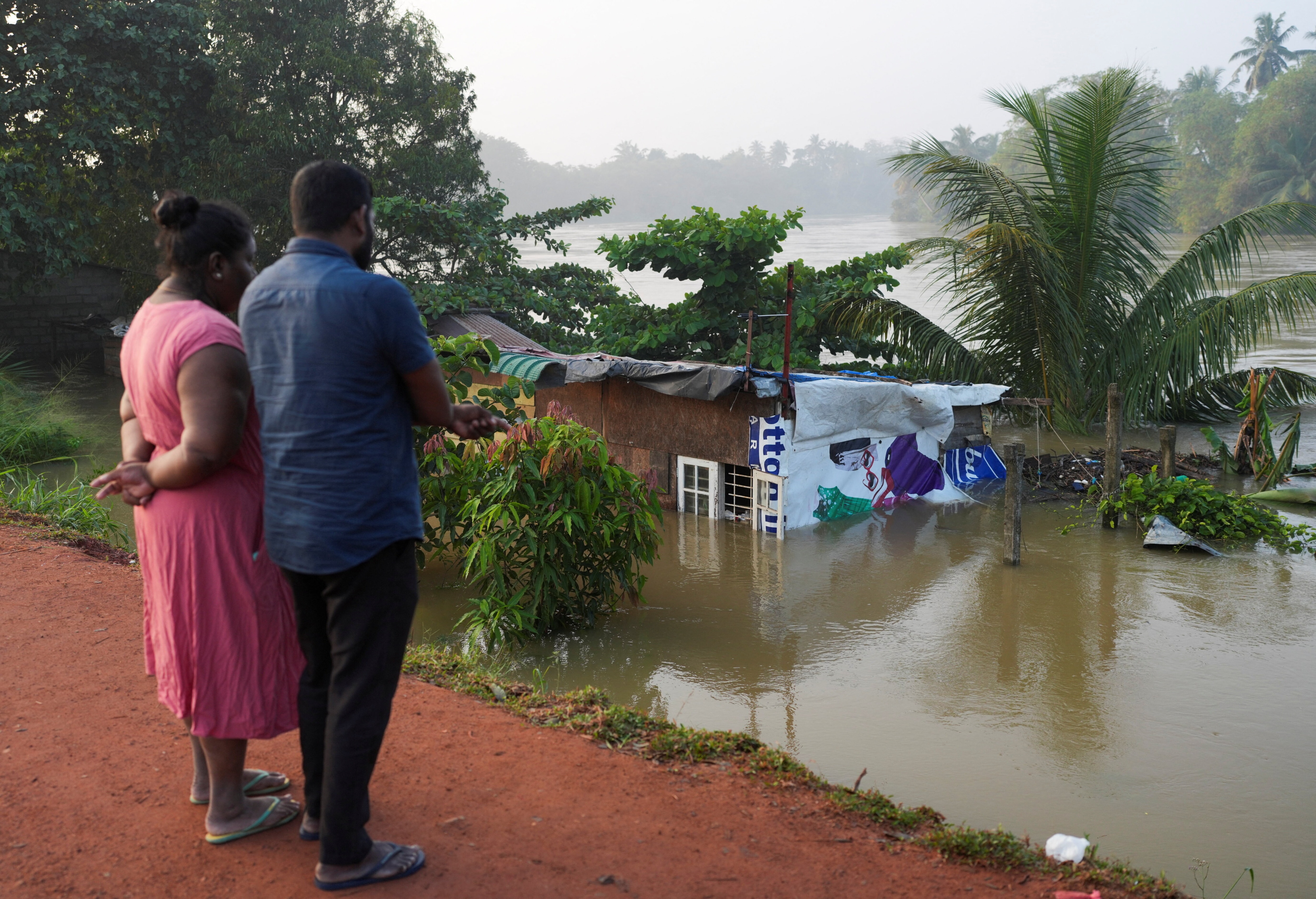
Climate disasters like floods often come hand in hand with debt increases, exacerbating their impact. Image: REUTERS/Thilina Kaluthotage
Kanni Wignaraja
UN Assistant Secretary-General and UNDP Regional Director for Asia and the Pacific, United Nations Development Programme (UNDP)- 95 percent of MSMEs across several Asian countries lack any financial protection against shocks.
- Individuals and economies across the developing world are similarly economically exposed to climate disasters, forcing them to resort to debt.
- Debt is almost inevitable in shock-hit economies, but the terms of that debt can be structured to encourage recovery, not make the burden greater.
In late November, Cyclone Ditwah’s torrential rains submerged nearly a fifth of Sri Lankan land and and damaged hundreds of thousands of homes, particularly affecting the most vulnerable. The country faces estimated losses of at least $6–7 billion, on top of an already fragile fiscal situation and an IMF programme that leaves little room for error.
Sri Lanka’s is an extreme case, but not an isolated one. Across the world, especially across Asia, floods and landslides have swept through Indonesia, Viet Nam, Thailand, the Philippines, Pakistan and Malaysia, killing over three thousand people and disrupting supply chains and threatening millions of livelihoods, many of them already precarious.
These disasters are no longer rare shocks; they are recurring events meeting a global economy under strain, which reverse hard-won gains. And they are creating a multi-layered crisis whose other side of the coin is debt: not just for governments, but for businesses and households.
If we keep treating debt as a standing sovereign fiscal problem, recovery will stall, and vulnerability will deepen. Disaster finance should be reframed as a whole-of-economy challenge, because climate shocks trigger interlinked layers of debt: public debt, business and market debt, and household debt.
Each layer is distinct, yet the pressures in one ripple through the others: government borrowing affects macroeconomic stability and market confidence; business debt puts a strain on employment and government revenues; and household debt amplifies poverty and social vulnerability. Addressing these layers in isolation will not work. We need tailored tools that recognize their connections if we want to dramatically reduce the total cost of recovery and protect human development.
Public debt: Pause before the cliff
When floods hit, budgets bleed from both ends: spending surges for relief, recovery and reconstruction while revenues collapse. Without tailored instruments, countries borrow at punishing rates or divert funds from basic services like health and education. Sri Lanka’s request for emergency IMF financing underscores the dilemma: how do you rebuild thousands of kilometres of roads, schools and clinics without sinking deeper into debt?
One answer, which was agreed in the Sevilla Commitment on Financing for Development, is to implement Climate Resilient Debt Clauses - “pause clauses” - that automatically defer repayments when disasters strike. After Hurricane Beryl in 2024, Grenada and St. Vincent triggered such clauses, freeing cash for urgent recovery without messy renegotiations. These tools are net present value neutral, meaning they don’t increase long-term costs, and rating agencies are becoming more receptive to them. When paired with state contingent bonds and catastrophe instruments, which extend maturities or provide payouts after shocks, they create breathing space when disasters like floods strike.
The principle is simple: don’t make recovery hinge on new loans on old terms. Instead, embed climate triggers in the debt itself so that budgets can adapt when disaster hits.
Business debt: Liquidity is survival
Floods don’t just wash away homes; they wipe out inventories, cashflow and credit lines. Small and medium sized enterprises, which are the backbone of local economies, often face the brutal choice of taking on high interest emergency loans or shutting down. In Asia, only about 5 percent of natural catastrophe losses are insured. A recent UNDP–Generali study found 95 percent of MSMEs across several Asian countries lack any financial protection against shocks.
A tested fix is parametric insurance coverage that pays out within days based on rainfall or river level triggers, not lengthy damage assessments. Pair that with concessional reinsurance to keep premiums affordable, and you have a lifeline for businesses. Regional risk pools like SEADRIF show how to scale these solutions and manage basis risk. Add guarantee-backed recovery credit – public guarantees that let banks offer lower rate, grace period loans – and you keep shops open, jobs intact and supply chains moving.
Floods shouldn’t force a solvent shopkeeper into insolvency. Trigger-based payouts and recovery credit beat predatory lending every time.
Household debt: The sharp edge of vulnerability
The poorest families often enter disasters already indebted to pay for food, school fees or health care. As revealed in UNDP and Oxford University’s 2023 Multidimensional Vulnerability Index (MVI) analysis, nearly half of Sri Lankan households had limited or no adaptive capacity even before this disaster, with household debt as one of the greatest contributors to it. When homes collapse and wages vanish, they borrow more at exorbitant rates or resort to desperate coping: pulling children out of school, reducing the quality and quantity of diets, marrying off daughters early, selling what little they have.
Solutions exist. Shock-responsive social protection – cash for work programmes, fee waivers, targeted stipends – provides incomes for livelihoods, keeps students enrolled and prevents irreversible setbacks. Debt moratoria for microfinance borrowers and utility fee suspensions in disaster zones can stop the spiral before it starts.
Smartly structured debt swaps can reduce debt in disaster-hit countries and free public resources. These resources, even if limited, can be used for direct household relief, to restructure loans. Authorities can tie debt service savings to climate-resilient investments that lower future borrowing needs.
A new contract for solidarity
Climate disasters are rewriting the economics of vulnerability. These are humanitarian crises but have fiscal, market and household shocks rolled into one. The old playbook consisting of emergency loans for governments and relief or charity for families, cannot keep pace with the scale and frequency of today’s catastrophes.
What we need is disaster-smart debt financing pause clauses in sovereign debt, pooled risk and parametric insurance for businesses, and shock-responsive safety nets for households. These tools don’t eliminate debt, but they make it more manageable and enable faster and fairer recovery.
Imagine the alternative. If Sri Lanka finances $2 billion of urgent repairs at 6 percent interest, that’s $120 million in annual debt service payments. This amount could have been used to rebuild schools or fund small businesses’ credit. A 12-month ‘pause clause’ would preserve that liquidity when it is needed the most. Multiply that logic across dozens of climate vulnerable economies, and you see why this approach makes sense.
Floods will rise. So will debt unless we change the rules. Let’s give countries, businesses, and families a fair chance to rebuild, and a fair shot at the future.
Don't miss any update on this topic
Create a free account and access your personalized content collection with our latest publications and analyses.
License and Republishing
World Economic Forum articles may be republished in accordance with the Creative Commons Attribution-NonCommercial-NoDerivatives 4.0 International Public License, and in accordance with our Terms of Use.
The views expressed in this article are those of the author alone and not the World Economic Forum.
Stay up to date:
Humanitarian Action
Related topics:


Forum Stories newsletter
Bringing you weekly curated insights and analysis on the global issues that matter.
More on Climate Action and Waste Reduction See all

Michael Kent and Christina Eng
March 16, 2026