How four cities are cutting heat, pollution and health risks - and saving money
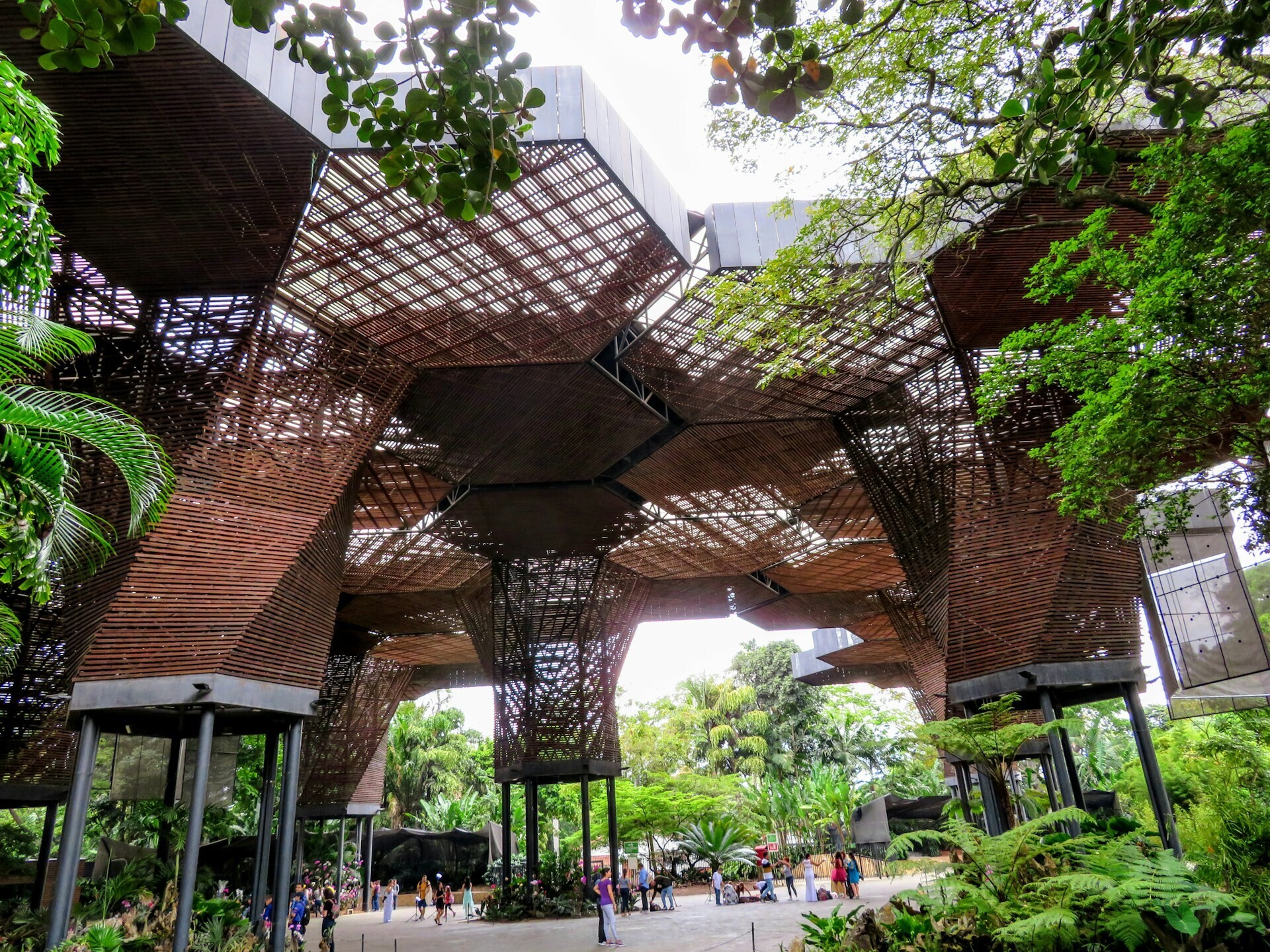
An architecture project in Orquideorama Jardín Botánico, Medellin - one of many cities boosting nature-based solutions and climate resilience Image: David Dibert/Unsplash
Gail Whiteman
Hoffmann Impact Professor for Accelerating Action on Nature and Climate, University of Exeter Business School, University of Exeter- Cities are home to over half of the world's population but most report major vulnerability to climate hazards such as flooding and extreme heat.
- Such climate hazards, in turn, threaten public health, livelihoods, productivity and economic growth as urbanization accelerates worldwide.
- Here are four cities that lead the way in urban climate-health resilience and offer a playbook for others to cut climate risk and protect health.
Cities are home to 56% of the world’s population and generate 80% of global GDP. Yet, 83% report major vulnerability to climate hazards, with flooding (58%) and extreme heat (54%) topping the list.
As urbanization accelerates, rising temperatures threaten not only public health but also livelihoods, productivity and economic growth.
Some cities, however, are turning climate‑health risks into testbeds for cost-effective solutions that work at scale.
Their approaches show how investing in climate resilience can deliver returns across multiple dimensions, reducing health risks, cutting economic losses and protecting asset values, all while shielding communities from worsening climate shocks.
For decision‑makers in governments, businesses and finance, these cities offer a practical playbook for backing solutions that cut climate risk, protect health and deliver better returns on scarce capital.
Here are four lessons from cities leading in urban climate-health resilience.
London climate and air policies cut hospital visits and sick leave
London’s low‑ and ultra‑low‑emission zones were brought in to cut climate‑warming pollution from traffic and improve air quality in central and inner London.
Together, they have helped push high‑emitting vehicles off the road, leading to a 9% drop in cardiovascular emergency hospital admissions, a 10.2% drop in respiratory issues and an 18.5% reduction in sick leave.
In all, the policies have resulted in productivity and health savings of more than £37 million ($49 million) annually, relative to areas of England without low‑emission zones.
For policy leaders, London demonstrates how air‑ and climate‑driven traffic rules can strengthen climate‑health resilience by reducing people’s exposure to harmful pollution, easing pressure on hospitals, and helping residents stay healthier as heatwaves and other climate stresses become more frequent.
Philadelphia shows flood resilience can improve health and increase asset value
The US city of Philadelphia shows how flood resilience solutions can turn climate vulnerabilities into asset growth.
Through its 25-year Green City, Clean Waters programme, running through 2036, the city has already installed rain gardens, bioswales and permeable pavements that divert 3 billion gallons of stormwater annually, cool nearby streets by up to 5°C on hot nights, and filter pollutants fuelling respiratory illness during compound wet-heat events.
In addition, the programme is on track to reduce pollution entering the Delaware and Schuylkill Rivers — Philadelphia's primary drinking water sources — by more than 2 billion gallons annually, directly cutting waterborne health risks for the city's 1.5 million residents.
Beyond its climate and health benefits, the initiative also drives asset appreciation. Properties adjacent to these installations commanded 10% higher sale prices, according to one analysis of several thousand property transactions.
For investors and policy-makers, Philadelphia’s model shows health resilience can pay dual dividends by curbing climate-health crises while boosting local economies.
Ahmedabad proves cost-efficient heat resilience delivers
Ahmedabad shows that cost-effective heat prevention is possible.
In 2013, the Indian city rolled out its Heat Action Plan to protect residents and workers from extreme heat. The payoff? The city cut heat-related mortality by ~25% within three years through scalable, low-cost tools, including cool roofs, hydration stations, shaded rest areas and SMS alerts.
With extreme heat already carving 10% productivity losses annually, Ahmedabad’s approach holds promise for businesses looking for cost-efficient heat-resilient models.
Cool roofs and shifting work schedules can deliver 3:1 benefit-cost ratios. Early warning systems, proven most efficient at 50:1 returns city-wide, can be translated at the company level by SMS alerts triggering worker breaks before heat stress escalates.
Medellín proves nature-based solutions can be health infrastructure
The Colombian city of Medellín turned one of Latin America’s most notorious heat islands into a testbed for nature‑based climate‑health solutions.
Since 2016, its Green Corridors programme has transformed 18 roads and 12 waterways into 20km of interconnected green space. The city trained 75 disadvantaged residents as urban gardeners to plant 2.5 million small plants and 880,000 trees across 30 corridors.
With a total investment of $16.3 million (equivalent to $6.50 per resident), the initiative’s payoff is significant. The city temperatures fell 2°C on average, air pollutants measured as PM2.5 dropped 8%, and acute respiratory infections declined over 40% within three years.
Its model, leveraging cost-effective nature-based solutions, offers decision-makers a blueprint to lower heat stress, improve air quality, safeguard population and workforce health, and reduce pressure on public healthcare at the same time.
Taken together, these four cities show that climate‑health resilience solutions can help decision‑makers tackle multiple risks at once in a cost‑efficient way – from green streets and corridors that handle floods and dirty air together to traffic rules that turn cleaner air into fewer hospital visits.
For policy-makers and investors deciding where to put scarce capital, the key takeaway is that the smartest bets are those that stack benefits, cutting climate risk, protecting health and strengthening urban economies in a single move.
Don't miss any update on this topic
Create a free account and access your personalized content collection with our latest publications and analyses.
License and Republishing
World Economic Forum articles may be republished in accordance with the Creative Commons Attribution-NonCommercial-NoDerivatives 4.0 International Public License, and in accordance with our Terms of Use.
The views expressed in this article are those of the author alone and not the World Economic Forum.
Stay up to date:
Cities and Urbanization
Related topics:


Forum Stories newsletter
Bringing you weekly curated insights and analysis on the global issues that matter.
More on Climate Action and Waste Reduction See all

Steve Rochlin and Judith Ketelslegers
March 26, 2026


