What is World Water Day?

This year's World Water Day on 22 March explores the relationship between water, women and gender equality. Image: Photo by Gyan Shahane on Unsplash
This article has been updated.
- World Water Day is held every year on 22 March to raise awareness of global freshwater challenges and solutions.
- This year's theme is Water and Gender, highlighting how water insecurity fuels inequality and exploring how women's voices and leadership can make water a force for a healthier and gender-equal future.
- The World Economic Forum's Water Futures Community is a collaborative platform driving solutions and finance to address emerging water challenges, advancing the global water agenda through dialogue and partnerships.
Held on 22 March each year, the United Nations' World Water Day focuses on the vital importance of freshwater to lives and livelihoods across the globe.
Raising awareness of the more than 2 billion people that live without access to safe water, the day highlights the scale of the global water crisis while advocating for action to address it.
This year's theme is Water and Gender, exploring how a crisis that affects everyone doesn't affect everyone equally.
According to the UN, where communities lack water security, inequalities flourish with women and girls bearing the brunt of the impact.
"Women can be many things at once: mothers, workers, caregivers, leaders," says UN-Water Chair Álvaro Lario. "When water is unsafe, or far from home, they are the ones expected to carry the burden on top of everything else."
Women's voices and leadership are essential to solving the water crisis, and we must invest in them to ensure services become more inclusive, sustainable and effective, the organization adds.
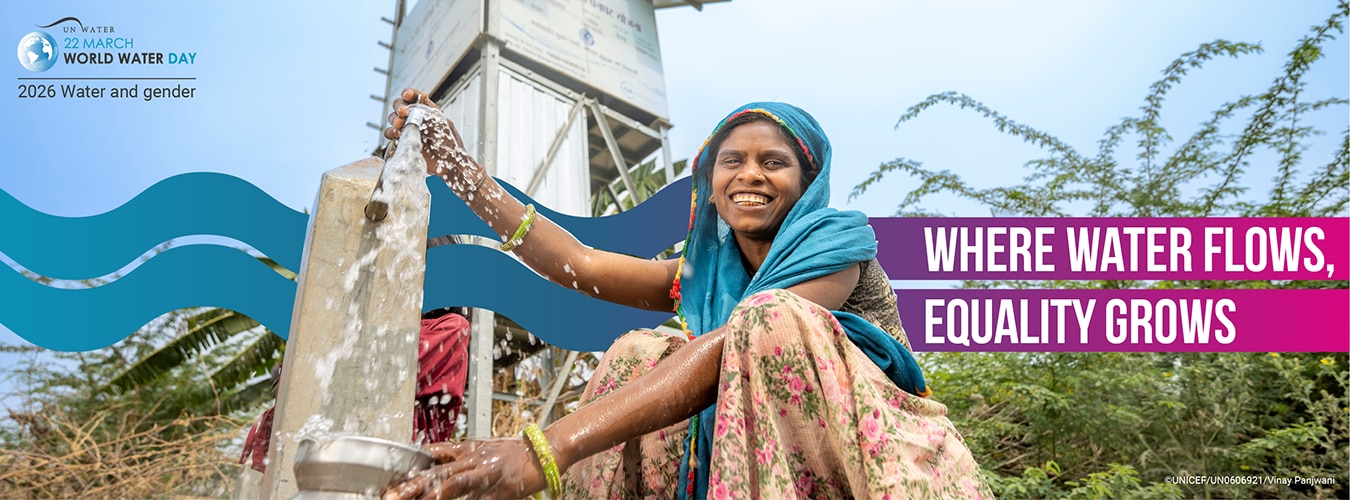
As the water crisis intensifies, 2026 has been called a 'Year of Water'. It concludes with the UN Water Conference (Dec 2-4, UAE), which will focus on matching political will with the scale of the situation.
The World Economic Forum's 56th Annual Meeting in Davos, in January 2026, convened leaders to spur progress across three critical dimensions: freshwater access and management, blue food security and ocean protection. The Annual Meeting saw the launch of major new initiatives that aim to move the world forward on taking action on all water systems – ocean and freshwater. Explore them in the article below.
Why does World Water Day matter?
The stats around freshwater speak for themselves:
- Over 2 billion people still lack access to safely managed drinking water.
- Diarrhoea caused by dirty water and poor sanitation kills a child under five nearly every two minutes.
- 447 million children worldwide go to a school that doesn't have a reliable supply of clean water.
- In 2021, more than 2 billion people lived in water-stressed countries. This is expected to be made worse as a result of climate change and population growth.
- The world won't achieve sustainable water management until 2049 at the current rate.
- An additional 1 billion people are expected to live with extremely high water stress by 2050.
World Water Day has been observed since 1993 to highlight the work that remains to ensure everyone on Earth has access to clean drinking water. And while it's a high-profile issue – check out our podcast with Matt Damon below – the figures above emphasize the challenges that remain, especially with freshwater usage increasing each year.
The World Health Organization warns that "historical rates of progress would need to double" for the world to achieve universal coverage of basic drinking water services by the end of the decade.
Less than 1% of the Earth’s freshwater is accessible drinking water and climate change is dangerously affecting that supply, according to the World Meteorological Association. Over the past 20 years, terrestrial water storage – including soil moisture, snow and ice – has dropped at a rate of 1cm per year, with major ramifications for water security.
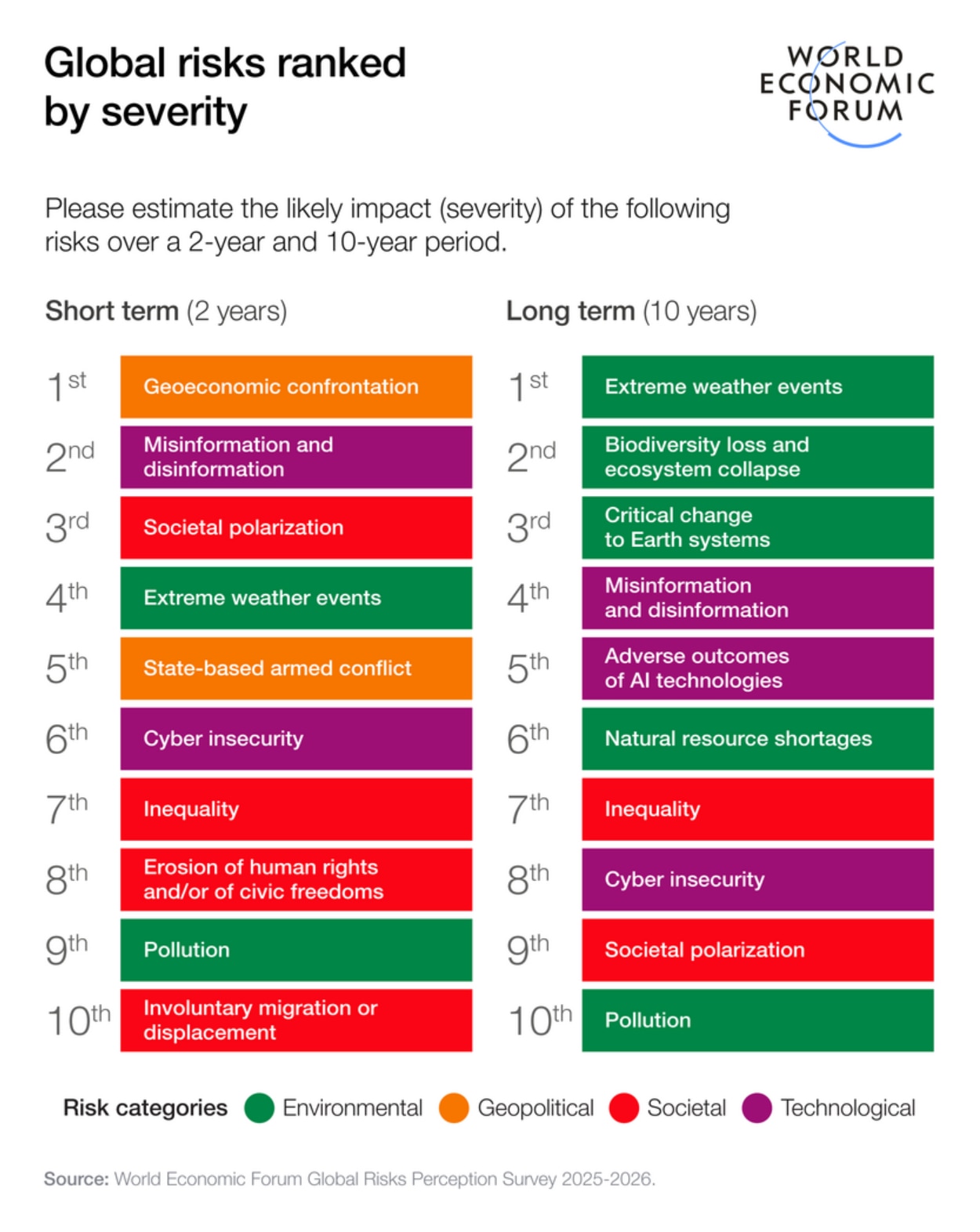
From climate change to urbanization and demographic changes, water supply systems face numerous risks. The World Economic Forum's Global Risks Report 2026 lists "natural resource shortages" as the 6th biggest risk over the next decade.
Plastic pollution is increasingly part of the water–climate nexus too. Microplastics are now found across freshwater systems — from the Alps to the Arctic — and can enter rivers and lakes as water cycles shift. Emerging research suggests they may also accelerate melting by reducing ice reflectivity. They are also entering drinking water sources, raising growing concerns about potential impacts on human health.
That's why raising awareness on conserving and protecting freshwater for everyone on Earth is vital, especially as the world looks to find – and implement – solutions.
Find out more about the challenges in the session below from our Annual Meeting in 2026 –
Water in the Balance.
The World Economic Forum and water security
A number of Forum initiatives and workstreams enable key actions and conversations to take place and help solutions get traction. Some include:
Driving innovation and entrepreneurship
UpLink: The World Economic Forum’s early-stage innovation ecosystem maximizes the key role innovation and entrepreneurial thinking can play in conserving and protecting freshwater sources. Its Aquapreneur Innovation Initiative, in partnership with HCL Group and the Food and Water Initiative, connects high-potential start-ups (UpLink Ventures) with the capital, partnerships and global ecosystem needed to scale solutions that drive freshwater resilience.
Fostering collaboration
Collaboration between public and private sectors has a significant role to play in providing clean water for all, and ensuring a sustainable, resilient global water system. Key initiatives that drive this critical cooperation include:
Water Futures Community: The Forum's Water Futures Community is a collaborative platform driving solutions and finance to address emerging water challenges, and advancing the global water agenda through dialogue and partnerships.
Global Plastic Action Partnership(GPAP): This collaborative platform brings together governments, businesses and civil society to tackle plastic pollution, helping reduce leakage into waterways and strengthen resilient communities.
Don't miss any update on this topic
Create a free account and access your personalized content collection with our latest publications and analyses.
License and Republishing
World Economic Forum articles may be republished in accordance with the Creative Commons Attribution-NonCommercial-NoDerivatives 4.0 International Public License, and in accordance with our Terms of Use.
The views expressed in this article are those of the author alone and not the World Economic Forum.
Stay up to date:
Water
Related topics:


Forum Stories newsletter
Bringing you weekly curated insights and analysis on the global issues that matter.
More on Food, Water and Clean AirSee all

Arslan Khalid and Rabia Ferroukhi
March 11, 2026


