The beautiful game's other prize? Jobs, growth and happiness
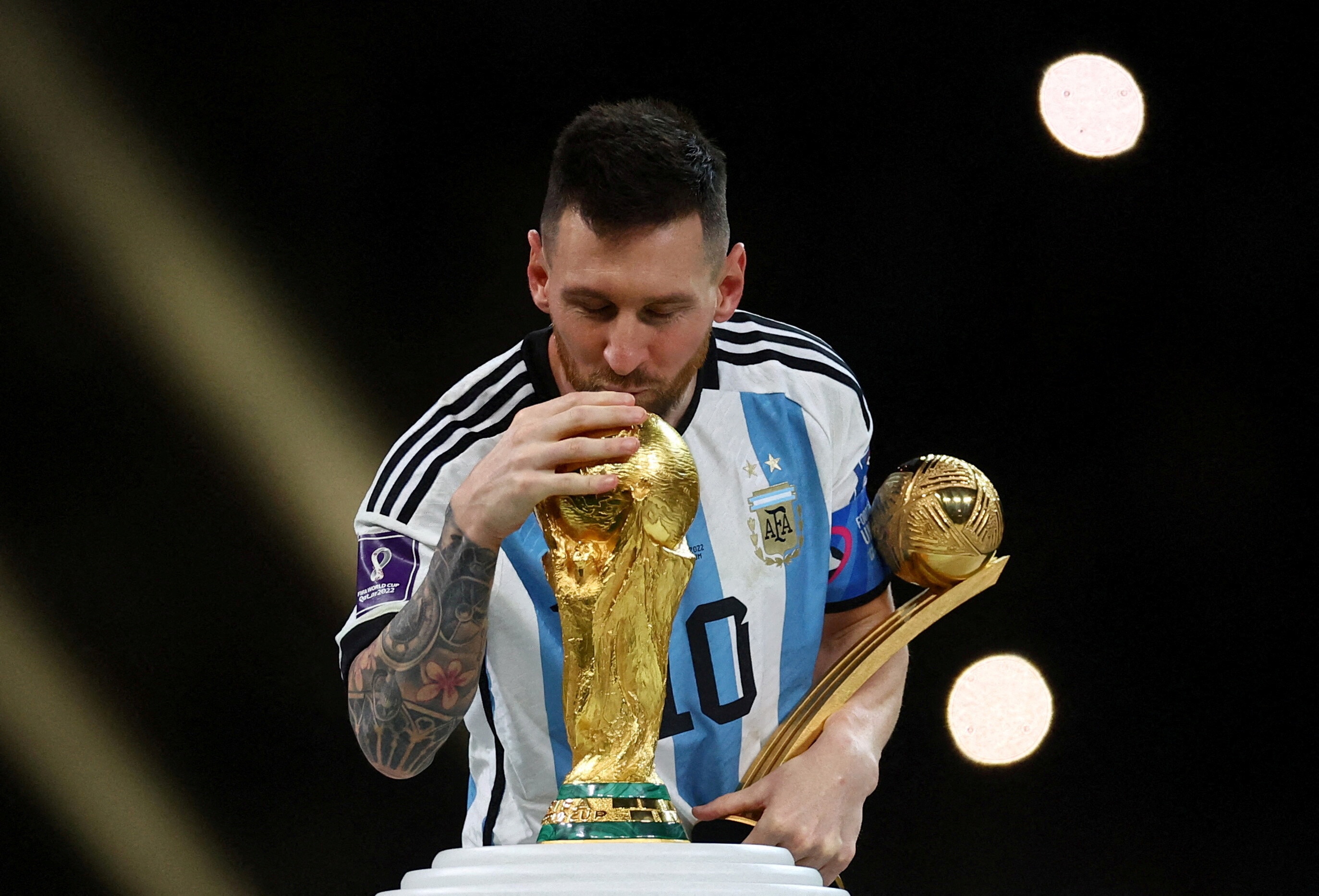
Lionel Messi kisses the World Cup trophy after Argentina won the FIFA World Cup Qatar 2022. Image: Reuters/Kai Pfaffenbach
- The FIFA World Cup 2026 kicks off on 11 June and could create more than $40 billion in global GDP.
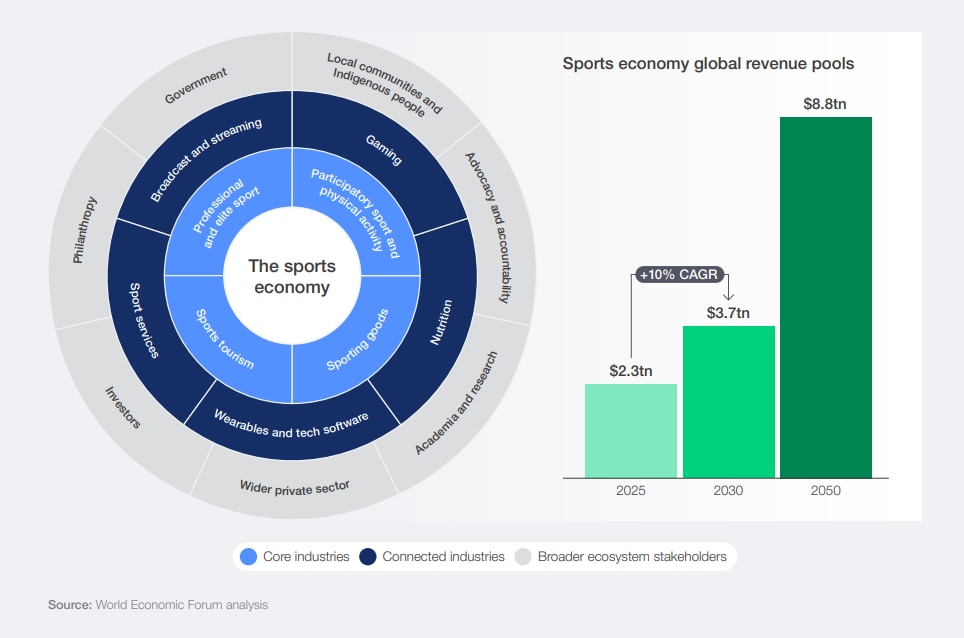
- The World Economic Forum says sport is one of the top 10 industries driving growth by 2030 and predicts the sports economy could be worth $8.8 trillion by 2050.
- Around the world, sporting events from the Olympics to the Commonwealth Games have brought economic and social benefits to communities.
In less than two months, the FIFA World Cup will kick off in the US, Canada and Mexico. Following swiftly on the heels of last year's FIFA Club World Cup, the event was supposed to make 2026 a bumper year for US tourism. But there are growing concerns among US host cities that the expected economic boost may not materialize, reports the Financial Times.
Experts say ticket prices, inflation fears and the so-called 'Trump slump' are putting fans off, with hotel rates down by a third in host cities from Atlanta to San Francisco.
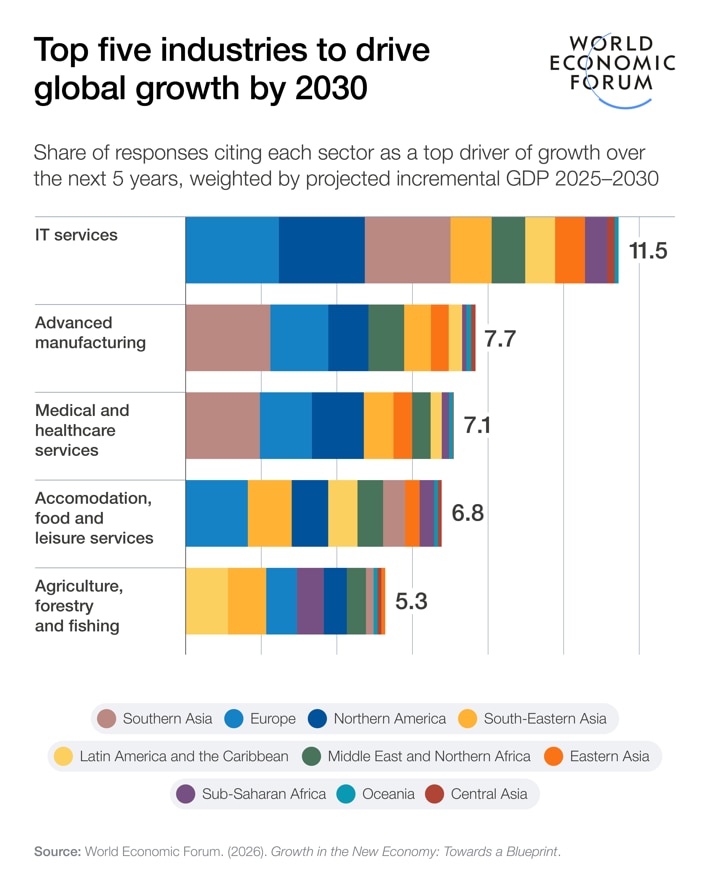
A new World Economic Forum report says accommodation, food and leisure is one of the top five industries driving growth in the next five years, with entertainment and sports in the top 10. Northern America in particular is set to be the main region for growth in entertainment and sports, making the reported dip in US World Cup tourism an outlier.
A Forum report published in January - Sports for People and Planet, produced with Oliver Wyman - finds it could become an $8.8 trillion economy by 2050, with key drivers including the growth of sports tourism and the mainstreaming of women's sport.
Sports' economic impact is not automatic - it needs the right conditions to work. But there is a raft of evidence from across the globe that when it does deliver, it can lift communities.
When football and entertainment collide
A landmark peer-reviewed study by the University of Michigan, published in the academic journal Communication & Sport, analyzed long-term Welsh government data on the former mining city of Wrexham. The findings were striking.
In September 2022, when the TV series Welcome to Wrexham premiered - a tale of two Hollywood actors' attempts to turn around the local football club's fortunes - Wrexham had the third-lowest employment rate of any local authority in Wales.
By March 2024, it had the highest. GDP per capita, social services spending and mental health outcomes all improved more sharply in Wrexham than comparable Welsh areas over the same period.
The economic ripple effects are measurable, too. Visitor spending in Wrexham hit $204.5 million in 2022, a 51% increase on the year before. The club's annual revenue surged from under $4 million pre-takeover to around $45.11 million by 2024-25.
Crucially, the researchers said this is not correlation but causation - they controlled for Wales-wide economic trends and isolated the Wrexham effect. A sports club, and the story told around it, demonstrably moved the economic needle of an entire city.
From the Commonwealth Games to the Olympics
Wrexham is just the latest chapter in a long history of sport-led urban transformation in the UK and across the globe.
When Manchester hosted the 2002 Commonwealth Games, the $405 million investment transformed East Manchester - one of the most deprived areas in England - from post-industrial wasteland into a civic landmark.
New homes, schools, the Manchester Aquatics Centre, and a stadium that later became the home of Manchester City Football Club, all emerged from the ashes.
In 2022, Sir Howard Bernstein, the council chief executive who oversaw it, called it "probably one of the most successful regeneration stories to be found anywhere in the western hemisphere".
A decade earlier, Barcelona used the 1992 Olympics to execute one of the most admired acts of urban reinvention in modern history. Unemployment in the city fell from 18.4% to 9.6% between 1986 and 1992, significantly outperforming Spain's national rate. Tourism rose from 1.7 million visitors in 1992 to 8.3 million by 2015.
The total induced economic impact (the 'ripple effect') of the Olympic investments exceeded $21.9 billion. Barcelona went from a declining port city to Europe's most visited Mediterranean destination.
The health and happiness dividend
Economists tend to focus on GDP and employment. But the Wrexham study points to something that is harder to quantify and arguably more important: the effect of sporting success on how people feel.
A 2023 study published in Systematic Reviews found that sports participation, especially in team settings, is consistently associated with lower depression, lower anxiety and higher self-reported wellbeing and life satisfaction.
The Forum's own Sports for People and Planet report describes sport's potential as a systems-level intervention: not mere entertainment, but social infrastructure.
Sport England's analysis of the value of community physical activity in 2023-24 put a precise number on this: $166 billion in social value generated across England alone in a single year, through reduced healthcare costs, improved mental health and community cohesion.
The World Cup's lesson for leaders
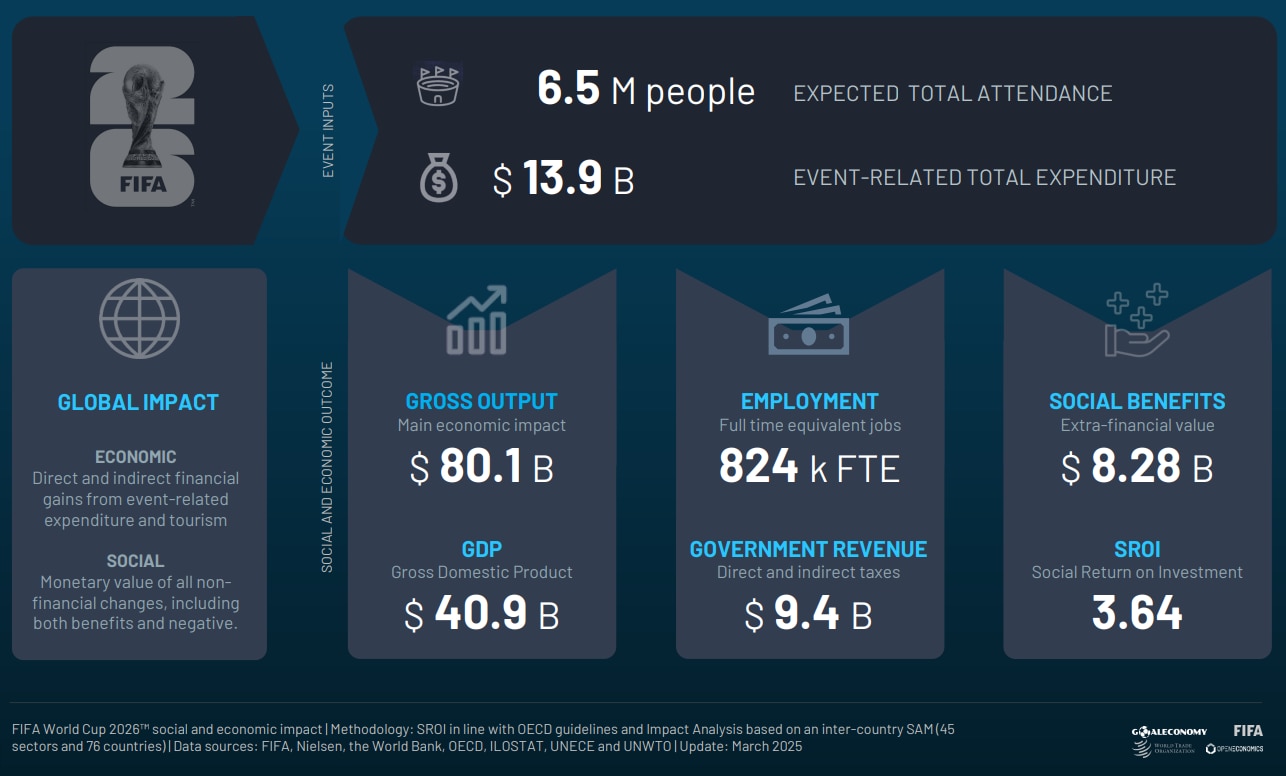
The World Cup's current predicament could turn around. The projected economic upside remains enormous: an official study published in March 2025 estimates the tournament could generate up to $40.9 billion in global GDP and 824,000 full-time jobs worldwide.
Los Angeles County alone is projected to see $594 million in economic impact from eight matches. But those projections were made in June 2024 and assumed a geopolitical environment that no longer exists.
Sport is a catalyst, not a guarantee. Its transformative power is real and evidenced. But it is unlocked by trust, openness and community belief, not just stadium capacity.
License and Republishing
World Economic Forum articles may be republished in accordance with the Creative Commons Attribution-NonCommercial-NoDerivatives 4.0 International Public License, and in accordance with our Terms of Use.
The views expressed in this article are those of the author alone and not the World Economic Forum.

Forum Stories newsletter
Bringing you weekly curated insights and analysis on the global issues that matter.
More on Economic GrowthSee all

Malte Kosub
September 11, 2026


