‘Clear winners’ amid the chaos – and other key economic news to know
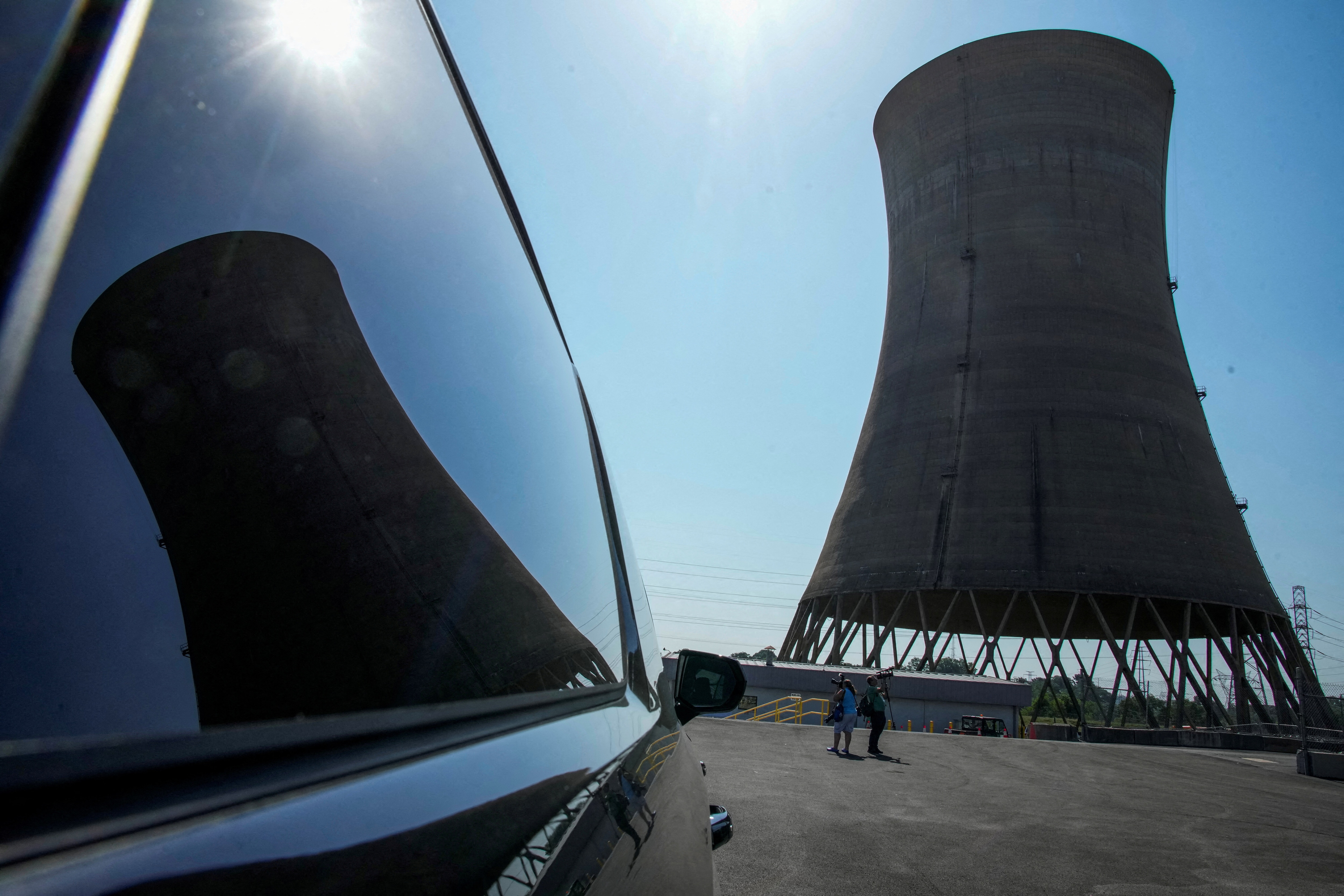
The Iran war-related supply shock has made fossil fuel alternatives like nuclear energy seem a lot more appealing. Image: Reuters/Eduardo Munoz
- This regular roundup of noteworthy news and analysis on the global economy zeroes in on one winner that could emerge from the war in the Middle East: low-carbon and renewable energy.
The news cycle has been inundated with supply-shock horror stories. But one narrative threaded throughout the coverage is about an inadvertent remix of sustenance for the global economy that isn’t very horrifying at all.
Fallout from the impasse in the Strait of Hormuz is inescapable. Some of the world’s biggest and most promising economies are being starved. In Japan, which hopes to one day retake its place among global juggernauts, news outlets closely covered the recent arrival of a single shipment of oil. India, which pushed past Japan in terms of the size of its GDP not long ago, now finds itself hindered by a reliance on imported gas.
But there are also signs of a constructive response. Countries that were previously lukewarm on low-carbon nuclear energy are now reconsidering or fast-tracking existing development plans. In March, the first full month of war-induced shock, China’s solar technology exports hit a record high, and new electric-vehicle registrations in Europe increased by nearly 50%. Suddenly, more Americans faced with high petrol prices are starting to ask why they can’t also buy affordable Chinese electric cars.
Meanwhile countries that have invested heavily in renewables are feeling pretty good about that right about now. It’s unclear how lasting all of this might be. A fundamental rewiring of infrastructure and political economies would be needed to make it stick. For now, anyway, at least one victor in a conflict that increasingly looks like a stalemate might be an energy mix long overdue for an update.
Many losers, some winners
Far away, too close. This report in The Conversation details how a neutral country nowhere near the conflict, Switzerland, is being impacted: as its pharmaceutical industry is forced to find new materials, there may be a shift in pollutants. A separate piece in the South China Morning Post visits another bucolic patch far from the fighting, where American farmers now short on fertilizer usually shipped from the Middle East are resorting to a crop at the centre of US-China trade tensions.
'China is the clear winner.' That's according to this piece published by the Council on Foreign Relations. It’s not just the country’s leadership in renewable energy and batteries, it’s China’s dominance in “electrical infrastructure writ large”.
Another potential winner: nuclear energy. “I am 100% sure nuclear is coming back,” the head of the International Energy Agency told the Associated Press. A separate AP accounting of countries now ramping up nuclear ambition includes Bangladesh, Kenya, the Philippines, Rwanda and Viet Nam.

Central bankers ‘in a vice’
War-related inflation threw a nasty curveball to central bankers. Expectations for interest rate cuts that can juice economic growth gave way to acknowledgement that surging energy prices could spoil the party. As expected, the US Federal Reserve held rates steady this week. This piece in The Economist digs into the challenge faced by the incoming Fed chair: fewer cuts than expected, more sweet-talk.
The menú del día as economic indicator. People in Spain and other European countries are cutting back on spending as inflation expectations rise, according to The Wall Street Journal. A separate WSJ report notes that the European Central Bank and the Bank of England are also keeping rates steady as they assess war impacts.
In Russia it’s a different story. This piece in The New York Times reports on central bank efforts there to cut and keep cutting in a bid to breathe life into an economy weighed down by the cost of the war in Ukraine.
Other news in brief
The hottest new asset is uncertainty. Wondering why you’re constantly reading about prediction markets? You can thank our 'polycrisis era.' (LSE)
Is $25 billion a lot? There’s a new assessment of the environmental impact of America’s many data centres. (NBER)
A world where AI numbers (actually) make sense. To make all those eye-popping valuations logical, this is what needs to happen. (Project Syndicate)
What’s the real price of oil? That is, why can a barrel of the weaponized commodity go for $78 in Kansas but $286 in Sri Lanka? (Bloomberg)
Green intentions short-circuited. Americans may want to buy electric cars again, but it’s not so easy anymore. (Inside Climate News)
Sitting on a massive stockpile. China has by far the biggest strategic oil reserve in the world, and it's not even close. (US EIA)
Don't miss any update on this topic
Create a free account and access your personalized content collection with our latest publications and analyses.
License and Republishing
World Economic Forum articles may be republished in accordance with the Creative Commons Attribution-NonCommercial-NoDerivatives 4.0 International Public License, and in accordance with our Terms of Use.
The views expressed in this article are those of the author alone and not the World Economic Forum.
Related topics:

Forum Stories newsletter
Bringing you weekly curated insights and analysis on the global issues that matter.
More on Economic GrowthSee all

John Letzing
July 31, 2026


