Opinion
What Afghanistan can teach us about building human-centric strategic foresight
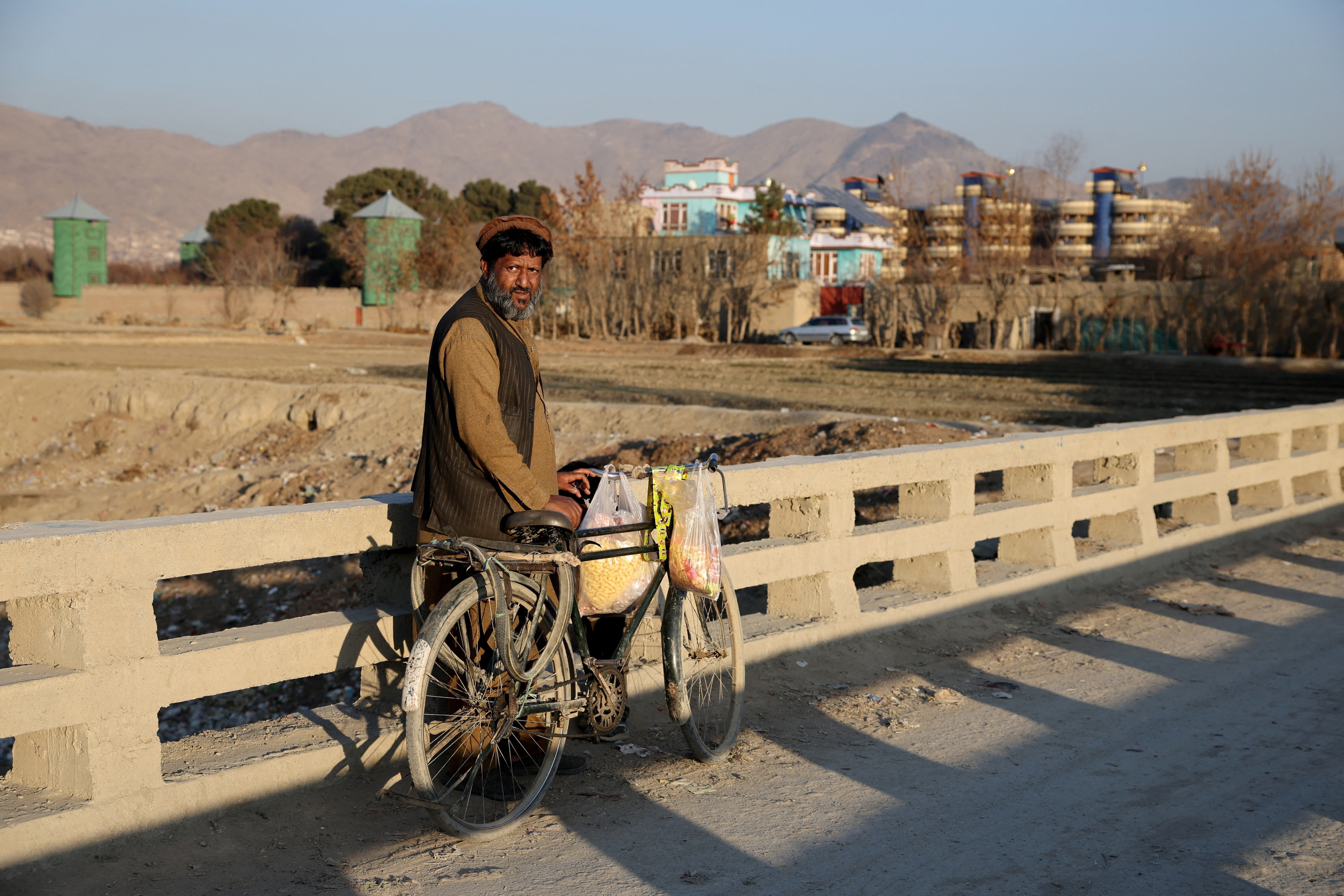
Afghanistan's plight holds lessons for strategic foresight professionals – and anyone else hoping to improve the state of the world. Image: REUTERS/Sayed Hassib
- Strategic foresight is a crucial business practice – but it often fails to account for lived experiences.
- In Afghanistan, for example, the signs of a crisis brewing across vast sections of society were already there long before they showed up in the data.
- For effective foresight, organizations must account for the qualitative lessons found on the human level alongside hard data.
At a time of accelerating technological change, economic uncertainty and geopolitical fragmentation, foresight – the capacity to explore multiple plausible futures and develop strategies to address them – has become essential to global leadership.
Yet meaningful foresight is not built through projections alone. It emerges through dialogue – especially with communities already navigating systemic disruption in their daily lives. The credibility of global foresight therefore depends on whether it reflects not only institutional analysis, but also lived experience.
Youth from the Global South, particularly young women, are often the first to encounter and adapt to structural shifts. Their experiences lie at the intersection of economic volatility, technological transformation and deep social inequality. These perspectives offer early insights into emerging risks that traditional forecasting tools frequently overlook.
What can Afghanistan teach us about strategic foresight?
The crisis in Afghanistan exposes a critical blind spot in conventional forecasting: its reliance on linear assumptions about state stability and institutional continuity. Traditional models, focused on indicators such as GDP trends, security spending and governance scores, tend to shift gradually. As a result, they often fail to detect rapid inflection points, including sudden collapses in administrative capacity or shifts in local legitimacy. Afghan communities, however, had long signaled declining trust in institutions, fragmented power dynamics and worsening livelihood insecurity. These qualitative early warnings rarely appear in standard datasets, yet they are essential for anticipating systemic breakdowns.
Today, Afghanistan is in a state of limbo. Its people, especially its youth, live in uncertainty, isolation and fear, cut off from global economic, educational and diplomatic systems. The crisis also demonstrates how forecasting models underestimate compound risks. Economic insecurity, displacement, climate stress and political volatility interact in non-linear ways. Afghanistan’s severe drought, rising prices of basic goods, shrinking employment opportunities and localized conflict dynamics were visible long before the governmental collapse. But forecasting tools often treated these pressures as isolated variables. Local testimonies show how these challenges intersect at the household level, pushing communities toward tipping points that formal models fail to detect. Integrating such lived signals into foresight frameworks is crucial for anticipating cascading risks in other fragile contexts.
Another overlooked dimension is the role of informal systems such as kinship networks, community leaders, illicit economies and cross-border movements that shape risk environments yet receive limited attention in quantitative models. Afghan perspectives make clear that these informal structures became the primary mechanisms of survival and adaptation as formal institutions weakened. Understanding how communities navigate uncertainty outside official governance channels enables foresight practitioners to anticipate alternative power arrangements and economic patterns that may emerge abruptly during crises.
How to build on the qualitative insights of strategic foresight
Internationally, Afghanistan shows the importance of sustained diplomatic engagement to maintain communication channels and prevent further isolation, which is vital for understanding and mitigating emerging risks.
For states, it demonstrates the value of integrating ground-level, intergenerational perspectives, especially from youth, into strategic planning to detect weak signals before they escalate into major disruptions.
For organizations, it offers a methodological shift: foresight capabilities become stronger when traditional forecasting is complemented with qualitative intelligence, local narratives, behavioral patterns, and social indicators, especially in contexts where data is sparse, volatility is high, and uncertainty is pervasive.
Global platforms such as Davos play an important role in shaping how emerging risks are understood. But foresight cannot rely solely on institutional perspectives. It must also incorporate the experiences of people navigating structural change in real time. Youth from the Global South bring insights formed at the frontlines of economic, technological, and social transition, perspectives that strengthen the ability of global institutions to detect risks early and design inclusive, effective responses.
Tools such as Intergenerational Foresight, developed through the World Economic Forum’s Global Foresight Network and the Global Shapers community, offer practical methodologies for embedding long-term responsibility and inclusive decision-making into governance systems.
Through my experience as a beneficiary of the programme, and as the lead contributor for the South Asia Design Sprint under the Future50 initiative, I saw how these tools become most effective when they are grounded in real lived realities.
Working directly with young people navigating rapid economic and social transitions highlighted how intergenerational insights, local knowledge and community-driven narratives can uncover weak signals that formal models often miss. This reinforced not only the technical value of Intergenerational Foresight, but also its core premise: durable futures emerge when those living through disruption help shape how the future is understood.
Leveraging foresight to build a better world
While Afghanistan can serve as a blueprint for more adaptive, human-centered foresight, the world would be in a far better position if it came together not only to study Afghanistan, but also to uplift it. The global community must engage, support and collaborate with Afghan communities, and with other nations facing similar fragility, to prevent crises from deepening.
Ultimately, foresight is not only about predicting the future. It is about shaping a future grounded in the full diversity of human experience. When lived realities, cultural nuances and local dynamics inform global analysis, and when every generation, especially youth, has access to education and opportunity, we lay the foundation for a more resilient, stable and inclusive world.
Don't miss any update on this topic
Create a free account and access your personalized content collection with our latest publications and analyses.
License and Republishing
World Economic Forum articles may be republished in accordance with the Creative Commons Attribution-NonCommercial-NoDerivatives 4.0 International Public License, and in accordance with our Terms of Use.
The views expressed in this article are those of the author alone and not the World Economic Forum.
Stay up to date:
Strategic Foresight
Related topics:


Forum Stories newsletter
Bringing you weekly curated insights and analysis on the global issues that matter.
More on Geographies in DepthSee all

Malte Kosub
September 11, 2026


