How applied AI is changing manufacturing risk management
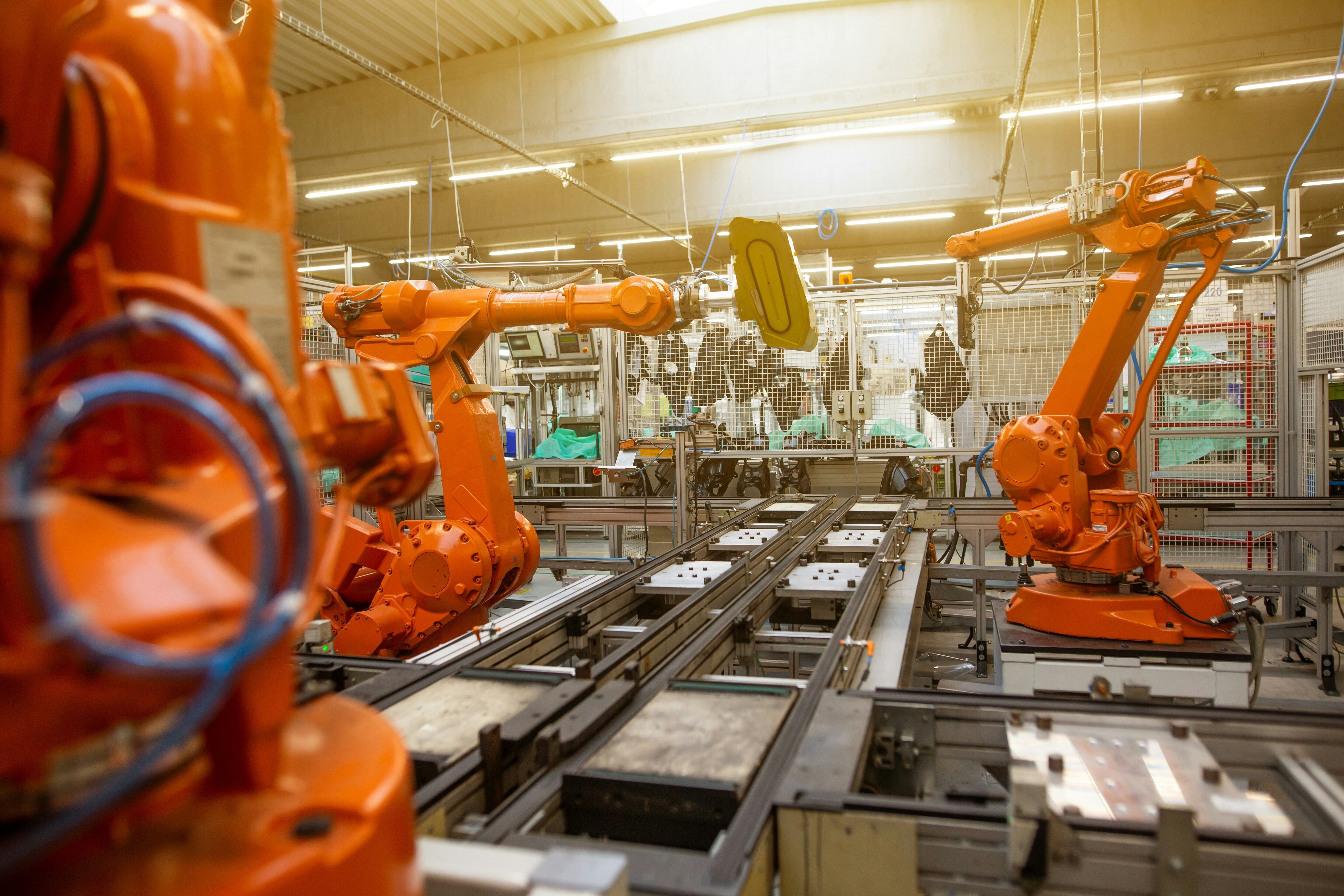
The manufacturing sector faces labour shortages, ageing workforces and pressure to maintain output amid disruption. Image: Simon Kadula/Unsplash
- Workplace safety has become a global systems challenge, with direct implications for workforce stability, productivity and supply chain resilience.
- At the same time, the manufacturing sector faces persistent labour shortages, ageing workforces and pressure to maintain output amid disruption.
- Applied AI can help manufacturers treat safety as a strategic capability, with safer workplaces better able to attract and retain talent, reduce operational disruption and create conditions for sustained performance.
Workplace safety is often treated as a local operational concern, managed facility by facility. But, in reality, it has become a global systems challenge with direct implications for workforce stability, productivity and supply chain resilience.
Preventable injuries cost an estimated 103 million workdays each year, with a 2021 report showing eliminating these incidents would be the equivalent of keeping more than 394,000 full-time workers on the job.
At the same time, manufacturers face persistent labour shortages, ageing workforces and pressure to maintain output amid disruption. A 2026 survey found that 79% of manufacturing leaders say the skilled labour shortage remains their greatest challenge, with 90% reporting that manufacturing departments are the most affected.
A report by Deloitte and The Manufacturing Institute projects that US manufacturing could need as many as 3.8 million new workers between 2024 and 2033, with up to 1.9 million of those positions at risk of going unfilled if current workforce challenges persist. Unsafe environments can amplify these challenges by driving absenteeism, turnover and operational downtime.
As manufacturing becomes more interconnected, the consequences of safety failures extend beyond individual facilities. A single incident can ripple across suppliers and regions, creating systemic risk that traditional approaches struggle to contain.
How AI makes manufacturing risk visible in real-time
Most safety programmes were built for a different era, and rely heavily on lagging indicators, periodic audits and manual observation.
Metrics such as total recordable incident rate (TRIR), long considered a trusted benchmark of performance, measure harm after it has occurred and offer limited insight into emerging exposure.
This is not a failure of intent or expertise. It reflects structural limitations in systems that were not designed to detect risk as it develops. Applied artificial intelligence (AI) offers a way to address that gap.
Applied AI introduces a different approach. Rather than automating high-stakes decisions, it helps reveal patterns that would otherwise remain difficult to detect.
When deployed in physical environments, AI can identify leading indicators of risk in real time. Subtle changes in proximity, positioning or exposure that may precede serious incidents become visible early enough to enable intervention.
The US National Safety Council's Work to Zero initiative has documented how computer vision enables continuous, automatic monitoring of workplace hazards – from personal protective equipment non-compliance to proximity breaches – that periodic manual observation consistently misses.
Meanwhile, a Verdantix global corporate survey of environment, health and safety (EHS) decision-makers found that 57% of firms have already implemented or are piloting computer vision and video analytics for safety, a sign that the shift from reactive to predictive monitoring is well under way.
What drives that shift is not the technology itself but what it makes possible: anticipation. This enables organizations to address high-severity exposure in the workplace before harm occurs.
Human-machine collaboration key to managing risk
In industrial settings, AI operates within the realities of the daily workplace. It works alongside people who understand operational constraints, production demands and the trade-offs inherent in complex environments.
Effective safety systems are designed to support human judgement. They provide timely insight, reduce cognitive load in high-risk tasks, and enable more consistent decision-making across shifts and sites. For collaboration to function well, there must be clarity around what the system observes and how its outputs inform action.
Clear role definition preserves accountability on the floor. And because the consequences in these settings are physical and immediate, credibility is earned over time through consistent performance and alignment with operational practice.
Much of the global conversation around AI centres on digital applications. However, industrial environments present a different context, where humans and machines share a physical space and risk cannot be abstracted away.
The World Economic Forum's Global Lighthouse Network has shown that facilities deploying AI and digital technologies at scale can achieve significant improvements in productivity and sustainability. Yet the Forum's own research suggests most companies are not yet prepared to scale these approaches, with critical barriers in governance, talent and infrastructure.
Deployment in industrial settings surfaces practical questions that policy discussions alone cannot resolve. How should impact be measured beyond productivity? In practice, manufacturers are increasingly evaluating AI through reductions in high-severity exposure and near-miss frequency. How can systems be introduced across diverse facilities? Experience shows that standardized governance frameworks, paired with local adaptation, are essential to scaling responsibly.
Scaling AI responsibly in industrial settings requires more than ambition. It demands structured governance that can adapt across sites, regions and regulatory contexts. The World Economic Forum's AI Governance Alliance playbook addresses this directly, identifying nine actionable strategies for organizations to move from responsible AI principles to operationalized practice – from embedding long-term AI vision into business strategy, to adopting systematic and context-specific approaches to risk management.
For manufacturers, these strategies are not abstract. They map onto the practical realities of deploying AI across diverse facility networks, where governance must be consistent enough to maintain standards and flexible enough to account for local conditions. Standardized frameworks for data governance and risk assessment, paired with empowered AI governance leaders at the operational level, are what enable organizations to scale without compromising accountability.
Early evidence supports this approach. A Verdantix Verified Value Delivery study evaluating the deployment of computer vision for workplace safety across 22 manufacturing sites found a 129% return on investment over three years, with $1.8 million in total benefits driven primarily by reductions in injuries, fatalities and operational shutdowns. These outcomes reflect what becomes possible when AI governance is embedded into operational practice from the outset – not treated as an afterthought.
Workplace safety as a strategic capability
Forward-looking organizations are beginning to treat safety as a strategic capability rather than a compliance obligation. Safer workplaces attract and retain talent, reduce operational disruption and create conditions for sustained performance.
In manufacturing, where workforce availability and resilience are strategic priorities, investment in safety increasingly aligns with innovation and long-term competitiveness. As applied AI becomes more integrated into industrial operations, safety is moving from the margins of strategy to its core.
The next step is not simply adopting new tools, but rethinking how risk is managed. Leaders have an opportunity to use applied AI to enhance human judgement, strengthen accountability and build more resilient operations.
The question is no longer whether technology belongs in risk and safety strategy, but how it can be deployed responsibly to support the people who keep industry running.
Don't miss any update on this topic
Create a free account and access your personalized content collection with our latest publications and analyses.
License and Republishing
World Economic Forum articles may be republished in accordance with the Creative Commons Attribution-NonCommercial-NoDerivatives 4.0 International Public License, and in accordance with our Terms of Use.
The views expressed in this article are those of the author alone and not the World Economic Forum.
Stay up to date:
Artificial Intelligence


Forum Stories newsletter
Bringing you weekly curated insights and analysis on the global issues that matter.
More on Artificial IntelligenceSee all

Natalia I. Kucirkova
October 13, 2026


