What to expect from the Trump-Xi summit
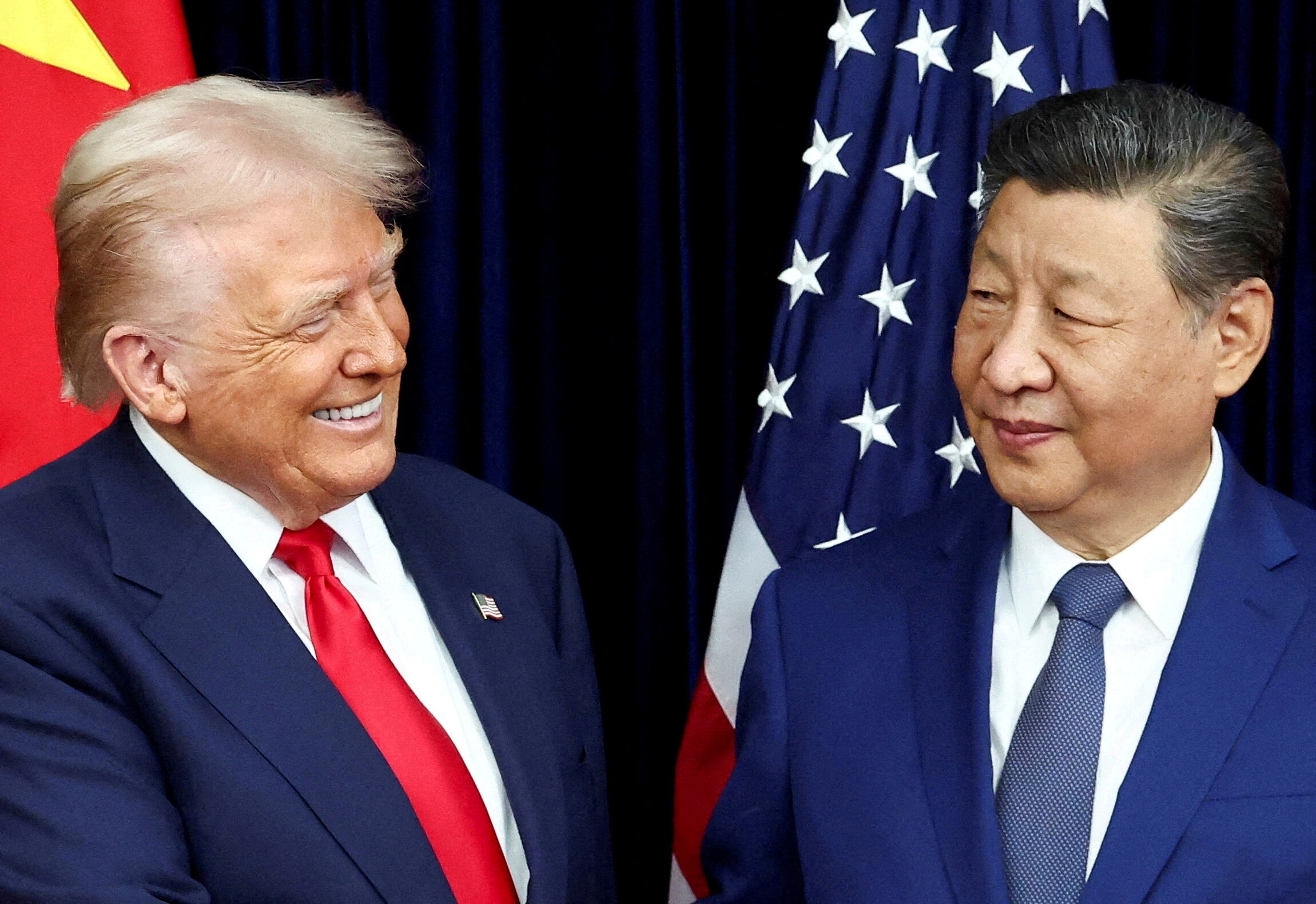
The Trump-Xi summit comes amidst heightened geopolitical tensions, with both leaders expected to focus on maintaining a fragile stability. Image: REUTERS/Evelyn Hockstein
- US President Donald Trump and Chinese President Xi Jinping are set to meet in Beijing on 14-15 May.
- The Trump-Xi summit comes amidst heightened geopolitical tensions, with both leaders expected to focus on maintaining a fragile stability.
- Economic deliverables are expected to be prioritized, while more sensitive topics like nuclear security could also surface.
After several weeks of delay, US President Donald Trump and Chinese President Xi Jinping are scheduled to meet in Beijing this month.
The meeting will mark the first visit to China by a US president since November 2017, when Trump last visited. Nonetheless, Trump and Xi have met repeatedly over the years. Most recently, in 2025 in Busan, South Korea, the two leaders gathered for a meeting that resulted in the lowering of US tariffs on Chinese imports from 57% to 47%. Trump later scored the successful meeting as a 12 out of 10.
This month, however, Trump and Xi will meet against a particularly tense geopolitical backdrop, as the war in the Middle East disrupts global energy markets and adds a new layer of strain to an already fragile US–China relationship.
What is the state of US-China relations?
The presidential summit will take place amidst ongoing tensions worldwide and a fragile US-China relationship shaped by national security concerns, supply chain competition and technological rivalry.
However, the US-China trading relationship remains a significant factor. Last year, after the Trump administration imposed tariffs ranging from 34% to 125%, China’s exports to the US dropped substantially, falling nearly 20% in 2025.
In October 2025, the two countries reached a trade agreement that reduced tariffs on Chinese goods and secured US access to critical minerals. Even so, Chinese exports to the US have continued to fall, dropping by 11% year-on-year in early 2026.
In response to US tariffs and trade policy shifts, China has increasingly diversified its trade relationships beyond the United States, positioning itself as a more stable and reliable partner across global markets.
In January, at the World Economic Forum's Annual Meeting in Davos, Switzerland, Chinese Vice-Premier He Lifeng stressed China’s commitment to multilateralism and trade, noting in a speech that China is "fostering common prosperity with its trading partners through its own development, and making the pie bigger for the global economy and trade."
In the first two months of 2026, China’s exports grew by 21.8% year-on-year, reflecting a reorientation toward non-US markets that has helped cushion the impact of declining trade with the United States.
Moreover, a number of recent geopolitical shocks have impacted US-China relations.
Notably, war in the Middle East has impacted US-China relations and complicated China's regional relationships and strong commercial ties with Iran. The China-Iran relationship was largely formalized in a 25-year strategic partnership agreement signed in 2021 that focused on economic, security and technology cooperation.
Another notable geopolitical issue is the US intervention in Venezuela, where China has provided substantial oil-backed loans of more than $100 billion.
Trump-Xi meeting: What's on the agenda?
While Trump and Xi are expected to prioritize economic and trade issues, the summit will likely extend beyond a narrow agenda to combine concrete economic deliverables with more sensitive geopolitical discussions that include security concerns.
Here are six key items expected to be discussed.
1. Managed trade and the 'Board of Trade' proposal
A central US objective is likely to be the establishment of a more structured trade framework.
US Trade Representative Jamieson Greer has openly discussed the idea of a “Board of Trade” to formalize and rebalance bilateral trade flows, including defining priority goods for import and export. This would represent a shift from ad hoc tariff measures toward a more institutionalized mechanism for managing trade imbalances.
2. Critical resources and major commercial deals
The US is expected to push for continued access to critical and rare earth minerals alongside large-scale commercial agreements. This includes a potential Chinese purchase of 500 Boeing aircraft and sustained Chinese imports of US agricultural products.
3. Investment restrictions and market access
For China, one of the key goals will be protecting its businesses from increased US regulatory and investment restrictions, including around advanced technologies like artificial intelligence.
Access to the US market for Chinese carmakers is also expected to be a topic of discussion at the meeting. This includes access for major Chinese electric vehicle makers like BYD, which earlier this year became the world's largest electric carmaker.
In January, Trump signalled a willingness to allow Chinese carmakers to sell vehicles in the US. In recent days, however, US lawmakers have urged Trump not to acquiesce to any effort to ease restrictions on Chinese cars, warning of a competitive threat to the US auto sector.
4. Security and strategic sensitivities
Although not the primary focus, national security concerns are likely to arise. This includes the subject of Taiwan.
During a phone call between Trump and Xi in February, Xi emphasized that the “Taiwan question is the most important issue in China–US relations” and urged the United States to “handle the issue of arms sales to Taiwan with prudence.”
5. Nuclear control and security dialogue
Trump has repeatedly called for a new nuclear arms control framework that would include China, arguing that existing US–Russia arrangements no longer reflect current strategic realities.
Against this backdrop, discussions on strategic stability, including nuclear risk and risk reduction, could come up during the Trump-Xi summit.
6. People-to-people ties and relationship stabilization
China is expected to emphasize the importance of rebuilding people-to-people exchanges.
This includes academic, cultural and business ties, many of which have deteriorated in recent years. The effort reflects a broader interest in stabilizing the bilateral relationship beyond purely economic transactions.

License and Republishing
World Economic Forum articles may be republished in accordance with the Creative Commons Attribution-NonCommercial-NoDerivatives 4.0 International Public License, and in accordance with our Terms of Use.
The views expressed in this article are those of the author alone and not the World Economic Forum.

Forum Stories newsletter
Bringing you weekly curated insights and analysis on the global issues that matter.
More on Geo-Economics and PoliticsSee all

Miriam Schive and Spencer Feingold
September 18, 2026