The real cost of geoeconomic confrontation: The prices people pay
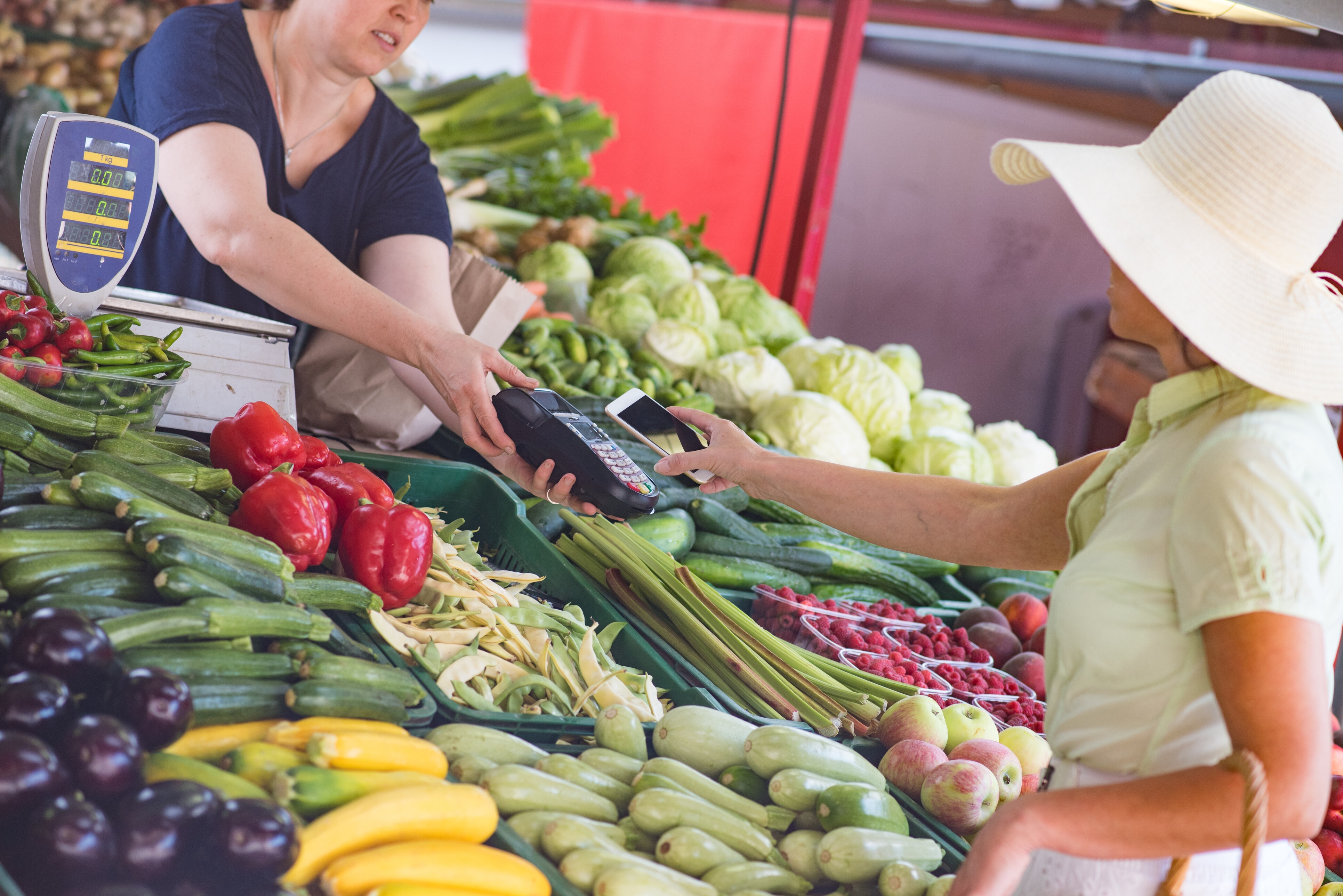
The costs of geoeconomic confrontation are reflected in food price increases, among other everyday changes. Image: iStockphoto/simonkr
- As conflict spreads around the world at an unprecedented rate, the knock-on effects hit food, jobs, healthcare, the environment and much more.
- Geoeconomics exacerbates this, as nations increasingly use economic tools, such as tariffs or sanctions, to further their interests.
- Safeguarding trade flows and stabilizing critical supply chains will ensure geopolitical shifts do not create the highest costs for the most vulnerable.
We are living in a world where pensioners might have to choose between heating and medicine, students often need to rethink studying abroad, workers must navigate industrial transitions, parents stretch their grocery budgets and small businesses must absorb frequent supply shocks.
At the same time, conflict is spreading at an unprecedented scale. Around 60 active state-based conflicts and more than 2.3 million related deaths were recorded in 2024 alone, according to the latest figures from the Uppsala Conflict Data Program. And as advances in technology reshape the economics of war, conflicts are becoming cheaper, more accessible and more difficult to end.
The underlying reason for many of these pain points is geoeconomic, which means using economic tools and policies, including tariffs and sanctions, to advance geopolitical objectives and power.
Indeed, geoeconomic confrontation was ranked the top immediate and short-term risk in the World Economic Forum’s Global Risks Report 2026, followed closely by state-based armed conflict. This implies that one in three of the more than 1,300 expert respondents to the Forum's Global Risks Perception Survey believe geopolitical risks are the most critical risks currently facing the world.
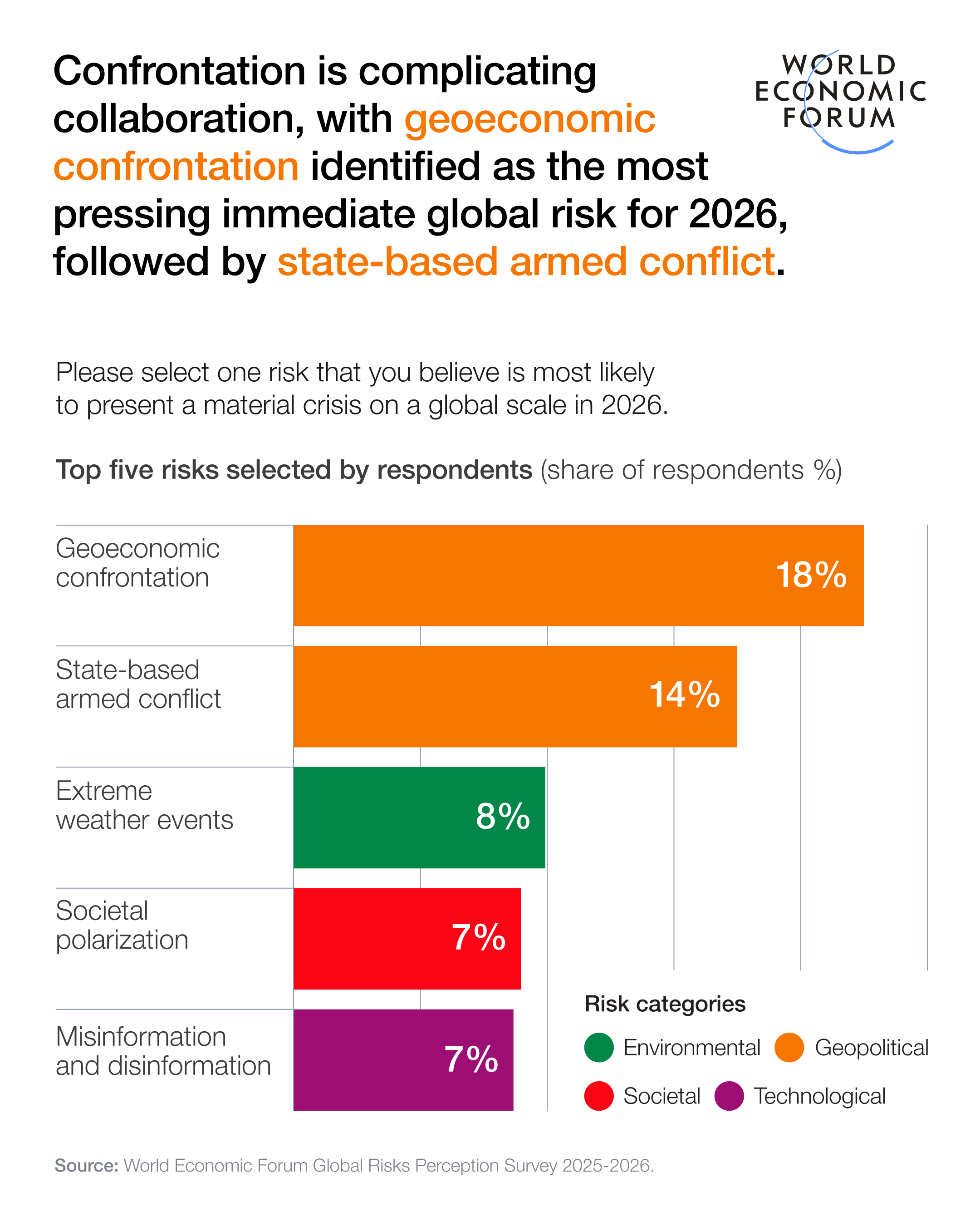
While these rankings are global in nature, geoeconomic confrontation is making waves locally as well.
Southeast Asian economies find themselves at the sharp end of global realignments, for instance. And at the World Economic Forum’s Annual Meeting 2026 in Davos, geoeconomic confrontation and its implications were a major topic, including that localization is gaining ground over globalization. The consensus was that increasing fragmentation is increasing fragility in many regions of the world.
What does geopolitical conflict cost people?
So what does this mean at the country, household or individual level? Families don’t debate tariff codes. They notice that bread costs more, cooking oil prices fluctuate and construction materials are more expensive and difficult to get.
When energy and other supply chains fragment along geopolitical lines – through supply cutoffs, reshoring, sanctions or strategic competition – the result is price volatility. Households experience this as higher electricity bills and fuel costs, a drop in medicine availability and pressure on food prices, among other effects.
Even if current hostilities in the Middle East ease, recovery will be slow. Damaged infrastructure, high insurance premiums and lingering security risks mean shipping could take months to normalize.
The massive disruption to global shipping in the Red Sea in late 2023, for example, forced major carriers to reroute around Africa's Cape of Good Hope. This cut Suez Canal traffic by up to 57%, adding 10-14 days to journeys. It took months for average daily transit trading volume to recover. A recent survey of oil and gas executives by the Federal Reserve Bank of Dallas in the US shows 80% expect the current Strait of Hormuz disruption to last months, with higher shipping and insurance costs becoming sticky.
In addition to energy, the Strait of Hormuz is a critical chokepoint for a wide network of global commodity flows that deliver a wealth of everyday necessities to people around the world.
Feeding through to food
The current Gulf conflict is sending shockwaves through global agriculture. The region normally supplies about one-third of seaborne fertiliser exports, most of which have been halted. Prices have surged, with the World Bank reporting at the end of April 2026 that the war has caused a 60% jump in urea, which is widely used in fertilisers – just as planting season begins across major markets.
The impact on agriculture is likely to be particularly severe in parts of Africa that obtain over a third of their nitrogen fertilizer from the Gulf, as well as smallholders in South Asia who depend on it to maximise output from limited land. With fertilizer typically bought just before use and rarely stockpiled, the disruption has left markets exposed and scrambling for supply. The World Food Programme warns that if traffic through the Strait remains disrupted, the number of people facing acute hunger could increase to 363 million globally this year.
The crisis is also spilling into other industries. More than half of Qatar’s exports of sulphur – an essential element of battery production – transits through the Strait of Hormuz. Petrochemical bottlenecks are also pushing up the cost of plastics such as bags, wraps and films. These materials are heavily used in the consumer goods and packaging industries, and so higher prices could be transmitted to consumers.
The effect on jobs and workplaces
Geoeconomic confrontation can also strain labour markets as businesses scale back or shut down. According to the International Labour Organization, slower global growth, driven partly by geopolitical instability, is expected to reduce employment growth and worsen job prospects. A recent academic analysis suggests that tariff increases alone could result in cumulative global job declines exceeding 23 million.
Small firms are particularly exposed because they often have limited capacity to absorb shocks. Rising inflation resulting from supply chain disruption erodes real wages and dampens hiring. Over time, if this persists, labour markets are likely to become more unequal, more insecure and slower to recover.
Workplaces are also subject to massive disruptions due to ongoing geopolitical crises. Energy supply disruption is forcing some countries to encourage partial remote work and learning to conserve energy consumption, while others are limiting the use of air conditioners in offices.
Health, education and the environment
Elderly people face heightened risks of illness, hunger and death as health systems collapse and displacement limits care during geopolitical conflict. There is evidence that large-scale displacement and rising food insecurity due to the ongoing conflict in the Middle East are affecting vulnerable populations and straining social support systems.
For students, the effects are both immediate and long-lasting: At least 52 million children in the Middle East and surrounding regions have experienced disrupted education due to school closures, displacement and insecurity. Attacks on infrastructure and the use of schools as shelters also severely limits access to learning.
And geoeconomic confrontation can act as a catalyst for environmental risks too. Conflicts accelerate environmental degradation, for example, as heavy metals from infrastructure destruction or weaponry pollute waterways. This creates long-tail risks for insurers, investors and firms operating in or sourcing from conflict-affected regions, not to mention the people living in affected areas. Environmental damage is both a cause and a consequence of instability, locking regions – and the supply chains that depend on them – into cycles of fragility.
Mitigating the cost of geoeconomic confrontation
Geoeconomic confrontation defines the global landscape today. The consequences are not confined to balance sheets and policy debates, they are embedded in trade, output, inflation trajectories, labour market inequalities and the erosion of social mobility and human dignity.
Current public policy trajectories suggest a continued shift toward localization, protectionism, strategic competition and a focus on short-term resilience gains – sometimes at the expense of long-term stability.
Cross-border cooperation can and will continue to deliver tangible gains for businesses and people, however. But this requires deliberate efforts to safeguard trade flows, stabilize critical supply chains and ensure that geopolitical shifts do not create the highest costs for the most vulnerable sections of our populations.
Don't miss any update on this topic
Create a free account and access your personalized content collection with our latest publications and analyses.
License and Republishing
World Economic Forum articles may be republished in accordance with the Creative Commons Attribution-NonCommercial-NoDerivatives 4.0 International Public License, and in accordance with our Terms of Use.
The views expressed in this article are those of the author alone and not the World Economic Forum.
Stay up to date:
Global Risks
Related topics:


Forum Stories newsletter
Bringing you weekly curated insights and analysis on the global issues that matter.
More on Global RisksSee all

Tyrone Jue
August 5, 2026


