Why the next decade of physical AI must be human-centric
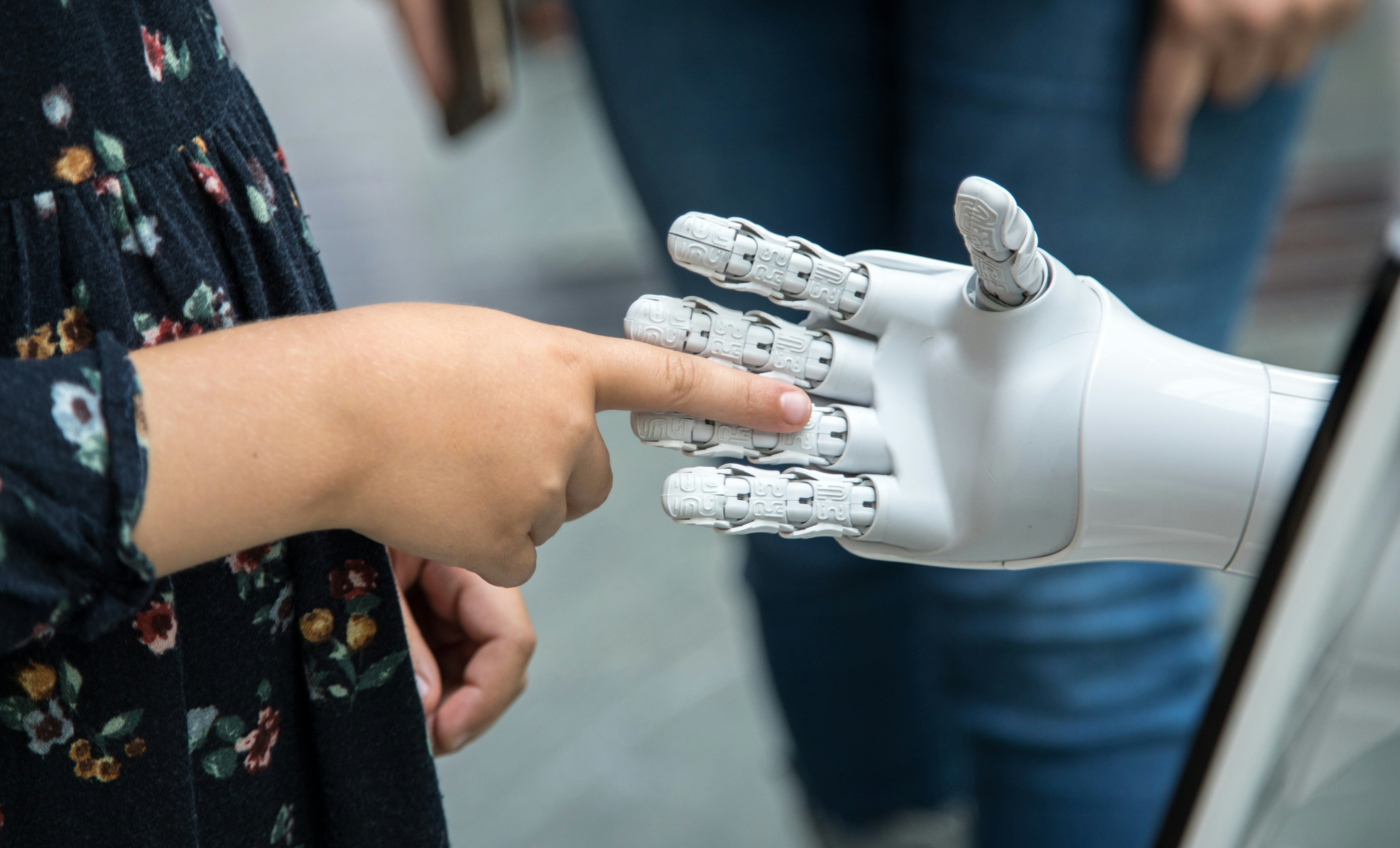
The next decade of physical AI must be built around the human benchmark: seamless, safe and empathetic human-robot interaction and collaboration. Image: Katja Ano /Unsplash
- The shift to physical AI requires moving past rigid automation towards true human-robot collaboration.
- Ageing advanced nations and youthful developing economies require completely different physical AI adaptation paths.
- Future workplaces must prioritize human well-being and intuitive machine explainability to guarantee workplace safety.
The artificial intelligence (AI) revolution of the past decade lived mostly behind glass, optimizing supply chains, writing code and shaping digital experiences. Today, AI is crossing into the physical world. Machines are no longer just processing data. They are moving matter, from factory floors to hospital wards, logistics hubs to agricultural fields.
We have entered the era of physical AI.
As this shift accelerates, fueled by advances in robotics, multimodal AI and real-world simulation, the central question is not how powerful these machines will become. It is whether they will truly collaborate with the humans they are designed to serve. If we want resilient, productive and humane workplaces, the next decade of physical AI must be built around the human benchmark: seamless, safe and empathetic human-robot interaction and collaboration.
Where we stand today: The friction of legacy automation
Physical AI is maturing rapidly. Hardware, including sensors, actuators and mechanical systems, has become reliable. Software, powered by large language models, computer vision and spatial intelligence, is giving machines basic common-sense reasoning. Yet true partnership remains rare.
In manufacturing and logistics, collaborative robots (cobots) have moved out of safety cages. Safety protocols, however, remain largely binary: a human steps too close and the machine slows or stops. This creates a zero-sum trade-off between worker safety and throughput. Interaction stays transactional. The human commands and the machine executes, while the cognitive load of managing exceptions still falls almost entirely on people.
According to the World Economic Forum’s Future of Jobs Report 2025, robotics and autonomous systems are expected to transform business operations at 58% of employers by 2030. Yet without deeper collaboration, these systems risk amplifying existing inefficiencies rather than resolving them.
The global divide: Different needs, shared opportunity
Adoption paths will diverge sharply by region, driven by demographics.
In developed economies such as Japan, Western Europe and North America, rapid ageing is shrinking workforces. Europe’s share of people aged 65 and older is projected to rise from 21% today to 29% by 2050. Japan already exceeds 29%. Labour shortages in healthcare, infrastructure, and manufacturing are acute. Here, physical AI is a demographic necessity: empathic assistants that augment remaining workers, reduce physical burnout and extend productive careers.
In developing regions such as much of Southeast Asia, India and parts of Africa, youthful populations offer a demographic dividend. Physical AI is not about replacing scarce labour but enabling rapid, safe industrialization. Intelligent robots can remove workers from hazardous tasks in heavy manufacturing and mining while pairing young employees with cognitive systems to deliver precision output at scale. This leapfrogging can elevate safety standards and global competitiveness without decades of legacy infrastructure.
A human-centric vision: From coexistence to cognitive synergy
Advances in context-aware, neuroadaptive robotics, enabled by multimodal sensing and simulation-to-reality training, will re-architect work over the next 10 years. A recent white paper from the World Economic Forum describes this as a layered automation strategy in which rule-based, training-based and context-based systems coexist, with humans shifting into higher-value roles such as AI trainers and system optimizers.
In manufacturing, binary safety stops will give way to dynamic adaptation. Robots will read posture, gaze and fatigue indicators, adjusting pace to sustain human cognitive performance rather than maximizing mechanical speed alone.
In agriculture, the most unpredictable physical domain, agile robot fleets will collaborate with farmers. They will handle grueling physical tasks under harsh conditions while yielding space and communicating intent, letting humans focus on ecosystem-level decisions.
In healthcare and eldercare, physical AI will move beyond logistics to ambient empathy. Robots will distinguish between a gentle balance assist and a medical emergency, easing nurse burnout so professionals can prioritize diagnosis and emotional care. In logistics, autonomous mobile robots will anticipate human trajectories and dynamically reroute heavy loads to ergonomic heights, turning rigid warehouses into fluid, adaptive environments.
In smart cities, polite infrastructure such as sanitation drones, repair units and autonomous transit will navigate crowded public spaces by understanding social norms, signaling intent clearly and operating unobtrusively.
The ethical imperative: What can we learn from the digital AI age?
The digital AI era taught hard lessons about unintended consequences, including algorithmic amplification of bias, erosion of attention and reduced human agency. We cannot repeat them in the physical world, where mistakes have immediate bodily consequences.
Explainability must become a core safety feature. Workers need to intuitively understand why a robot is moving or pausing. Predictability builds trust. Human agency must remain paramount. The AI augments decisions but never overrides the ultimate orchestrator. And industrial KPIs must evolve. Success should equally weight mechanical output and human physical and cognitive well-being. Technology’s value lies in complementing, not supplanting, human capabilities.
A reality already underway
The transition to physical AI is not speculative. It is an engineering and economic reality already underway. The technology itself is neutral. The outcome, whether it elevates or diminishes the human experience, depends on deliberate design choices made now.
By anchoring the next decade of physical AI in the human benchmark, we can create workplaces that are safer, more productive and more humane. Developed nations can sustain ageing societies. Developing nations can industrialize responsibly. And across both, workers can thrive as the ultimate orchestrators of intelligent systems.
This is not just an industrial opportunity; it is a human one. Getting it right requires global collaboration, shared standards and an unwavering focus on people. The decade ahead will redefine our relationship with machines. Let us ensure the benchmark remains human.
Don't miss any update on this topic
Create a free account and access your personalized content collection with our latest publications and analyses.
License and Republishing
World Economic Forum articles may be republished in accordance with the Creative Commons Attribution-NonCommercial-NoDerivatives 4.0 International Public License, and in accordance with our Terms of Use.
The views expressed in this article are those of the author alone and not the World Economic Forum.
Stay up to date:
Artificial Intelligence


Forum Stories newsletter
Bringing you weekly curated insights and analysis on the global issues that matter.