Why the future of AI governance depends on human judgment
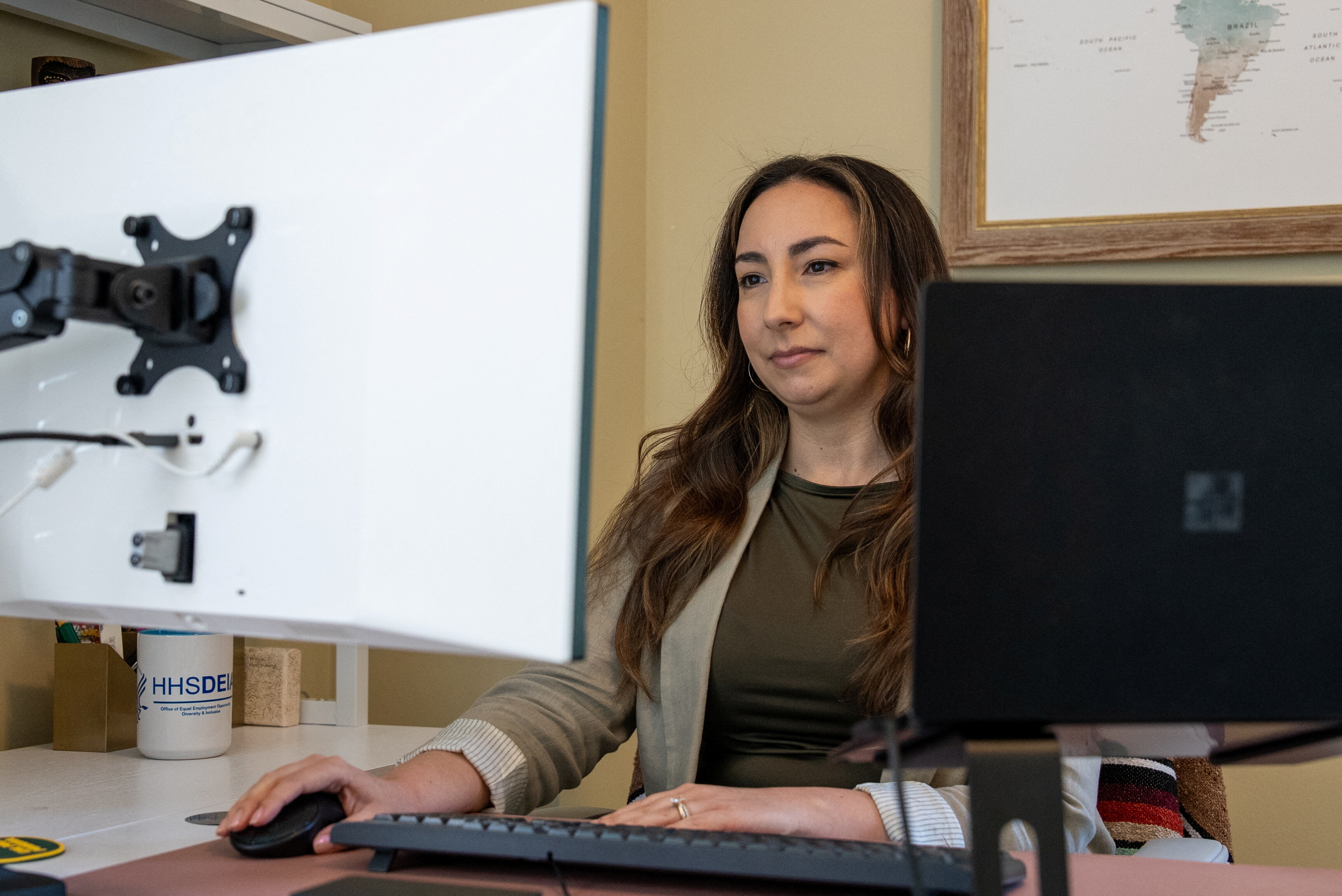
The evidence suggests that effective AI governance depends on human judgment. Image: REUTERS/Julio Cesar Chavez
- In a study of more than 32,000 scans, radiologists overrode an AI tool in about 2% of cases – and they were right nearly nine times in ten.
- New AI laws in the EU, South Korea, Vietnam and elsewhere increasingly hold individuals accountable for overseeing and overriding AI decisions.
- This judgment-based AI governance sharpens with experience, with high-stakes decision-making ability peaking between 55 and 65.
In the city centre of Kuala Lumpur, a senior bank manager, Diana, has her name on the decisions a machine makes. When the lending model approves or declines an application, she is the person that regulators hold responsible for mistakes.
Diana is not just a reviewer who signs off – she interrogates the model, flags suspect outputs and owns the correction. Her bank can buy a better AI model next quarter, but it cannot, as easily, buy the insight Diana supplies.
Executive committees and boards still treat AI governance as largely a technology problem: procure the system, place a human in the loop and then satisfy the auditors.
If something in that sequence rings hollow, you’re not alone. The phrase “human in the loop” has become a comfort we repeat without asking the harder question: can that person actually make wise decisions when the model and the situation disagree? The model was never the hard part of AI governance. Judgment matters more and appointing someone like Diana, who can choose when the stakes are real but the output is wrong, is crucial.
Where judgement-based AI governance is rolling out
The European Union’s AI Act, in force since August 2024, requires under Article 14, that high-risk systems let a designated person oversee, question and override their output. Singapore’s MAS has proposed risk-management guidelines, now past public consultation, that would put boards and senior management on the hook for decisions in lending, risk and fraud. South Korea’s AI Basic Act, in force since January 2026, places safety and transparency duties on high-impact AI operators. Malaysia’s proposed right to human review would require the reviewer to hold the authority and competence to overrule the machine.
Vietnam’s AI Law, in force since March 2026, goes furthest: it bans obstructing or disabling the human mechanisms that oversee and control AI, which implies that letting judgment wither through over-reliance may itself break the law.
Now, notice the contrast when rules are absent.
Australia has so far declined to enact a standalone AI law for the private sector, and New Zealand has taken a similarly light-touch path. That gives us a natural experiment in risk. In Singapore, Vietnam, South Korea and Malaysia, weak oversight is increasingly a legal and punitive risk: sanctions, licence loss and personal liability for named officers.
In Australia and New Zealand, the absence of such measures represents a reputational risk. While in many businesses, legal risk earns a whole budget line, a board agenda item and named and trained people, reputational risk is simply assigned a policy document and a clean-up plan. One forces investment in human judgment, while the other will cross that bridge only when they come to it.
How the Forum helps leaders make sense of AI and collaborate on responsible innovation
Cognitive sovereignty and AI governance
So what do these laws actually demand of the individuals charged with being in the loop? The accountable person must catch the case that falls outside the pattern, question a confident output and hold the customer’s interest, firm’s exposure and regulator’s intent at once. Then, after that, they make the call under uncertainty.
This is cognitive sovereignty: the ability to stand apart from the machine and exercise higher-order situational judgment built from years of experience. It’s rapidly becoming expensive brainpower in organizations.
In a real-world study of more than 32,000 scans, radiologists overrode an FDA-cleared AI tool in about 2% of cases, and where they disagreed, the human call was right nearly nine times in ten. Hundreds of confirmed blood clots would have been missed by the model alone. The value was not in the routine agreement but in the rare, hard case a human caught.
Here is where the familiar story about the ageing brain gets it backwards. The judgment AI governance requires can sharpen with experience rather than fade.
A 2026 longitudinal study in Scientific Reports tracked nearly 4,000 adults and found no known ceiling on brain-health improvement at any age. A 2025 analysis in Intelligence found that the broad functioning behind high-stakes decisions tends to peak between 55 and 60, with those best suited to such roles rarely younger than 40 or older than 65. Dr. Sandra Bond Chapman of the Center for BrainHealth calls integrated reasoning, connecting past patterns to novel problems, our “platinum” cognitive function, often excelling between 55 and 65. I have written about this adult brain development arc in more detail.
None of this is automatic. Age confers nothing on its own. These capabilities grow when trained deliberately, and they can erode under chronic overload, poor sleep and the repeated temptation to wave through an answer because it arrives polished.
That last temptation has a name. Researchers call it automation bias, and decades of studies show it strikes experts as readily as novices: one review found wrong machine advice raised incorrect human decisions by about a quarter. Why?
AI’s polished output can create a feeling of rightness so strong that the brain sees a stop sign, and higher-order thinking never starts. Seniority is no shield. In fact, the most exposed professionals can be seasoned executives: all that experience supplies additional signals that everything looks right, so a confident output can stop hard-earned wisdom from ever becoming active judgment.
Why AI governance is not a technology problem
This is why treating AI governance as a technology problem can be a costly mistake.
Too often, organizations spend heavily on better models while underinvesting in the people meant to govern them. The best workers can be experienced professionals labelled “past their prime” and managed toward the door. We risk buying the system and starving the oversight.
Diana’s year looked ordinary. No headline promotion, and she has moved into a role her institution cannot operate without. She is not the person the bank replaces. Instead, she’s the person they cannot lose.
Boards can no longer simply ask if a human sits in the loop and check that box. They must assess whether that person can act with cognitive sovereignty and out-think the system when it matters, and whether anyone is investing so she can.
You cannot govern what you depend on.
Don't miss any update on this topic
Create a free account and access your personalized content collection with our latest publications and analyses.
License and Republishing
World Economic Forum articles may be republished in accordance with the Creative Commons Attribution-NonCommercial-NoDerivatives 4.0 International Public License, and in accordance with our Terms of Use.
The views expressed in this article are those of the author alone and not the World Economic Forum.
Stay up to date:
Artificial Intelligence


Forum Stories newsletter
Bringing you weekly curated insights and analysis on the global issues that matter.