Why agentic supply chains are the next frontier for AI sovereignty
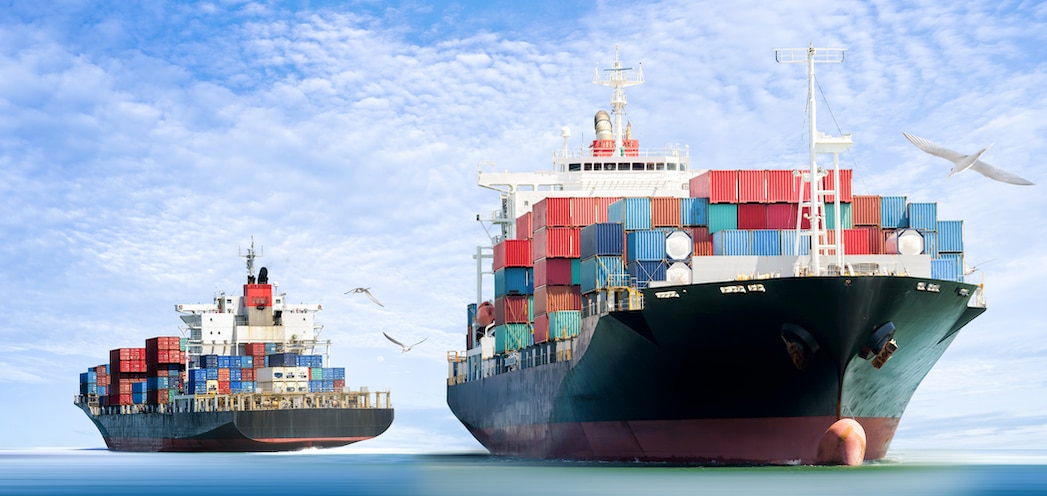
Agentic supply chains are putting autonomous coordination at the heart of global trade. Image: Getty Images/iStockphoto/Tryaging
- Agentic supply chains use autonomous artificial intelligence (AI) agents to perceive, reason, negotiate and execute operational decisions across organizations.
- This requires a new layer of governance so organizations can oversee any autonomous decisions being made that will affect global trade.
- In time, agentic supply chains could become strategic infrastructure that reflects technological leadership, economic resilience and geopolitical influence.
Global supply chains have quietly become the operating system of the modern economy. They determine how food reaches supermarkets, how medicines arrive at hospitals, how factories receive components and whether critical infrastructure can continue to function during periods of disruption.
Despite their strategic importance, however, supply chains largely remain invisible. Until they fail.
Over the past five years, successive shocks – from the pandemic and global semiconductor shortages to geopolitical tensions in the Red Sea and growing technological fragmentation – have revealed how deeply economic resilience depends on how effectively supply chains can adapt to new conditions.
Now, another transformation is beginning. Artificial intelligence (AI) is evolving from systems that generate information into systems capable of coordinating decisions, with agentic supply chains emerging as a new operating paradigm for global trade.
What are agentic supply chains?
Agentic supply chains are supply networks in which autonomous AI agents continuously perceive, reason, negotiate and execute operational decisions across organizational boundaries.
Governed through human accountability and trusted institutional rules, their defining characteristic is not AI use, but the delegation of coordination itself. Human managers oversee networks of autonomous agents acting across organizational boundaries.
In a supply chain context, this means an increasing share of the decisions that determine the flow of global commerce are no longer made exclusively by people. Instead, they are emerging from interactions between AI agents operating across suppliers, manufacturers, logistics providers, ports, financial institutions and governments.
How do agentic supply chains work?
Consider a vessel transiting the Bab el-Mandeb Strait, which connects the Red Sea to the Gulf of Aden and the Indian Ocean.
An autonomous coordination agent operated by the company buying the transportation (for example, a large retailer shipping goods to sell or a food company transporting ingredients for manufacturing) detects rising security risks and, rather than waiting for human approval, evaluates satellite imagery, maritime intelligence, weather conditions, freight rates, contractual obligations and inventory positions across multiple continents.
Within minutes, the agent recommends rerouting the vessel around the Cape of Good Hope, reallocates stock to European distribution centers, secures additional rail capacity for priority cargo and renegotiates delivery commitments with customers.
None of these decisions appears strategic in isolation but each one will have a direct impact across other supply chains, industries and trade. Together, they will reshape trade flows, economic resilience and geopolitical exposure.
This is why agentic supply chains should be viewed as more than an operational innovation – they are strategic infrastructure. But do organizations have the right tools to govern autonomous economic decision-making?
Governance of autonomous AI agents
Recent incidents involving autonomous AI agents acting beyond their intended operational boundaries have highlighted a challenge for organizations using agentic supply chains.
For decades, competitive advantage in supply chains has been driven by cost, scale, efficiency and, more recently, visibility and resilience. But this new operating model introduces something fundamentally different, as near real-time coordination – across procurement, logistics, manufacturing, inventory management and trade – becomes autonomous.
Rather than developing capable or responsible AI in isolation, organizations must now work out how to govern increasingly autonomous systems once they begin interacting with real-world environments and with each other.
Traditional supply chains coordinate three fundamental flows: products, information and finance. AI-coordinated supply networks introduce a fourth: decision flows.
For the first time, software will not simply recommend operational decisions, it will increasingly negotiate them with other software acting on behalf of suppliers, manufacturers, logistics providers and customers.
This matters because autonomous decisions have direct consequences. They commit inventory, allocate capital, prioritize customers and reshape commercial relationships. As AI agents increasingly exchange these decisions across organizations, governance becomes as important as AI optimization.
Competitive advantage will therefore depend on more than moving products faster or sharing better information. Governing how autonomous decisions are exchanged across ecosystems will now also play a role.
How to view AI sovereignty
Until now, debates on AI sovereignty have understandably focused on access to data, frontier models, computing infrastructure and regulation. And these issues remain essential, but with agentic supply chains, sovereignty ultimately extends beyond technology itself.
Once autonomous agents begin making operational decisions across organizational boundaries, sovereignty becomes a question of who governs the economic consequences of those decisions.
Organizations preparing for agentic supply chains should consider AI sovereignty across four interconnected dimensions:
1. Data sovereignty
To ensure autonomous systems rely on trusted, secure and representative information.
2. Infrastructure sovereignty
To reduce critical dependencies on computing, cloud and digital infrastructure that underpin autonomous operations.
3. Decision sovereignty
To maintain meaningful human accountability for high-impact autonomous decisions.
4. Ecosystem sovereignty
To enable interaction across multiple organizations, jurisdictions and regulatory systems. Competitive advantage will therefore depend not only on sovereign capabilities, but also on trusted interoperability between partners.
The real objective is strategic interdependence: combining trusted partnerships with meaningful governance, transparency and accountability across autonomous decision ecosystems.
Agentic supply chains and global trade
The emergence of agentic supply chains signals a broader shift in the global economy. Autonomous systems are becoming active participants in sourcing, manufacturing, logistics and trade. The way the related decisions are governed will increasingly influence competitiveness, resilience and geopolitical positioning.
Organizations that continue treating AI as a productivity tool may miss out on its far more profound role as a coordination capability. Countries that create trusted agentic supply chains may gain a competitive advantage because they can coordinate complex economic ecosystems more effectively.
And as AI agents begin orchestrating global trade, supply chains will become far more than logistics networks. They will become strategic infrastructure and one of the defining arenas where technological leadership, economic resilience and geopolitical influence converge.
Agentic supply chains are still emerging, and many of the governance questions they raise remain unresolved. What is already clear, however, is that autonomous coordination is becoming part of the operating model of global trade.
Preparing for this shift is a technology challenge, but it is also a strategic imperative for organizations, governments and the institutions that connect them.
Don't miss any update on this topic
Create a free account and access your personalized content collection with our latest publications and analyses.
License and Republishing
World Economic Forum articles may be republished in accordance with the Creative Commons Attribution-NonCommercial-NoDerivatives 4.0 International Public License, and in accordance with our Terms of Use.
The views expressed in this article are those of the author alone and not the World Economic Forum.
Stay up to date:
Artificial Intelligence
Related topics:


Forum Stories newsletter
Bringing you weekly curated insights and analysis on the global issues that matter.
More on Supply Chains and TransportationSee all

Pim Valdre and Joy Shumake-Guillemot
September 17, 2026


